For years, the promise of robotaxis hinged on a simple economic argument: remove the driver, and the cost per mile plummets. In 2026, that argument is being tested at scale. Waymo operates thousands of paid rides daily across multiple U.S. metros. Zoox is expanding its purpose-built driverless service. And a reshaped Cruise is slowly rebuilding trust after its 2023 San Francisco incident. But the question most riders actually ask is practical: what does an autonomous vehicle cost me per ride, and how does that compare to Uber or Lyft?
This guide breaks down the real economics of robotaxi services in 2026 — fare structures, per-mile costs, surge dynamics, safety records, technology stacks, and the regulatory framework determining where you can actually hail a driverless car today.
What Level of Autonomy Are Robotaxis, Really?
SAE Automation Levels — What They Actually Mean for Riders
| Level | Name | Who Drives | Example |
|---|---|---|---|
| 0 | No Automation | Human | Standard car, no assist |
| 1 | Driver Assistance | Human (system assists steering OR speed) | Adaptive cruise control |
| 2 | Partial Automation | Human (must supervise at all times) | Tesla Autopilot, GM Super Cruise, Ford BlueCruise |
| 3 | Conditional Automation | System in limited conditions; human on standby | Mercedes Drive Pilot (limited markets, ≤40 mph) |
| 4 | High Automation | System fully; no human needed in operational domain | Waymo One, Zoox (geofenced cities) |
| 5 | Full Automation | System everywhere, all conditions | Does not exist commercially |
Robotaxi services like Waymo and Zoox operate at SAE Level 4 — meaning the vehicle handles all driving tasks without any human intervention, but only within a defined operational design domain (ODD). That ODD is typically a geofenced urban area with mapped roads, and it may exclude severe weather, unmapped construction zones, or certain highway segments.
This is fundamentally different from consumer Level 2 systems like Tesla's Full Self-Driving (Supervised) or GM's Super Cruise. Those systems require an attentive human driver ready to take over at any moment. A Level 4 robotaxi has no steering wheel for the rider — and no expectation that you'll intervene.
Where Can You Actually Use a Robotaxi Right Now?
Service availability in 2026 remains metro-specific. Here's where you can hail a fully driverless ride today:
| Service | Live Cities (Paid Rides) | Service Hours | Fleet Size (Est.) | Vehicle |
|---|---|---|---|---|
| Waymo One | Phoenix (metro-wide), San Francisco, Los Angeles, Austin | 24/7 in Phoenix & SF; limited hours in LA & Austin | ~1,000+ across all markets | Jaguar I-PACE (custom-upfitted), next-gen Hyundai Ioniq 5 (announced) |
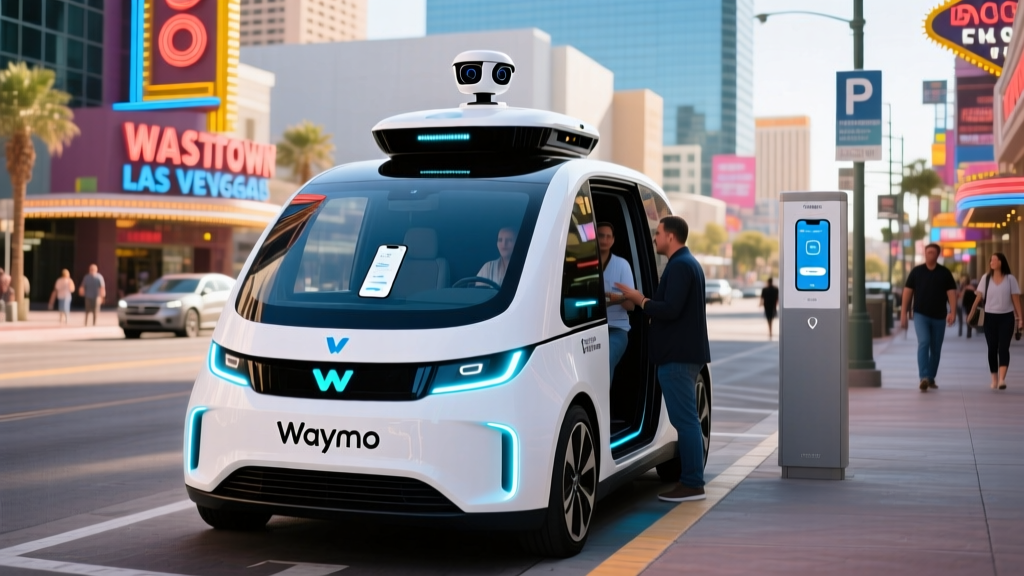
| Zoox | Las Vegas (Strip corridor & downtown), Foster City, CA (limited) | Daytime/evening hours | ~250 (purpose-built vehicles) | Zoox Gen 3 (bidirectional, no steering wheel) |
| Cruise (relaunched) | Phoenix (limited zone), Dallas (pilot) | Daytime only, restricted zones | ~100 (Chevrolet Bolt EV) | Chevrolet Bolt EV / next-gen Origin (delayed) |
| Waymo (expansion announced) | Atlanta, Miami — expected late 2026/2027 | TBD | TBD | TBD |
Key caveat: "Announced" expansion cities are not live. Waymo has confirmed Atlanta and Miami as future markets, but paid service there is not operational as of mid-2026. Phoenix remains the most mature market, with the broadest geofenced area and 24/7 availability.
Autonomous Vehicle Cost: Robotaxi Fares vs. Uber and Lyft
The core economic question: does removing the driver actually make rides cheaper? The answer depends on market, time of day, and trip distance. Here's what real fare data shows across comparable trips in 2026:
| Metric | Waymo One | UberX | Lyft Standard |
|---|---|---|---|
| Base fare (typical) | $3.50–$5.00 | $2.50–$4.00 | $2.00–$3.50 |
| Per-mile rate | $1.25–$1.80 | $1.10–$1.60 | $1.00–$1.50 |
| Per-minute rate | $0.30–$0.45 | $0.20–$0.35 | $0.18–$0.30 |
| 3-mile urban trip (est.) | $9–$14 | $8–$13 | $7–$12 |
| 10-mile airport trip (est.) | $22–$32 | $18–$28 | $17–$26 |
| Surge pricing | Limited (capacity-based, less aggressive) | Frequent, can 2–3x base | Frequent, "Prime Time" multipliers |
| Tip expected | No (optional in-app) | Yes (15–20% norm) | Yes (15–20% norm) |
The honest verdict: On a per-ride basis, Waymo fares in 2026 are roughly on par with Uber and Lyft — sometimes slightly higher on short trips, sometimes lower during peak surge periods when Uber/Lyft prices spike 2–3x. The no-tip expectation effectively narrows the gap, since a 20% tip on a $15 Uber ride adds $3.
Waymo has historically subsidized rides to build market share. As the service matures and unit economics tighten, expect fares to align closer to true operational cost. The long-term thesis — that Level 4 autonomy eventually undercuts human-driven rideshare by 30–50% — has not yet materialized at consumer-facing price points.
How Safe Are Robotaxis? The Real Data
Robotaxi Safety Record — Verified Data Points
- Waymo (through 2025, published data): Over 50 million fully autonomous miles driven across public roads. Waymo's published analysis (submitted to NHTSA) showed a 85% reduction in injury-causing crash involvement compared to human benchmarks in comparable urban environments. Contact-only incidents (minor, low-speed) occurred at roughly 5.5 per million miles — predominantly other drivers rear-ending stationary Waymo vehicles at intersections.
- Cruise (pre-suspension 2023): Approximately 5 million autonomous miles before the October 2023 San Francisco incident, where a Cruise vehicle struck and dragged a pedestrian who had been thrown into its path by a human-driven car. The incident led to California DMV permit suspension and a nationwide operational pause. Cruise has since relaunched with safety drivers in limited markets before returning to driverless operations in restricted zones.
- Zoox: Limited public mileage data (estimated ~1 million autonomous miles in controlled environments). No major public incidents reported, but fleet size and operational scope are significantly smaller than Waymo's.
- Human driver benchmark: Per NHTSA data, U.S. drivers experience approximately 1.9 injury-causing crashes per million vehicle miles traveled and roughly 1.35 fatalities per 100 million miles.
Sources: NHTSA AV Safety Data, IIHS Autonomous Vehicle Research, Waymo Safety Report (2024–2025).
The data indicates that robotaxis in geofenced, well-mapped urban environments are performing at or above human safety benchmarks for injury-causing incidents. However, the edge cases — construction zones, erratic pedestrians, adverse weather — remain the scenarios where incidents cluster. The Cruise pedestrian incident underscored that Level 4 systems can fail in complex multi-agent scenarios that a human driver might navigate more intuitively.
The Technology Stack: Lidar, Cameras, and Geofencing
Robotaxi technology in 2026 converges on a multi-sensor approach, though architectures differ by company:
| Component | Waymo (6th-Gen) | Zoox (Gen 3) | Tesla FSD (Level 2 comparison) |
|---|---|---|---|
| Primary perception | Custom lidar (roof + corners) + cameras + radar | Multi-lidar array + cameras (360° coverage) | Camera-only (8 cameras, no lidar/radar in current HW4) |
| Mapping | HD pre-mapped (centimeter-level) + real-time localization | HD pre-mapped + SLAM | No HD map; relies on real-time perception + navigation data |
| Compute | Custom Waymo Driver platform, redundant compute units | Custom Zoox compute, dual-redundant | Tesla HW4 (dual SoC, ~300 TOPS) |
| Geofencing | Yes — strict operational domain | Yes — strict operational domain | No — designed for any road (with driver supervision) |
| Remote assistance | Yes — fleet response team can provide high-level guidance (not remote driving) | Yes — remote guidance for edge cases | No — driver is the fallback |
The lidar vs. camera-only debate remains the industry's defining technical split. Waymo and Zoox both rely on lidar as a core sensor — it provides precise 3D depth perception independent of lighting conditions, critical for nighttime urban driving and detecting small objects. Tesla's camera-only approach (used in its Level 2 FSD system) argues that vision-based AI, trained on massive datasets, can match lidar performance at lower hardware cost. However, Tesla's system requires human supervision and is not approved for driverless operation.
Geofencing is the other critical technology constraint. Waymo and Zoox vehicles operate only within pre-mapped zones where every lane, signal, and crosswalk is cataloged at centimeter precision. If you request a ride that exits the geofence, the app simply won't allow it. This is a safety feature, not a limitation to work around.
Regulatory Landscape: Who Approves Robotaxi Operations?
Robotaxi deployment in the U.S. involves a layered regulatory framework that varies significantly by state:
- Federal (NHTSA / DOT): Sets vehicle safety standards (FMVSS). Currently, NHTSA does not "approve" robotaxi services — it regulates vehicle safety and investigates incidents. The NHTSA AV safety framework requires manufacturers to self-certify compliance, and NHTSA can issue recalls or investigations.
- State level: This is where operational permission lives. California (CPUC + DMV): The most mature regulatory regime — companies need a DMV testing/deployment permit and a CPUC permit for paid rides. Arizona: Minimal regulation; Phoenix has been the most permissive market, which is why Waymo scaled there first. Texas: Austin allows AV operations with local permitting. Nevada: Las Vegas permits Zoox operations under state AV legislation.
- Local/municipal: Cities can impose additional restrictions — speed limits, zone boundaries, operating hours, and reporting requirements. San Francisco's Board of Supervisors voted in 2023 to restrict Cruise operations before the DMV suspended the permit entirely.
The regulatory patchwork means expansion is slow and jurisdiction-by-jurisdiction. A company can't simply "launch nationally" — each metro requires separate approvals, community engagement, and first-responder coordination.
Current Limitations: Where Robotaxis Still Fall Short
What Level 4 Robotaxis Cannot Do in 2026
- Severe weather: Heavy rain, snow, fog, and ice degrade lidar and camera performance. Waymo and Zoox suspend or restrict service during these conditions. Phoenix's dry climate is a major reason it became the lead market.
- Unmapped or dynamic construction zones: While systems handle routine construction with updated mapping data, sudden lane closures or flagger-directed traffic can trigger a remote-assistance pause or a safe pullover.
- Highway driving at high speeds: Most robotaxi ODDs limit operations to surface streets at ≤45 mph. Limited highway segments are included in some markets, but long-distance highway trips are not supported.
- Rural or suburban areas: Service is strictly urban. No robotaxi will pick you up in a rural area or a low-density suburb outside the geofence.
- Complex multi-agent edge cases: Unprotected left turns across heavy traffic, jaywalking crowds, emergency vehicle interactions, and scenarios requiring "social negotiation" (e.g., a four-way stop with ambiguous right-of-way) remain areas where the system may be overly conservative — stopping and waiting rather than proceeding assertively.
- Accessibility gaps: Current Waymo vehicles (Jaguar I-PACE) require riders to enter a standard SUV. Zoox's purpose-built vehicle is designed for wheelchair accessibility, but fleet availability is limited.
For most urban riders taking short-to-medium trips in good weather within a supported city, these limitations are manageable. But if you're planning an airport run during a rainstorm, or need a ride to the suburbs, a robotaxi isn't an option yet.
The Bigger Economic Picture: When Does Autonomy Actually Save Money?
The autonomous vehicle cost equation extends beyond per-ride fares. Here's the ownership and fleet-level context:
| Cost Factor | Human Rideshare (Uber/Lyft) | Robotaxi Fleet | Personal EV Ownership |
|---|---|---|---|
| Driver cost per mile | $0.50–$0.80 (driver earnings) | $0 (no driver) | $0 (you drive) |
| Vehicle cost per mile (depreciation + maintenance) | $0.30–$0.50 | $0.50–$0.80 (expensive sensor suite, higher vehicle cost) | $0.25–$0.45 |
| Energy cost per mile | $0.04–$0.08 (EV) / $0.12–$0.18 (gas) | $0.04–$0.07 (all-electric fleet) | $0.03–$0.06 (home charging) |
| Insurance per mile | $0.05–$0.10 | $0.10–$0.20 (higher liability exposure) | $0.06–$0.12 |
| Remote ops / fleet management per mile | N/A | $0.10–$0.20 | N/A |
| Estimated total cost per mile | $0.90–$1.50 | $0.75–$1.30 | $0.35–$0.65 |
The robotaxi cost advantage over human rideshare exists, but it's narrower than early projections suggested. The savings from eliminating driver pay are partially offset by higher vehicle costs (a lidar-equipped Waymo Jaguar I-PACE costs well over $100,000 per unit), remote operations staffing, and elevated insurance. As sensor costs decline and fleet utilization improves, the per-mile cost should drop — but the "70% cheaper than Uber" projections from 2018–2020 have not materialized.
For individuals who drive regularly, personal EV ownership remains significantly cheaper per mile than either robotaxis or rideshare. A well-chosen EV charged at home on a Level 2 charger costs $0.03–$0.06 per mile in electricity — a fraction of any for-hire service.
Frequently Asked Questions
Is a robotaxi truly self-driving, or is someone controlling it remotely?
Robotaxis from Waymo and Zoox are genuinely self-driving (SAE Level 4) within their operational domain. There is no remote driver controlling the steering, braking, or acceleration. However, a fleet operations team monitors vehicles and can provide high-level guidance in edge cases — for example, confirming it's safe to proceed through an unusual construction zone. This is not remote driving; it's remote assistance, and the vehicle still executes all dynamic driving tasks autonomously.
How much does a Waymo ride cost compared to Uber in 2026?
A typical 3-mile urban Waymo ride costs $9–$14, compared to $8–$13 for UberX and $7–$12 for Lyft. The gap narrows when you factor in that Waymo doesn't expect a tip (saving 15–20%). During Uber/Lyft surge periods, Waymo can actually be cheaper since its pricing is less volatile. For longer trips (10+ miles), traditional rideshare still tends to edge out robotaxis on price.
What happens if a robotaxi gets into an accident?
The operating company (Waymo, Zoox, etc.) carries liability insurance and is responsible for incidents that occur during autonomous operation. Riders are not held liable for driving-related incidents. After any collision, the vehicle is programmed to safely stop, contact emergency services if needed, and alert the fleet operations team. NHTSA requires incident reporting for AV-involved crashes.
Can I use a robotaxi in any city?
No. As of 2026, paid driverless robotaxi service is limited to Phoenix, San Francisco, Los Angeles, Austin (Waymo), and Las Vegas (Zoox), with limited Cruise operations in Phoenix and Dallas. Expansion to Atlanta, Miami, and other cities has been announced but is not yet live. Rural areas, suburbs outside geofences, and most U.S. cities have no robotaxi service.
Will robotaxi costs come down significantly in the next few years?
Likely, but gradually. The main cost-reduction levers are cheaper sensor suites (lidar costs have dropped from $75,000 per unit in 2017 to roughly $5,000–$10,000 in 2026), higher fleet utilization (more rides per vehicle per day), and scaled manufacturing of purpose-built vehicles like the Zoox Gen 3. Most industry analysts project a 20–30% fare reduction by 2028–2029 as these factors compound, but don't expect dramatic overnight price drops.