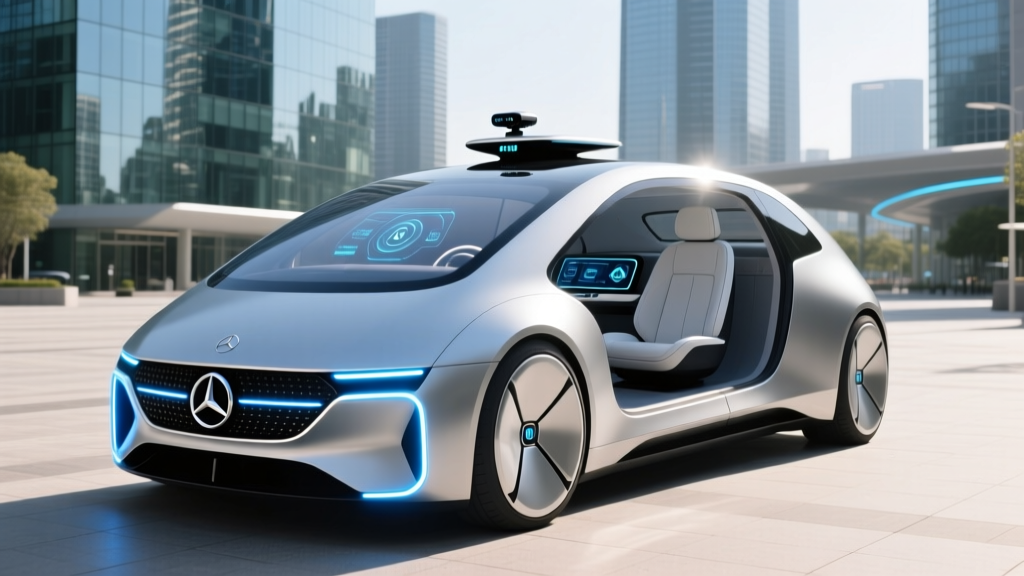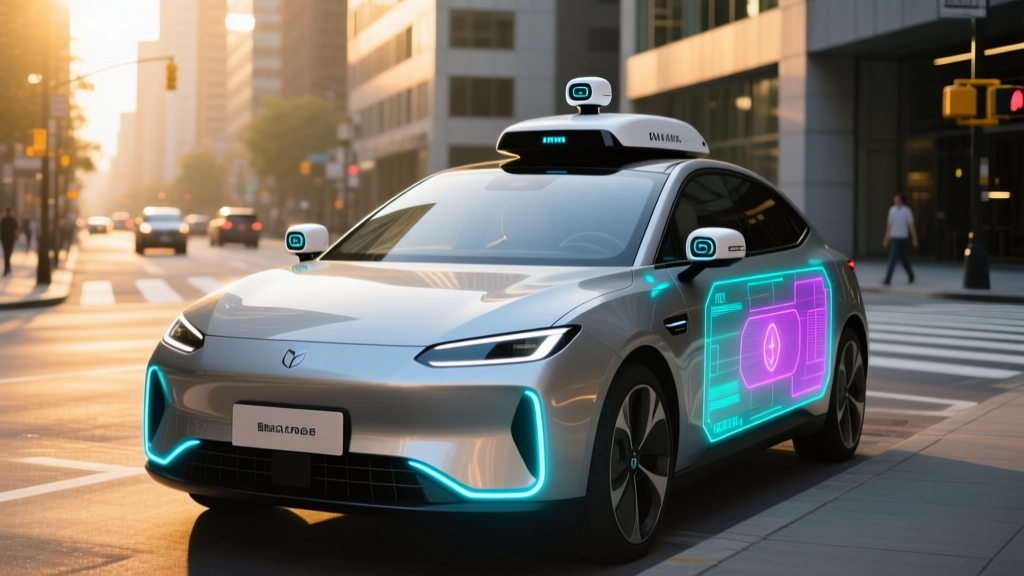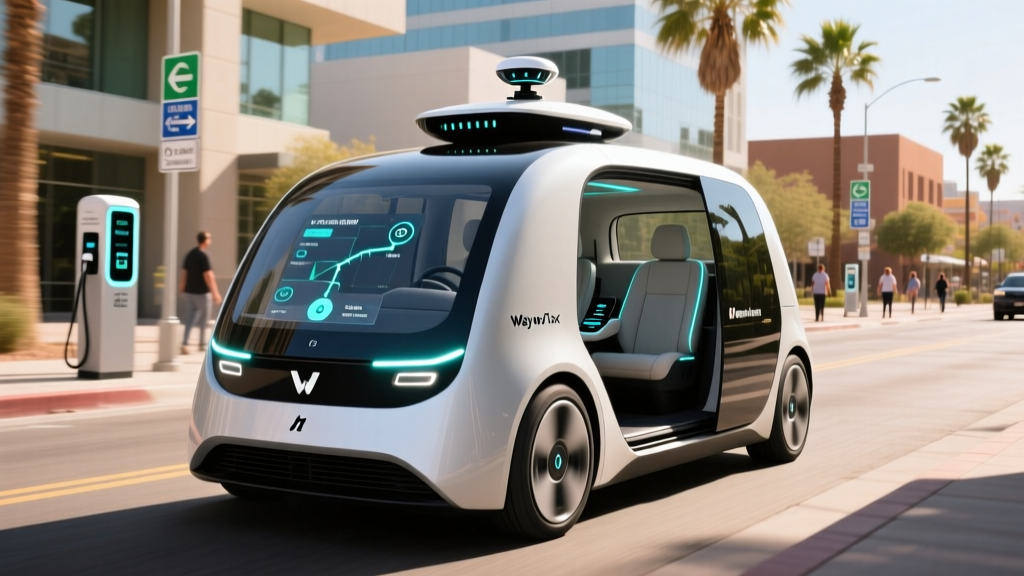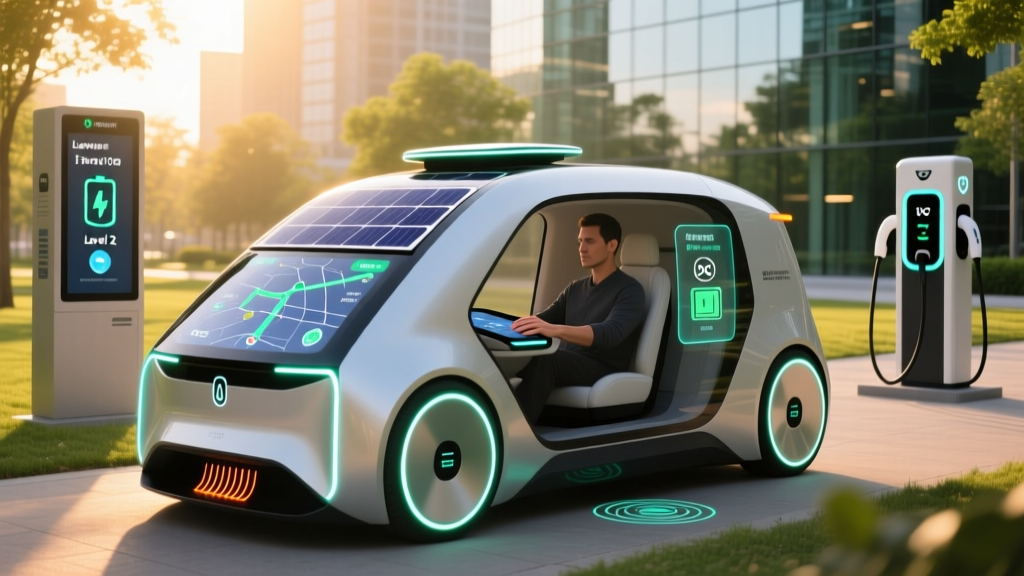
If you've been searching for an autonomous driving RV, you've probably encountered a wall of clickbait headlines and concept renders. The honest answer, as of 2026, is straightforward: no fully self-driving recreational vehicle is available for purchase or public use. Not from Winnebago, not from Tesla, not from any startup you've seen on YouTube.
What does exist is a rapidly maturing ecosystem of Level 4 robotaxi services operating in specific U.S. cities — and a set of Level 2 driver-assistance systems in modern motorhomes that require your constant attention. Conflating the two is dangerous and expensive. This guide separates what's real from what's vaporware, and explains what RVers can actually use today.
The SAE Autonomy Levels: Why Your RV Isn't Self-Driving
The Society of Automotive Engineers defines six levels of driving automation. Understanding these is non-negotiable before spending a dollar on any system marketed as "autonomous."
| Level | Name | Who Drives | Real-World Example |
|---|---|---|---|
| 0 | No Automation | Human 100% | Older motorhomes, no assist features |
| 1 | Driver Assistance | Human (system assists one task) | Adaptive cruise control OR lane keeping |
| 2 | Partial Automation | Human (must supervise constantly) | Tesla Autopilot, Ford BlueCruise, GM Super Cruise |
| 3 | Conditional Automation | System in narrow conditions; human on standby | Mercedes Drive Pilot (limited markets, <40 mph) |
| 4 | High Automation | System fully, within geofence | Waymo One, Zoox (no steering wheel) |
| 5 | Full Automation | System everywhere, all conditions | Does not exist commercially anywhere |
Every motorhome and towable RV sold in 2026 tops out at Level 2. That means adaptive cruise plus lane-centering working together, with you legally and physically responsible for the vehicle at every second. Take your hands off the wheel in a Winnebago e-RV or a Tesla-towed Airstream, and you're risking a 4,000–12,000 lb rig with no one in charge.
Where Robotaxis Actually Operate in 2026
Level 4 robotaxis are real, commercially available, and carrying paying passengers daily — but only inside tightly defined geofences in a handful of cities. You cannot summon one to an RV park in rural Montana.
| Service | Cities Live | Hours | Vehicle |
|---|---|---|---|
| Waymo One | Phoenix, San Francisco, Los Angeles, Austin | 24/7 in most zones | Jaguar I-PACE, Zeekr RT |
| Cruise | Phoenix (limited relaunch), select Houston zones | Limited hours | Chevrolet Bolt EV / Origin |
| Zoox | Las Vegas Strip corridor, Foster City (CA) testing | Limited public access | Zoox carriage (bidirectional, no wheel) |
| Motional (Hyundai/Aptiv) | Las Vegas (Uber/Lyft integration) | Select hours | Hyundai Ioniq 5 robotaxi |
Notice the pattern: dense urban cores in Sun Belt or coastal metros with mapped infrastructure, favorable weather, and cooperative regulators. RV travel — highways, national parks, rural two-lanes, mountain grades — is precisely the environment where Level 4 does not operate.
Pricing: Robotaxi vs Uber vs Owning Your RV
For urban travelers, robotaxis have reached pricing parity with conventional rideshare on many routes. Here's what a typical 5-mile trip costs in Phoenix as of early 2026:
| Service | Typical Fare | Surge Risk | Notes |
|---|---|---|---|
| Waymo One | $11–$16 | Low (no human driver supply) | Promotional credits common for new riders |
| UberX | $13–$22 | High during peak hours | Varies with driver availability |
| Lyft Standard | $12–$20 | Moderate | Often price-matched to Uber |
For RVers, the relevant comparison isn't robotaxi vs rideshare — it's the fantasy of a self-driving motorhome vs reality. A Class A diesel pusher running 600 miles at 7 MPG costs roughly $240 in fuel one-way (at $4.00/gal diesel). An "autonomous" version doesn't exist to offset that with driver-rest savings, and won't for years.
Safety Data: What the Numbers Actually Show
- Over 50 million fully driverless miles completed across operating cities.
- Fatal and serious-injury crash rates significantly below human-driver baselines in comparable urban environments, per peer-reviewed studies and NHTSA filings.
- Most reported contacts are low-speed and property-damage only; Waymo publishes quarterly safety transparency reports.
Cruise, by contrast, suspended nationwide operations in late 2023 after a pedestrian-dragging incident in San Francisco, and has only cautiously resumed limited service. That divergence matters: Level 4 safety is not uniform across operators. Each company's sensor suite, validation process, and geofence discipline produces different real-world outcomes.
For RV contexts — highway speeds, large vehicle mass, mixed rural traffic — there is zero published Level 4 safety data because no one has operated there commercially.
The Technology Stack: Why It Doesn't Fit an RV Yet
Level 4 robotaxis rely on a dense, expensive, power-hungry sensor and compute stack that simply hasn't been adapted for motorhome form factors or economics.
- LiDAR: Multiple spinning or solid-state units (roof, corners) providing centimeter-accurate 3D point clouds. Waymo's 5th-gen hardware tops the I-PACE roof; Zoox uses 6+ units.
- Cameras: 12–20+ high-dynamic-range imagers covering 360°, feeding neural perception networks.
- Radar: Long-range forward units plus short-range corner radars for redundancy in rain and fog.
- HD Mapping: Pre-scanned centimeter-accurate maps of every operating geofence, updated continuously.
- Compute: Custom AI accelerators drawing 500–1,500 watts — substantial parasitic load on any vehicle's electrical system.
- Connectivity: Dual-redundant cellular (often 5G) plus fallback links for remote assistance.
Tesla's camera-only FSD (Supervised) approach — no LiDAR, no radar on current models — remains a Level 2 system requiring driver supervision per Tesla's own documentation and NHTSA classification. It is not a robotaxi, despite marketing language.
Current Limitations That Block Any RV Application
Even in their home cities, Level 4 robotaxis face hard constraints. Transplant the scenario to an RV trip and every one becomes a trip-ending blocker:
- Geofencing: Vehicles refuse trips outside pre-mapped zones. Crossing a city limit or taking a detour to an RV resort ends the ride.
- Weather: Heavy rain, snow, fog, and dust degrade LiDAR and camera performance. Most services reduce or suspend operations during storms — precisely when RVers in mountain passes need help most.
- Construction and edge cases: Unmapped lane shifts, flaggers, emergency scenes, and unusual road furniture still require remote-human intervention or cautious pullovers.
- Vehicle size and dynamics: Current stacks are validated on passenger cars under ~5,000 lb GVWR. A 10,000+ lb Class A has radically different stopping distances, blind spots, and sway dynamics that no current system handles.
- Towing: No Level 4 system is validated with a trailer in tow. Period.
- Off-pavement: Gravel roads, forest service roads, RV park lanes — unmapped and out of scope.
The Regulatory Landscape
Deployment authority is split: NHTSA sets federal vehicle safety standards (FMVSS), while state DMVs and public-utility commissions approve commercial robotaxi operations. California's CPUC and DMV have been the most permissive frameworks; Arizona's approach is lighter-touch; several states still prohibit driverless commercial service entirely.
For a hypothetical autonomous RV, regulatory approval would require FMVSS compliance for a heavy vehicle class, state-by-state operating permits, and likely new federal rulemaking. NHTSA's automated-vehicle guidance currently focuses on passenger cars and light trucks — the RV use case isn't on the near-term docket.
What RVers Can Actually Use Today
If you're outfitting a motorhome in 2026, the realistic autonomy menu is:
- Level 2 driver-assist suites: Mercedes Sprinter-based Class B/C RVs with Distronic + Active Lane Keeping; Ford E-Transit cutaways with Co-Pilot360; Ram ProMaster with adaptive cruise. Hands on wheel, eyes on road, always.
- Advanced trailer-back assist: Ford's Pro Trailer Backup Assist and Ram's Trailer Reverse Steering Control — genuine quality-of-life tech, but not autonomy.
- Robotaxis at your destination: Park the RV and hail a Waymo inside Phoenix, SF, LA, or Austin for urban errands. That's the real near-term intersection of RV life and Level 4.
Frequently Asked Questions
Can I buy an autonomous driving RV in 2026?
No. No manufacturer sells a self-driving motorhome, travel trailer, or fifth wheel. The most advanced systems available in RVs are Level 2 driver-assist features that require your full attention.
Is Tesla FSD available in a motorhome?
Tesla does not sell a motorhome chassis. Some owners flat-tow vehicles behind motorhomes, but FSD (Supervised) is a Level 2 system even in Tesla's own cars — not a substitute for a driver, and not validated in towing configurations.
When will autonomous RVs be available?
No credible manufacturer has announced a production timeline. Level 4 is still geofenced to dense urban cores in passenger cars; extending it to heavy vehicles, highways, rural roads, and towing scenarios is a multi-phase engineering and regulatory effort with no public deadline.
Are robotaxis safer than human drivers?
Waymo's published data shows lower serious-crash rates than human baselines in its operating cities, but this doesn't generalize to all operators, all cities, or all conditions. Cruise's 2023 suspension is a reminder that safety performance varies company to company.
How much does a Waymo ride cost compared to Uber?
In Phoenix and San Francisco, Waymo One fares typically run $11–$16 for a 5-mile trip, roughly on par with or slightly below UberX during non-surge periods, with more predictable pricing since there's no human-driver supply constraint.
The autonomous driving RV is a compelling idea and a legitimate long-term engineering goal. In 2026, it remains exactly that — a goal. Plan your trips with the Level 2 assist features that exist, hail a robotaxi when you're in one of the four cities that supports it, and treat any vendor promising a self-driving motorhome with the skepticism that claim deserves.