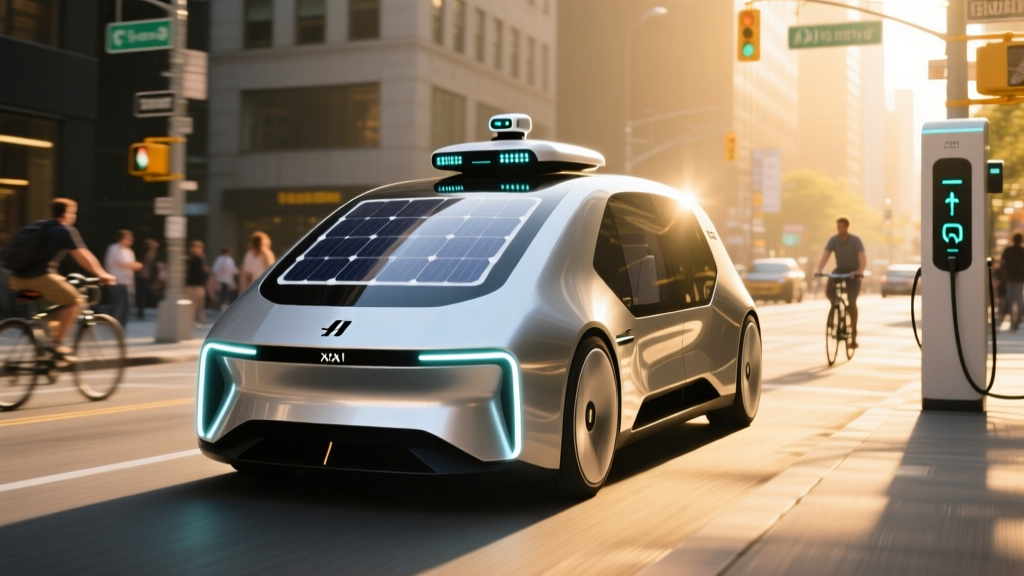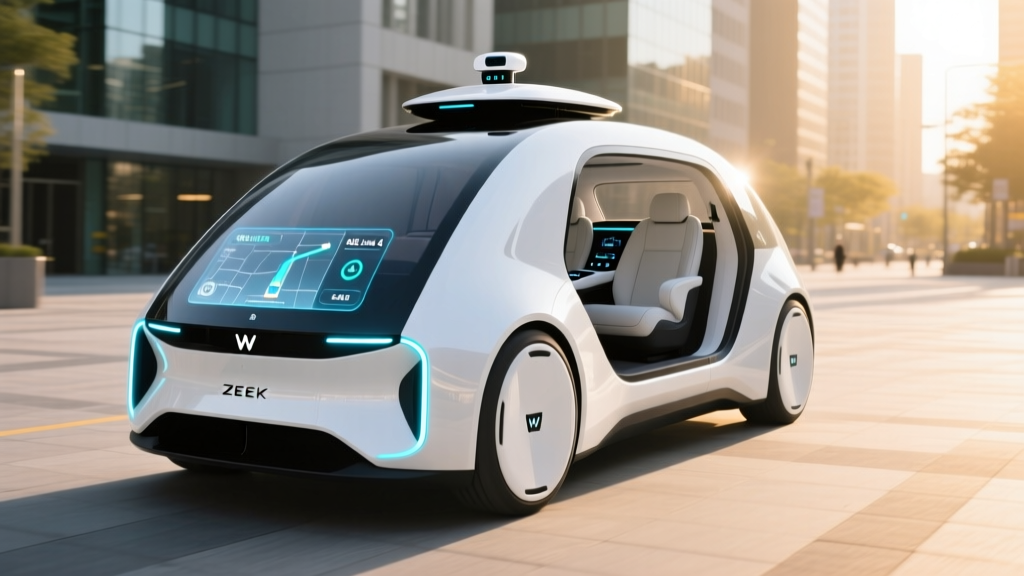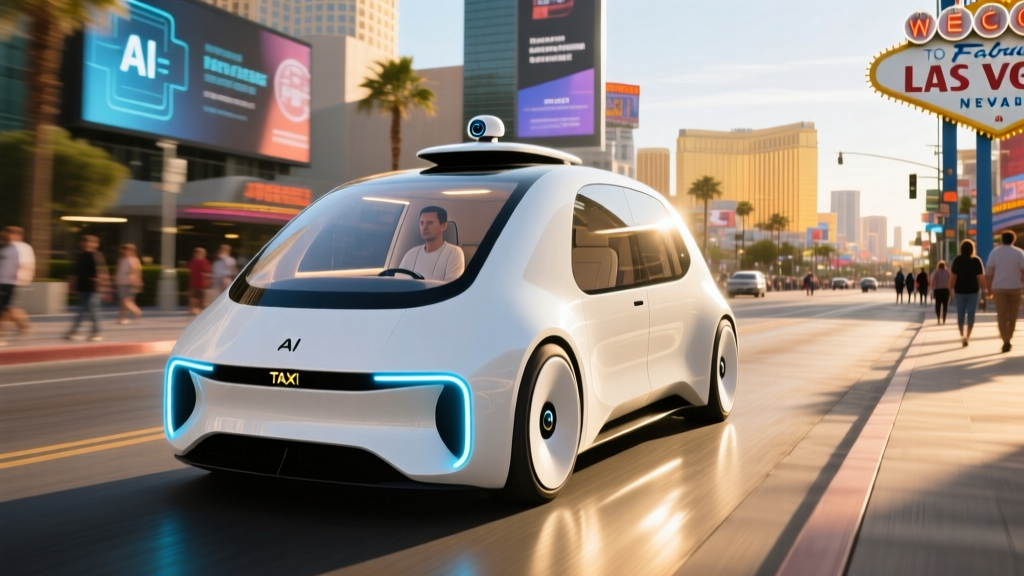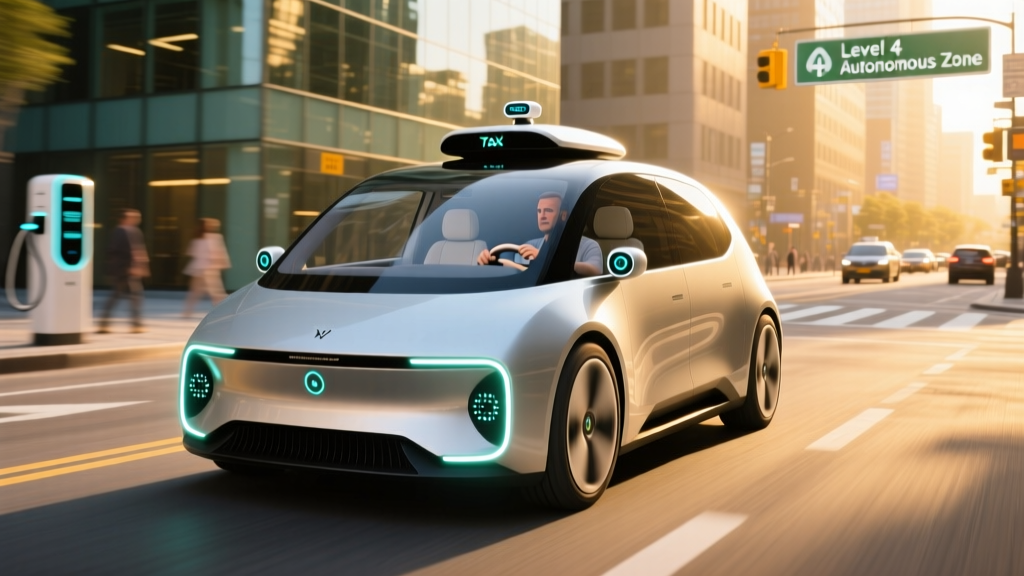
The phrase "self-driving" gets thrown around so casually that most car shoppers can't tell the difference between a Tesla on Autopilot and a Waymo robotaxi with no steering wheel. The distinction matters enormously — both legally and for your safety. The automotive industry uses the Sae autonomous driving level framework to classify exactly how much a vehicle can do on its own, and understanding these levels is the single most important thing you can do before trusting any automated system with your life.
This guide cuts through the marketing noise. We'll map every automation level to real vehicles you can buy or ride in today, examine robotaxi safety data with actual numbers, compare pricing against Uber and Lyft, and explain the technology stacks and regulatory frameworks that determine where these vehicles can operate.
The SAE Autonomous Driving Level Framework: Levels 0 Through 5
The Society of Automotive Engineers (SAE International) defines six levels of driving automation, from zero automation to full autonomy in all conditions. This framework — formally known as SAE J3016 — is the global standard used by regulators, manufacturers, and insurers.
| Level | Name | Who Drives? | Who Monitors? | Current Examples |
|---|---|---|---|---|
| 0 | No Automation | Human | Human | Any conventional car without ADAS |
| 1 | Driver Assistance | Human + system (one axis) | Human | Adaptive cruise control OR lane-keeping alone |
| 2 | Partial Automation | Human + system (steering AND speed) | Human (must supervise constantly) | Tesla Autopilot, GM Super Cruise, Ford BlueCruise, Toyota Safety Sense |
| 3 | Conditional Automation | System (in specific conditions) | System, but human must take over on request | Mercedes DRIVE PILOT (limited markets, low speed) |
| 4 | High Automation | System (within geofence/conditions) | System (no human needed within ODD) | Waymo One, Zoox, Cruise (pre-suspension) |
| 5 | Full Automation | System (all conditions, everywhere) | System | Does not exist commercially |
Level 2 vs. Level 4: Why Consumer "Self-Driving" Isn't
The most dangerous confusion in the EV space is conflating Level 2 driver-assist systems with Level 4 robotaxi autonomy. Here's the concrete difference:
Level 2 (what you can buy): Tesla's FSD (Supervised), GM's Super Cruise, Ford's BlueCruise, and similar systems can steer, accelerate, and brake on mapped highways. However, the human driver must remain attentive, hands on or near the wheel (or eyes on the road for camera-monitored systems), and ready to intervene within seconds. The NHTSA has investigated numerous crashes involving Level 2 systems where drivers were inattentive. You are the driver. The car is assisting.
Level 4 (what you can ride in): Waymo's fifth-generation and sixth-generation vehicles operating in Phoenix, San Francisco, Los Angeles, and Austin have no human driver. The system handles all driving tasks within its Operational Design Domain (ODD) — a defined geographic area, speed range, and weather condition set. If the system encounters a scenario it cannot handle, it performs a minimal risk maneuver (pulling over safely) rather than handing control to a passenger. These vehicles carry redundant sensor suites, compute platforms, and communication systems.
- Systems can fail to detect stopped emergency vehicles, construction zones, and irregular obstacles
- Phantom braking (unexpected deceleration) remains documented across multiple manufacturers
- Lane-keeping can degrade in faded markings, rain, or direct low-angle sunlight
- Driver monitoring systems can sometimes be defeated — but doing so voids your liability protection
- You are legally and financially responsible for every mile driven on Level 2 assist
Where Robotaxi Services Operate Right Now (2026)
Level 4 robotaxi services are live and carrying paying passengers in a growing but still limited set of cities. Availability changes frequently as companies expand, pause, or restructure operations.
| Service | Operator | Cities (Fully Driverless) | Hours | Vehicle Platform |
|---|---|---|---|---|
| Waymo One | Waymo (Alphabet) | Phoenix metro, San Francisco, Los Angeles, Austin | 24/7 in most markets | Jaguar I-PACE (Gen 5), Hyundai Ioniq 5 (Gen 6 rollout) |
| Zoox | Zoox (Amazon) | Las Vegas (limited), Foster City, CA (testing/expansion) | Limited hours | Zoox purpose-built vehicle (no steering wheel) |
| Baidu Apollo Go | Baidu | Wuhan, Beijing, Chongqing, Shenzhen (China) | Extended hours | Various, including RT6 purpose-built |
Where can I use this robotaxi service right now? If you're in the Phoenix metro area (Tempe, Scottsdale, Chandler, Mesa), San Francisco, Los Angeles, or Austin, you can download the Waymo One app, request a ride, and be picked up by a vehicle with no one in the driver's seat. Wait times typically run 3–8 minutes in core service areas. Outside these geofenced zones, the service simply isn't available — you cannot summon a Waymo to an address beyond the mapped boundary.
Cruise, GM's robotaxi division, suspended all driverless operations in late 2023 following a serious incident in San Francisco. As of early 2026, Cruise has been conducting limited supervised testing but has not resumed commercial driverless service. This illustrates a key reality: Level 4 operations can be paused by regulators or the companies themselves when safety concerns arise.
Robotaxi Pricing: How Does It Compare to Uber and Lyft?
The economics of robotaxis are still evolving. Without a human driver to pay, operators theoretically have a massive cost advantage — but the capital expense of sensor-laden vehicles, remote-assistance teams, and mapping infrastructure keeps prices competitive rather than dirt-cheap.
| Scenario | Waymo One | UberX | Lyft Standard |
|---|---|---|---|
| Short trip (3 miles, non-peak) | $8–$12 | $9–$14 | $8–$13 |
| Medium trip (8 miles, non-peak) | $15–$22 | $16–$25 | $15–$24 |
| Airport run (15 miles, off-peak) | $28–$38 | $30–$45 | $28–$42 |
| Surge pricing (peak demand) | Moderate increase | 1.5x–3.0x surge | 1.5x–2.5x Prime Time |
How much does it cost vs Uber/Lyft? In most scenarios, Waymo pricing is comparable to or slightly below standard UberX and Lyft fares — and critically, Waymo does not surge as aggressively during peak demand. A Friday-night airport run that might surge to $65 on UberX could be $35 on Waymo. However, Waymo doesn't offer shared/pool options or budget tiers, so for price-sensitive riders willing to share, Uber Pool or Lyft Shared can still be cheaper.
Waymo also offers promotional credits for new riders and loyalty programs in some markets. Tipping is not expected (there's no driver to tip), though the app allows you to add a gratuity that goes to the operations team.
Robotaxi Safety Record: What the Data Actually Shows
How safe are robotaxis? This is the question that matters most, and it requires looking at reported data rather than anecdotes. Level 4 operators are required to report disengagements, collisions, and incidents to state regulators (notably the California DMV and CPUC) and to the NHTSA under Standing General Order 2021-01.
- Total autonomous miles driven: Over 50 million fully driverless miles across all markets
- Contact rate: Waymo's internal analysis (peer-reviewed methodology) showed a 85% reduction in injury-causing crash involvement compared to human benchmarks in the same operating areas
- Reported collisions: The majority of police-reported collisions involving Waymo vehicles were caused by other human drivers (rear-endings, red-light runners) — consistent with human-driven fleet patterns
- Critical incidents: A small number of incidents involving contact with pedestrians or cyclists have been reported; the most scrutinized was the October 2023 Cruise incident in San Francisco (not Waymo), which led to Cruise's operational suspension
Sources: NHTSA Standing General Order reports, California DMV autonomous vehicle disengagement reports, Waymo safety publications.
The data picture is nuanced. Robotaxis appear to have lower crash rates per million miles than human drivers in their operating areas, but they operate under constrained conditions (mapped roads, moderate speeds, favorable weather in most markets). They also exhibit different failure modes than humans — occasional erratic stops, confusion at complex multi-lane intersections, and difficulty with informal communication (eye contact, hand waves) that human drivers use to negotiate ambiguous situations.
The Cruise suspension of late 2023 is an important data point: a pedestrian was struck by a human-driven vehicle and thrown into the path of a Cruise robotaxi, which then dragged the pedestrian while attempting to pull over. The incident revealed gaps in post-collision behavior and reporting transparency. It demonstrates that Level 4 autonomy, while statistically safe in routine conditions, still faces edge-case challenges that can have serious consequences.
Under the Hood: Robotaxi Technology Stacks Explained
The hardware and software that enable Level 4 autonomy represent a fundamentally different approach than the camera-centric systems in consumer vehicles.
- LiDAR: Multiple spinning or solid-state units providing 360° 3D point clouds at 10–20 Hz; effective range 200–300+ meters. LiDAR is the core differentiator from camera-only approaches — it provides direct depth measurement independent of lighting conditions.
- Cameras: 8–12+ high-resolution cameras covering 360° overlap, used for object classification, traffic-light state detection, and sign reading.
- Radar: Multiple units for velocity detection of moving objects, redundancy in rain/fog where LiDAR performance degrades.
- IMU/GPS/HD Maps: Inertial measurement units combined with RTK-GPS and centimeter-accuracy pre-mapped routes. The vehicle knows its position within inches before a single sensor reading is processed.
- Compute: Custom AI inference hardware (often 500+ TOPS) running perception, prediction, and planning models simultaneously with redundant failover.
LiDAR vs. camera-only: This is the central technology debate. Tesla famously pursues a camera-only ("Tesla Vision") approach for its Level 2 FSD system, arguing that humans drive with eyes (cameras) and a neural net (brain), so machines should too. Waymo, Zoox, Baidu, and virtually every other Level 4 operator use LiDAR as a primary sensor, arguing that redundancy and direct depth measurement are essential when no human is available as a fallback. As of 2026, no camera-only system has achieved Level 4 commercial deployment.
Geofencing: Level 4 robotaxis operate within a pre-mapped Operational Design Domain. Every lane, curb, signal, and crosswalk is cataloged in HD maps updated regularly. When the vehicle approaches the geofence boundary, it simply will not proceed — it will reroute or end the trip. This is both a strength (the system knows the territory intimately) and a limitation (scaling requires mapping every new neighborhood at high fidelity).
The Regulatory Landscape: Who Approves Robotaxi Operations?
Autonomous vehicle regulation in the United States is a patchwork of federal, state, and local authority — and understanding who controls what explains why robotaxis are available in some cities but not others.
Federal (NHTSA): The National Highway Traffic Safety Administration sets vehicle safety standards (FMVSS) and investigates crashes. NHTSA does not currently "approve" autonomous driving systems the way the FAA certifies aircraft. Instead, it issues Standing General Orders requiring crash reporting, conducts defect investigations, and can order recalls. The NHTSA AV safety portal tracks these actions.
State level: States control whether driverless testing and commercial deployment are legal on public roads. Key states include:
- California: The DMV issues testing permits; the CPUC issues commercial deployment permits. Both require extensive reporting. California has the most detailed public data on AV operations.
- Arizona: Among the most permissive regulatory environments. Waymo launched commercially in Phoenix with relatively light-touch state oversight.
- Texas: Allows AV operations with a state permit; Austin has become a major Waymo market.
- Nevada: Permits testing and limited operations; Las Vegas hosts Zoox activity.
Local/municipal: Cities often negotiate directly with operators on service areas, curb management, and emergency-response protocols. San Francisco's Board of Supervisors and the SFMTA have been vocal participants in shaping robotaxi deployment terms, including speed restrictions and zone limitations.
The absence of a comprehensive federal AV framework means that expansion into new states requires navigating each jurisdiction individually — a significant brake on how quickly these services scale.
Current Limitations: Where Robotaxis Still Fall Short
What are the current limitations? Level 4 robotaxis are impressive within their operating envelope, but that envelope has hard boundaries that riders encounter regularly.
- Geofencing: You cannot take a Waymo from San Francisco to Sacramento. Service ends at the mapped boundary. Trips that cross the geofence edge will be declined or rerouted.
- Weather: Heavy rain, fog, snow, and ice degrade LiDAR and camera performance. Most services reduce operations or suspend entirely in severe weather. Phoenix's dry climate is not a coincidence — it's an ideal testing environment.
- Construction zones: While improving, robotaxis can struggle with temporary lane shifts, flaggers, and unmarked detours that deviate from their HD maps. Expect longer routes or trip cancellations in active construction areas.
- Pickup/dropoff precision: The vehicle may stop on the nearest legal curb rather than at a specific building entrance. In dense urban areas with bus lanes, loading zones, and bike lanes, finding a legal stop can add walking distance.
- No informal negotiation: Human drivers use eye contact, hand gestures, and social cues to navigate four-way stops, merge-zip situations, and parking-lot interactions. Robotaxis follow deterministic rules, which can result in overly cautious behavior (extended stops, yielding when a human would proceed).
- Accessibility: Current Waymo vehicles (Jaguar I-PACE) require passengers to enter a standard vehicle. Wheelchair-accessible robotaxis remain in development. Zoox's purpose-built vehicle aims to address this but is not yet in wide deployment.
- No highway driving (most markets): Most current robotaxi services operate on surface streets. Highway-speed Level 4 operations are technically feasible but add enormous complexity and risk. Waymo has begun limited highway segments in some markets, but the majority of rides are local.
- Passenger behavior: Spills, vandalism, medical emergencies, and unruly passengers present challenges without a driver present. Vehicles include cabin monitoring cameras and remote-assistance communication, but resolution can take time.
Is This Truly Self-Driving? The Honest Answer
Is this truly self-driving or driver-assist? The answer depends entirely on which vehicle and which system you're discussing.
If you're sitting in the back of a Waymo in Phoenix with an empty driver's seat, watching the steering wheel turn on its own through residential streets and signalized intersections — yes, that is genuine Level 4 self-driving within its geofenced domain. No human is driving. No human is monitoring. The system is fully responsible.
If you're sitting behind the wheel of a Tesla with FSD (Supervised) engaged on the 405, navigating interchanges and lane changes — no, that is not self-driving. That is Level 2 driver-assist. You are the driver. You must remain attentive. If something goes wrong and you were not supervising, you bear legal and financial responsibility. Tesla's own owner's manual states this explicitly, and the "(Supervised)" designation Tesla added to FSD's name reflects this reality.
The gap between Level 2 and Level 4 is not a small software update. It's a fundamental engineering, regulatory, and liability chasm. Level 4 requires redundant sensors, redundant compute, HD mapping, remote-assistance infrastructure, regulatory approval in each jurisdiction, and insurance frameworks that account for machine liability rather than driver liability. That's why Level 4 exists as a ride-hail service in four U.S. cities, while Level 2 exists in millions of driveways.
Frequently Asked Questions
Can I buy a Level 4 self-driving car for personal use?
No. As of 2026, no automaker sells a Level 4 vehicle to consumers. Level 4 systems are operated as fleet services (Waymo, Zoox) because they require continuous HD map updates, remote-assistance teams, fleet maintenance protocols, and regulatory permits tied to specific operators and geographies. The closest consumer product is Mercedes-Benz's DRIVE PILOT, which is certified Level 3 in very limited conditions (specific highways, under 40 mph, good weather, in Germany and select U.S. states), but even this system requires the driver to be available to resume control.
How does a robotaxi handle an emergency or system failure?
Level 4 vehicles are designed with redundant systems — dual compute platforms, backup power, redundant braking and steering actuators. If a primary system fails, the backup takes over. If the vehicle encounters a scenario it cannot resolve (unmapped construction, sensor obstruction), it performs a "minimal risk maneuver" — typically activating hazards and pulling to the nearest safe stop. A remote-assistance operator can then assess the situation and either guide the vehicle or dispatch roadside support.
Are robotaxis available in my city?
As of early 2026, fully driverless commercial robotaxi service in the U.S. is available in Phoenix (metro), San Francisco, Los Angeles, Austin, and limited areas of Las Vegas. If you're outside these markets, you may see autonomous test vehicles with safety drivers, but you cannot hail a driverless ride. Expansion timelines depend on regulatory approval in each new jurisdiction and the operator's mapping and validation process.
What happens if a robotaxi gets into a crash?
The operator (Waymo, Zoox, etc.) carries liability insurance for its fleet. In a collision, the vehicle's sensors record comprehensive data that is reported to NHTSA under Standing General Order requirements and to state regulators. Fault determination follows standard traffic-law principles, but with the operator — not a human driver — as the responsible party for the vehicle's actions. This is a fundamental shift from Level 2, where the human driver retains liability.
Will Level 5 (full autonomy everywhere) ever exist?
Level 5 — a vehicle that can drive itself in every condition, on every road, with no geographic or weather limitations — remains a theoretical goal with no credible timeline. The edge cases (unmapped rural roads, blizzards, informal construction, unusual road users) are extraordinarily difficult. Most industry experts and operators have shifted focus from pursuing Level 5 to expanding Level 4 domains incrementally. Anyone promising Level 5 within a specific year is selling something.
The autonomous driving level framework isn't just academic — it's the lens through which you should evaluate every claim, every feature, and every vehicle in the electrified auto space. A $12 Waymo ride across Scottsdale and a $70,000 Tesla with FSD are operating at fundamentally different levels of automation with fundamentally different liability structures. Know the level before you trust the system.