What Is an Autonomous Cart — and How Does It Differ from a Robotaxi?
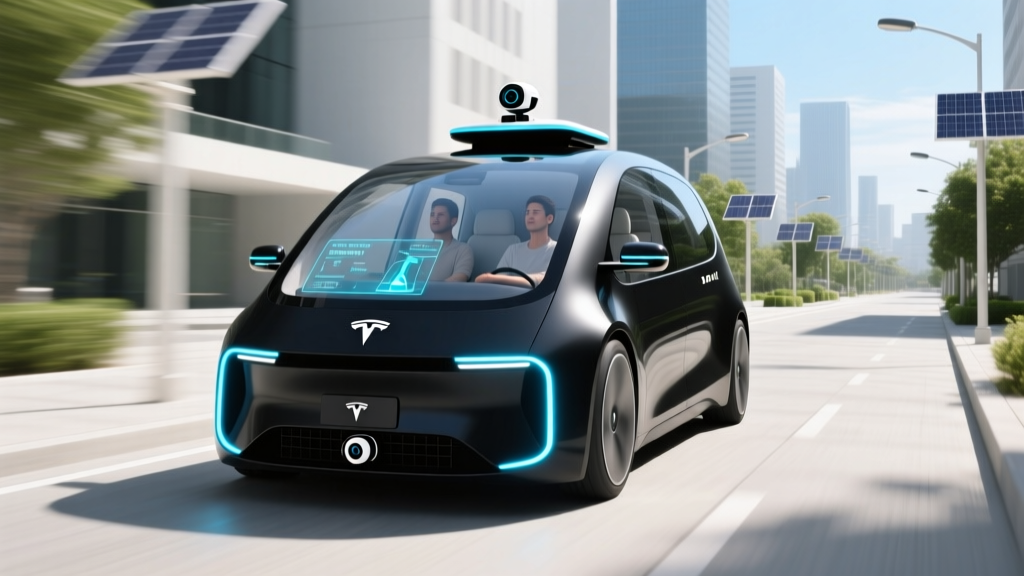
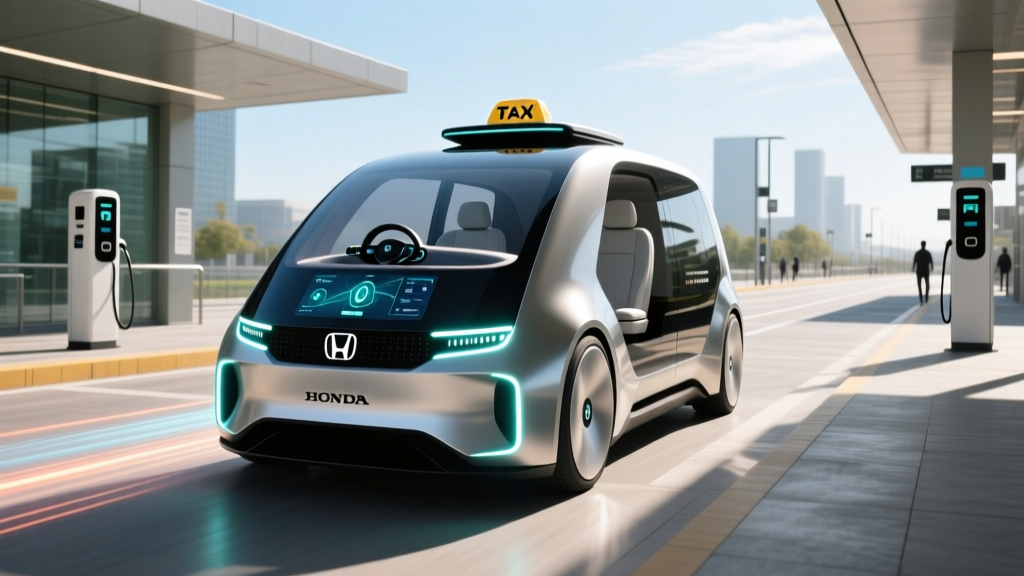
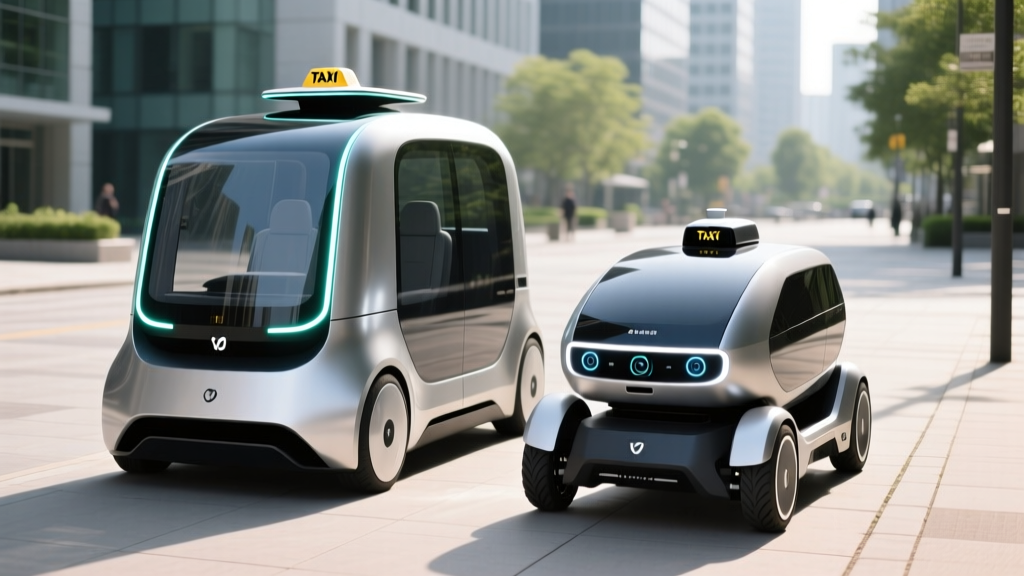
The term autonomous cart has emerged as a catch-all for a growing category of low-speed, driverless electric vehicles designed for short-distance trips on campuses, planned communities, retirement villages, and geofenced urban districts. Unlike full-size Level 4 robotaxis from Waymo or Zoox — which navigate complex city traffic at highway-adjacent speeds — autonomous carts typically operate at 15–25 mph on predefined routes with minimal interaction with heavy traffic.
Think of them as the golf-cart-sized cousin of the robotaxi: smaller battery packs (usually 8–20 kWh), simpler sensor suites, and tightly constrained operational design domains (ODDs). Companies like Gatik (short-haul logistics), Beep, and Navya (now part of EasyMile) have deployed variants of these vehicles across the U.S., while consumer-facing services like the NHTSA-monitored neighborhood shuttles continue to expand in controlled environments.
Most autonomous carts deployed in 2026 operate at SAE Level 4 — meaning they are fully driverless within their specific geofenced ODD (a campus loop, a resort, a retirement community). No human driver is present, and no remote teleoperator is actively steering in real time under normal conditions. This is fundamentally different from Level 2 systems like Tesla Autopilot or GM Super Cruise, which require an attentive human driver at all times. A Level 4 cart handles all driving tasks within its narrow domain; if it encounters a situation it cannot resolve, it performs a minimal-risk maneuver (typically a controlled stop) rather than handing off to a human.
Where Can You Ride an Autonomous Cart Right Now?
Unlike Waymo's robotaxi service — available to the general public in Phoenix, San Francisco, Los Angeles, and Austin — autonomous cart services are mostly deployed in semi-private or institutional settings. Here is the current operational landscape as of early 2026:
| Service / Operator | Vehicle Type | Location(s) | Access | Speed / Range |
|---|---|---|---|---|
| Beep Autonomous Shuttle | Low-speed EV shuttle (8–12 passengers) | Selected retirement communities (FL, TX), university campuses (MI, NC) | Resident / student / visitor | 15–20 mph / ~50 mi range |
| EasyMile (ex-Navya) Shuttle | Low-speed EV shuttle (6–12 passengers) | Military bases, corporate campuses, select transit-first-mile routes (MN, CA) | Employee / authorized | 15–25 mph / ~40 mi range |
| Gatik Autonomous Box Truck | Class 3–6 electric box truck (freight) | Dallas–Fort Worth, Toronto, select Walmart/KB Home routes | B2B logistics only | 45–65 mph / 150+ mi range |
| Waymo Via (delivery cart variant) | Compact delivery pod | Phoenix metro (limited pilot) | Partner delivery (UPS, DoorDash) | 25–35 mph / ~80 mi range |
| Zoox Purpose-Built Vehicle | Full-size Level 4 robotaxi | Las Vegas, San Francisco (limited public pilot) | Invite-only public beta | Up to 75 mph / ~100 mi range |
The key takeaway: if you are looking to hail an autonomous cart with your phone the way you would a Waymo robotaxi, your options in 2026 remain extremely limited. Most autonomous cart deployments are institutional — you ride one because you live in a specific community, work at a specific campus, or visit a specific resort, not because you opened an app in any city.
How Much Does an Autonomous Cart Ride Cost vs. Uber or Lyft?
Pricing for autonomous cart services is rarely consumer-facing because most deployments are subsidized by the institution that operates them (a university, a homeowners' association, a corporate campus). Where pricing does exist, here is how it compares:
| Service | Typical Cost per Ride | Cost per Mile | Who Pays |
|---|---|---|---|
| Beep / EasyMile campus shuttle | Free (included in HOA/tuition) | $0.00 to rider | Institution subsidizes ($150K–$300K/yr per vehicle) |
| Waymo robotaxi (Phoenix/SF) | $8–$18 per ride (1–5 mi) | $1.50–$2.50/mi | Rider pays (comparable to UberX) |
| UberX (national average) | $10–$22 per ride (1–5 mi) | $1.80–$3.00/mi | Rider pays |
| Lyft Standard (national average) | $9–$20 per ride (1–5 mi) | $1.70–$2.80/mi | Rider pays |
For the institutional shuttle model, the economics work differently. Operators typically pay $150,000–$300,000 annually per vehicle including hardware lease, software licensing, fleet monitoring, and maintenance. For a 200-unit retirement community running two shuttles, that translates to roughly $1,250–$2,500 per household per year — often bundled into HOA fees. Compare that to each household's annual rideshare spend for short local trips, and the math can pencil out for communities with high short-trip demand.
How Safe Are Autonomous Carts? The Real Data
- Waymo (full-size robotaxi, Level 4): Over 50 million driverless miles completed as of late 2025. Per NHTSA Standing General Order data and Waymo's published safety reports, the fleet's at-fault crash rate is approximately 57% lower than human benchmarks for comparable urban driving, and injury-causing crash rates are roughly 76% lower (source: Waymo Safety Report, 2025).
- Low-speed autonomous shuttles (Beep, EasyMile): Across reported deployments, these vehicles have accumulated millions of miles at 15–25 mph with very few reported collisions. Their constrained ODDs (dedicated lanes, campus roads, low-speed environments) inherently reduce crash severity. NHTSA's automated vehicle safety portal tracks incident reports from all Level 4 operators.
- Gatik (middle-mile freight): Over 5 million autonomous miles on fixed B2B routes in Texas, with zero reported at-fatal incidents as of early 2026.
The low-speed nature of autonomous carts is a major safety advantage: kinetic energy scales with the square of velocity, so a collision at 20 mph carries roughly one-quarter the energy of one at 40 mph.
That said, the data pool for autonomous carts specifically is far smaller than for full-size robotaxis. Most shuttle deployments have logged hundreds of thousands of miles, not tens of millions. Statistical significance is still developing, and the controlled environments these carts operate in make direct comparison to human-driven urban traffic misleading. They are safer in part because the driving environment is simpler.
Under the Hood: Autonomous Cart Technology Stack
Most autonomous carts in 2026 use a multi-sensor fusion approach, distinct from Tesla's camera-only FSD (which remains a Level 2 driver-assist system):
- LiDAR: Typically 2–4 solid-state or spinning units (Ouster, Hesai, or Innoviz) providing a 360° point cloud out to 100–200 meters. LiDAR is near-universal on Level 4 carts because the vehicles operate without a human fallback driver.
- Cameras: 6–12 high-dynamic-range cameras for lane detection, traffic-sign recognition, and object classification.
- Radar: 2–4 short- and mid-range radar units for velocity detection and adverse-weather redundancy.
- GNSS + IMU: Centimeter-accurate positioning via RTK-corrected GPS combined with inertial measurement units for dead-reckoning in GPS-denied areas (parking garages, tree canopy).
- HD Maps: Pre-built centimeter-accurate maps of the geofenced route, updated periodically. This is a key difference from camera-only approaches that attempt to drive anywhere.
- Compute: NVIDIA DRIVE Orin or Qualcomm Snapdragon Ride platforms, typically 200–500 TOPS of AI inference throughput.
The battery packs in autonomous carts are modest: 8–20 kWh lithium iron phosphate (LFP) is common, chosen for its thermal stability and long cycle life over the higher energy density of NMC. At 15–25 mph with frequent stops, energy consumption runs 0.2–0.5 kWh/mile, giving practical ranges of 30–80 miles before recharging. Most shuttle operators use overnight Level 2 charging (7–19 kW) and opportunity-charge during midday layovers.
Regulatory Landscape: Who Approves Autonomous Cart Operations?
Autonomous cart regulation in the U.S. is a patchwork of federal, state, and local authority:
- Federal (NHTSA): Under the Standing General Order (updated 2024–2025), all Level 4 operators must report crashes involving their vehicles within 24 hours. NHTSA also issues exemptions from certain Federal Motor Vehicle Safety Standards (FMVSS) for vehicles without steering wheels or pedals — Zoox and the Waymo/Zoox-style pods have received limited exemptions. Low-speed vehicles (LSVs) under FMVSS 500 have a separate, simpler certification path if top speed is 20–25 mph.
- State: California (DMV + CPUC), Arizona, Texas, Florida, and Nevada have the most permissive frameworks for driverless testing and deployment. States like New York and Massachusetts maintain stricter requirements (safety driver mandates, additional insurance).
- Local: Many autonomous cart deployments on private property (corporate campuses, HOAs, military bases) fall outside public-road regulation entirely, governed instead by the property owner's risk management and insurance requirements.
The regulatory environment for low-speed autonomous carts is notably simpler than for full-size robotaxis operating on public roads at 35–65 mph. This is a key reason the autonomous cart segment has deployed more widely in controlled environments even as robotaxi expansion faces regulatory friction in some cities.
Current Limitations: What Autonomous Carts Cannot Do
- Geofencing: Autonomous carts cannot leave their pre-mapped route. If a road closure or construction forces a detour outside the HD map boundary, the vehicle will stop and request remote assistance or wait.
- Weather: Heavy rain, snow, and fog degrade LiDAR and camera performance. Most low-speed shuttles suspend operation in moderate-to-heavy precipitation. This is a significant limitation in northern U.S. climates during winter months.
- Speed: Limited to 15–25 mph (some up to 35 mph in designated zones). Not suitable for arterial roads, highways, or any route requiring higher-speed merging.
- Edge cases: Unusual road configurations, emergency vehicles, unmapped construction zones, and erratic pedestrian behavior can trigger conservative stops. Remote teleoperators may need to approve a path or authorize a maneuver, adding 30–90 seconds of delay.
- Capacity: Most autonomous carts carry 4–12 passengers. They are not a replacement for personal vehicles or full-size rideshare for group transport or long-distance trips.
- No door-to-door on-demand: Most deployments operate on fixed loops or designated stops. You cannot hail an autonomous cart to an arbitrary address the way you can a Waymo or Uber.
These limitations are not failures of the technology — they are deliberate design constraints. Level 4 autonomy is achievable in narrow, well-defined domains long before it is achievable everywhere. The autonomous cart is a proof point that self-driving works when the problem space is tightly bounded.
Autonomous Cart vs. Full-Size Robotaxi: Which Matters to You?
The distinction matters depending on your use case:
| Factor | Autonomous Cart (Low-Speed Shuttle) | Full-Size Robotaxi (Waymo / Zoox) |
|---|---|---|
| SAE Level | Level 4 (within ODD) | Level 4 (within ODD) |
| Speed | 15–25 mph | Up to 65–75 mph |
| Terrain | Campus loops, HOA roads, dedicated lanes | Public city streets, some highways |
| Access | Residents, employees, students, visitors | General public (in service cities) |
| Cost to rider | Usually free (institutionally subsidized) | $8–$18 per ride |
| Battery | 8–20 kWh (LFP typical) | 60–100 kWh (NMC typical) |
| Weather tolerance | Low — suspends in rain/snow | Moderate — operates in light rain |
| Availability | Dozens of deployments, mostly private | 4–5 U.S. cities, public access |
Frequently Asked Questions
Is an autonomous cart truly self-driving or just driver-assist?
Autonomous carts deployed in 2026 are SAE Level 4 — fully driverless within their geofenced operational domain. There is no human driver on board, and no steering wheel or pedals in most models. This is categorically different from Level 2 driver-assist systems like Tesla Autopilot or Ford BlueCruise, which require continuous human supervision. If an autonomous cart encounters a scenario it cannot handle, it performs a controlled stop — it does not hand control to a human occupant.
Where can I ride an autonomous cart today?
Your best access is through institutional deployments: retirement communities in Florida and Texas (Beep shuttles), university campuses in Michigan and North Carolina (EasyMile/Beep), and select military bases. Public on-demand autonomous cart hailing — the equivalent of calling an Uber but getting a driverless pod — is not broadly available in 2026 outside limited pilots.
How much does an autonomous cart ride cost compared to Uber or Lyft?
For the rider, most autonomous cart rides are free because the operating institution (HOA, university, employer) subsidizes the service. The operator pays roughly $150K–$300K annually per vehicle. Where consumer pricing exists (Waymo robotaxi as a comparison point), rides cost $8–$18 for 1–5 mile trips, roughly on par with UberX at $10–$22.
How safe are autonomous carts compared to human drivers?
Low-speed autonomous carts operate in constrained environments at 15–25 mph, which inherently limits crash severity. Waymo's full-size Level 4 fleet — a larger data set — shows at-fault crash rates 57% below human benchmarks and injury-causing crashes 76% below human benchmarks across 50+ million driverless miles. Autonomous cart-specific data is smaller in volume but has not shown adverse safety trends in reported deployments.
What battery chemistry do autonomous carts use?
Most autonomous carts use LFP (lithium iron phosphate) battery packs in the 8–20 kWh range. LFP is chosen for its superior thermal stability (lower fire risk), longer cycle life (3,000–5,000 cycles vs. 1,000–2,000 for NMC), and lower cost — all priorities for fleet vehicles that charge daily. The trade-off is lower energy density, but at 15–25 mph, range requirements are modest.
Will autonomous carts replace personal cars?
No — at least not in their current form. Autonomous carts are a first-mile/last-mile and short-trip solution for specific environments. They complement personal vehicles and rideshare rather than replacing them. A resident in a retirement community might use an autonomous cart to reach the clubhouse or pharmacy but still rely on a personal car or robotaxi for a 20-mile trip to a medical appointment.