The promise of autonomous cars and safety improvements has driven billions of dollars in investment over the past decade. The pitch is straightforward: remove human error — fatigue, distraction, impairment — and you eliminate the cause of roughly 94% of traffic fatalities. But as fully driverless robotaxi services expand across U.S. cities in 2026, the question has shifted from "can they drive?" to "how safely, where, and under what conditions?"
This guide cuts through the marketing to examine real-world safety data, operational realities, and the current limits of Level 4 autonomous vehicles. We focus on services you can actually hail today — not concepts, not pilot programs, and not Level 2 driver-assist systems that still require your full attention behind the wheel.
SAE Automation Levels: What "Self-Driving" Actually Means
The most common source of confusion in the autonomous vehicle space is the difference between systems that assist a driver and systems that replace one entirely. The SAE International J3016 standard defines six levels of driving automation, and understanding them is essential before evaluating any safety claim.
| Level | Name | Who Drives | Current Examples |
|---|---|---|---|
| 0 | No Automation | Human does everything | Legacy vehicles |
| 1 | Driver Assistance | Human drives; system assists steering OR speed | Adaptive cruise control, lane-keeping assist |
| 2 | Partial Automation | Human drives; system assists steering AND speed | Tesla Autopilot, FSD Supervised, GM Super Cruise, Ford BlueCruise |
| 3 | Conditional Automation | System drives in specific conditions; human must take over when requested | Mercedes Drive Pilot (limited markets, low-speed highway) |
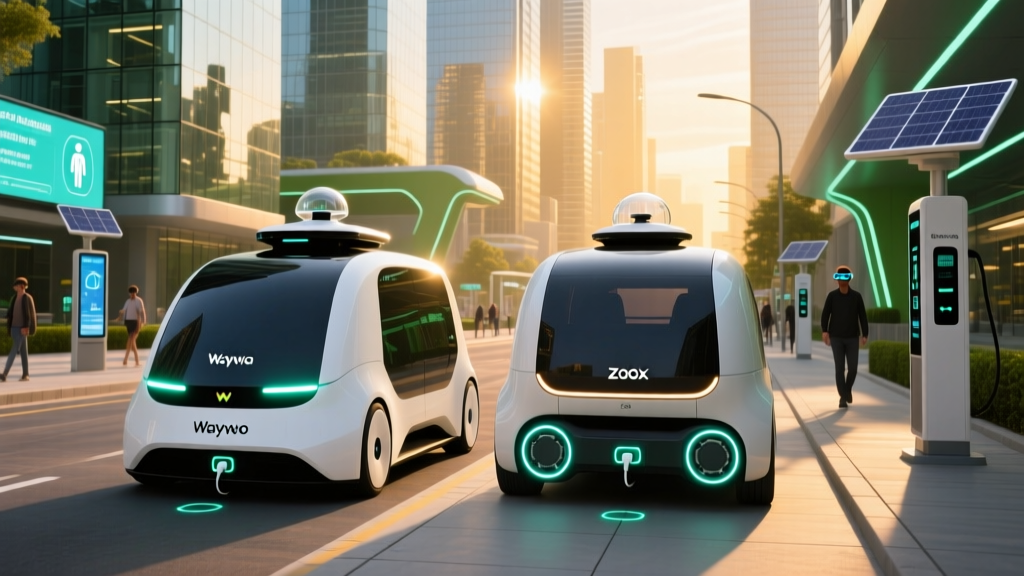
| 4 | High Automation | System drives entirely within a defined operational design domain (ODD); no human needed | Waymo One, Zoox (geofenced urban areas) |
| 5 | Full Automation | System drives everywhere, all conditions, no human needed | Does not exist commercially |
Where Can You Actually Use a Robotaxi in 2026?
Level 4 robotaxi service remains geographically constrained. These vehicles operate within geofenced areas — digitally mapped zones where the company has validated road conditions, infrastructure, and regulatory approval. Drive to the edge of that zone and the vehicle will not operate beyond it.
| Service | Operator | Live Cities | Service Hours | Vehicle Platform |
|---|---|---|---|---|
| Waymo One | Waymo (Alphabet) | Phoenix metro, San Francisco, Los Angeles, Austin | 24/7 in Phoenix & SF; limited hours in LA & Austin | Jaguar I-PACE (custom 5th-gen sensor suite), Hyundai IONIQ 5 (newer fleet) |
| Zoox | Zoox (Amazon) | Las Vegas (Strip corridor), Foster City, CA (limited) | Limited hours; invitation/early-access model | Zoox purpose-built vehicle (bidirectional, no steering wheel) |
| Cruise | Cruise (GM) | Operations suspended since late 2023; limited supervised testing in Phoenix and Dallas as of 2025-2026 | Not available for public ride-hailing | Chevrolet Bolt EV (originally); next-gen Origin (status uncertain) |
Waymo is the only service offering broad, 24/7 commercial robotaxi rides to the general public across multiple major U.S. cities as of early 2026. Expansion to additional cities — including discussions around Miami, Atlanta, and Tokyo — has been announced but is not yet live. Zoox operates a purpose-built vehicle with no steering wheel but remains in a limited-access phase. Cruise, once the second-largest U.S. robotaxi operator, suspended all public operations following a serious pedestrian incident in San Francisco in October 2023 and has not resumed commercial service.
Several other operators — including Baidu's Apollo Go in China — run significant robotaxi fleets internationally, but this analysis focuses on U.S.-available services.
How to Hail a Robotaxi and What It Costs
Using Waymo One is functionally similar to Uber or Lyft: download the app, enter your pickup and destination, confirm the ride, and a vehicle arrives. The difference is that no driver is inside. You sit in the back seat (or front, if you prefer), and the car handles the entire trip within its service territory.
| Metric | Waymo One | UberX | Lyft Standard |
|---|---|---|---|
| Base fare (typical) | $3.00–$4.50 | $2.50–$3.50 | $2.00–$3.00 |
| Per-mile rate | $1.25–$1.75 | $1.00–$1.50 | $0.95–$1.40 |
| Per-minute rate | $0.25–$0.40 | $0.20–$0.35 | $0.18–$0.30 |
| 5-mile / 15-min trip estimate | $13–$18 | $11–$15 | $10–$14 |
| Surge pricing | Rare; limited dynamic pricing | Common during peak demand | Common during peak demand |
| Tipping | Not applicable (no driver) | Expected ($2–$5+) | Expected ($2–$5+) |
In practice, Waymo pricing is competitive with rideshare on a per-trip basis, particularly when you factor in the absence of tipping. A typical 5-mile urban trip in Phoenix or San Francisco costs between $13 and $18 — comparable to UberX once tip is included. Wait times vary: in dense service areas like central Phoenix and San Francisco, a vehicle typically arrives within 3–7 minutes. In outlying areas near the geofence boundary, waits can stretch to 12–18 minutes.
Waymo has offered promotional pricing and loyalty credits at various points, but the standard rates above reflect typical non-promotional fares as of early 2026. Zoox, in its limited-access phase, has offered free rides to early users.
Autonomous Cars and Safety: What the Data Actually Shows
This is the question that matters most, and the one with the most nuanced answer. Let's look at the concrete data available from NHTSA and operator-reported figures.
- At-fault crash rate: Waymo vehicles were involved in approximately 70% fewer at-fault property-damage claims per million miles compared to human drivers in the same urban environments.
- Injury claim rate: Roughly 80% fewer injury-related claims per million miles vs. human benchmarks.
- Severity: When collisions did occur, they were overwhelmingly low-speed and low-severity — typically rear-end or side-swipe contacts under 15 mph, often caused by human-driven vehicles striking the robotaxi.
However, these numbers require context:
- Operational Design Domain (ODD) advantage: Robotaxis operate in mapped, geofenced urban areas with relatively predictable traffic patterns. They do not currently operate on high-speed freeways (above ~45 mph in most zones), in severe weather, or on unmapped rural roads. Comparing their safety record to all human driving — which includes highway, rural, and adverse-condition miles — is not apples-to-apples.
- Low-speed bias: Most robotaxi miles are accumulated at 25–40 mph in urban environments. Human fatality rates are dramatically higher at highway speeds (65–80 mph), where robotaxis largely do not operate.
- Conservative driving behavior: Robotaxis are programmed to drive cautiously — they obey speed limits strictly, maintain generous following distances, and stop completely at stop signs. This reduces collision risk but can frustrate human drivers and occasionally cause rear-end incidents when the robotaxi stops more abruptly than a human would expect.
- NHTSA Standing General Order: Under NHTSA's Standing General Order, all operators of Level 2+ and Level 4 systems must report crashes involving their vehicles. This data is publicly searchable and provides a more complete picture than voluntary disclosures.
The Cruise suspension in late 2023 serves as a cautionary case study. In October 2023, a Cruise robotaxi in San Francisco struck a pedestrian who had been thrown into its path by a human-driven vehicle. The robotaxi's initial braking response was appropriate, but its post-impact behavior — it dragged the pedestrian approximately 20 feet while attempting to pull over to a safe location — raised serious questions about edge-case handling. California's DMV subsequently suspended Cruise's deployment permit, and the company voluntarily paused all operations nationwide. This single incident demonstrated that even millions of safe miles do not guarantee safe handling of every scenario.
Under the Hood: Robotaxi Technology Stack
The sensor and computing architecture of a Level 4 robotaxi is orders of magnitude more complex than a Level 2 driver-assist system. Here's how the major platforms approach perception and decision-making.
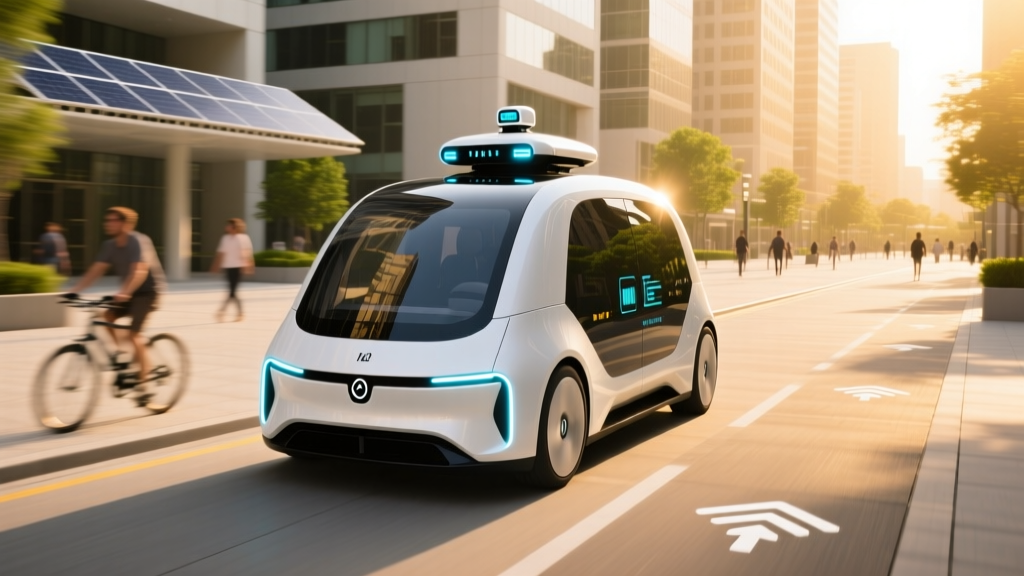
- LiDAR: Multiple roof-mounted and body-integrated LiDAR units providing a 360° 3D point cloud. LiDAR (light detection and ranging) uses laser pulses to measure distances to objects with centimeter precision, independent of lighting conditions.
- Cameras: 8+ high-resolution cameras covering 360° with overlapping fields of view for redundancy and object classification (pedestrian vs. cyclist vs. vehicle).
- Radar: Multiple radar units for velocity detection of moving objects, functioning in rain and fog where LiDAR and cameras degrade.
- Compute: Custom-designed computing platform processing sensor data in real time — estimated at hundreds of tera-operations per second (TOPS).
- HD Mapping: Centimeter-precision pre-mapped routes updated continuously. The vehicle localizes itself within this map to within a few centimeters at all times.
Zoox's approach is notably different. Its purpose-built vehicle — a compact, symmetrical pod with no steering wheel or pedals — integrates sensors directly into the vehicle body rather than mounting them on a roof rack. It uses a similar LiDAR-camera-radar fusion stack but benefits from a ground-up vehicle design optimized for sensor placement and passenger safety.
Tesla's camera-only approach (used in FSD Supervised) represents a fundamentally different philosophy: no LiDAR, no radar — vision-only neural networks. This approach remains Level 2 and requires driver supervision. No camera-only system currently operates at Level 4 in a commercial robotaxi service in the U.S., though Tesla has announced plans for a robotaxi service. As of 2026, that service is not operational.
Regulatory Landscape: Who Approves Robotaxi Operations?
Robotaxi deployment in the U.S. requires approval from multiple agencies, and the regulatory framework varies significantly by state.
- State DMV / Public Utilities Commission: In California, the DMV issues testing permits and the California Public Utilities Commission (CPUC) issues commercial deployment permits. Both must approve operations. The DMV can suspend permits — as it did with Cruise in 2023.
- NHTSA (Federal): Sets vehicle safety standards (FMVSS) and issues crash-reporting requirements. NHTSA does not currently "approve" autonomous driving systems, but it investigates incidents and can issue recalls. In 2024-2025, NHTSA opened investigations into both Tesla Autopilot/FSD and Waymo operations following reported incidents.
- State legislatures: Arizona has taken the most permissive approach, allowing commercial robotaxi operations with minimal state oversight — which is why Waymo's Phoenix operation was the first to launch. Texas (Austin) has a similar framework. Other states, including Nevada (Las Vegas) and Georgia, have passed enabling legislation.
- Local municipalities: City governments can impose additional restrictions, including geofence boundaries, operating hours, and fleet-size caps. San Francisco's Board of Supervisors voted in 2023 to restrict robotaxi expansion before the Cruise incident prompted a broader pause.
The patchwork nature of regulation means that a robotaxi company may be fully approved in one city and entirely prohibited in another just a few hundred miles away. There is no unified federal framework for Level 4 deployment as of 2026.
Current Limitations: Where Robotaxis Cannot Go or Struggle
Level 4 autonomy is impressive within its operational domain, but that domain has hard edges. Here are the practical limitations any prospective rider — or policy-maker — should understand:
- Geofencing: Robotaxis will not operate outside their mapped service area. If your trip crosses the boundary, the vehicle will not accept the ride or will reroute to stay within the zone.
- Weather: Heavy rain, fog, snow, and ice significantly degrade sensor performance. LiDAR scatters in heavy precipitation; cameras lose visibility. Waymo and other operators will pause service or restrict operations during severe weather events. Phoenix's dry climate is not coincidental — it's one of the easiest environments for autonomous perception.
- Construction zones: Temporary lane shifts, jersey barriers, and flaggers create scenarios that differ from the pre-mapped environment. Robotaxis handle minor construction zones but may pull over and request remote assistance for complex or novel configurations.
- Emergency vehicles: While robotaxis are programmed to yield to emergency vehicles, real-world incidents have shown inconsistent performance. NHTSA investigations in 2024-2025 examined multiple instances of robotaxis failing to properly yield to fire trucks and ambulances.
- Highway/freeway driving: Most current Level 4 services operate on surface streets at speeds up to approximately 45 mph. Highway-speed operation introduces dramatically more complex decision-making (merging at speed, multi-lane negotiation, higher consequence of failure).
- Pedestrian edge cases: Unpredictable pedestrian behavior — jaywalking in groups, people stepping out from behind occlusions, wheelchair users or people with unusual gaits — remains a challenge. The Cruise incident was partly a failure in post-impact pedestrian handling, not just initial detection.
- Remote assistance latency: When a robotaxi encounters a scenario it cannot resolve autonomously, it contacts a remote human operator. This introduces latency — typically 30 seconds to several minutes — during which the vehicle remains stationary, potentially blocking traffic.
Is It Truly Self-Driving, or Is This Still Driver-Assist?
However, Level 4 is not Level 5. These vehicles cannot drive "anywhere." They operate within a specific, approved, geofenced area under specific conditions. Take a Waymo vehicle to a rural road in Montana in a snowstorm and it would not function. True Level 5 autonomy — drive anywhere, any conditions, no human needed — does not exist commercially and is not projected by any credible analyst to arrive before 2030 at the earliest.
Bottom Line: What the Safety Picture Looks Like in 2026
The data supports a cautiously optimistic view of robotaxi safety within their operational domain. Waymo's millions of autonomous miles show lower at-fault collision rates than human drivers in comparable urban environments, and the severity of incidents that do occur is generally low. The technology — LiDAR-camera-radar fusion, HD mapping, conservative driving policies — works well for the scenarios it was designed to handle.
But the limitations are real and consequential. Geofencing restricts where you can go. Weather restricts when you can ride. Edge cases — construction zones, emergency vehicles, unpredictable pedestrians — remain areas where the technology can fail, sometimes in ways that create new hazards (stationary vehicles blocking traffic lanes, remote-assistance delays).
The Cruise incident of 2023 demonstrated that a strong safety record over millions of miles does not immunize an operator against catastrophic edge-case failures. It also demonstrated that regulatory oversight can act swiftly when it does — California's DMV suspended Cruise's permit within days, and the company's nationwide self-suspension followed.
For riders in Phoenix, San Francisco, Los Angeles, or Austin, robotaxis are a viable, reasonably priced, and data-supported transportation option today. For everyone else, the wait continues — not because the technology doesn't work, but because scaling it safely to new cities, new conditions, and new edge cases takes longer than the industry's early projections suggested.
Frequently Asked Questions
Where can I use a robotaxi service right now?
Waymo One is available to the general public in Phoenix (metro-wide, 24/7), San Francisco (most of the city, 24/7), Los Angeles (downtown and surrounding areas, limited hours), and Austin (limited service area and hours). Zoox operates a limited-access service on the Las Vegas Strip corridor. Cruise is not offering public rides as of 2026.
How much does a robotaxi cost compared to Uber or Lyft?
Waymo One fares are generally comparable to UberX or Lyft Standard once you factor in the absence of tipping. A typical 5-mile urban trip costs $13–$18 on Waymo, versus $11–$15 on rideshare before tip. Robotaxi pricing rarely includes surge multipliers, which can make it cheaper than rideshare during peak demand.
How safe are robotaxis — is there real data?
Waymo has reported completing over 10 million fully autonomous miles with approximately 70% fewer at-fault property-damage claims and 80% fewer injury claims per million miles compared to human benchmarks in the same urban environments (via Swiss Re analysis). However, these comparisons have limitations: robotaxis operate at lower speeds, in geofenced urban areas, and avoid severe weather — all factors that reduce baseline risk. NHTSA's Standing General Order provides publicly searchable crash data for all Level 2+ and Level 4 operators.
What are the current limitations of robotaxi services?
Key limitations include: geofencing (service only within mapped zones), weather restrictions (heavy rain, snow, or fog can pause operations), inability to handle complex construction zones or novel road configurations, challenges with emergency vehicle interactions, and speed limits (most services cap at ~45 mph, avoiding highways). Remote human assistance is available when the vehicle cannot resolve a scenario, but this introduces delays.
Is a robotaxi truly self-driving, or is it like Tesla Autopilot?
Robotaxis like Waymo and Zoox are SAE Level 4 — genuinely driverless within their operational domain. There is no human driver, no steering wheel for passengers, and no requirement for you to monitor the road. This is fundamentally different from Tesla Autopilot, FSD Supervised, GM Super Cruise, and Ford BlueCruise, which are all SAE Level 2 driver-assist systems that require the human to remain fully engaged as the driver at all times.