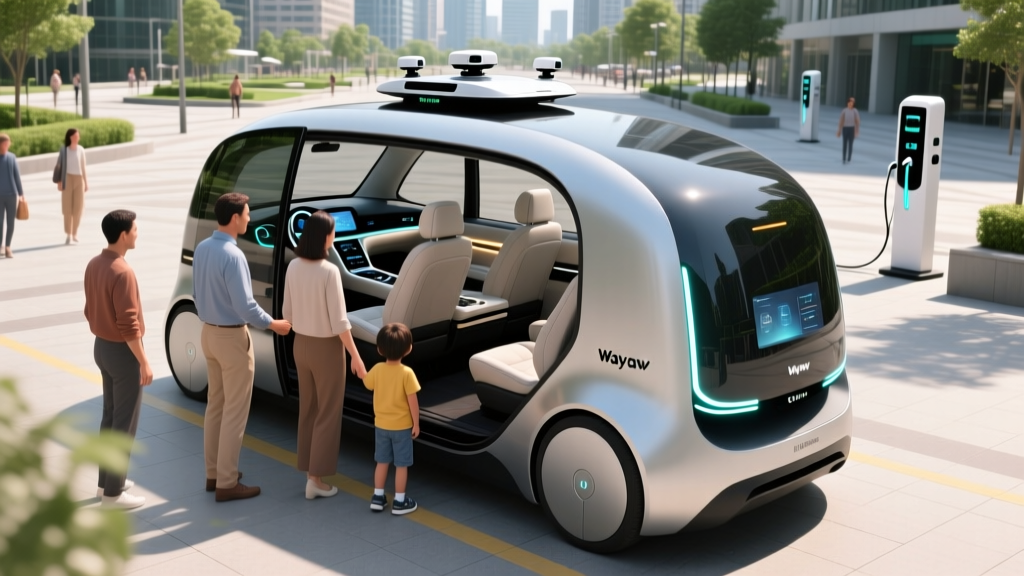
Headlines about autonomous car accidents grab attention fast — a Waymo vehicle nudging a parked car, a Zoox robotaxi confused by construction cones, or a Tesla on Autopilot misreading a lane merge. But isolated incidents tell only part of the story. To evaluate robotaxi safety honestly, we need the numbers: millions of driverless miles, disengagement rates, crash severity, and how those figures stack up against human benchmarks.
This guide breaks down the real-world safety record of Level 4 robotaxis operating in the U.S. as of early 2026, the technology behind them, where you can actually hail one, and what still goes wrong.
Level 4 Robotaxis vs. Level 2 Driver-Assist: A Critical Distinction
Before examining accident data, the SAE automation level matters enormously. Consumer vehicles with Tesla Autopilot, Ford BlueCruise, or GM Super Cruise are SAE Level 2 — the driver must remain engaged and is legally responsible. Robotaxis from Waymo and Zoox operate at SAE Level 4 — no human driver is present, and the system handles all driving within its operational design domain (ODD).
| Level | Name | Who Drives? | Examples (2026) |
|---|---|---|---|
| Level 0 | No Automation | Human | Basic cruise control |
| Level 1 | Driver Assistance | Human | Adaptive cruise OR lane-keep |
| Level 2 | Partial Automation | Human (must supervise) | Tesla Autopilot/FSD Supervised, BlueCruise, Super Cruise |
| Level 3 | Conditional Automation | System (human on standby) | Mercedes Drive Pilot (limited markets, ≤40 mph) |
| Level 4 | High Automation | System (no driver needed in ODD) | Waymo One, Zoox (geofenced service areas) |
| Level 5 | Full Automation | System (anywhere, any condition) | Does not exist commercially |
Conflating Level 2 driver-assist crashes with Level 4 robotaxi incidents distorts safety comparisons. They are fundamentally different systems with different failure modes and regulatory oversight.
Autonomous Car Accidents: What the Data Says
The National Highway Traffic Safety Administration (NHTSA) requires manufacturers and operators to report crashes involving Level 2 and Level 4 automated systems. This Standing General Order, in effect since 2021, gives us the most comprehensive public dataset on autonomous car accidents in the U.S.
Waymo Safety Data (through late 2025, published 2026):
- Driverless miles logged: Over 50 million fully autonomous (no-driver) miles across Phoenix, San Francisco, Los Angeles, and Austin.
- Injury-causing crash rate: Waymo's driverless vehicles were involved in injury-causing crashes at a rate approximately 85% lower than human benchmarks in comparable urban environments, per Waymo's peer-reviewed analysis published in 2025.
- Property-damage-only contacts: Higher frequency than human baselines in some categories — particularly low-speed contacts with curbs, poles, and stationary objects during complex maneuvers.
- Fatalities: Zero fatalities in Waymo's driverless fleet as of early 2026.
Context matters. Robotaxis operate almost exclusively in dense urban cores at moderate speeds (typically under 45 mph). Human crash data includes rural highways, high-speed interstates, and impaired driving — scenarios robotaxis don't encounter. Direct comparison requires adjusting for speed, environment, and time of day.
Zoox, Amazon's autonomous vehicle subsidiary, operates its purpose-built bidirectional vehicle in Las Vegas and parts of California. As a smaller fleet, its public mileage data is more limited, but it has reported zero at-fault injury crashes in its driverless operations through 2025.
Common Causes of Robotaxi Incidents
When autonomous car accidents do occur with Level 4 systems, patterns emerge:
- Stationary object contact: Misjudging clearance near construction zones, parked delivery trucks, or narrowed lanes.
- Rear-end events: Robotaxis braking conservatively for perceived hazards, causing human drivers behind them to collide.
- Edge-case confusion: Unusual road configurations, temporary detours, or non-standard traffic control (e.g., a crossing guard using hand signals instead of a standard sign).
- Sensor obstruction: Heavy rain, fog, or dust degrading lidar and camera performance, prompting the vehicle to pull over — which can itself create a hazard.
Where Can You Actually Use a Robotaxi in 2026?
Robotaxi service is not nationwide. It operates within tightly defined geofences — mapped areas where the system has been validated. Step outside the geofence, and the car won't go.
| Operator | Live Markets | Service Hours | Vehicle |
|---|---|---|---|
| Waymo One | Phoenix (metro-wide), San Francisco (most of city), Los Angeles (select zones), Austin (expanding) | 24/7 in Phoenix & SF; limited hours in LA/Austin | Jaguar I-PACE (6th-gen sensor suite) |
| Zoox | Las Vegas (Strip corridor + downtown), Foster City/San Francisco (limited zones) | Daytime/evening hours | Zoox purpose-built carriage (bidirectional, no steering wheel) |
| Cruise (GM) | Limited re-launch in Phoenix and Dallas (restricted zones, reduced fleet) | Daytime only, safety operator present in some vehicles | Chevrolet Bolt EV / Origin (select) |
Important: Cruise suspended all driverless operations in late 2023 after a serious incident in San Francisco involving a pedestrian. Its 2025–2026 re-entry has been gradual, with smaller fleets and more conservative operational limits. Always verify live service areas on the operator's app before planning a trip.
Robotaxi Pricing vs. Uber and Lyft
Robotaxi rides are priced to compete with standard rideshare — not to undercut it dramatically. Here's how typical fares compare in shared markets:
| Service | Base Fare | Est. Total (5 mi) | Surge Pricing? | Tips Expected? |
|---|---|---|---|---|
| Waymo One | $3.50 | $12–$18 | No surge; wait times vary | Optional (in-app) |
| UberX | $2.80 | $11–$22 | Yes, frequently | Yes (15–20%) |
| Lyft | $2.50 | $10–$20 | Yes | Yes (15–20%) |
| Zoox | $0 (introductory) | $0–$8 (promotional pricing) | No | No |
Waymo's pricing is broadly comparable to UberX without surge. The key advantage is predictability — no surge multipliers during peak hours. Zoox has used heavily subsidized pricing during its market-building phase, but long-term fares are expected to align with rideshare norms once promotional periods end.
The Technology Stack: How Robotaxis See the Road
Waymo 6th-Generation System (Jaguar I-PACE)
- Lidar: Multiple roof-mounted and bumper-integrated units providing 360° 3D point clouds up to 500+ meters.
- Cameras: High-resolution surround cameras (8+) for lane markings, traffic signals, pedestrian gestures, and signage.
- Radar: Imaging radar for velocity detection of moving objects and performance in rain/fog where lidar degrades.
- Audio sensors: External microphones to detect sirens from emergency vehicles.
- HD maps: Centimeter-accurate pre-mapped routes within the geofence, continuously updated.
Zoox Purpose-Built Vehicle
- Symmetrical sensor layout: Identical sensor pods on all four corners — the vehicle can drive in either direction (no traditional front/back).
- Lidar + camera + radar fusion: Redundant sensing on all sides.
- No steering wheel or pedals: True Level 4 design — no provision for human takeover.
This sensor redundancy is the key differentiator from consumer Level 2 systems. A Tesla on FSD Supervised relies primarily on cameras (Tesla Vision) with no lidar. When a camera is blinded by sun glare or a faded lane marking, a Level 2 system alerts the driver to take over. A Level 4 robotaxi must handle the situation autonomously or execute a safe stop — which is why lidar and radar redundancy are non-negotiable for driverless operation.
Regulatory Landscape: Who Approves Robotaxi Operations?
Robotaxi deployment in the U.S. involves a patchwork of state and federal oversight:
- Federal (NHTSA): Sets vehicle safety standards (FMVSS) and mandates crash reporting via the Standing General Order. NHTSA does not currently "approve" autonomous driving systems but can issue recalls or investigations. In 2025, NHTSA opened inquiries into several robotaxi operators regarding traffic obstruction and emergency vehicle interactions.
- State DMVs and PUCs: California's Department of Motor Vehicles and Public Utilities Commission jointly regulate testing and commercial deployment. Operators must obtain permits, report disengagement data, and demonstrate safety performance before expanding service areas. Arizona (where Waymo launched first) has a more permissive framework with fewer permit requirements.
- Local/municipal: Cities often negotiate operating agreements covering fleet size, service zones, parking/staging, and data sharing. San Francisco's Board of Supervisors has held multiple hearings on robotaxi expansion, responding to constituent concerns about traffic obstruction and emergency response interference.
- Texas (Austin): The Texas Department of Licensing and Regulation oversees autonomous vehicle testing, with Waymo receiving authorization for driverless operations in 2025.
Current Limitations: Where Robotaxis Still Fall Short
Operational Constraints (2026)
- Weather: Heavy rain, snow, fog, and dust significantly degrade sensor performance. Waymo and Zoox may restrict service or pull vehicles during severe conditions. Snow-covered roads remain a hard no-go — no Level 4 operator offers service in snow-belt cities.
- Geofencing: Service is limited to pre-mapped areas. Request a ride outside the zone and the app simply won't route you. Expansion requires months of mapping, validation, and regulatory approval per new zone.
- Construction zones: Temporary lane shifts, barrel lines, and flaggers challenge perception systems. Robotaxis may stop, reroute, or request remote human teleoperation assistance — adding delay.
- Emergency vehicles: While audio sensors detect sirens, complex multi-vehicle emergency scenes (fire trucks blocking lanes, police directing traffic) can cause the vehicle to halt and wait rather than navigate through.
- Unprotected left turns: Some operators restrict unprotected left turns at busy intersections, opting for longer routes with signalized turns — increasing trip time.
- Pickup/drop-off precision: The vehicle may stop 50–100 feet from your exact pin in complex urban environments (loading zones, bike lanes, double-parked trucks), requiring a short walk.
- No highway/freeway service (most markets): Waymo's Phoenix operations include some freeway segments, but most robotaxi service is surface-street only. Airport runs via freeway are available in select markets but not universal.
Are Robotaxis Safer Than Human Drivers?
The honest answer: in their specific operating conditions, the data suggests yes — but with important caveats.
Human drivers in the U.S. experience approximately 1.35 fatalities per 100 million vehicle miles traveled (NHTSA 2024 data) and roughly 300 injury-causing crashes per 100 million miles. Waymo's published data shows its driverless fleet experiencing injury-causing crashes at a fraction of that rate within comparable urban environments.
But robotaxis don't drive on rural two-lane roads at 65 mph. They don't drive drunk, drowsy, or distracted. They operate in mapped, mostly low-speed urban zones with redundant sensor suites. The comparison is useful but not apples-to-apples.
What's clear: autonomous car accidents in Level 4 operations tend to be low-severity — low-speed contacts, curb strikes, and rear-end events caused by the robotaxi's conservative braking. High-severity and fatal crashes, which dominate human crash statistics, are extremely rare in the robotaxi dataset so far.
Frequently Asked Questions
Is a robotaxi truly self-driving, or is there a remote human operator?
Level 4 robotaxis from Waymo and Zoox drive autonomously with no human in the vehicle. However, they use remote assistance (sometimes called teleoperations) for edge cases — a remote operator can provide high-level guidance (e.g., "proceed around the obstacle on the left") but does not directly steer or brake the vehicle in real time. The onboard system executes all driving actions.
How much does a Waymo ride cost compared to Uber?
For a typical 5-mile urban trip, Waymo One fares range from $12–$18, comparable to UberX without surge pricing. The advantage is fare predictability — Waymo does not apply surge multipliers. During peak demand, wait times may increase instead.
What happens if a robotaxi gets confused or stuck?
The vehicle will come to a controlled stop, activate hazard lights, and request remote assistance. A teleoperations specialist reviews the situation and provides guidance. In rare cases, a roadside assistance team may be dispatched to manually relocate the vehicle. This is a primary source of traffic obstruction complaints in San Francisco.
Have there been any fatalities in Waymo or Zoox robotaxis?
As of early 2026, there have been zero passenger fatalities in Waymo's or Zoox's driverless operations. There have been incidents involving pedestrians and other road users, including the 2023 Cruise incident in San Francisco (a pedestrian struck by a human-driven vehicle was subsequently run over by a Cruise robotaxi that pulled to the curb). That incident led to Cruise's permit suspension and operational overhaul.
Can I use a robotaxi in the rain?
Light to moderate rain — yes, with slightly more conservative driving behavior. Heavy rain, flooding, or fog may trigger service restrictions or vehicle pull-backs. Snow and ice remain outside the operational design domain for all current Level 4 services.
Do robotaxis have insurance?
Yes. Operators carry commercial liability insurance covering passengers and third parties. When you ride in a Waymo, you are covered under Alphabet/Waymo's commercial policy — you do not need personal auto insurance for the trip. Specific coverage limits vary by state and operator.
Will robotaxis replace Uber and Lyft drivers?
Not in the near term. Robotaxi fleets number in the low thousands across a handful of cities, while Uber and Lyft operate millions of human-driven vehicles nationwide. Robotaxis will complement rideshare in dense urban cores but cannot serve suburban, rural, or unmapped areas for years to come.