Waymo's expansion into Austin, Texas, marks one of the most anticipated robotaxi launches outside the company's established markets. But how much of the city is actually covered, what does a ride cost compared to Uber or Lyft, and what does the safety record actually show? This guide breaks down the Austin Waymo service with exact figures, current operational boundaries, and the regulatory framework that governs it.
SAE Automation Level: What Austin Waymo Actually Is
Before anything else, it's critical to distinguish Waymo's robotaxi from consumer driver-assist systems. Waymo operates at SAE Level 4 — meaning the vehicle handles all driving tasks within its defined operational design domain (ODD) with no human driver present. This is fundamentally different from Tesla Autopilot, Ford BlueCruise, or GM Super Cruise, which are SAE Level 2 systems requiring continuous driver supervision.
| Level | Classification | Who Drives | Example |
|---|---|---|---|
| Level 0 | No automation | Human | Standard vehicle |
| Level 1 | Driver assistance | Human (one feature assisted) | Adaptive cruise control |
| Level 2 | Partial automation | Human (must supervise) | Tesla Autopilot, BlueCruise, Super Cruise |
| Level 3 | Conditional automation | System (human on standby) | Mercedes Drive Pilot (limited markets) |
| Level 4 | High automation | System (no human needed in ODD) | Waymo One, Zoox |
| Level 5 | Full automation | System (everywhere, all conditions) | Does not exist commercially |
Where Can You Use Austin Waymo Right Now?
Waymo's Austin service area is geofenced — the robotaxis operate only within approved boundaries that have been mapped in high definition and validated through extensive testing. As of early 2026, Waymo's Austin footprint covers key corridors including:
- Downtown Austin — the central business district, Congress Avenue, and surrounding entertainment areas
- South Austin — including South Lamar (SoLa), Bouldin Creek, and Zilker-adjacent neighborhoods
- East Austin — portions of East 6th, East Cesar Chavez, and the Holly Street corridor
- Austin-Bergstrom International Airport (AUS) — designated pickup/dropoff zones
- The Domain and North Austin — select areas along major arterials
| City | Status | Approximate Coverage | Access Type |
|---|---|---|---|
| Phoenix, AZ | Fully operational | ~300+ sq mi metro | Open to public (Waymo One app) |
| San Francisco, CA | Fully operational | Most of SF proper | Open to public (Waymo One app) |
| Los Angeles, CA | Operational | Santa Monica, Hollywood, Downtown, Beverly Hills | Open to public (Waymo One app) |
| Austin, TX | Operational / Expanding | Downtown, South, East, AUS airport corridor | Public access via Waymo One app |
Waymo's geofence expands incrementally as the company validates new streets and scenarios. You can check your exact pickup location in the Waymo One app, which shows the live service boundary. If your destination falls outside the geofence, the app will not let you book the ride.
How to Hail a Waymo in Austin (and What It Costs)
Using Waymo in Austin follows the same pattern as its other markets:
- Download the Waymo One app (iOS/Android) and create an account.
- Enter your pickup and dropoff — both must fall within the active geofence.
- Confirm your ride — the app shows estimated wait time, fare, and vehicle details.
- Meet the vehicle — a 6th-generation Waymo Driver-equipped Jaguar I-PACE pulls up. Confirm your identity via the in-car screen.
- Ride — select music, adjust climate, and watch the route on the passenger display. There's no driver to interact with.
Austin Waymo Pricing vs. Uber and Lyft
Waymo prices its rides to be competitive with UberX and Lyft standard fares — typically within 10-15% of equivalent rideshare trips, and occasionally cheaper during surge pricing periods when human-driven rideshare spikes. Based on reported fares from Austin riders:
| Service | Base Fare | Per Mile | Per Minute | Estimated Total (5 mi, 15 min) |
|---|---|---|---|---|
| Waymo | ~$3.50 | ~$1.25 | ~$0.30 | $13.00–$15.00 |
| UberX | ~$2.50 | ~$1.15 | ~$0.25 | $11.00–$18.00* |
| Lyft | ~$2.50 | ~$1.10 | ~$0.25 | $10.50–$17.00* |
*UberX and Lyft fares vary significantly with demand-based surge pricing. Waymo does not currently use surge multipliers, making it more predictable during peak hours, weekends, and events like SXSW or ACL Festival.
Austin Waymo Safety Record: What the Data Shows
Safety is the most scrutinized aspect of any robotaxi service. Waymo publishes periodic safety reports and has submitted data to the National Highway Traffic Safety Administration (NHTSA) under standing general orders for automated driving systems.
- Over 30 million fully autonomous miles driven across all Waymo markets (Phoenix, SF, LA, Austin)
- Waymo's internal analysis (validated by third-party Swiss Re data) showed a ~85% reduction in injury-causing crash rates compared to human benchmarks in comparable urban environments
- Contact rates (any physical contact, including minor bumps at low speed) significantly below human driver averages per million miles
- No confirmed fatalities in fully autonomous Waymo operations as of early 2026
Context matters: the vast majority of reported robotaxi "incidents" in regulatory filings involve other human-driven vehicles making contact with the robotaxi — rear-end collisions at stoplights, sideswipes in merge zones — not the autonomous vehicle initiating the collision. Waymo's data, published in partnership with insurance analytics firm Swiss Re, found that their vehicles were involved in property-damage-only crashes at roughly 76% lower rates than human-driven vehicles in the same operating areas.
That said, Austin presents unique challenges: aggressive driving culture, frequent construction zones, high pedestrian and e-scooter traffic, and flash-flood weather events. Waymo's Austin safety record is still accumulating compared to Phoenix (operational since 2018) and San Francisco (2021).
Technology Stack: How the 6th-Gen Waymo Driver Works
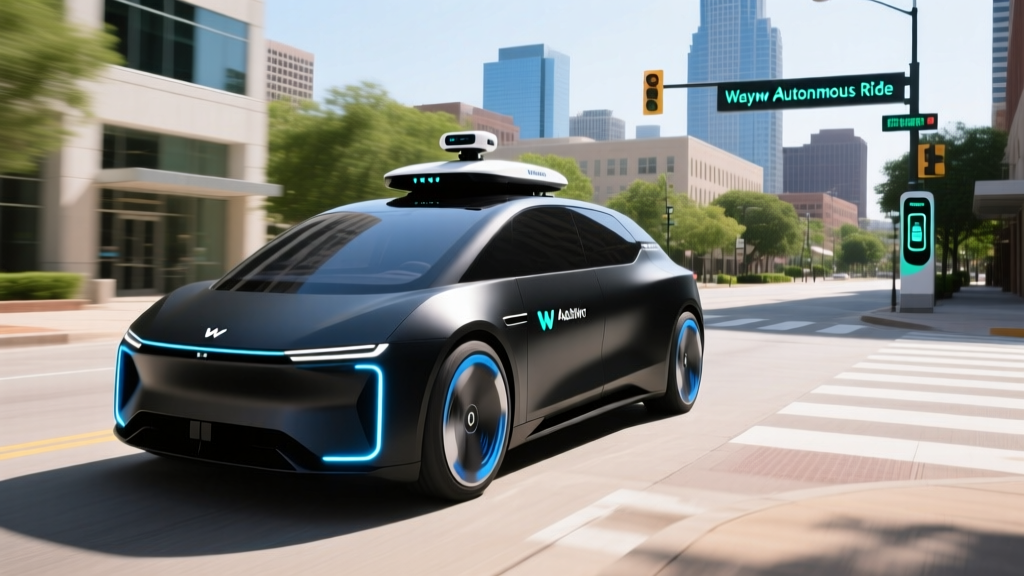
Waymo's Austin fleet uses the 6th-generation Waymo Driver sensor suite, integrated into the all-electric Jaguar I-PACE (84 kWh battery, EPA-estimated 234-mile range). Unlike Tesla's camera-only approach, Waymo uses a multi-modal sensor stack:
| Sensor Type | Waymo 6th-Gen | Tesla FSD (Supervised) |
|---|---|---|
| LiDAR | Custom-built, roof-mounted + peripheral units; 360° coverage up to 500m | None |
| Cameras | 29+ high-resolution cameras, 360° overlap | 8 surround cameras (Tesla Vision) |
| Radar | 6 radar units (improved resolution over 5th-gen) | None (removed in 2022+) |
| Audio sensors | External microphones (detect sirens, horns) | None |
| HD mapping | Centimeter-level pre-mapped routes | Real-time only (no HD maps) |
| SAE Level | Level 4 (no driver needed) | Level 2 (driver must supervise) |
The LiDAR-first approach gives Waymo a significant advantage in depth perception, especially at night, in direct sunlight glare, and in complex urban scenes with occluded pedestrians. The HD maps provide a centimeter-accurate baseline that the real-time perception system cross-references — if the live sensor data conflicts with the map (e.g., a new construction barrier), the system treats the live data as authoritative and may reduce speed or pull over if confidence drops below threshold.
The Jaguar I-PACE platform is notable: it's a production EV with 394 horsepower, 0-60 mph in 4.5 seconds, and DC fast charging at up to 100 kW (10-80% in approximately 45 minutes). Waymo's fleet charges at dedicated depot locations, so riders never encounter a vehicle mid-charge.
Regulatory Framework: Who Approves Waymo in Austin?
Robotaxi operations in Texas fall under a layered regulatory structure:
- Texas Department of Transportation (TxDOT) — oversees autonomous vehicle testing and deployment permits on public roads. Texas passed HB 3167 in 2023, establishing a framework for driverless vehicle operations.
- City of Austin — local ordinances govern where autonomous vehicles can operate, pickup/dropoff zones, and coordination with Austin Transportation & Public Works.
- NHTSA (federal) — sets vehicle safety standards (FMVSS). Waymo has received exemptions for certain requirements (e.g., steering wheel/ pedal mandates for purpose-built vehicles like the Zeekr RT01 planned for future deployment).
- Texas Department of Motor Vehicles — vehicle registration and titling for autonomous fleet vehicles.
Waymo must maintain a NHTSA standing general order compliance, reporting any crash involving its ADS-equipped vehicles within 24 hours for incidents involving injury or within specified timeframes for property-damage events. The Insurance Institute for Highway Safety (IIHS) has also begun evaluating ADS operational safety, though formal crash-test ratings specific to robotaxi operations remain in development.
Current Limitations: What Austin Waymo Cannot Do
Level 4 autonomy is powerful but bounded. Here's what riders should expect:
- Geofence boundaries: You cannot travel outside the approved service area. Suburbs like Round Rock, Cedar Park, Pflugerville, and San Marcos are not covered.
- Heavy rain and flooding: Austin's flash-flood events and torrential downpours can degrade LiDAR and camera performance. Waymo may pause operations in severe weather — the app will show "service temporarily unavailable."
- Construction zones: While Waymo handles routine construction, major road reconfigurations (lane shifts, temporary signals) can cause the vehicle to take a longer route or pause until remote assistance confirms a safe path.
- No highway driving (limited): Most Austin Waymo routes are surface streets. Limited highway segments may be included, but the system primarily operates on mapped urban arterials.
- Pets and special cargo: Service animals are permitted, but pets in carriers, oversized items, or unaccompanied minors are not allowed.
- Wait times: Depending on fleet density and demand, wait times can range from 3-15 minutes — longer than Uber/Lyft in some Austin neighborhoods due to smaller fleet size.
- No manual override: Passengers cannot steer or brake. If you need to stop mid-trip, you use the in-app "pull over" feature, and the vehicle finds a safe stopping point.
Frequently Asked Questions
Is the Austin Waymo service truly self-driving?
Yes — within its geofenced service area, the Waymo vehicle operates at SAE Level 4 with no human driver present. The driver's seat is empty. This is fundamentally different from Tesla FSD (Supervised) or GM Super Cruise, which are Level 2 systems that require a licensed, attentive driver behind the wheel at all times.
How much does a Waymo ride cost in Austin compared to Uber?
Waymo fares are generally within 10-15% of UberX/Lyft standard pricing, typically $13-$15 for a 5-mile trip. The key advantage is no surge pricing — during high-demand events, Waymo can be 20-40% cheaper than a surged Uber or Lyft.
How safe are Waymo robotaxis based on real data?
Waymo has accumulated over 30 million fully autonomous miles across its markets. Third-party analysis (Swiss Re) showed an approximately 85% reduction in injury-causing crash rates versus human benchmarks. No confirmed fatalities in fully autonomous operations as of early 2026. Full safety data is reported to NHTSA under standing general orders.
Can I take a Waymo from Austin to San Antonio or the airport?
Austin-Bergstrom International Airport (AUS) is within the service area with designated pickup zones. However, intercity trips to San Antonio, Houston, or Dallas are not possible — the geofence covers only the Austin metro core. For longer trips, use traditional rideshare or rental options.
What happens if the Waymo vehicle encounters an emergency?
Waymo vehicles have a "minimal risk condition" protocol: if the system cannot safely continue, it pulls over to the nearest safe stopping point. Passengers can also use the in-app support button to connect with a remote Waymo specialist. The vehicles are monitored 24/7 by Waymo's fleet operations center, which can provide remote guidance (but not remote steering) for complex scenarios.
Does Waymo operate 24/7 in Austin?
Waymo's Austin service hours may initially be more limited than its mature Phoenix market (which operates 24/7). Check the Waymo One app for current operating hours, which typically expand as the service matures and fleet size increases.