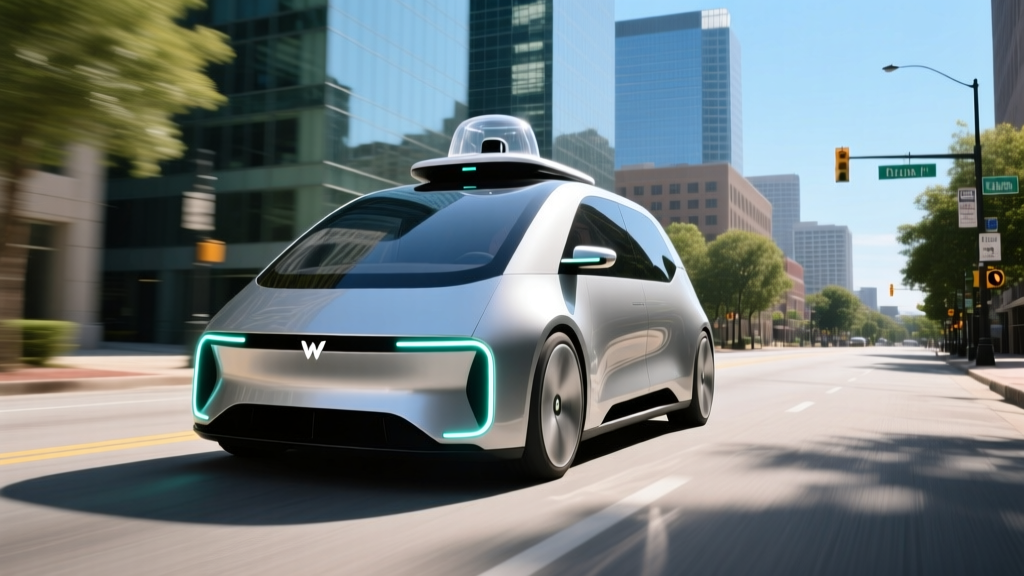
If you have been searching for an Atlanta Waymo ride, you are not alone. Atlanta is one of the most anticipated markets for Waymo's fully driverless robotaxi service, and the company has been mapping and testing in the city since 2023. But as of early 2026, the question remains: can you actually hail a Waymo in Atlanta today, or is it still in the pipeline?
This guide covers exactly where Waymo's SAE Level 4 service operates right now, what Atlanta's status is in Waymo's expansion roadmap, the technology powering the fleet, verified safety data, expected pricing, and the real-world limitations you should understand before stepping into a vehicle with no one behind the wheel.
Where Can You Actually Ride a Waymo Right Now?
Waymo One — the company's commercial, fully driverless ride-hailing service — is not yet available to the general public in Atlanta. As of 2026, Waymo's live commercial operations are concentrated in a handful of U.S. metros, with Atlanta classified as an upcoming expansion market where Waymo has conducted mapping and limited testing but has not opened paid public rides.
| City | Status | Service Area Size | Availability |
|---|---|---|---|
| Phoenix, AZ | Live — Fully Operational | ~315 sq mi (expanded) | Open to all via Waymo One app |
| San Francisco, CA | Live — Fully Operational | ~70+ sq mi | Open to all via Waymo One app |
| Los Angeles, CA | Live — Fully Operational | ~80+ sq mi | Open to all via Waymo One app |
| Austin, TX | Live — Scaling | Expanding geofence | Open to riders via app (waitlist in some zones) |
| Atlanta, GA | Testing / Upcoming | Mapped corridors, no public geofence | Not available — anticipated future launch |
Waymo has confirmed Atlanta as a target expansion city, and the company has been spotted running test vehicles — primarily Jaguar I-PACE EVs equipped with the latest sensor suite — on Atlanta streets. However, moving from testing to commercial service requires regulatory approval from both the Georgia state government and local municipalities, which has not yet been granted for paid public operations as of this writing.
If you are in Atlanta and want a robotaxi experience today, your options are limited. Cruise (GM's robotaxi arm) previously operated in select cities but significantly scaled back operations following its 2023 safety incidents and has not established a meaningful Atlanta presence. Waymo remains the most viable Level 4 robotaxi provider nationally, and Atlanta riders will need to wait for the official Waymo One launch.
Understanding the Autonomy Level: Level 4, Not Level 2
- Level 0: No automation. The human does everything.
- Level 1: Single-feature assist (adaptive cruise OR lane-keep). Driver fully responsible.
- Level 2: Combined assist (steering + speed). Examples: Tesla Autopilot, GM Super Cruise, Ford BlueCruise. Driver must remain engaged and supervise at all times.
- Level 3: Conditional automation in specific scenarios. Driver can disengage but must take over when requested. Very limited deployment (e.g., Mercedes DRIVE PILOT in approved zones).
- Level 4: High automation within a defined operational design domain (ODD). No driver needed inside the geofence. This is where Waymo One operates.
- Level 5: Full automation everywhere, all conditions. Does not currently exist in production.
This distinction matters because consumers frequently conflate Level 2 driver-assist features with true self-driving. Tesla's Full Self-Driving (Supervised), despite its name, is a Level 2 system — the driver must watch the road and keep hands available. Waymo One is fundamentally different: it is an SAE Level 4 service. There is no steering wheel accessible to the rider, no expectation of human intervention, and the vehicle handles all driving tasks within its approved geofenced zone without any human behind the wheel.
When Atlanta Waymo service does launch, riders can expect the same Level 4 experience: you enter a destination in the app, the vehicle arrives, you buckle up, and the car handles the entire trip autonomously within the approved service area. No driver, no supervision required from you.
Waymo's Technology Stack: Lidar, Cameras, and Radar
Waymo's approach to autonomous driving is sensor-fusion heavy — a deliberate contrast to Tesla's camera-only strategy. The current-generation Waymo Driver (the hardware and software suite installed on each vehicle) relies on overlapping sensor modalities to build a real-time 360-degree understanding of the environment.
- Lidar: Multiple roof-mounted and body-integrated lidar units providing high-resolution 3D point clouds up to 500+ meters. Lidar works independently of lighting conditions, which is critical for night driving and direct-sun glare scenarios.
- Cameras: 29+ cameras covering 360-degree vision at varying ranges (short, medium, long). These read traffic lights, signs, lane markings, and detect pedestrians and cyclists.
- Radar: Multiple radar units for velocity detection of moving objects, performing reliably in rain and fog where cameras and lidar can degrade.
- External audio receivers: Microphones that detect sirens from emergency vehicles to trigger appropriate yielding behavior.
- HD mapping: Waymo pre-maps every inch of its service area at centimeter-level precision. The vehicle cross-references real-time sensor data against this map for localization and route planning.
For Atlanta, this means Waymo will need to complete extensive HD mapping of every street within its planned geofence before launching — a process that involves driving every road multiple times in varying conditions. Atlanta's complex road network, including the Downtown Connector (I-75/I-85), numerous highway interchanges, and the hilly terrain of neighborhoods like Buckhead and Virginia-Highland, makes this a non-trivial undertaking.
The geofencing model is a key limitation and a key strength. Waymo vehicles will not operate outside their approved zone, and the system is designed to pull over safely if it encounters a situation it cannot handle (construction zones, severe weather, sensor obstruction). This is the "operational design domain" (ODD) that defines Level 4 autonomy: extremely capable within boundaries, but not universal.
Safety Record: What the Data Actually Shows
- Total autonomous miles driven: Over 30 million fully driverless miles as of mid-2025 (Waymo Safety Report)
- Crash rate vs. human baseline: Waymo's fully autonomous vehicles showed an 85% reduction in police-reported crash rates and a 57% reduction in injury-causing crashes compared to human drivers in comparable urban environments, per a study published by the Insurance Institute for Highway Safety (IIHS) and Swiss Re partnership.
- Contact incidents: The vast majority of Waymo vehicle contacts involve low-speed, low-severity events (often being rear-ended at stoplights by human drivers).
- NHTSA Standing General Order: Waymo reports all Level 4 incidents to NHTSA as required. Data is publicly accessible via NHTSA's crash reporting database.
Waymo's safety record is the strongest among robotaxi operators, but it is not spotless. The fleet has been involved in minor collisions — predominantly low-speed incidents where a human-driven vehicle struck the Waymo. There have also been edge-case incidents involving construction zones and unusual road configurations that prompted software updates and temporary service-area adjustments.
Compared to Cruise, which saw its California operating permit suspended in late 2023 after a serious pedestrian-dragging incident in San Francisco, Waymo's operational approach has been more conservative. Waymo typically limits speeds to 35-45 mph in urban zones, avoids the most complex highway merges where possible, and maintains a remote-assistance team that can advise vehicles in ambiguous situations (though they cannot remotely steer the car in real-time).
For Atlanta specifically, the safety question will hinge on how well Waymo's software adapts to Georgia's driving culture — which includes aggressive lane changes on I-85, frequent unprotected left turns on surface streets, and a higher prevalence of pedestrians in areas like Midtown and the BeltLine corridor. Waymo's Atlanta testing phase is designed to build this local driving intelligence before any public launch.
Pricing: Waymo vs. Uber and Lyft
In cities where Waymo One is live, pricing is structured to be competitive with standard rideshare — not premium. Waymo does not currently charge a "robotaxi premium" in most markets, though surge-style pricing can apply during high-demand periods.
| Service | Typical Fare | Notes |
|---|---|---|
| Waymo One | $12 – $18 | No tip expected; competitive with UberX/Lyft Standard |
| UberX | $13 – $22 | Varies by surge; tip customary ($2-$5) |
| Lyft Standard | $12 – $20 | Varies by demand; tip customary |
| Waymo (airport run, 15 mi) | $28 – $42 | Comparable to UberX for longer trips |
One practical advantage of Waymo: no tipping. Since there is no driver, riders are not expected to tip, which effectively reduces the total trip cost by 15-20% compared to a comparable UberX or Lyft ride where tipping is customary. For frequent riders, this adds up significantly over time.
When Atlanta Waymo service eventually launches, expect introductory promotional pricing to drive adoption — Waymo has used discounted first-ride credits and referral bonuses in new markets. Long-term pricing will likely mirror the ranges above, adjusted for Atlanta's lower cost base compared to San Francisco or Los Angeles.
How to Use Waymo One (and What to Expect in Atlanta)
The user experience of Waymo One is straightforward and mirrors rideshare apps you already know:
- Download the Waymo One app (iOS/Android) and create an account.
- Enter your pickup and destination within the service geofence.
- Confirm the ride — the app shows your vehicle's license plate, model (Jaguar I-PACE), and estimated arrival time.
- Meet the vehicle — it pulls to the curb. You unlock it via the app (tap your phone on the reader or enter a PIN on the rear-seat screen).
- Buckle up and press "Start Ride" on the rear-seat touchscreen. The vehicle begins driving autonomously.
- Monitor your route on the in-car screen, which shows the vehicle's perception of surrounding objects in real-time. You can adjust music and climate controls.
- Arrive and exit. The vehicle pulls over safely, doors unlock, and your receipt is sent to the app.
For Atlanta riders anticipating the launch: the service area will almost certainly debut as a limited geofence — likely covering high-density corridors such as Midtown, Buckhead, the Airport (ATL), and potentially the Perimeter area. Waymo typically starts with a smaller zone and expands gradually as the system proves reliable in local conditions.
Regulatory Landscape: Who Approves Robotaxis in Georgia?
Robotaxi regulation in the United States is a patchwork of state and local authority. In California, the California Public Utilities Commission (CPUC) and the DMV jointly regulate autonomous vehicle testing and commercial deployment. This dual-approval process is why Waymo's San Francisco launch took years of permitting.
Georgia's regulatory environment is comparatively more open. In 2017, Georgia passed legislation (HB 472) that explicitly permits the operation of autonomous vehicles on public roads, provided they comply with all traffic laws and carry minimum insurance. The state does not require a special permit for testing, which is one reason Waymo chose Atlanta as a mapping and testing location.
However, commercial robotaxi service — where a company charges the public for driverless rides — involves additional layers:
- State-level authorization: Georgia must have a framework for commercial autonomous ride-hailing, including insurance requirements, data-reporting obligations, and consumer protections.
- City-level coordination: The City of Atlanta, MARTA, and the Georgia DOT would need to coordinate on pickup/dropoff zones, curb management, and integration with public transit.
- NHTSA federal compliance: All vehicles must meet Federal Motor Vehicle Safety Standards (FMVSS). Waymo's Jaguar I-PACE fleet is a production vehicle that meets these standards natively. However, upcoming purpose-built robotaxis (like the Zeekr RT without steering wheels) would require FMVSS exemptions from NHTSA.
As of 2026, Georgia has not established a formal CPUC-equivalent process for commercial robotaxi approval, which is one factor in the delayed Atlanta Waymo launch. Waymo has been working with local officials, but the regulatory pathway is still being defined.
Current Limitations: What Robotaxis Cannot Do
- Geofencing: Vehicles will not operate outside the approved service area. If your destination is beyond the geofence, the app will not let you book the ride.
- Weather: Heavy rain, fog, and snow can degrade sensor performance. Waymo may pause service or restrict the geofence during severe weather events. Atlanta's occasional ice storms could trigger temporary shutdowns.
- Highway driving: Waymo's Level 4 system primarily operates on surface streets. Limited highway operation exists in some markets, but complex multi-lane interchanges (like Atlanta's Spaghetti Junction) may be excluded from the initial geofence.
- Construction zones: Unexpected road closures, lane shifts, and temporary barriers remain challenging. Waymo vehicles may pull over and wait for remote guidance or reroute entirely.
- Pickup/dropoff precision: The vehicle may not stop at your exact front door. It uses designated pull-over spots, which could mean a short walk from the curb to your destination.
- No interstate travel: You cannot take a Waymo from Atlanta to, say, Chattanooga or Birmingham. The service is strictly local within the geofenced zone.
- Accessibility: Waymo's current fleet (Jaguar I-PACE) is not wheelchair-accessible. The company has stated plans to integrate accessible vehicles, but this remains a gap for riders with mobility needs.
These limitations are not unique to Waymo — they apply to all current Level 4 robotaxi services. The technology is remarkably capable within its designed parameters, but those parameters are narrow compared to what a human driver can handle. This is the honest reality of autonomous driving in 2026: extraordinary within the geofence, nonexistent outside it.
Frequently Asked Questions
Is Waymo available in Atlanta right now?
No. As of early 2026, Waymo One is not available for public rides in Atlanta. Waymo has been testing and mapping in the city, but commercial service has not launched. The earliest realistic timeframe for a public Atlanta launch is late 2026 or 2027, contingent on regulatory approvals and operational readiness.
How much would a Waymo ride cost in Atlanta?
Based on pricing in live markets, expect a 5-mile Atlanta trip to cost roughly $12–$18, comparable to UberX or Lyft Standard but without the expectation of a tip. Airport runs (ATL to Midtown, approximately 10-12 miles) would likely fall in the $25–$38 range. Waymo often offers promotional pricing when entering new markets.
Is Waymo truly self-driving or is there a remote driver?
Waymo One vehicles are truly driverless — there is no human in the driver's seat, no remote joystick control. The vehicle operates autonomously using its onboard AI system. However, Waymo does maintain a remote-assistance team that can advise the vehicle in unusual situations (e.g., confirming whether an object in the road is a bag or a rock). This is advisory, not real-time remote driving.
How does Waymo's safety compare to human drivers?
According to data published in partnership with the Insurance Institute for Highway Safety (IIHS) and reinsurer Swiss Re, Waymo's fully autonomous fleet demonstrated an 85% reduction in police-reported crash rates compared to human drivers in equivalent urban environments. Over 30 million driverless miles have been logged. Most incidents involving Waymo vehicles are low-severity and caused by other (human-driven) vehicles.
What vehicle does Waymo use?
Waymo's current fleet consists of the all-electric Jaguar I-PACE, equipped with the 6th-generation Waymo Driver sensor suite. Waymo has also announced a partnership with Hyundai/Geely's Zeekr brand to produce a purpose-built robotaxi (no steering wheel, sliding doors, low floor for accessibility), but this vehicle is not yet in commercial service.
Will Waymo come to other cities beyond Atlanta?
Waymo has confirmed plans to expand to additional U.S. cities. Beyond its current live markets (Phoenix, San Francisco, Los Angeles, Austin) and upcoming targets like Atlanta, Waymo has expressed interest in cities including Miami, Dallas, and Nashville. Each expansion requires local mapping, testing, and regulatory approval, so timelines vary significantly by market.