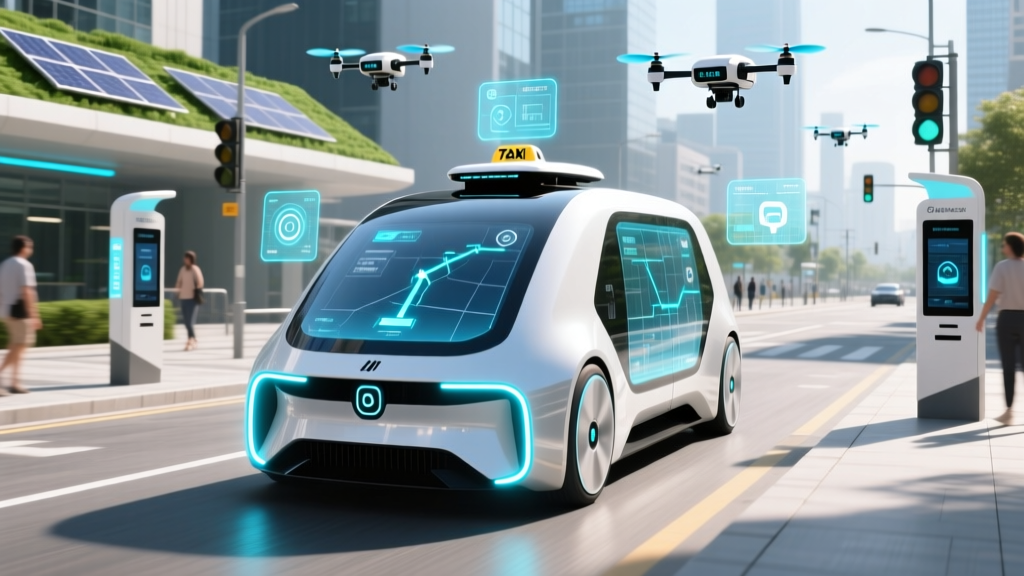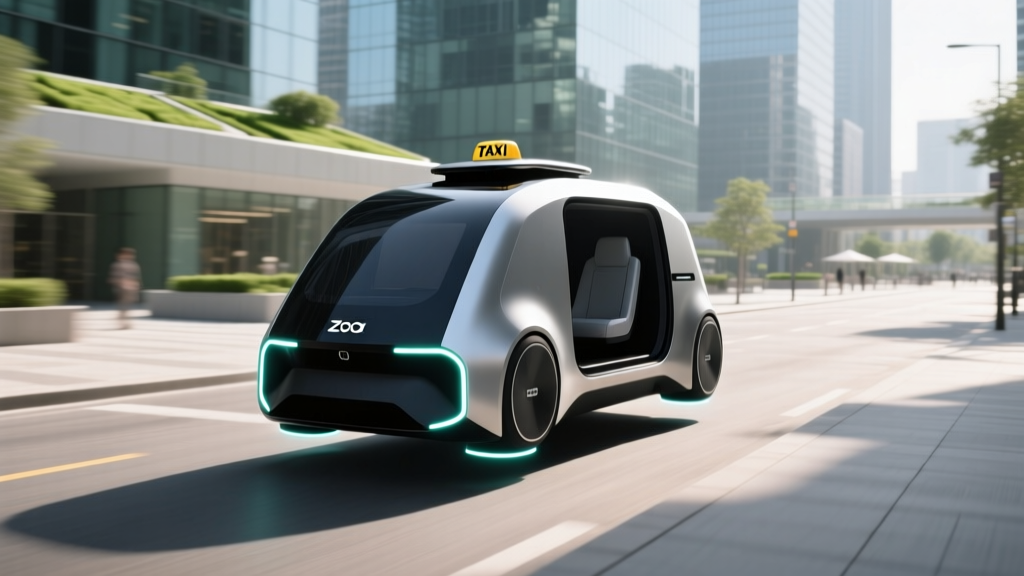
If you have seen Zoox's boxy, steering-wheel-free robotaxi gliding through San Francisco or Las Vegas, you probably have one question: can you actually hail one, and what does it cost? The short answer is that Zoox rides are not free as a standard service in 2026, but the Amazon-owned autonomous vehicle company has run limited free promotional periods during early launch phases. Here is everything you need to know about Zoox pricing, where you can ride, safety performance, and how the service stacks up against Uber and Lyft.
What Is Zoox and What Autonomy Level Does It Operate At?
Zoox is a fully autonomous ride-hail service — not a car you buy, but a mobility platform you summon via app. Unlike Tesla's Full Self-Driving (Supervised) or GM's Super Cruise, which require an attentive driver behind the wheel, Zoox operates at SAE Level 4 automation within its geofenced service areas. That means the vehicle handles all driving tasks with no human fallback driver on board, under defined operational conditions.
| Level | Who Drives | Example |
|---|---|---|
| Level 2 | Human (hands on or eyes on) | Tesla Autopilot, BlueCruise, Super Cruise |
| Level 3 | System (human on standby) | Mercedes Drive Pilot (limited markets) |
| Level 4 | System (no human needed, geofenced) | Zoox, Waymo |
| Level 5 | System (everywhere, all conditions) | Does not yet exist commercially |
This distinction matters. When people ask whether robotaxis are "self-driving," the answer for Zoox is yes — within its approved zones, there is no driver, no steering wheel, and no pedals. The vehicle is a purpose-built, bidirectional carriage with inward-facing seats and a top speed of 75 mph.
Where Can I Ride a Zoox Robotaxi Right Now?
Zoox has been methodically expanding its commercial service footprint since launching its first paid rider program. As of early 2026, here is where you can actually hail a ride:
| City | Status | Service Area Notes |
|---|---|---|
| Las Vegas, NV | Commercial service live | Las Vegas Strip corridor, airport-adjacent zones, downtown core |
| San Francisco, CA | Commercial service live | Select neighborhoods; expanded geofence vs. 2024 pilot zones |
| Foster City, CA | Testing / limited access | Near Zoox HQ; employee and invited-rider programs |
| Austin, TX | Announced expansion | Testing underway; commercial launch expected 2026–2027 |
| Atlanta, GA | Announced expansion | Regulatory approvals pending; no public rides yet |
Access in live cities may still require joining a waitlist or receiving an invitation, particularly during peak demand periods. Zoox has historically gated its rollout more conservatively than Waymo, prioritizing safety data accumulation over rapid geographic expansion.
Are Zoox Rides Free? Pricing Breakdown vs. Uber and Lyft
During its initial Las Vegas and San Francisco soft launches, Zoox offered complimentary rides to early access riders — a promotional strategy to build rider familiarity and gather feedback. Those free-ride windows were time-limited.
As of 2026, Zoox charges for rides in its commercial markets. Pricing is designed to be competitive with conventional rideshare, though exact per-mile and per-minute rates vary by city and time of day. Here is how a typical Zoox fare compares:
| Cost Factor | Zoox | UberX | Lyft Standard |
|---|---|---|---|
| Base fare | ~$2.50 | ~$2.50–$3.00 | ~$2.00–$3.00 |
| Per-mile rate | ~$1.25–$1.75 | ~$1.50–$2.50 | ~$1.30–$2.20 |
| Per-minute rate | ~$0.30–$0.45 | ~$0.25–$0.50 | ~$0.25–$0.45 |
| Surge pricing | Minimal (fixed fleet) | Frequent in peak hours | Frequent in peak hours |
| Tips | No driver to tip | Expected ($2–$5+) | Expected ($2–$5+) |
| Estimated 5-mile trip | ~$10–$14 | ~$13–$20 | ~$12–$18 |
The tip savings alone can shave 15–25% off a comparable Uber or Lyft ride. Zoox's fixed, company-owned fleet also means less exposure to surge pricing spikes that plague traditional rideshare during events, airport rushes, or bad weather.
How to Use the Zoox App and Hail a Ride
The Zoox rider experience is entirely app-based, similar to Uber or Lyft but with a few differences unique to a driverless platform:
- Download the Zoox app (iOS/Android) and create an account with phone verification.
- Check service availability — the app map shows the current geofenced zone. If your pickup or dropoff falls outside the boundary, the ride cannot be requested.
- Enter your destination and confirm the upfront fare estimate.
- Wait for vehicle assignment — the app shows the approaching Zoox vehicle with its unique identifier and license plate.
- Authenticate at the vehicle — scan a QR code or enter a PIN on the exterior panel to unlock the doors. This ensures only the booked rider enters.
- Start your ride — the in-cabin screen shows your route, ETA, and climate/music controls. A remote support agent is accessible via button at all times.
Rides are currently limited to passengers 18+ (or accompanied minors depending on city rules). The vehicle seats up to four passengers, and there is no option to request a specific vehicle type — every Zoox is the same purpose-built carriage.
How Safe Are Zoox Robotaxis? The Data
Safety is the most scrutinized aspect of any Level 4 robotaxi service. Zoox publishes periodic safety reports and is subject to NHTSA Standing General Order crash-reporting requirements, which mandate that all ADS-equipped vehicles report collisions within one day.
- Autonomous miles driven: Over 1 million fully driverless miles across test and commercial operations
- Reportable collisions (NHTSA SGO): Low single-digit incidents, predominantly low-speed contact events (e.g., being rear-ended at stoplights, minor sideswipe by human drivers)
- At-fault incidents: Zoox vehicles have not been cited as the primary at-fault party in any serious-injury collision in public NHTSA filings
- Disengagement rate: Zoox does not publicly report per-mile disengagement figures in the same format as California DMV reports (its commercial fleet operates outside traditional disengagement-tracking frameworks), but internal data shared with regulators indicates remote-assistance interventions averaging fewer than 1 per 5,000–8,000 miles in mature service zones
For context, the human driver fatal crash rate in the US is approximately 1.35 deaths per 100 million vehicle miles (IIHS). Robotaxi fleets have not yet accumulated enough miles to make a statistically rigorous fatality-rate comparison, but the available data from Zoox and Waymo suggests contact events are overwhelmingly minor and low-speed. The most common robotaxi "incident" is being hit by a human driver — not the other way around.
Zoox Technology Stack: Lidar, Cameras, and Geofencing
Zoox takes a sensor-rich approach that contrasts sharply with Tesla's camera-only FSD philosophy. The Zoox vehicle is equipped with a symmetric sensor suite providing 360-degree redundancy:
| Component | Specification |
|---|---|
| Lidar | Multiple roof- and corner-mounted units; 360° coverage with overlapping fields of view; range ~200m+ |
| Cameras | High-resolution surround camera array for object classification, traffic-light state, and signage |
| Radar | Forward and corner radar for velocity detection and adverse-weather penetration |
| Compute | Custom high-performance ADS computer with redundant processing paths |
| Battery | ~75 kWh usable (estimated), NMC chemistry; designed for all-day urban operation with fast-charge pit stops |
| Top speed | 75 mph |
| Drive architecture | Bidirectional (no designated front/back); four-wheel steering |
| Geofencing | HD-mapped operational design domain (ODD); vehicle will not operate outside approved boundaries |
The reliance on lidar gives Zoox a significant advantage in depth perception and night operation compared to camera-only systems. Lidar actively illuminates the environment, meaning the vehicle's perception does not degrade in darkness, glare, or shadow. The trade-off is cost — each Zoox vehicle carries significantly more expensive hardware than a consumer EV with Level 2 ADAS.
Geofencing is central to Zoox's safety case. The vehicle's operational design domain (ODD) is pre-mapped at centimeter-level precision. If a route would take the vehicle outside its approved zone, or if GPS/localization confidence drops, the vehicle executes a minimal-risk maneuver (pulling over safely) rather than guessing.
Regulatory Landscape: Who Approves Zoox Operations?
Deploying a driverless vehicle for commercial passenger service requires navigating a patchwork of state and federal regulation:
- California (CPUC + DMV): The California Public Utilities Commission issues permits for commercial robotaxi service, while the DMV manages testing permits and collision reporting. Zoox holds both a testing permit and a commercial deployment permit for San Francisco.
- Nevada: Nevada's regulatory framework is more permissive, with the Nevada DMV authorizing autonomous vehicle testing and deployment. Las Vegas has been a primary Zoox commercial market.
- Federal (NHTSA): The National Highway Traffic Safety Administration does not currently "approve" ADS systems pre-market but enforces safety through the Standing General Order crash-reporting mandate, recall authority, and Federal Motor Vehicle Safety Standards (FMVSS). Zoox received a notable FMVSS exemption for its steering-wheel-free vehicle design, since several standards assume a human driver position.
- Expansion states (Texas, Georgia): Each state has its own legislative framework. Texas has been relatively open to AV testing; Georgia has been working through legislative updates to accommodate commercial robotaxi deployment.
The regulatory process is the primary bottleneck on Zoox's expansion timeline. Each new city requires not just mapping and testing, but formal regulatory approval — a process that can take 12–24 months per jurisdiction.
Current Limitations: What Zoox Cannot Do
- Weather restrictions: Zoox vehicles will pause or reduce service during heavy rain, fog, or flooding conditions that exceed sensor confidence thresholds. Unlike a human driver who "pushes through," the system defaults to caution.
- Geofence boundaries: You cannot request a ride that starts or ends outside the mapped ODD. This means suburban areas, highways outside the zone, and many residential neighborhoods are not yet accessible.
- No highway operation (most zones): Current commercial service is predominantly urban surface-street driving. Interstate or freeway segments are limited or excluded in most geofenced areas.
- Construction zones: Major road construction with altered lane markings or temporary barriers can trigger a remote-assistance intervention or reroute.
- Emergency vehicles: While Zoox vehicles are programmed to yield to emergency vehicles, complex multi-lane scenarios with simultaneous emergency vehicles can cause the vehicle to pull over and wait — adding time to your trip.
- No cargo-only or delivery trips: A passenger must be present. You cannot send a Zoox to pick up food or a package without a rider inside.
- Accessibility: The Zoox vehicle is designed with wheelchair accessibility in mind, but riders should confirm specific accommodation availability through the app, as not all vehicles in the fleet may be identically configured.
These limitations are not unique to Zoox — Waymo faces similar constraints. The key takeaway is that Level 4 autonomy means "self-driving within a defined box." That box is growing, but it is far from universal.
Zoox vs. Waymo: Quick Comparison
| Feature | Zoox | Waymo |
|---|---|---|
| Vehicle type | Purpose-built (no steering wheel) | Retrofit Jaguar I-PACE, Zeekr |
| SAE Level | Level 4 | Level 4 |
| Live cities (2026) | Las Vegas, San Francisco | Phoenix, SF, LA, Austin, expanding |
| Highway driving | Limited | Select freeway segments |
| Parent company | Amazon | Alphabet (Google) |
| Rider waitlist | Yes (varies by city) | Mostly open access in live cities |
| Cumulative driverless miles | ~1M+ | 30M+ |
Waymo is significantly further along in both geographic reach and cumulative miles. Zoox's advantage lies in its purpose-built vehicle — designed from the ground up for riders rather than retrofitted from a consumer car — and Amazon's deep resources for scaling logistics and fleet management.
Frequently Asked Questions
Are Zoox rides completely free?
No. Zoox offered free promotional rides during its initial soft-launch periods in Las Vegas and San Francisco, but standard commercial rides are paid as of 2026. Fares are competitive with UberX and Lyft Standard, and you save on tipping since there is no driver. Check the Zoox app for any active new-rider promotional credits.
Is Zoox really self-driving, or is there a hidden driver?
Zoox is genuinely driverless — SAE Level 4. There is no steering wheel, no pedals, and no human driver on board. The vehicle operates autonomously within its geofenced service area, with remote support agents available to assist in edge cases. This is fundamentally different from Level 2 systems like Tesla Autopilot, which require constant human supervision.
Can I use Zoox at the airport?
In Las Vegas, Zoox service includes airport-adjacent zones, but direct terminal pickup and dropoff availability depends on airport authority agreements, which evolve over time. Check the app's geofence map for the most current airport access status.
What happens if the Zoox vehicle breaks down mid-ride?
The vehicle is designed to detect faults and execute a minimal-risk maneuver — typically pulling to the nearest safe curb. A remote support agent communicates with passengers through the in-cabin screen, and Zoox dispatches roadside assistance or arranges alternative transportation. You are not charged for incomplete rides due to vehicle issues.
How does Zoox handle bad weather?
Zoox vehicles use lidar, radar, and cameras — a sensor suite more robust than camera-only systems in low visibility. However, during heavy rain, dense fog, or flooding, the system may reduce speed, reroute, or pause service entirely. If your ride is canceled due to weather, you are not charged.
Does Zoox sell its vehicles to consumers?
No. Zoox is a mobility-as-a-service platform only. You cannot purchase a Zoox vehicle. The company operates its own fleet exclusively for ride-hail service, similar to how you cannot buy a Waymo vehicle.
Editorial note: Robotaxi availability, pricing, and regulatory status change frequently. Always verify current service details through the official Zoox app and your local transportation authority before planning trips around autonomous vehicle service.