Short Answer: Yes, Every Waymo Robotaxi Is Fully Electric
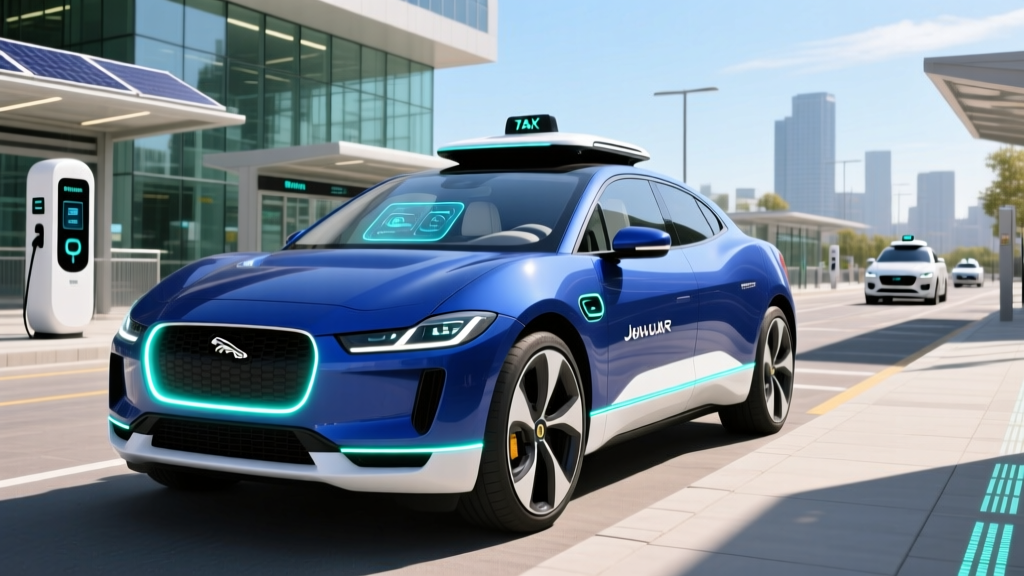
If you've ever hailed a driverless ride through downtown Phoenix or San Francisco, you likely climbed into the back of a Jaguar I-PACE — a battery-electric SUV that serves as the exclusive vehicle platform for Waymo's commercial robotaxi service, Waymo One. As of early 2026, Waymo operates a fully electric fleet, and the choice isn't just an environmental statement. EVs offer the precise torque control, low-vibration cabin, and high-voltage electrical architecture that Level 4 autonomous systems demand.
But "electric" is only part of the story. What really separates a Waymo robotaxi from the EV in your driveway is the sensor array bolted to its roof, the SAE Level 4 autonomy software running in its trunk-mounted compute unit, and the geofenced service areas where regulators have approved fully driverless operation. Let's break down the vehicle, the tech, the real-world safety data, and where you can actually hail one today.
The Vehicle: Jaguar I-PACE Specs and Why Waymo Chose It
Waymo partnered with Jaguar Land Rover to build a purpose-integrated version of the I-PACE, modified from the ground up to house the 5th-generation Waymo Driver sensor suite and computing hardware. Unlike a retrofit, this isn't an aftermarket bolt-on — the lidar, cameras, and radar units are designed into the vehicle's body panels and roof rack from the factory.
| Specification | Value |
|---|---|
| Powertrain | Dual-motor AWD, fully electric (BEV) |
| Battery Capacity | 90 kWh usable (NMC lithium-ion) |
| EPA Range | 234 miles (stock I-PACE); estimated ~180–200 mi in robotaxi config due to sensor power draw and added weight) |
| Horsepower / Torque | 394 hp / 512 lb-ft |
| 0–60 mph | 4.5 seconds |
| Max DC Fast Charge Rate | 100 kW (CCS1 connector) |
| 10–80% DC Charge Time | ~45 minutes (at 100 kW peak) |
| Sensor Suite (5th-Gen) | 6 lidar, 8 cameras, 6 radar, external audio receivers |
SAE Autonomy Level: What Level 4 Actually Means
Waymo One is classified as SAE Level 4 — High Automation. This is a critical distinction that most consumers confuse with the Level 2 systems found in consumer vehicles like Tesla's FSD (Supervised), Ford BlueCruise, or GM Super Cruise.
| Level | Name | Who Drives? | Examples |
|---|---|---|---|
| Level 0 | No Automation | Human does everything | Basic cruise control |
| Level 1 | Driver Assistance | Human drives; system assists steering OR speed | Adaptive cruise, lane-keeping |
| Level 2 | Partial Automation | Human drives; system assists steering AND speed | Tesla Autopilot/FSD Supervised, BlueCruise, Super Cruise |
| Level 3 | Conditional Automation | System drives in specific conditions; human must take over when requested | Mercedes DRIVE PILOT (limited markets) |
| Level 4 | High Automation | System drives fully within its operational design domain; no human needed | Waymo One, Zoox (limited areas) |
| Level 5 | Full Automation | System drives everywhere, all conditions; no human needed ever | Does not exist commercially |
Where Can You Actually Ride in a Waymo Robotaxi in 2026?
Waymo One is not available everywhere. The service operates within strictly defined geofences — mapped, validated zones where the 5th-gen Waymo Driver has been extensively tested and approved by regulators. As of early 2026, fully driverless Waymo One rides are available in the following metropolitan areas:
| City / Region | Service Status | Service Area Notes |
|---|---|---|
| Phoenix, AZ (Metro) | Fully operational — driverless | Largest service area; covers ~225+ sq mi including Chandler, Tempe, Mesa, Scottsdale, and Phoenix Sky Harbor Airport |
| San Francisco, CA | Fully operational — driverless | Most of the city; 24/7 service approved. Dense urban environment with complex traffic patterns |
| Los Angeles, CA | Fully operational — driverless | Expanded across West LA, Hollywood, downtown, and surrounding areas; growing coverage footprint |
| Austin, TX | Operational — driverless (expanding) | Initial service area covering central Austin; expansion ongoing |
Waymo has announced plans to expand to additional cities, but any areas not listed above should be considered announced or in testing — not yet available for public rides. Expansion requires both regulatory approval from state and local authorities and extensive validation driving within each new geofence.
How to Use Waymo One and What It Costs vs. Uber/Lyft
Using Waymo One is nearly identical to using Uber or Lyft. You download the Waymo One app, enter your pickup and destination within the service area, and a driverless Jaguar I-PACE arrives. There's no driver to rate, no tip to add, and the vehicle will not make unscheduled stops.
Step-by-Step: Hailing Your First Robotaxi
- Download the Waymo One app (iOS/Android) and create an account.
- Enter your pickup location — it must be within the active geofence.
- Confirm your destination — also within the geofence boundary.
- Wait for pickup — typical wait times are 3–8 minutes in well-covered areas.
- Unlock the vehicle via the app when it arrives; the doors unlock automatically.
- Buckle up and press "Start Ride" on the rear-seat screen.
- Arrive and exit — payment is processed automatically via the app.
| Ride Scenario | Waymo One | UberX | Lyft Standard |
|---|---|---|---|
| Short trip (~3 mi, city) | $9–$13 | $10–$15 | $10–$14 |
| Medium trip (~8 mi, city) | $18–$26 | $19–$28 | $18–$27 |
| Airport trip (~15 mi) | $32–$45 | $35–$50 | $33–$48 |
| Surge pricing frequency | Rare; dynamic but less volatile | Frequent during peak hours | Frequent during peak hours |
Pricing is broadly competitive with traditional rideshare, and in many cases slightly cheaper during peak hours because Waymo doesn't experience the same driver-supply surge dynamics. Waymo occasionally offers promotional pricing for new riders in expansion markets. There is no tipping — the vehicle has no driver to tip.
Safety Record: What the Real Data Shows
Safety is the most scrutinized aspect of robotaxi operations, and Waymo publishes more transparency data than any competitor. As of early 2026, Waymo's fleet has accumulated over 50 million fully autonomous miles across its commercial and testing operations, with the vast majority in Phoenix, San Francisco, and Los Angeles.
- Total autonomous miles driven: 50+ million (commercial + testing)
- Fatalities involving Waymo robotaxi (driverless mode): 0
- Police-reported injury crashes: Significantly lower rate per million miles compared to human-driver benchmarks in equivalent geographies, per Waymo's published safety reports reviewed by NHTSA
- Most common incident type: Low-speed contact with stationary objects (e.g., chains, cones, parked cars) during complex urban maneuvers — typically resulting in cosmetic vehicle damage only
- Contact rate: Waymo reports property-damage-only contact rates roughly 50–60% lower than human drivers in the same urban environments, based on insurance claim benchmarks
Sources: Waymo safety reports, NHTSA ADS reporting, and peer-reviewed analysis published by the Insurance Institute for Highway Safety (IIHS).
Context: Incidents That Have Drawn Scrutiny
Waymo's record is not without incidents. In 2024, a Waymo vehicle in San Francisco struck a pedestrian who ran into the street from behind a parked bus — the vehicle was traveling below the speed limit and braked, but could not avoid contact. The pedestrian sustained minor injuries. NHTSA investigated and the incident highlighted a persistent edge case: pedestrians emerging from occlusion at speed.
Separately, in early 2024, a software issue caused a small number of Waymo vehicles in Phoenix to incorrectly predict the paths of other vehicles at low speeds, resulting in minor property-damage contacts. Waymo issued an over-the-air software update within days. The company's transparency in reporting these incidents — required under NHTSA's Standing General Order for ADS-equipped vehicles — is itself a differentiator compared to the opacity of some competitors.
Technology Stack: Lidar, Cameras, Radar, and Geofencing
The 5th-generation Waymo Driver represents a fundamentally different approach to autonomous driving than the camera-only systems championed by Tesla. Waymo uses a redundant, multi-modal sensor stack:
5th-Gen Waymo Driver Sensor Breakdown
- 6 Lidar units: Roof-mounted and body-integrated, providing a 360° 3D point cloud of the environment. Lidar excels at precise distance measurement and object shape detection regardless of lighting conditions.
- 8 Cameras: High-resolution, covering near and far fields. Used for lane detection, traffic signal recognition, signage reading, and object classification.
- 6 Radar units: Provide velocity data on moving objects and perform reliably in rain, fog, and dust — conditions where lidar and cameras can degrade.
- External audio receivers: Detect sirens from emergency vehicles, enabling the system to yield appropriately.
- HD Maps + Geofencing: Waymo vehicles operate only within pre-mapped zones. The HD map provides centimeter-level road geometry, and the geofence ensures the vehicle never attempts to operate in an area it hasn't been validated for.
Lidar vs. Camera-Only: Why It Matters
Waymo's reliance on lidar is a deliberate engineering choice. Lidar provides active illumination — it doesn't depend on ambient light, so performance at night or in tunnels matches daytime performance. The trade-off is cost and complexity: a full lidar suite adds significant hardware expense compared to a camera-only approach. However, for a fleet-operated robotaxi model where hardware cost is amortized over millions of revenue-generating miles, the redundancy is justified.
The geofencing approach also means Waymo's system doesn't need to handle every road in America — it needs to handle every road within its service area extremely well. This is a fundamentally different engineering problem than building a system that can drive anywhere (SAE Level 5), which no company has achieved.
Regulatory Landscape: Who Approves Robotaxi Operations?
Robotaxi operations in the United States are governed by a patchwork of state and local regulations — there is no single federal license to operate a driverless vehicle commercially.
- California: The California Public Utilities Commission (CPUC) and the California DMV both play roles. The DMV issues testing and deployment permits; the CPUC regulates commercial passenger service. Waymo holds both a DMV deployment permit and a CPUC passenger service permit for San Francisco and Los Angeles.
- Arizona: Arizona has taken a permissive regulatory stance since 2015, with no specific state-level permit required beyond standard vehicle registration and insurance. Waymo's Phoenix operation was the first commercial robotaxi service in the US, launching in 2020.
- Texas: Texas passed autonomous vehicle legislation (HB 3388) allowing ADS-equipped vehicles on public roads. Austin operations require local coordination but face fewer regulatory hurdles than California.
- Federal (NHTSA): NHTSA does not currently "approve" autonomous vehicles but exercises oversight through Standing General Orders requiring crash reporting, defect investigations, and safety recalls. NHTSA's ADS page tracks enforcement actions.
This fragmented regulatory environment means expansion to a new city requires not just technical validation but also navigating each state's permitting process — a significant factor in why robotaxi growth is measured in cities per year, not nationwide launches.
Current Limitations: Where Robotaxis Still Fall Short
Despite the impressive technology and safety record, Waymo One has real, practical limitations that riders and prospective riders should understand:
Operational Limitations
- Geofence boundaries: You cannot hail a Waymo to or from any address outside the approved service area. If your destination falls outside the geofence, the app will not allow the ride.
- Weather restrictions: Heavy rain, fog, or dust can degrade sensor performance. In Phoenix, monsoon conditions may temporarily suspend service. Waymo does not currently operate in snow or ice conditions.
- Highway driving: Waymo One trips are predominantly surface-street operations. While the vehicles are technically capable of highway speeds, most service areas are designed around urban/suburban corridors.
- Construction zones: Unexpected lane closures, temporary signage, and shifting road geometry remain challenging. The vehicle may reroute or, in rare cases, pull over and request remote assistance (not remote driving — remote confirmation of a path).
- Emergency vehicle interactions: While audio sensors detect sirens, complex multi-vehicle emergency scenes can cause the vehicle to stop and wait rather than navigate around the situation.
- No intercity trips: Phoenix to Tucson, or San Francisco to Sacramento, is not possible. These are strictly local-ride services.
- Accessibility: Waymo vehicles are Jaguar I-PACE SUVs — they are not wheelchair-accessible. The company has stated it is exploring accessible vehicle options but has not announced a timeline.
The Edge-Case Reality
Autonomous driving at Level 4 within a geofence is a solved problem for the vast majority of trips — but "vast majority" still leaves a long tail of unusual scenarios. A person in a costume, an overturned truck spilling cargo, a police officer directing traffic with non-standard hand signals — these are the situations where the system may choose to stop and wait rather than proceed. For riders, this means occasional trips that take slightly longer than a human driver would, or in rare cases, a trip that the vehicle cannot complete.
Frequently Asked Questions
Are Waymo vehicles fully electric?
Yes. Every Waymo One robotaxi is a Jaguar I-PACE, a fully electric SUV with a 90 kWh NMC battery and dual-motor all-wheel drive. The fleet produces zero tailpipe emissions, though upstream electricity generation varies by grid region.
Is Waymo truly self-driving, or is there a human involved?
Waymo One is SAE Level 4 — fully driverless within its approved geofence. There is no human driver in the vehicle, no steering wheel operator, and no real-time remote control. The vehicle makes all driving decisions autonomously. This is fundamentally different from Level 2 systems like Tesla FSD (Supervised), where a human driver must remain engaged at all times.
How much does a Waymo ride cost compared to Uber or Lyft?
Waymo One pricing is broadly comparable to UberX and Lyft Standard, typically within $1–$3 of equivalent rideshare trips. During surge periods, Waymo can be notably cheaper because it doesn't face driver-supply shortages. There is no tipping.
What cities can I use Waymo in right now?
As of early 2026, Waymo One is fully operational in Phoenix (metro), San Francisco, Los Angeles, and Austin. Expansion to additional cities is ongoing but requires regulatory approval and extensive mapping/testing in each new area.
Has a Waymo robotaxi ever been in a serious crash?
Through early 2026, Waymo reports zero fatalities involving its driverless robotaxi fleet. There have been minor property-damage incidents and at least one pedestrian injury incident in San Francisco involving a pedestrian who ran into the street from behind an occluding vehicle. Waymo's contact rate per million miles is reported to be significantly lower than human-driver benchmarks in equivalent urban areas.
Can Waymo drive in rain or snow?
Waymo vehicles can operate in light rain, but heavy precipitation, fog, and dust can degrade lidar and camera performance. Service may be temporarily restricted during severe weather. Waymo does not operate in snow or ice, which limits expansion to cities with harsh winters.
Will Waymo replace Uber and Lyft?
Not in the near term. Robotaxi services are constrained by geofencing, weather limitations, regulatory approval timelines, and fleet-scaling costs. Waymo is a complement to traditional rideshare in specific metro areas, not a nationwide replacement. The capital required to deploy thousands of sensor-laden EVs in each city means growth will remain measured for years.