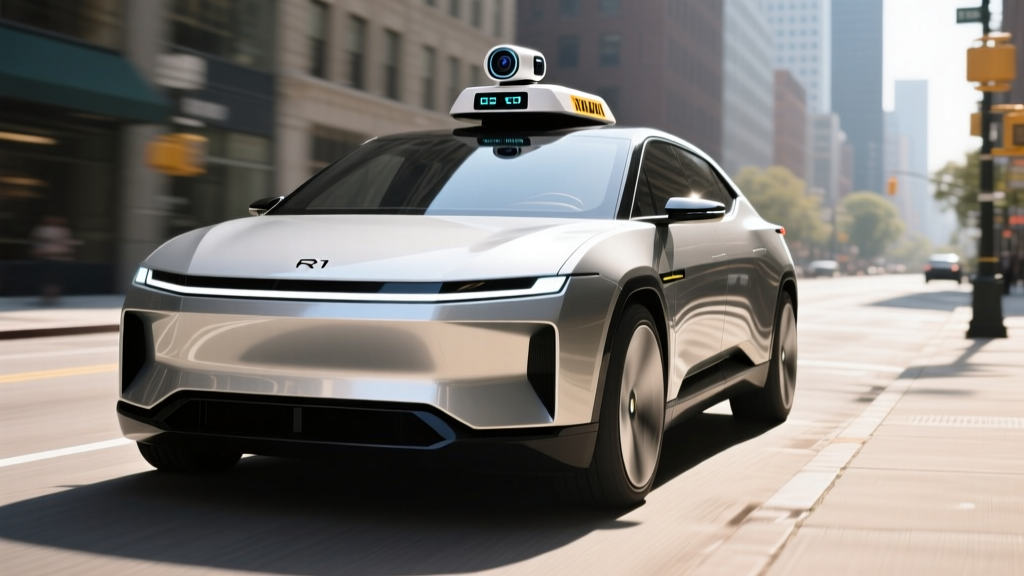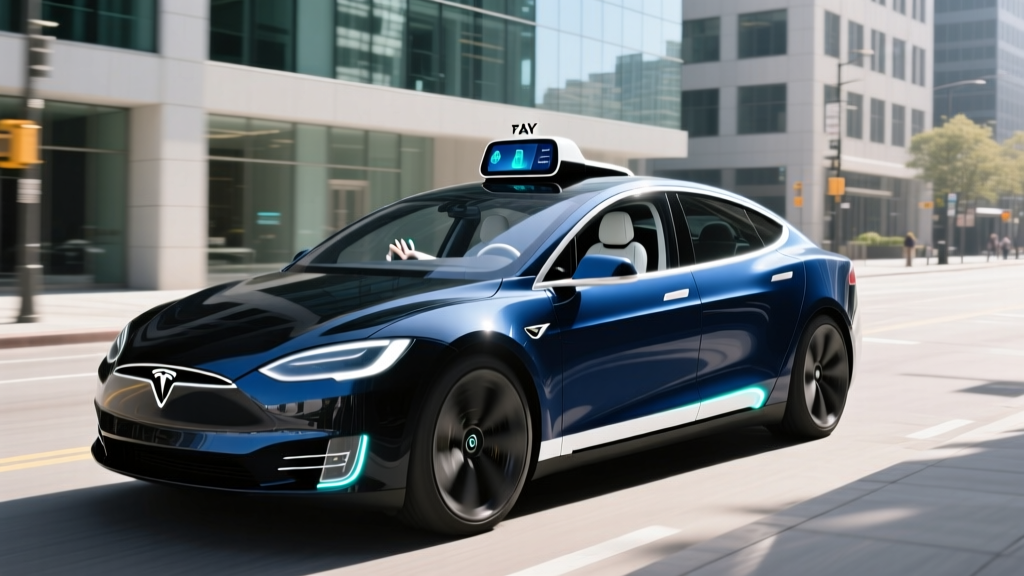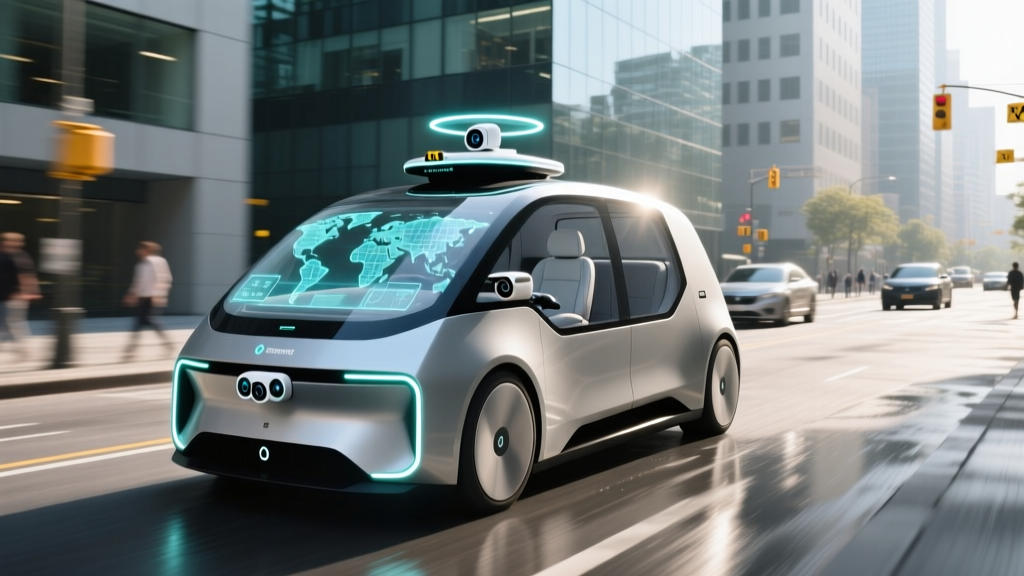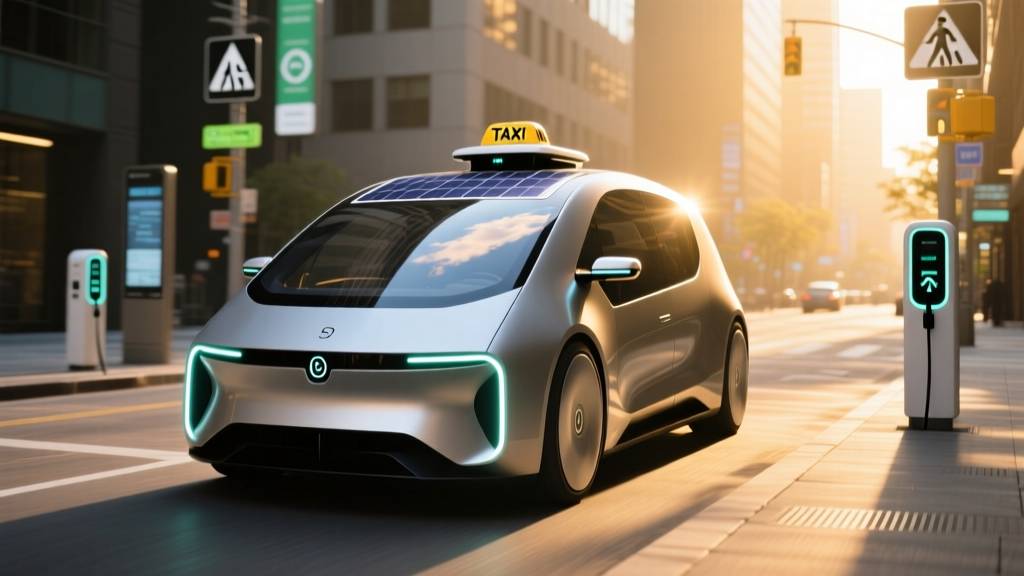
In February 2024, Apple officially canceled Project Titan — its decade-long, $10+ billion effort to build an autonomous electric vehicle. The decision sent shockwaves through the auto and tech industries, ending one of the most ambitious and secretive vehicle programs in history. But the Apple autonomous car story didn't simply vanish. Its technology, talent, and hard-won lessons have reshaped the broader robotaxi landscape in 2026, and understanding what went wrong — and what survived — is essential for anyone following autonomous driving.
This article breaks down the full arc of Apple's self-driving car ambitions, examines where the technology landed, and contextualizes it against the robotaxi services you can actually ride today.
Project Titan: A Decade of Pivots and the Final Shutdown
Apple's automotive ambitions date back to at least 2014, when the company began recruiting engineers from Tesla, Ford, and GM under the codename Project Titan. The project oscillated between two visions for years:
- Full vehicle manufacturing: Apple designs and builds its own branded EV, competing directly with Tesla, Rivian, and legacy OEMs.
- Autonomous driving platform: Apple develops a self-driving software and sensor stack to license to automakers or deploy in its own mobility service.
By 2019, Apple had laid off over 200 Titan employees and appeared to be pivoting toward an autonomous platform. By 2021, under the leadership of Kevin Lynch (who moved from the Apple Watch team), the project swung back toward building a full consumer vehicle — initially targeting a 2025 launch with SAE Level 5 autonomy (no steering wheel, no pedals). That target was repeatedly pushed to 2026, then 2028, and the autonomy goal was downgraded to SAE Level 4 (driverless within geofenced areas).
In January 2024, Bloomberg reported that Apple's leadership had given the Titan team an ultimatum: redefine the project's vision or face cancellation. By late February, the decision was made. Apple would shut down the car effort entirely, redirecting roughly 2,000 employees toward generative AI projects.
Why the Apple Autonomous Car Failed: Five Structural Problems
Having covered the autonomous vehicle space through multiple boom-and-bust cycles, the failure pattern is clear. Apple's car effort suffered from a convergence of problems that no amount of cash could solve:
1. The Level 5 Mirage
Apple's early insistence on full Level 5 autonomy — a car that drives itself anywhere, in any condition, with no human backup — was a strategic error. As of 2026, no production vehicle anywhere in the world operates at SAE Level 5. Waymo, the most advanced robotaxi operator, runs at Level 4 within carefully mapped and geofenced urban areas. Apple's initial refusal to accept this reality delayed engineering progress for years.
2. Leadership Instability
Project Titan cycled through at least four leadership changes in its lifespan — from Steve Zadesky to Doug Field to Kevin Lynch — each bringing a different strategic direction. This contrasted sharply with Waymo's consistent technical leadership and Tesla's singular (if controversial) vision under Elon Musk.
3. The Manufacturing Reality Check
Apple explored partnerships with Hyundai/Kia, BMW, Mercedes-Benz, and Nissan, but negotiations repeatedly collapsed. Automakers were unwilling to cede the level of control Apple demanded. Building a car from scratch — with crash safety certification, supply chain management, dealer networks, and NHTSA compliance — is a fundamentally different challenge from shipping consumer electronics.
4. Sensor Stack Indecision
Apple's testing fleet of Lexus RX450h SUVs used a heavy lidar-centric sensor suite (similar to Waymo and Cruise), but internal debates continued about whether to pursue a camera-first approach (like Tesla) or a hybrid stack. This indecision consumed engineering cycles that competitors spent iterating on production-ready systems.
5. Generative AI Pulled Resources and Attention
By late 2023, Apple's board — particularly CEO Tim Cook — faced mounting pressure to show progress in generative AI. Project Titan was consuming over $1 billion annually with no clear path to revenue. The calculus shifted: redirecting that talent and compute toward Apple Intelligence and on-device AI models offered a faster, more certain return.
- Level 0: No automation. Human does everything.
- Level 1: Single-feature assist (adaptive cruise OR lane-keeping).
- Level 2: Combined assist (steering + acceleration). Driver must remain fully engaged. Examples: Tesla Autopilot, Ford BlueCruise, GM Super Cruise.
- Level 3: Conditional automation — car handles driving in specific scenarios, human must take over when requested. Very limited deployment (Mercedes Drive Pilot in Nevada, at low speeds).
- Level 4: High automation — fully driverless within defined operational design domains (geofenced areas, specific conditions). Examples: Waymo One, Zoox.
- Level 5: Full automation — no geographic or condition limits. Does not exist in production anywhere as of 2026.
Where Apple's Autonomous Tech Ended Up in 2026
The cancellation of the Apple car didn't mean the technology went to waste. Here's where the pieces landed:
| Asset / Capability | Outcome |
|---|---|
| Neural network and perception models | Integrated into Apple Intelligence and on-device ML frameworks for vision and spatial computing (Vision Pro) |
| Custom automotive silicon (Project Titan chip designs) | Reportedly repurposed for next-generation Apple Silicon AI accelerators |
| Lidar and sensor fusion R&D | Informed sensor arrays in Vision Pro 2 and future spatial computing hardware |
| Mapping and HD localization data | Folded into Apple Maps improvements for lane-level navigation |
| Battery and powertrain patents | Apple retains a large EV-related patent portfolio; potential licensing revenue |
| Engineering talent (~2,000 people) | Majority reassigned to AI/ML teams; some departed to Waymo, Zoox, Tesla, and startups |
Apple also continues to operate a fleet of test vehicles for what appears to be an autonomous shuttle concept on its own Apple Park campus — a low-speed, geofenced Level 4 service for employees. This is a far cry from a consumer robotaxi, but it keeps a small amount of autonomous driving capability in-house.
The Robotaxis You Can Actually Ride in 2026
While Apple stepped back, the robotaxi industry moved forward decisively. Here's where the major Level 4 services stand today:
| Service | Operator | SAE Level | Live Cities (2026) | Availability |
|---|---|---|---|---|
| Waymo One | Waymo (Alphabet) | Level 4 | Phoenix, San Francisco, Los Angeles, Austin | 24/7, open to public via app |
| Waymo (expansion) | Waymo | Level 4 | Detroit, Miami (limited zones) | Limited launch / waitlist |
| Zoox | Amazon/Zoox | Level 4 | Las Vegas, Foster City (CA) | Invite-only / employee access |
| Cruise | GM/Cruise | Level 4 | Phoenix (limited relaunch) | Limited hours, supervised re-entry phase |
| Baidu Apollo Go | Baidu | Level 4 | Wuhan, Beijing, Shenzhen (China) | Fully commercial, open to public |
| Motional (Ioniq 5) | Hyundai/Aptiv | Level 4 | Las Vegas (limited) | Partnership with Uber/Lyft |
Key distinction: Tesla's FSD (Supervised) is a Level 2 driver-assistance system. The driver must remain attentive and is legally responsible for the vehicle at all times. It is not a robotaxi, despite Tesla's marketing around a "Robotaxi" unveil. Waymo and Zoox are Level 4 — there is no human driver in the vehicle.
Robotaxi Pricing: How Does It Compare to Uber and Lyft?
One of the most common questions from prospective robotaxi riders is cost. Here's a comparison based on typical urban trips in markets where both robotaxi and rideshare services operate:
| Trip Type | Waymo One | UberX | Lyft Standard |
|---|---|---|---|
| Short (3-5 miles, urban) | $8 – $13 | $10 – $16 | $9 – $15 |
| Medium (8-12 miles) | $18 – $28 | $20 – $32 | $19 – $30 |
| Airport run (15-20 miles) | $35 – $50 | $38 – $55 | $35 – $52 |
| Surge pricing | Minimal / none | 1.5x – 3x common | 1.3x – 2.5x common |
| Tipping | Not expected | 15-20% customary | 15-20% customary |
Waymo's pricing is broadly competitive with UberX and Lyft, with the key advantage being no surge pricing. During peak hours or bad weather, when rideshare prices spike, Waymo's fares remain stable. The tradeoff is that Waymo's service area is geofenced — you can't take a Waymo to a distant suburb outside its operational design domain (ODD).
For a deeper look at the economics of EV ownership versus rideshare and robotaxis, see our total cost of ownership analysis.
Safety Data: What the Numbers Actually Show
Safety is the most scrutinized — and most misunderstood — aspect of robotaxi operations. Here's what the data shows as of early 2026:
- Waymo: Over 10 million fully driverless miles completed across Phoenix, SF, and LA. According to NHTSA data and Waymo's published safety reports, Waymo vehicles are involved in ~70% fewer police-reported injury crashes per million miles compared to the human-driver benchmark in the same cities.
- Cruise: Suspended operations in October 2023 after a serious incident in San Francisco (a pedestrian was dragged under a Cruise vehicle following a collision with a human-driven car). Relaunching in 2025-2026 with enhanced safety protocols and limited hours.
- Industry-wide: California DMV disengagement reports (which track how often human safety drivers must intervene) show intervention rates dropping from ~1 per 5,000 miles in 2020 to ~1 per 25,000+ miles for top operators in 2025. However, these reports have methodological limitations and should be interpreted carefully.
Important context: Robotaxis operate primarily in dense urban environments at moderate speeds (25-45 mph). This is fundamentally different from highway driving. The relevant comparison is not "robotaxi vs. human on a freeway" but "robotaxi vs. human in the same urban geofence." On that basis, the data favors robotaxis — but the sample size is still small relative to the billions of miles driven by humans annually.
Technology Stack: How Robotaxis Actually See the World
The sensor and compute architecture of a Level 4 robotaxi is dramatically more complex than a Level 2 driver-assist system. Here's how the major stacks compare:
| Component | Waymo (6th-Gen Jaguar I-PACE) | Zoox (Purpose-Built Vehicle) | Tesla FSD (Level 2) |
|---|---|---|---|
| Primary sensors | Custom lidar (360°), 29 cameras, 6 radar units | Custom lidar, cameras, radar (redundant arrays on all corners) | 8 cameras only (no lidar, no radar) |
| Lidar | Yes — proprietary Halo unit, ~300m range | Yes — proprietary units | No |
| Compute | Custom Waymo TPU-based platform | Custom Zoox compute module | Tesla HW4 (dual-chip FSD computer) |
| HD mapping | Yes — centimeter-precise, pre-mapped geofence | Yes — pre-mapped service areas | No — "end-to-end" neural network approach |
| Geofencing | Yes — strict ODD boundaries | Yes — limited service areas | No — nominally works on any road (driver responsible) |
| Redundancy | Full redundant braking, steering, power, compute | Full redundant systems, bidirectional driving | Limited redundancy (human is the backup) |
The lidar-vs-camera debate remains the industry's central technical schism. Waymo, Zoox, Baidu, and virtually all Level 4 operators use lidar as a primary sensor, arguing that its precise 3D depth measurement is essential for safety in complex urban scenes. Tesla's camera-only approach is less expensive and more scalable, but it has not achieved Level 4 capability — and the Insurance Institute for Highway Safety (IIHS) has flagged concerns about camera-only systems in low-light and high-contrast conditions.
Current Limitations: What Robotaxis Still Can't Do
- Geofencing: Waymo, Zoox, and all current Level 4 services operate within strictly defined geographic boundaries. Drive outside the zone and the service won't dispatch. This means no suburban or rural coverage.
- Weather: Heavy rain, fog, snow, and ice degrade lidar and camera performance. Most robotaxi services reduce operations or pause entirely during severe weather — precisely when rideshare demand spikes.
- Construction zones: Dynamic lane closures, temporary signage, and flaggers remain challenging edge cases. Robotaxis may route around construction or request remote human teleoperation assistance.
- Complex unprotected turns: Multi-lane unprotected left turns in heavy traffic still trigger conservative behavior — long waits, aborted maneuvers, or remote-assist calls.
- Passenger behavior: No driver means no one to enforce seatbelt use, manage disruptive passengers, or handle medical emergencies in the vehicle.
- Pickup/dropoff precision: Geofenced zones don't always align perfectly with where passengers want to go. "Last 100 feet" navigation (driveways, parking garages, private roads) is often outside the ODD.
Regulatory Landscape: Who Approves Robotaxi Operations?
Robotaxi deployment in the United States is governed by a patchwork of state and local regulations — there is no single federal framework for commercial autonomous vehicle operations:
- California (CPUC + DMV): The most active regulatory environment. The California Public Utilities Commission (CPUC) issues permits for commercial robotaxi services, while the DMV manages testing permits and disengagement reporting. San Francisco has been the epicenter of both robotaxi deployment and community pushback.
- Arizona: The least restrictive state for AV operations. Waymo launched its first commercial service in Phoenix partly because of Arizona's permissive regulatory stance. No state-level permit required for driverless testing or commercial operation.
- Texas: Austin has become a major robotaxi market, with relatively friendly local regulations and a growing tech-savvy ridership base.
- Federal (NHTSA): The National Highway Traffic Safety Administration sets vehicle safety standards and investigates crashes involving automated driving systems. NHTSA's Standing General Order (since 2021) requires manufacturers and operators to report crashes involving Level 2-5 systems within 24 hours.
The regulatory environment remains fluid. Following Cruise's 2023 incident, several cities and states reconsidered their AV permitting processes. Advocacy groups like the Consumer Reports auto safety team have pushed for more transparent safety reporting and stronger federal oversight.
What Apple's Exit Means for the Autonomous Future
Apple's departure from the autonomous car race is significant less for what it changes and more for what it confirms: building a Level 4+ autonomous vehicle — let alone a full consumer EV around it — is among the hardest engineering challenges in the modern economy. It requires sustained commitment over 10+ years, tolerance for billions in losses before revenue, deep manufacturing expertise, and regulatory navigation across dozens of jurisdictions.
The companies that are succeeding — Waymo (backed by Alphabet's deep pockets), Zoox (backed by Amazon), and Baidu Apollo (operating in China's more permissive regulatory environment) — share a common trait: they've been iterating on real-world robotaxi operations for 5+ years, accumulating the billions of miles of driving data that no simulation can replicate.
For consumers, the practical takeaway is this: robotaxis are real, they're available now in a growing number of cities, they're statistically safer than human drivers in their operating domains, and they cost about the same as Uber. But they're not coming to your rural driveway anytime soon — and Apple's retreat is proof that even the world's most valuable company couldn't crack the problem on its preferred timeline.
Frequently Asked Questions
Is Apple still working on an autonomous car in 2026?
No. Apple officially canceled Project Titan in February 2024. The company redirected its automotive engineering talent toward generative AI projects. Apple retains a large portfolio of EV and autonomous driving patents, and operates a small autonomous shuttle test fleet on its Apple Park campus, but it is not developing a consumer vehicle.
Could Apple license its autonomous technology to a car company?
It's theoretically possible — Apple holds hundreds of patents related to vehicle sensors, battery systems, and autonomous navigation. However, no licensing deals have been announced. Apple's historical reluctance to license its core technology (iOS, for example, has never been licensed to other phone makers) suggests this is unlikely.
Where can I ride a robotaxi right now?
As of 2026, Waymo One operates commercially in Phoenix, San Francisco, Los Angeles, and Austin. Baidu Apollo Go is the world's largest robotaxi service, operating in over 10 Chinese cities including Wuhan and Beijing. Zoox has limited operations in Las Vegas. Cruise is in a phased relaunch in Phoenix.
Are robotaxis really safer than human drivers?
Within their operational domains (mapped urban areas, moderate speeds, fair weather), the data suggests yes. Waymo reports approximately 70% fewer injury crashes per million miles compared to the human benchmark in the same cities. However, robotaxis have not been tested at scale in highway, rural, or severe-weather conditions, so the comparison is context-specific.
How much does a Waymo ride cost compared to Uber?
Waymo One pricing is comparable to UberX — roughly $8-$13 for a short urban trip and $18-$28 for a medium trip. The key difference is that Waymo does not use surge pricing, so costs remain predictable even during peak demand periods.
What SAE automation level are current robotaxis?
Commercial robotaxis from Waymo, Zoox, and Baidu operate at SAE Level 4 — fully driverless within geofenced operational design domains. No production system anywhere operates at Level 5 (full autonomy in all conditions). Consumer vehicles like Tesla FSD (Supervised), Ford BlueCruise, and GM Super Cruise are Level 2 — the driver must remain engaged and is legally responsible.