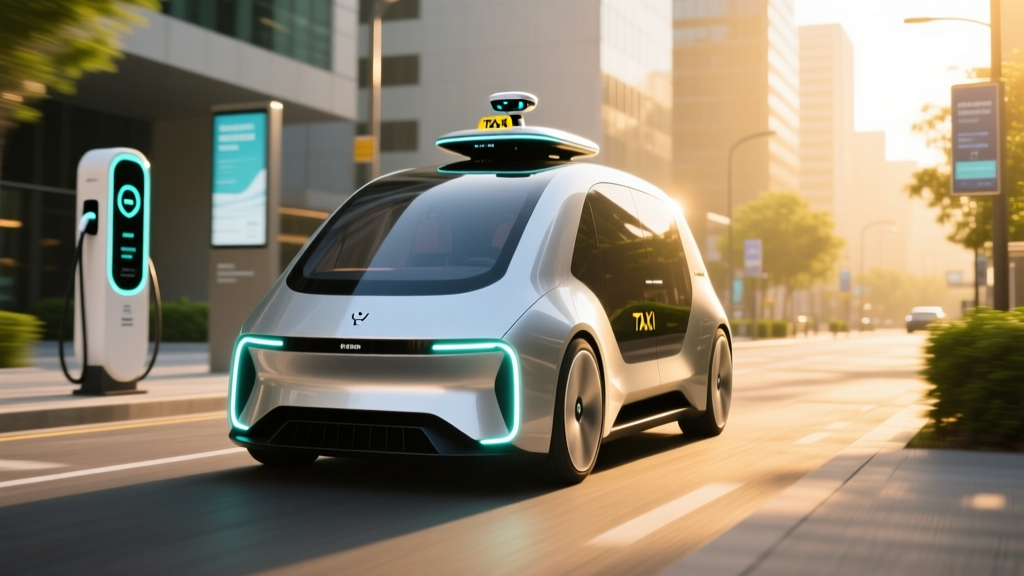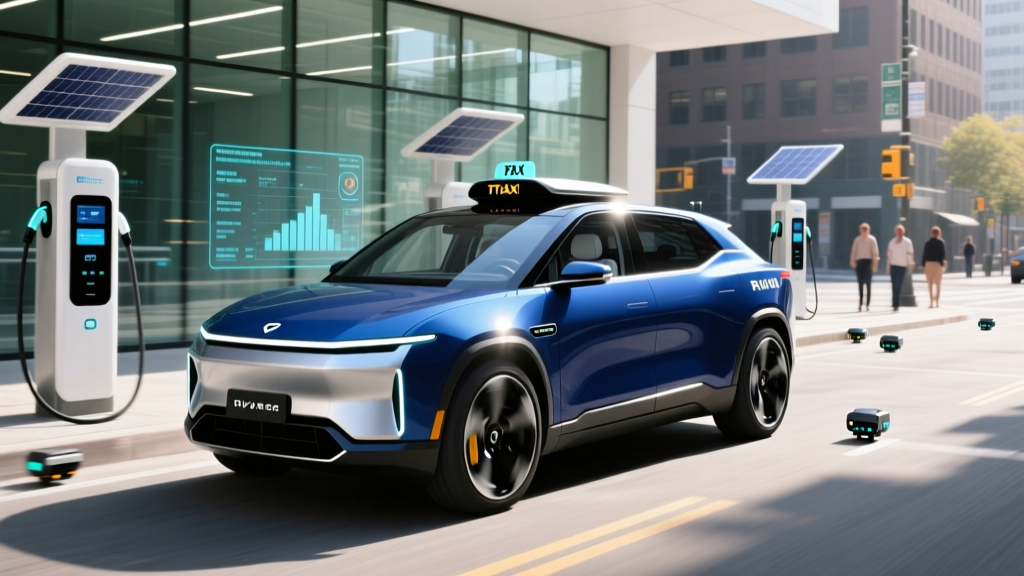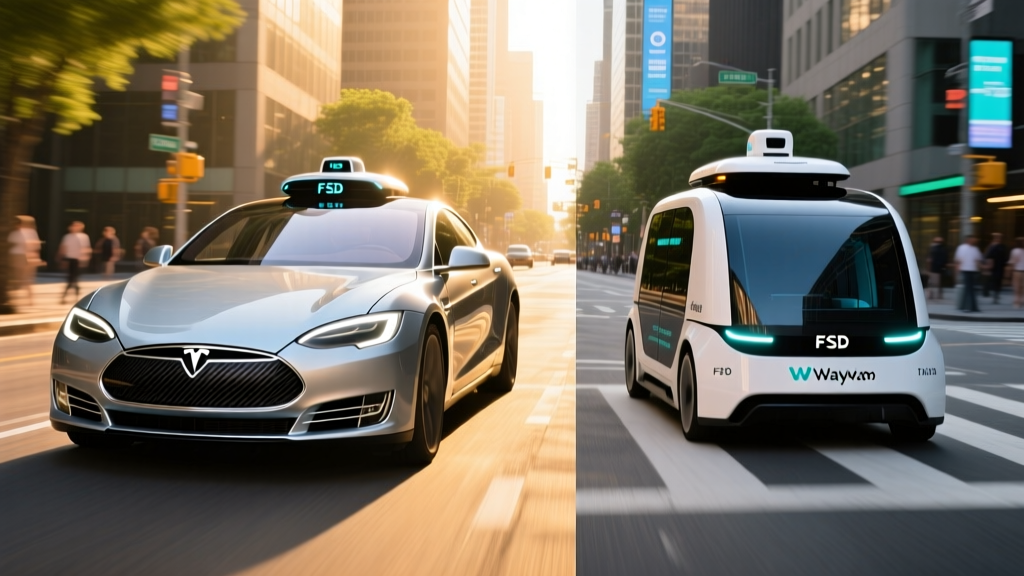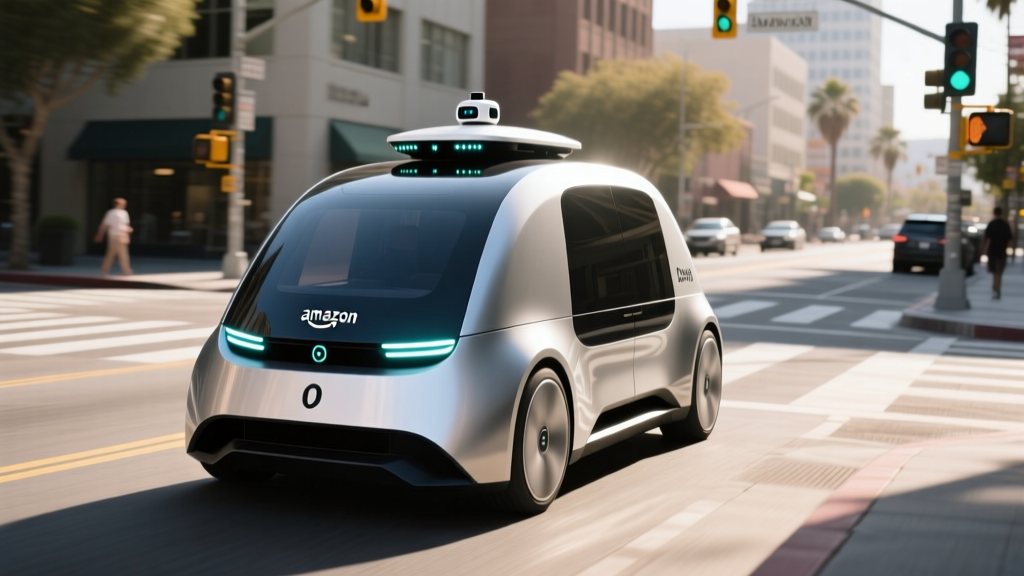
Amazon acquired autonomous driving startup Zoox in 2020 for roughly $1.2 billion, and the company has been steadily developing a purpose-built robotaxi ever since. Unlike the Waymo vans or Cruise sedans you may have seen, the Zoox vehicle is a symmetrical, carriage-style pod with no steering wheel, no pedals, and seats that face each other. It is designed from the ground up as a driverless ride-hail vehicle — not a modified consumer car.
If you've been searching for information on an "Amazon self-driving car," you're likely wondering whether you can actually hail one today, how safe it is, and how it stacks up against Uber or Lyft on price. This guide breaks down exactly where Zoox operates, what the technology can and cannot do, and what the real safety data shows as of early 2026.
SAE Autonomy Level: What Zoox Actually Is
The Zoox robotaxi operates at SAE Level 4 within its approved Operational Design Domain (ODD). This means the vehicle handles all driving tasks — steering, braking, navigation, obstacle avoidance — without any human intervention, but only within specific geographic boundaries and conditions. There is no human driver behind the wheel and no expectation that a passenger will take over.
This is fundamentally different from SAE Level 2 driver-assistance systems like Tesla Autopilot, Ford BlueCruise, or GM Super Cruise, which require continuous driver supervision. Zoox is not a consumer car you can buy; it is a mobility-as-a-service platform.
| Level | Name | Driver Required? | Examples |
|---|---|---|---|
| 0–1 | No Automation / Driver Assist | Yes, fully | Cruise control, lane-keep |
| 2 | Partial Automation | Yes, hands on or eyes on | Autopilot, BlueCruise, Super Cruise |
| 3 | Conditional Automation | Yes, must take over on request | Mercedes DRIVE PILOT (limited) |
| 4 | High Automation | No (within ODD) | Zoox, Waymo, Cruise (paused) |
| 5 | Full Automation | No, anywhere | Does not exist commercially |
Where Can I Ride a Zoox Robotaxi Right Now?
Zoox has been conducting public-facing operations in a limited capacity. The company launched its first commercial rider-hail service in Las Vegas, Nevada and expanded to portions of San Francisco, California. As of early 2026, Zoox continues to operate primarily in these two metros, with testing permits also active in Austin, Texas and Atlanta, Georgia, though those markets have not yet launched full public commercial service.
| City | Status | Service Area | Hours |
|---|---|---|---|
| Las Vegas, NV | Commercial service (live) | Las Vegas Strip corridor & downtown | Extended hours, not 24/7 |
| San Francisco, CA | Commercial service (limited) | Select neighborhoods, geofenced | Daytime/evening hours |
| Austin, TX | Testing (permit active) | Mapped zones, not open to public | N/A |
| Atlanta, GA | Testing (permit active) | Mapped zones, not open to public | N/A |
To ride in cities where commercial service is live, users download the Zoox app (available on iOS and Android), create an account, and request a ride much like Uber or Lyft. The app shows the vehicle's approach, lets you unlock the doors via phone, and handles payment automatically. There is no driver to interact with and no tip screen.
Zoox has periodically offered free or heavily discounted introductory rides in new markets to build rider familiarity. Check the Zoox app or website for current promotional pricing in your city.
Zoox vs. Uber and Lyft: Pricing Comparison
Robotaxi operators have an inherent cost-structure advantage: no driver payout. However, the vehicles themselves are expensive (estimated $150,000–$200,000+ per unit with sensor suites), and fleet operations, remote monitoring, and maintenance add significant overhead.
| Service | Typical Fare | Surge Pricing? | Wait Time |
|---|---|---|---|
| Zoox | $7–$14 (introductory promos often lower) | Limited / no surge currently | 3–8 min in service zone |
| UberX | $10–$18 | Yes, frequent | 2–6 min |
| Lyft | $10–$17 | Yes, frequent | 2–6 min |
| Waymo One | $9–$16 | Limited | 3–10 min |
Zoox's pricing strategy has leaned toward competitive or below-market fares to encourage adoption. As fleet density increases and promotional periods end, expect fares to settle near or slightly below UberX/Lyft equivalents — the value proposition being consistent pricing without surge multipliers and the novelty of a fully driverless experience.
Safety Record: What the Data Shows
- Commercial miles driven: Estimated 1+ million driverless miles across Las Vegas and San Francisco combined.
- Reported contact incidents: Zoox has filed collision reports with the California DMV and NHTSA as required. The number of reported contacts is low relative to miles operated, with most involving low-speed scenarios and no serious injuries.
- NHTSA Standing General Order: Zoox is subject to NHTSA's Standing General Order requiring Level 2–5 ADS-equipped vehicles to report crashes within 24 hours.
- No fatalities have been publicly attributed to Zoox robotaxi operations as of early 2026.
For comparison context, the U.S. traffic fatality rate is approximately 1.33 deaths per 100 million vehicle miles traveled (NHTSA). Robotaxi operators have collectively logged tens of millions of driverless miles with zero or near-zero fatalities, though the sample size remains small compared to human driving.
Zoox's safety approach relies on redundant systems: the vehicle can continue to operate safely if a primary sensor, compute module, or communication link fails. The vehicle's top speed is limited to 75 mph, and it operates within geofenced areas that have been extensively mapped and validated.
Like all robotaxi companies, Zoox has faced scrutiny. In late 2024, the NHTSA opened a preliminary evaluation into Zoox following reports of vehicles behaving unexpectedly near construction zones. Zoox cooperated and issued software updates to address the flagged behavior. This type of regulatory feedback loop is standard for the industry.
Technology Stack: How the Zoox Vehicle Sees the World
The Zoox robotaxi does not follow Tesla's camera-only philosophy. Instead, it uses a multi-modal sensor suite combining three perception technologies:
Zoox Sensor Architecture
- LiDAR (Light Detection and Ranging): Multiple roof-mounted and corner-mounted LiDAR units create a real-time 3D point cloud of the environment, accurate to centimeters. LiDAR works in darkness and is not affected by glare.
- Cameras: A full 360° camera array provides color imagery for object classification (pedestrian vs. cyclist vs. cone), traffic-light state detection, and sign reading.
- Radar: Long- and short-range radar units detect object velocity and perform reliably in rain, fog, and dust — conditions where LiDAR and cameras can degrade.
Compute: Custom onboard processors run Zoox's proprietary perception, prediction, and planning stack. The vehicle makes driving decisions locally; it does not rely on a continuous cloud connection to navigate.
Geofencing: The vehicle only operates within a pre-mapped, pre-validated Operational Design Domain (ODD). If the vehicle approaches the boundary of its approved zone, it will not proceed and will safely stop or reroute.
Bidirectional design: The Zoox vehicle can drive in either direction (it is symmetrical front-to-back), which simplifies maneuvers like three-point turns and enables it to exit dead-end streets without reversing long distances.
This sensor-heavy approach is more expensive than Tesla's vision-only FSD stack but is the industry consensus for Level 4 operations. Waymo uses a similar LiDAR + camera + radar fusion. The redundancy ensures that if one sensor modality degrades (e.g., cameras blinded by direct sun), others compensate.
Current Limitations: What Zoox Cannot Do
Level 4 autonomy is powerful but bounded. Zoox is transparent about its Operational Design Domain limitations, and riders should understand these before expecting a universal replacement for Uber:
- Geofenced areas only: You cannot ride a Zoox to an arbitrary address. The service operates within a mapped corridor — typically dense urban cores and specific commercial districts. Requesting a ride outside the zone will not be fulfilled.
- Weather restrictions: Heavy rain, dense fog, snow, and ice can degrade sensor performance. Zoox may suspend service or restrict operations during severe weather events. Las Vegas's dry climate and San Francisco's mild conditions are favorable; expansion into cities with harsh winters will require validated cold-weather performance.
- Construction zones and unmapped changes: Temporary road closures, lane shifts, and construction barriers that are not reflected in the map can cause the vehicle to stop and request remote assistance. Zoox has a remote-guidance team that can provide high-level routing advice, but a remote operator does not "drive" the vehicle in real time.
- No highway driving (currently): Zoox operations focus on urban surface streets at speeds up to 75 mph. Long-distance highway trips between cities are not part of the current service.
- Limited cargo and accessibility: The carriage-style interior accommodates up to four passengers but has limited trunk space compared to a standard sedan. Wheelchair-accessible vehicle variants have been announced but are not yet in wide commercial deployment.
- No multi-stop trips: Current Zoox rides are point-A-to-point-B. You cannot add intermediate stops (e.g., pick up a friend or stop at a store) the way you can with Uber or Lyft.
Regulatory Landscape: Who Approves Robotaxi Operations?
Robotaxi deployment in the United States involves a layered regulatory framework:
- NHTSA (federal): Oversees vehicle safety standards. Zoox received a special exemption from certain Federal Motor Vehicle Safety Standards (FMVSS) — such as requiring a steering wheel and mirrors — because its vehicle was purpose-built without them. NHTSA also mandates crash reporting via the Standing General Order.
- State DMVs and PUCs: States control testing permits and commercial deployment approvals. The California DMV issues autonomous vehicle testing permits and publishes disengagement reports. The California Public Utilities Commission (CPUC) approves commercial passenger service. Nevada's DMV has its own autonomous vehicle licensing framework, under which Zoox operates in Las Vegas.
- Local municipalities: Cities can impose additional requirements regarding where robotaxis operate, hours of service, and coordination with emergency services.
This patchwork means that even if Zoox's technology is validated in one state, expansion to a new city requires separate regulatory approval — a significant factor in the pace of geographic growth.
The Amazon Factor: Why Zoox Matters in the EV Ecosystem
Amazon's backing gives Zoox resources that most autonomous driving startups lack: deep pockets for continued R&D, access to Amazon's logistics and cloud infrastructure (AWS), and a long-term strategic vision that ties robotaxi fleets to Amazon's last-mile delivery ambitions. While Zoox is currently a passenger mobility service, the underlying autonomous platform could eventually serve package delivery in urban cores.
The Zoox vehicle itself is a battery electric vehicle (BEV). Its battery pack is estimated in the 70–80 kWh range (usable capacity), providing enough range for a full day of urban ride-hail duty with opportunity charging between shifts. The vehicle charges via standard CCS connectors at depot-based DC fast chargers. Exact EPA range figures for the Zoox vehicle have not been published in the same manner as consumer vehicles, as it is not sold to the public and does not appear on fueleconomy.gov.
Frequently Asked Questions
Is the Amazon self-driving car actually self-driving, or is there a remote driver?
Zoox operates at SAE Level 4, meaning there is no human driver in the vehicle and no remote operator driving it in real time. A remote guidance team can provide high-level routing advice if the vehicle encounters an unfamiliar scenario, but the vehicle executes all driving maneuvers autonomously.
Can I buy a Zoox vehicle?
No. The Zoox robotaxi is not available for consumer purchase. It operates exclusively as a ride-hail service through the Zoox app in approved cities.
How does Zoox compare to Waymo?
Both are SAE Level 4 robotaxi services. Waymo has a larger commercial footprint (Phoenix, San Francisco, Los Angeles, Austin) and more accumulated driverless miles. Zoox differentiates with its purpose-built symmetrical vehicle design and Amazon's financial backing. Pricing and wait times are competitive between the two in overlapping markets.
What happens if the Zoox vehicle gets into an accident?
Zoox vehicles are equipped with collision reporting systems that automatically notify the operations center and emergency services if needed. Passengers can communicate with Zoox support via an in-vehicle screen and speaker system. All incidents are reported to NHTSA under the Standing General Order.
Will Zoox expand to my city?
Zoox has testing permits in Austin and Atlanta, signaling potential future commercial launches, but no confirmed dates. Expansion requires regulatory approval in each new jurisdiction. Check the Zoox website for the latest city announcements.
Does Zoox operate at night and in the rain?
Zoox operates during extended hours but is not currently a 24/7 service in all markets. Light rain does not typically suspend operations, but heavy precipitation, flooding, or severe weather may trigger a service pause for safety.