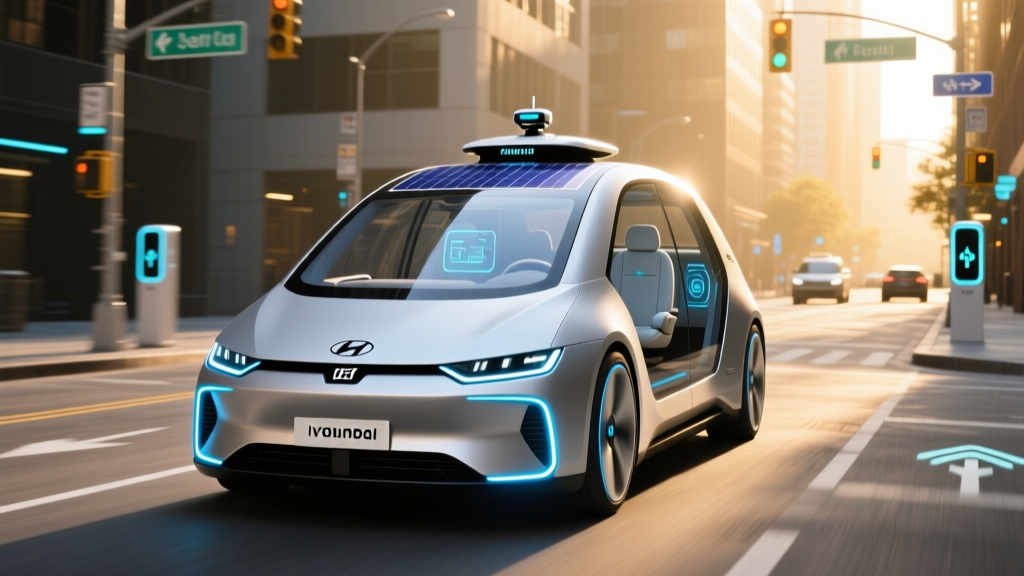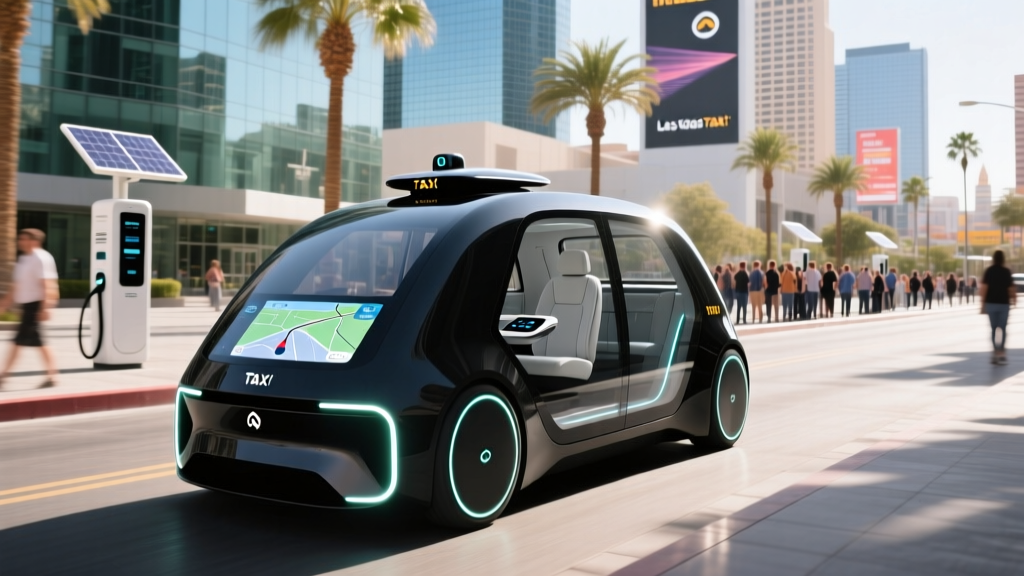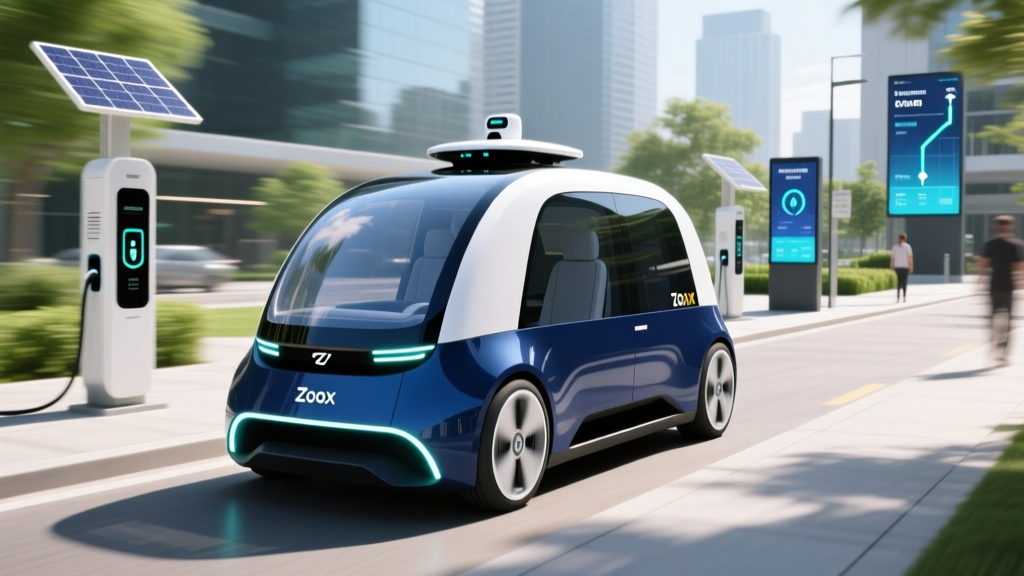
When shoppers search for an "Amazon driverless car," they're usually looking for one thing: the autonomous vehicle project that Amazon acquired and has been quietly developing for years. That project is Zoox, the self-driving technology company Amazon purchased in 2020 for approximately $1.2 billion. Unlike consumer EVs you can buy and park in your garage, Zoox is building a purpose-built Level 4 robotaxi — a carriage-style vehicle with no steering wheel, no pedals, and no driver's seat. Here's exactly what that means for riders in 2026, where the service operates, what it costs, and what the safety data actually shows.
What Is Zoox and How Does It Relate to Amazon?
Zoox was founded in 2014 in Foster City, California, as a stealth-mode autonomous vehicle startup. Amazon acquired the company in June 2020, and Zoox has operated as a wholly-owned subsidiary ever since. The vehicle at the center of the project is the Zoox Gen 3 robotaxi, a bidirectional, symmetrical pod designed from the ground up for driverless passenger service. It seats four passengers face-to-face, features large sliding doors, and is engineered for dense urban environments rather than highway cruising.
Amazon's interest in Zoox spans two use cases: last-mile passenger mobility (the robotaxi service) and potential future applications in package delivery logistics. However, as of 2026, the public-facing service is strictly a passenger robotaxi — there is no consumer "Amazon driverless car" you can purchase or lease.
Zoox operates at SAE Level 4, meaning the vehicle handles all driving tasks within its defined Operational Design Domain (ODD) — specific geofenced urban areas under approved conditions — with no human driver present. This is fundamentally different from Level 2 systems like Tesla Autopilot or Ford BlueCruise, which require continuous driver supervision. At Level 4, there is no one behind the wheel to supervise. If the system encounters a scenario it cannot handle, it is designed to pull over safely rather than hand control to a passenger.
Where Can You Ride a Zoox Robotaxi Right Now?
Zoox has been methodically expanding its service footprint through 2025 and into 2026. Unlike Waymo, which has pursued aggressive multi-city rollouts, Zoox has favored a slower, more controlled deployment strategy. Here is the current operational status:
| City | Status | Service Area | Public Access |
|---|---|---|---|
| Las Vegas, NV | Commercial service | Las Vegas Strip corridor, downtown, airport vicinity | Open to public via Zoox app |
| San Francisco, CA | Commercial service (limited) | Select neighborhoods, geofenced zones | Waitlist + invited riders |
| Foster City, CA | Testing & limited rides | Suburban corridors near Zoox HQ | Employee/invited riders |
| Atlanta, GA | Testing (announced) | Not yet disclosed | Not available |
Las Vegas remains Zoox's primary commercial proving ground, chosen partly because Nevada's regulatory environment for autonomous vehicles is well-established and partly because the Strip corridor offers dense, predictable urban routing. San Francisco operations are more restricted due to the city's complex terrain, weather variability, and ongoing regulatory negotiations with the California Public Utilities Commission (CPUC).
Zoox Technology Stack: Lidar, Cameras, and Geofencing
Zoox takes a sensor-fusion approach that is distinctly different from Tesla's camera-only FSD strategy. The Gen 3 vehicle is equipped with a dense array of perception hardware:
- Lidar: Multiple solid-state and spinning lidar units providing 360° 3D point-cloud mapping out to approximately 150+ meters
- Cameras: A surround-camera array covering all directions with overlapping fields of view for redundancy
- Radar: Forward and side-facing radar for velocity detection and performance in low-visibility conditions
- Ultrasonic sensors: Close-range object detection for low-speed maneuvering and docking
The vehicle's compute platform runs Zoox's proprietary prediction and planning stack, which processes sensor data in real time to model the behavior of pedestrians, cyclists, and other vehicles. The system is designed around a bidirectional driving architecture — the Zoox vehicle can travel in either direction with equal capability, a design choice that simplifies U-turns and tight urban routing.
Geofencing is central to how Zoox operates at Level 4. The vehicle will only operate within pre-mapped, approved zones where Zoox has validated the system's performance. If a rider requests a destination outside the geofence, the app will not allow the booking. This is a hard constraint, not a soft warning.
Pricing: Zoox vs. Uber and Lyft
During its initial commercial phases, Zoox has adopted an aggressive pricing strategy designed to build ridership and gather operational data. Here's how fares compare to traditional rideshare in markets where Zoox is active:
| Metric | Zoox | UberX | Lyft Standard |
|---|---|---|---|
| Base fare | $0 (promotional period) | $2.50–$3.50 | $2.50–$3.50 |
| Per-mile rate | $0 (promotional) / ~$1.20 est. future | $1.25–$1.75 | $1.15–$1.65 |
| Per-minute rate | $0 (promotional) / ~$0.30 est. future | $0.25–$0.40 | $0.25–$0.38 |
| 3-mile trip (est.) | $0–$5 (promo pricing) | $9–$15 | $8–$14 |
| Surge pricing | Not currently applied | 1.2x–3.0x common | 1.2x–2.5x common |
| Tipping | No driver to tip | Expected ($2–$5) | Expected ($2–$5) |
The critical caveat: Zoox's current promotional pricing is not sustainable long-term. The company is subsidizing rides to build ridership volume and operational data. When Zoox transitions to standard pricing, industry analysts expect fares to land slightly below Uber/Lyft on a per-mile basis — the absence of a human driver eliminates the largest cost center in rideshare — but the introductory zero-fare period will end. Riders should expect standard pricing to be introduced in phases as fleet scale increases.
Safety Record: What the Data Shows
Evaluating robotaxi safety requires looking at concrete operational data rather than marketing claims. Zoox, like other Level 4 operators in California, is required to report disengagement and collision data to the California DMV and to the National Highway Traffic Safety Administration (NHTSA) under Standing General Order 2021-01.
- Total autonomous miles driven: Zoox has accumulated millions of driverless miles across its test and commercial fleets, though exact cumulative figures are not always broken out separately from testing miles in public reports.
- Collision reports: Zoox has reported minor-contact incidents to NHTSA, consistent with the broader robotaxi industry. Most reported incidents involve low-speed contact where the robotaxi was rear-ended or sideswiped by a human-driven vehicle — a pattern shared by Waymo and Cruise.
- Disengagement rate: Zoox's California DMV disengagement reports have shown improving year-over-year miles-per-disengagement figures, though direct cross-company comparison is unreliable because manufacturers define "disengagement" differently.
- No passenger fatalities: As of 2026, no Zoox robotaxi has been involved in a passenger fatality during commercial or testing operations.
The honest assessment: Zoox has a smaller public safety dataset than Waymo, which has operated commercially at far greater scale in Phoenix, San Francisco, and Los Angeles. Zoox's more cautious deployment strategy means fewer total miles, which means less statistical confidence in safety comparisons. This is a known trade-off of Zoox's methodical approach — slower expansion produces fewer data points but also fewer high-profile incidents.
Regulatory Landscape: Who Approves Robotaxi Operations?
Robotaxi operations in the United States sit at the intersection of federal, state, and local regulation, and the framework varies significantly by jurisdiction:
- Federal (NHTSA): Sets vehicle safety standards and requires collision reporting under Standing General Order. NHTSA does not currently "approve" robotaxi services but can issue recalls and investigate safety defects. Zoox received a specific exemption from certain Federal Motor Vehicle Safety Standards (FMVSS) — such as requirements for steering wheels and mirrors — because its vehicle was designed without them.
- California (DMV + CPUC): The DMV issues testing and deployment permits. The CPUC regulates commercial passenger service, including fare structures and insurance requirements. Zoox must hold permits from both agencies to operate in San Francisco and Foster City.
- Nevada (DMV + local authorities): Nevada was an early adopter of autonomous vehicle legislation. The state DMV issues autonomous vehicle licenses, and local jurisdictions (such as Clark County for the Las Vegas Strip) coordinate on operational zones and traffic integration.
The regulatory environment remains fluid. Following Cruise's high-profile pedestrian incident in San Francisco in late 2023, several jurisdictions tightened oversight of robotaxi operations. Zoox has so far avoided similar regulatory backlash, partly because its deployment scale has been smaller and more controlled.
Current Limitations: What Zoox Cannot Do
Level 4 autonomy is impressive within its operational boundaries, but those boundaries are firm. Here are the hard constraints riders should understand before booking:
- Geofence restrictions: The vehicle will not travel outside its pre-mapped service zone. You cannot hail a Zoox to a suburb that falls outside the approved ODD.
- Weather constraints: Heavy rain, fog, and low-visibility conditions can trigger the vehicle to pull over or refuse service. Lidar performance degrades in heavy precipitation, and the system is designed to err on the side of caution.
- No highway operation: The Zoox vehicle is designed for urban streets at speeds up to approximately 35–45 mph. It does not merge onto freeways or operate at highway speeds.
- Limited cargo capacity: The four-seat, face-to-face cabin layout does not accommodate large luggage, bicycles, or bulky items. This is a passenger pod, not an SUV.
- Accessibility: While Zoox has designed for wheelchair accessibility, real-world availability of wheelchair-accessible vehicles in the active fleet may be limited during early deployment phases.
- Construction zones: Unexpected road closures or major construction rerouting can cause the vehicle to stop and request remote assistance rather than navigate dynamically.
- No multi-stop trips: Current service is point-A to point-B only. You cannot add intermediate stops the way you can with Uber or Lyft.
How to Use the Zoox Service: Step by Step
- Download the Zoox app (available on iOS and Android) and create an account.
- Verify you are in a service area. The app will only allow ride requests within the active geofence.
- Set your pickup and drop-off locations. Both must be within the approved zone — the app will flag any out-of-bounds destination.
- Confirm your ride. During the promotional period, no payment method may be required. When standard pricing launches, you'll add a payment method as with any rideshare app.
- Meet the vehicle. The Zoox pod will pull to your designated pickup point. Doors open automatically; there is no driver to greet you.
- Board and confirm. Interior screens display your route and trip status. The vehicle will not depart until all passengers are seated and doors are closed.
- Ride. The vehicle handles all driving. A screen shows the route, current speed, and detected objects in real time. An emergency stop button and two-way communication to a remote support agent are available at all times.
Zoox vs. Waymo: Where They Differ
Readers researching robotaxis will inevitably compare Zoox to Waymo, the Alphabet-owned competitor that currently operates the largest Level 4 robotaxi fleet in the U.S. The two services differ in meaningful ways:
- Vehicle design: Waymo retrofits existing vehicles (Jaguar I-PACE, Zeekr RT, Chrysler Pacifica) with sensor suites. Zoox built a ground-up, purpose-built carriage with no driver controls. This gives Zoox more design flexibility but limits production speed.
- Scale: Waymo has logged tens of millions of paid passenger miles across multiple cities. Zoox's commercial mileage is an order of magnitude smaller.
- Speed envelope: Waymo vehicles operate on roads with speed limits up to 65 mph, including some freeway segments. Zoox is optimized for lower-speed urban streets.
- Corporate backing: Both are owned by tech giants (Amazon and Alphabet), providing deep capital reserves for long development timelines.
Frequently Asked Questions
Can I buy an Amazon driverless car for personal use?
No. Zoox is a robotaxi service, not a consumer vehicle. There is no purchase or lease option. The Zoox vehicle is designed exclusively for fleet-operated, driverless passenger service within geofenced urban areas.
Is Zoox truly self-driving, or is there a remote driver?
Zoox operates at SAE Level 4, meaning there is no human driver in the vehicle — not behind the wheel (there is no wheel) and not remotely controlling the car in real time. Remote agents can provide guidance if the vehicle encounters an edge case it cannot resolve, but they do not "joystick" the vehicle. The AI handles all real-time driving decisions.
How much does a Zoox ride cost compared to Uber?
During its current promotional phase, Zoox rides in Las Vegas are free or very low cost. When standard pricing launches, fares are expected to be slightly below comparable Uber/Lyft rides on a per-mile basis, with the added benefit of no surge pricing and no tipping. A typical 3-mile urban trip currently costs $0–$5 on Zoox versus $9–$15 on UberX in Las Vegas.
How safe are Zoox robotaxis?
Zoox has reported minor low-speed contact incidents to NHTSA, consistent with industry-wide robotaxi data. No passenger fatalities have occurred in Zoox operations. The company's cautious, limited-scale deployment means fewer total miles driven than Waymo, which limits the statistical confidence of safety comparisons. Zoox's safety record to date has been cleaner than Cruise's, which experienced a serious pedestrian incident in 2023.
What happens if the Zoox vehicle encounters a situation it can't handle?
The vehicle is designed to execute a minimal risk condition (MRC) — typically pulling over to a safe stop — rather than handing control to a passenger (there are no controls to hand over). A remote support agent can then assess the situation and provide guidance or dispatch assistance.
Does Zoox operate in bad weather?
Zoox may suspend or limit service during heavy rain, fog, or other low-visibility conditions. Lidar and camera performance degrades in severe weather, and the system is programmed to prioritize safety over availability. Light rain may not trigger a suspension, but heavy precipitation likely will.
Will Amazon use Zoox for package delivery?
Amazon has not announced a timeline for using the Zoox platform for delivery logistics. The current vehicle is designed for passenger seating, not cargo. However, Amazon's long-term interest in autonomous last-mile delivery is well-documented, and Zoox's technology stack could eventually be adapted to delivery-specific vehicle platforms.