The phrase "self-driving car" gets thrown around loosely — applied to everything from a Tesla on Autopilot to a steering-wheel-free pod in Phoenix. For buyers and riders trying to understand the actual advantages of a self-driving car, the noise makes it nearly impossible to separate marketing from measurable reality. This guide cuts through that confusion with hard data on where Level 4 robotaxis operate today, what they cost, how their safety records stack up, and where the technology still falls short.
What "Self-Driving" Actually Means: SAE Levels Explained
Before weighing any advantages, you need to know which level of automation you're talking about. The Society of Automotive Engineers (SAE) defines six levels, and the gap between Level 2 and Level 4 is the single most misunderstood distinction in the EV and autonomous space.
| Level | Name | Who Drives? | Examples (2026) |
|---|---|---|---|
| 0 | No Automation | Human does everything | Basic vehicles with no ADAS |
| 1 | Driver Assistance | Human + one system (steering OR speed) | Adaptive cruise control, lane-keep assist |
| 2 | Partial Automation | Human supervises; system handles steering AND speed | Tesla Autopilot, Ford BlueCruise, GM Super Cruise |
| 3 | Conditional Automation | System drives in limited conditions; human must take over on request | Mercedes DRIVE PILOT (limited highway, ≤40 mph, approved states) |
| 4 | High Automation | System drives fully within geofenced area; no human needed | Waymo, Zoox, Cruise (in approved zones) |
| 5 | Full Automation | System drives everywhere, all conditions | Does not exist commercially as of 2026 |
Where Can You Actually Use a Robotaxi Right Now?
Level 4 robotaxi service is not nationwide. It operates in specific geofenced zones within approved cities, and availability shifts as companies expand or pull back. Here's the operational landscape as of early 2026:
| Operator | Live Cities | Service Hours | Geofence Notes |
|---|---|---|---|
| Waymo (Alphabet) | Phoenix, AZ; San Francisco, CA; Los Angeles, CA; Austin, TX | 24/7 in Phoenix & SF; limited hours in LA & Austin during rollout | Defined urban/suburban zones; airport service in PHX and SFO |
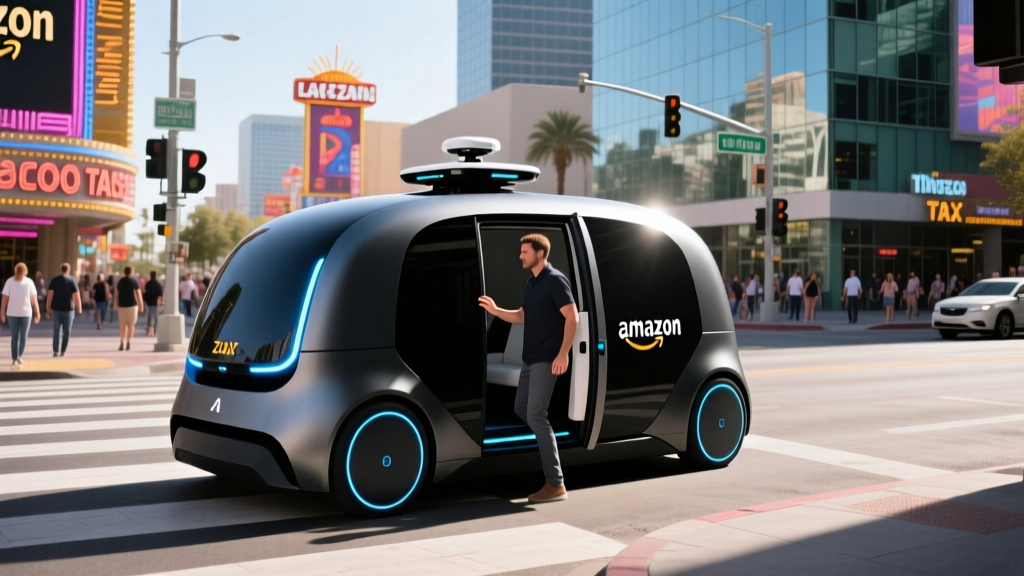
| Zoox (Amazon) | Las Vegas, NV; Foster City, CA (limited); Phoenix, AZ (testing/expansion) | Limited hours; invitation-based in some zones | Purpose-built bidirectional vehicle; dense urban corridors |
| Cruise (GM) | Phoenix, AZ; Dallas, TX; Houston, TX (gradual relaunch) | Daytime/evening hours; phased expansion | Resumed operations post-2023 SF incident with enhanced safety protocols |
| Baidu Apollo Go | Wuhan, Beijing, Chongqing, Shenzhen (China) | Mostly daytime; varies by city | Largest fleet globally by ride volume; not available in the US |
If you live outside these metro areas, Level 4 robotaxi service is not yet available to you. Announced expansions (e.g., Waymo's planned entry into additional Sun Belt cities) should be treated as preliminary until rides are bookable by the public.
The Real Advantages of a Self-Driving Car (Level 4 Robotaxi)
With the definition and geography established, here are the concrete, data-verifiable advantages that Level 4 robotaxis offer today — not promises, but measurable benefits for riders in service areas.
1. Consistent, Predictable Pricing
Robotaxis don't surge-price the way Uber and Lyft do during rainstorms or bar-close rushes. Waymo's pricing model in Phoenix and San Francisco generally tracks close to standard rideshare rates but without the 2x–4x surge multipliers that hit human-driven platforms during peak demand. A 5-mile ride in Phoenix typically runs $8–$14 on Waymo, comparable to a non-surged UberX fare of $9–$13 for the same route.
| Factor | Waymo (Robotaxi) | UberX / Lyft |
|---|---|---|
| Base fare (off-peak) | $8–$14 | $9–$13 |
| Surge multiplier (peak) | None observed (fixed model) | 1.5x–4.0x common |
| Wait time (avg) | 3–7 minutes | 2–10 minutes (varies by market) |
| Tipping expected | No | Yes ($2–$5 typical) |
| Accessibility vehicles | Limited WAV availability | Uber WAV / Lyft Access (limited supply) |
2. No Distracted, Impaired, or Fatigued Driving
The Level 4 sensor suite never gets tired, never checks a phone, and never drives after drinking. This is arguably the single largest safety-related advantage of a self-driving car in robotaxi form. The system monitors 360 degrees continuously with overlapping sensor modalities. Human drivers, by contrast, were implicated in distraction-related crashes accounting for roughly 3,000+ fatalities annually in the US per NHTSA data.
3. Mobility for Non-Drivers
Elderly riders, people with certain disabilities, teenagers (with parental account setup where permitted), and individuals who simply can't or don't want to own a car gain genuine point-to-point transportation. Waymo has partnered with accessibility organizations to offer wheelchair-accessible vehicles in select markets, though supply remains limited compared to the overall fleet.
4. No Parking, No Ownership Overhead
A robotaxi drops you at the curb and leaves. No circling for parking, no garage rent, no insurance premiums, no maintenance schedule. For urban riders who would otherwise own a car used fewer than 10 miles per day, the total cost of robotaxi rides can undercut ownership when you factor in insurance ($1,500–$2,500/yr), depreciation, fuel/charging, and parking ($150–$400/mo in many cities).
How Safe Are Robotaxis? The Data
Safety is the most contested question in autonomous vehicles, and it demands concrete numbers — not slogans from either side.
- Total autonomous miles driven: 30+ million fully driverless miles (cumulative across Phoenix, SF, LA)
- Injury-causing crash rate: Waymo reported approximately 85% fewer police-reported injury crashes per million miles compared to human benchmarks in its operating cities, based on internal data shared with NHTSA
- Contactless at-fault incidents: Extremely low; the majority of reported incidents involve other human-driven vehicles rear-ending or sideswiping the robotaxi
- Disengagement rate: Not directly comparable to Level 2 systems; Level 4 vehicles pull over safely (a "minimal risk condition") when uncertain rather than handing off to a driver
Note: Waymo's safety data is self-reported and contextualized against human baselines in the same geographies. Independent third-party verification remains limited. Cruise's October 2023 incident in San Francisco — where a pedestrian was dragged after being struck by a human-driven vehicle and then run over by a Cruise robotaxi — resulted in a California DMV permit suspension and a full operational pause before the company relaunched with modified protocols in 2025.
The honest read: Level 4 robotaxis in their approved zones appear to avoid many of the crash categories that plague human drivers (DUI, distraction, fatigue, speeding). They are not crash-proof, and edge cases — construction zones, unusual road configurations, severe weather — remain areas where the technology is still maturing.
The Technology Stack: How Robotaxis See the Road
Understanding the hardware helps explain both the advantages and the limitations.
Typical Level 4 Sensor Suite
| Sensor | Function | Range | Strengths / Weaknesses |
|---|---|---|---|
| LiDAR (Light Detection and Ranging) | 3D point-cloud mapping of surroundings | 150–300 m | Excellent depth perception in darkness; degraded by heavy fog/snow |
| Cameras (8–12+ units) | Object classification, lane detection, traffic light/signal reading | 200+ m | Rich semantic data; affected by glare, rain, direct sun |
| Radar (4–6 units) | Velocity detection, object tracking through weather | 150–250 m | Works in rain/fog; lower spatial resolution than LiDAR |
| Ultrasonic sensors | Near-field obstacle detection (parking, low-speed) | 1–5 m | Reliable at close range; irrelevant at speed |
| HD Maps + GPS/IMU | Centimeter-level localization within geofence | Global (within mapped areas) | Enables precise positioning; requires constant map updates for construction/changes |
Contrast with Tesla's camera-only ("Tesla Vision") approach for Level 2 FSD: Waymo, Zoox, and Cruise all use LiDAR as a core sensor, arguing that redundant depth perception is essential for driverless operation. This remains one of the industry's most significant technical debates.
Geofencing: The Invisible Boundary
Level 4 robotaxis operate within high-definition mapped zones. If a ride request starts or ends outside the geofence, the system simply won't accept it. This is a hard constraint — not a "the car might struggle" soft limit. Geofences expand over time as companies map new corridors and gain regulatory approval, but riders on the edge of service areas will encounter hard cutoffs.
Current Limitations: What Robotaxis Cannot Do
Any honest assessment of the advantages of a self-driving car must also account for where the technology fails or is restricted. These limitations are not theoretical — they affect real rides, real schedules, and real trip planning.
- Heavy rain, snow, and fog: Most Level 4 fleets reduce service or pull vehicles off the road during heavy precipitation. LiDAR scatter in dense fog and snow degrades the point cloud; camera occlusion from rain on lenses limits classification. Phoenix and LA are favorable markets partly because of dry weather.
- Construction zones and detours: Rapidly changing road configurations — temporary lanes, shifted barriers, flaggers — can exceed the system's ability to navigate safely. Vehicles may pull over and request remote assistance or cancel the ride.
- Unprotected left turns across heavy traffic: Some operators restrict certain maneuvers in high-speed, high-density intersections, choosing longer routes to avoid them.
- Pickup/drop-off precision: Finding the exact front door of a sprawling apartment complex, hospital campus, or airport terminal remains a last-100-feet problem. Riders often walk a short distance from the curb-drop point.
- No highway/interstate service (most markets): Waymo's Phoenix and Austin operations include some highway segments, but most robotaxi service is surface-street focused. Long intercity trips are not available.
- Wait times during peak demand: Fleet sizes are finite. During major events or rush hour, wait times can stretch to 15–20+ minutes — comparable to or worse than rideshare in the same conditions.
- Accessibility gaps: Wheelchair-accessible robotaxis are available in limited numbers. Riders who need assistance loading mobility devices or who have service animals may encounter inconsistent experiences.
The Regulatory Landscape: Who Decides Where Robotaxis Operate?
Autonomous vehicle regulation in the US is a patchwork of federal, state, and local authority — and understanding it helps explain why service is available in some cities but not others.
- Federal (NHTSA): Sets vehicle safety standards (FMVSS). NHTSA has granted limited exemptions for vehicles without steering wheels or pedals (e.g., Zoox's purpose-built vehicle, GM's Cruise Origin — though the Origin was paused in 2024 and its future remains uncertain as of 2026). NHTSA also investigates crashes and can issue recalls for autonomous systems.
- State level: This is where most operational authority lives. California's DMV and CPUC issue testing and deployment permits. Arizona has taken a permissive approach with minimal state-level barriers, which is why Phoenix became the first major robotaxi market. Texas passed legislation in 2023 enabling AV deployment, opening Austin, Dallas, and Houston. States like New York remain restrictive, requiring a human safety operator in the vehicle — effectively blocking Level 4 service.
- Local/municipal: Cities can impose additional conditions on robotaxi operations — speed limits, school zone restrictions, fleet-size caps, and reporting requirements. San Francisco's Board of Supervisors notably voted to restrict Waymo and Cruise operations in 2023 before state-level regulators (CPUC) ultimately approved expansion, illustrating the tension between local and state authority.
The practical takeaway: if your state legislature hasn't passed enabling legislation for driverless commercial service, no robotaxi company can legally operate there regardless of technical readiness. Track your state's AV bills if you're wondering when service might arrive.
Level 2 Driver-Assist vs. Level 4 Robotaxi: Know the Difference
Tesla's FSD (Supervised), Ford's BlueCruise, and GM's Super Cruise are Level 2 systems. They can steer, accelerate, and brake on highways and some surface streets, but the driver must remain fully attentive, hands on or near the wheel (or eyes on the road for camera-monitored systems), and legally liable for every moment of operation.
Waymo, Zoox, and Cruise robotaxis are Level 4 systems. There is no driver. The vehicle handles all driving tasks within its geofence, and the company — not the rider — bears operational responsibility.
Calling a Level 2 system "self-driving" is factually incorrect and potentially dangerous. The advantages discussed in this article — no driver fatigue, mobility for non-drivers, no steering wheel required — apply only to Level 4 robotaxis, not to any consumer vehicle you can purchase in 2026.
Robotaxi vs. Car Ownership: When Does the Math Work?
The advantages of a self-driving car in robotaxi form are most compelling when compared to the total cost of personal vehicle ownership for low-mileage urban dwellers. Here's a rough framework:
- Robotaxi wins if: You drive fewer than 8,000 miles/year, live within a robotaxi geofence, have reliable transit or walking for trips outside the zone, and don't need a vehicle for cargo, towing, or road trips.
- Ownership wins if: You commute long distances, regularly travel outside geofenced areas, need cargo space or child-seat flexibility, live in a city without robotaxi service, or take frequent road trips where the per-mile cost of robotaxis would dwarf a car payment and charging costs.
At $10–$14 per ride and 2 rides per day, 5 days per week, annual robotaxi spending lands around $5,200–$7,300. Compare that to a typical compact EV ownership cost of roughly $8,000–$10,000/year (including payment, insurance, electricity, maintenance, and depreciation per AAA's ownership cost studies). The breakeven point shifts based on your specific mileage, local parking costs, and whether you qualify for the federal §30D EV tax credit on a personal purchase.
Frequently Asked Questions
Is a robotaxi truly self-driving, or is someone watching remotely?
Level 4 robotaxis drive themselves without a human in the vehicle. However, companies like Waymo employ remote fleet-assistance teams that can be consulted when a vehicle encounters an ambiguous situation (e.g., a complex construction zone). The remote operator does not "joystick" the car in real time; they provide high-level guidance (e.g., "proceed around the obstacle on the left"), and the vehicle's onboard system executes the maneuver. This is a meaningful distinction from Level 2 systems where the human in the driver's seat is the real-time decision-maker.
How much does a Waymo ride cost compared to Uber?
In most markets, Waymo pricing is comparable to a non-surged UberX fare — typically $8–$14 for a 5-mile urban trip. The key difference is the absence of surge pricing: Waymo does not currently apply multipliers during peak demand, while Uber and Lyft routinely surge to 1.5x–4x during rush hours, bad weather, or major events. For frequent riders in surge-prone areas, Waymo's predictability can translate to meaningful savings.
What happens if a robotaxi gets into a crash?
The operating company (Waymo, Cruise, Zoox) carries commercial insurance and assumes liability for crashes caused by their autonomous system. This is fundamentally different from a Level 2 crash, where the human driver's personal insurance is typically primary. After Cruise's 2023 San Francisco incident, the company faced regulatory suspension, internal restructuring, and enhanced safety protocols before relaunching — demonstrating that regulators can and do hold operators accountable.
Can I use a robotaxi in bad weather?
Generally, no — or with significant limitations. Most Level 4 fleets reduce operations or suspend service entirely during heavy rain, snow, fog, or ice. The sensor stack (particularly LiDAR and cameras) degrades in these conditions, and the system is programmed to prioritize safety over availability. If you live in a city with frequent adverse weather, robotaxi reliability will be seasonal.
Will robotaxis replace personal car ownership?
Not in the near term, and likely not universally. Robotaxis serve dense urban and suburban corridors where fleet density, geofencing, and trip length make the economics work. Rural areas, long-distance travel, cargo hauling, family logistics with multiple child seats, and regions with harsh weather remain better served by personal vehicles — including personal EVs. The realistic future for most Americans is a mix: robotaxi for some trips, personal vehicle (or transit, or micromobility) for others.