What an ADAS Test Actually Reveals About Modern Driver-Assist
If you've watched any recent ADAS test footage on YouTube or read a manufacturer's press release, you might think today's electric vehicles are on the verge of driving themselves. The reality is more nuanced—and more useful, if you understand what you're actually buying. Advanced Driver-Assistance Systems (ADAS) in 2026 EVs represent genuinely impressive sensor fusion, software, and computing power, but they remain assistance systems, not autonomous ones. The driver is still legally and practically responsible for the vehicle at all times.
This guide dissects the major ADAS platforms available on current-model EVs, explains the underlying technology, and maps out what each system can and cannot do in real-world conditions—from sun-blinded cameras to faded highway lane markings.
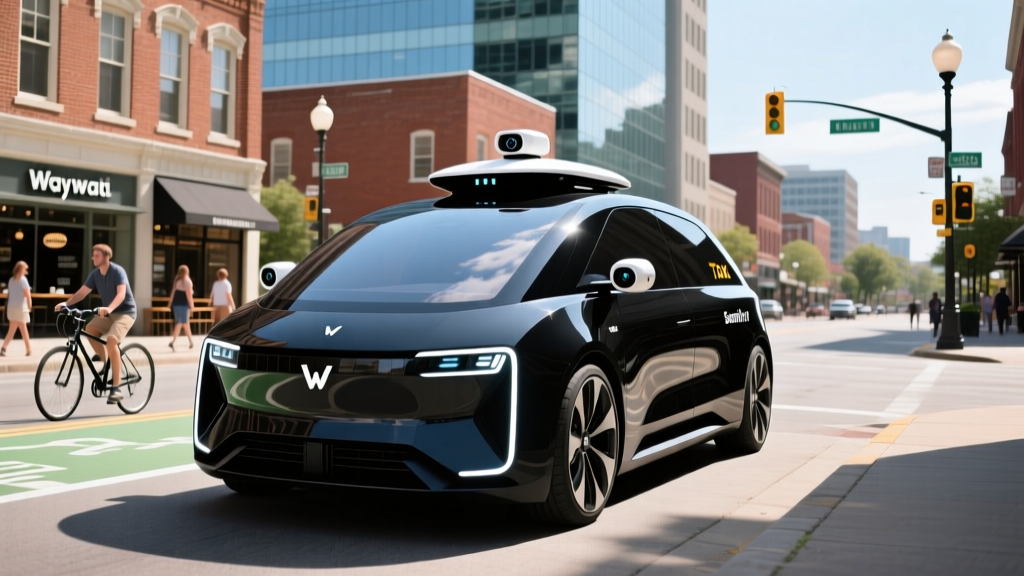
Every consumer-available ADAS in 2026—including Tesla Full Self-Driving (Supervised), Ford BlueCruise, GM Super Cruise, and Hyundai/Kia Highway Driving Assist—is classified as SAE Level 2 automation. That means the system can control steering, acceleration, and braking simultaneously, but a human driver must continuously supervise and be prepared to take over instantly. SAE Level 4 (true driverless operation within defined areas) is currently only available via commercial robotaxi services like Waymo in select cities—not in any vehicle you can buy.
How ADAS Sensors Actually Work Under the Hood
Modern ADAS relies on sensor fusion—combining data from multiple hardware inputs to build a real-time model of the driving environment. Here's what's typically onboard a 2026 EV:
| Sensor Type | Function | Strengths | Weaknesses |
|---|---|---|---|
| Forward-facing cameras (8MP typical) | Lane detection, traffic sign reading, object classification | High resolution, color data, reads signs/lights | Blinded by direct sun, heavy rain, snow, dirt |
| Surround-view cameras (6–12 units) | 360° awareness, close-range object detection | Full perimeter coverage, supports parking | Limited range (~50m), weather-dependent |
| Millimeter-wave radar (77 GHz) | Distance/speed measurement of vehicles ahead | Works in rain, fog, darkness; accurate velocity | Low spatial resolution, poor pedestrian detection |
| LiDAR (selected models) | Precise 3D point cloud of surroundings | Centimeter accuracy, works day/night | Expensive, limited range in heavy precipitation |
| Ultrasonic sensors | Close-range obstacle detection (parking) | Reliable under 5 meters, low cost | Very short range, slow-speed only |
Processing this sensor data requires dedicated silicon. Tesla uses its custom HW4 (and now HW5 in 2026 models) neural-network accelerator, capable of processing over 300 trillion operations per second. GM's Super Cruise runs on a dedicated GM computing module with redundant processors, while Ford BlueCruise leverages a Mobileye-based perception stack. Hyundai Motor Group's HDA2 and the newer Highway Driving Assist on the Ioniq 5 and EV6 use a combination of Mobileye EyeQ chips and in-house software.
Brand-by-Brand ADAS Naming and What You Actually Get
One of the most confusing aspects of shopping for EV driver-assist features is that every manufacturer uses different branding—and the capabilities behind those brands vary significantly. Here's the 2026 landscape:
| Manufacturer | System Name | Hands-Free? | Road Coverage | Standard / Optional |
|---|---|---|---|---|
| Tesla | Autopilot (basic) | No (hands-on wheel torque) | All roads (lane centering + TACC) | Standard on all models |
| Tesla | Full Self-Driving (Supervised) | No (eyes-monitored via cabin cam) | All roads incl. city streets | $8,000 one-time or $99/month |
| Ford | BlueCruise 1.4 | Yes (eyes-monitored) | ~130,000 miles pre-mapped highways | Included 2 yrs, then $75/mo or $2,500 |
| GM (Chevy/Cadillac) | Super Cruise | Yes (eyes-monitored) | ~750,000 miles pre-mapped roads (US + Canada) | Included on select trims, $25/mo after trial |
| Hyundai/Kia/Genesis | Highway Driving Assist 2 (HDA2) | No (hands-on) | Highways (GPS-linked) | Standard on SEL/EX and above |
| BMW | Driving Assistant Professional | Yes (hands-off up to 85 mph, eyes-monitored) | Divided highways | $2,500 package (i4/i5/iX) |
| Mercedes-Benz | Drive Pilot (Level 3, limited) | Yes (eyes-off in approved conditions) | Select highways in NV and CA only, <40 mph | $2,500/yr subscription (EQS) |
Mercedes-Benz's Drive Pilot deserves a specific callout: it is the only SAE Level 3 system available to US consumers as of 2026, meaning the car assumes legal responsibility for driving in its narrow operational domain (congested divided highways, under 40 mph, clear weather, in Nevada or California). Outside those conditions, it defaults to Level 2. This is a meaningful but extremely limited capability compared to the marketing language.
Real-World ADAS Test Results: Where These Systems Excel and Fail
Manufacturer demos always take place on freshly painted highways under blue skies. An honest ADAS test requires examining what happens when conditions degrade. After thousands of miles of real-world use across multiple platforms, here's what we've documented:
- Faded or missing lane markings: Camera-based systems (Tesla, Hyundai HDA2) will disengage or drift without clear lane lines. LiDAR-equipped cars handle this better but are rare in consumer EVs.
- Construction zones: Temporary barriers, shifted lanes, and orange cones remain a consistent failure mode across all Level 2 systems. Expect to take over.
- Direct sun glare: Low-angle sunrise/sunset can saturate forward cameras, causing phantom braking or lane-centering failure. Keep a windshield clean and visor ready.
- Heavy rain and snow: Radar penetrates precipitation, but cameras and LiDAR degrade significantly. Most systems will issue a "sensor blocked" warning and disable within minutes of heavy accumulation.
- Stationary objects at speed: Radar systems are tuned to filter out stationary returns (overpasses, signs) to avoid false alarms. This means a stopped fire truck or disabled car in your lane may not trigger braking at highway speeds—NHTSA has documented multiple incidents of this exact failure.
- Edge-case merging: Systems struggle with aggressive cut-ins, zipper merges, and on-ramps with unusual geometry. Tesla FSD (Supervised) handles these better than most, but still requires frequent intervention in dense urban traffic.
Where ADAS genuinely shines: long, monotonous highway stretches with clear markings and moderate traffic. On a 600-mile Interstate drive, BlueCruise or Super Cruise will handle 80–90% of the miles hands-free (eyes still required), significantly reducing fatigue. Adaptive cruise control with lane centering—available on virtually every 2026 EV—makes stop-and-go commuting dramatically less stressful.
ADAS Cost Breakdown: Purchase, Subscription, and Hidden Value
The pricing models for advanced driver-assist features have fragmented into three camps: bundled-standard, one-time purchase, and subscription. Here's what you'll actually pay in 2026:
| System | Upfront Cost | Subscription | Free Trial | Transfers on Resale? |
|---|---|---|---|---|
| Tesla Autopilot (basic) | Included | N/A | N/A | Yes (vehicle feature) |
| Tesla FSD (Supervised) | $8,000 | $99/month | Occasional 30-day trials | Yes if purchased; no if subscribed |
| Ford BlueCruise | $2,500 (lifetime) or included 2 yrs | $75/month or $800/year | 2 years on new Mustang Mach-E, F-150 Lightning | Lifetime purchase transfers; sub does not |
| GM Super Cruise | Included on Premium/Luxury trims | $25/month after 3-yr trial | 3 years on most EVs | Connected to vehicle hardware |
| Hyundai HDA2 | Included (trim-dependent) | N/A | N/A | Yes (vehicle feature) |
| BMW Driving Asst. Pro | $2,500 package | N/A | N/A | Yes (vehicle feature) |
| Mercedes Drive Pilot (L3) | N/A | $2,500/year | None | No (annual sub) |
The subscription trend is accelerating. Tesla's FSD monthly option now accounts for a significant portion of activations, and Ford has made it clear that BlueCruise subscriptions are a recurring-revenue priority. If you plan to keep your EV for 4+ years, a one-time purchase is usually cheaper: Tesla FSD at $8,000 breaks even versus the $99/month subscription at roughly 6.7 years. For shorter ownership cycles, subscribe.
Is It Self-Driving? The Honest Answer to the Biggest ADAS Question
No. Not even close. And saying so isn't being conservative—it's being accurate and keeping you safe.
The term "Full Self-Driving" on Tesla's order page is a marketing name, not a technical description. Tesla's own owner's manual (and the "Supervised" suffix added in 2024) makes clear that the driver must remain attentive, hands available, and ready to intervene at any moment. The cabin camera monitors eye direction, but it cannot verify cognitive attention—you can stare at the road while mentally checked out, which is exactly when accidents happen.
GM's Super Cruise and Ford's BlueCruise use infrared driver-monitoring cameras mounted on the steering column or instrument cluster to track gaze direction. If your eyes leave the road for more than a few seconds, escalating warnings follow: chime, seat vibration, then system disengagement with hazard lights. This is a meaningful safety improvement over torque-based steering wheel monitoring (which Tesla and most others still use), because it's harder to fool.
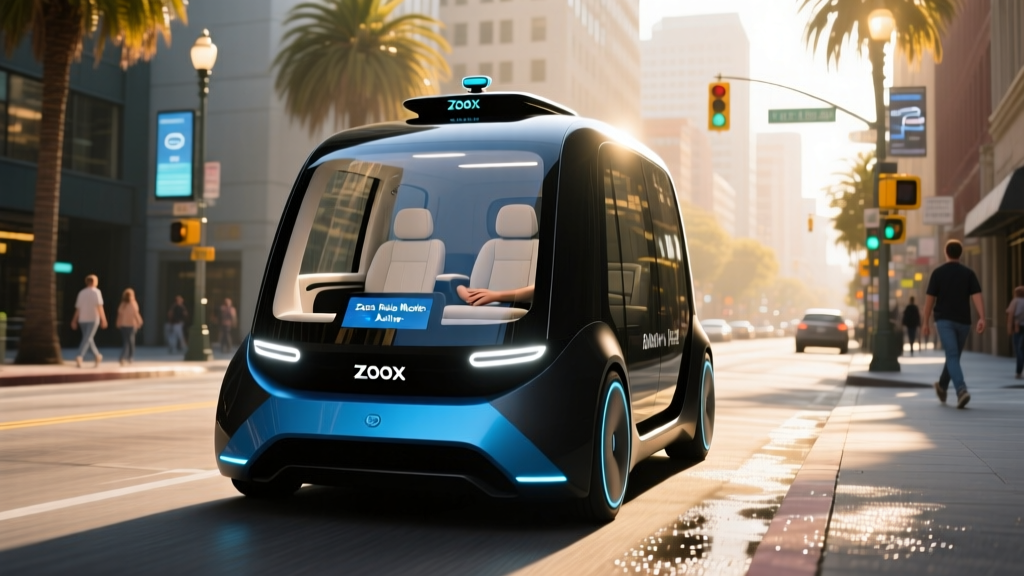
For genuine self-driving—where you can read a book or nap—only SAE Level 4 robotaxi services like Waymo qualify, and those aren't available for personal purchase. They operate in geofenced areas of Phoenix, San Francisco, and Los Angeles with remote-assistance infrastructure.
Which ADAS System Should You Actually Choose?
The "best" system depends entirely on your driving profile:
Choose GM Super Cruise if: You do most of your driving on major Interstates and well-mapped divided highways. Its 750,000-mile road coverage is the largest hands-free network, and the driver-monitoring system is excellent. Available on the 2026 Chevy Equinox EV (LT trim, ~$43,000), Blazer EV, Silverado EV, and Cadillac Lyriq.
Choose Ford BlueCruise if: You want hands-free highway driving in a broadly capable EV like the Mustang Mach-E or F-150 Lightning. The 130,000-mile coverage is smaller than GM's, but the system handles lane changes smoothly and the 2-year free trial is generous. The Mach-E Premium starts around $48,000.
Choose Tesla FSD (Supervised) if: You drive extensively on non-highway roads and city streets where no other hands-off system operates. FSD handles stoplights, roundabouts, and neighborhood turns—impressively at times, terrifyingly at others. Expect to intervene 3–8 times per hour in complex urban environments. The $99/month subscription lets you test before committing $8,000.
Choose Hyundai HDA2 / Kia HDA2 if: You want reliable, no-subscription highway assist without paying a premium. It's not hands-free, but it's bundled into well-equipped EVs like the Ioniq 5 ($45,500 SEL trim) and EV6 ($47,500 Wind trim) with no ongoing costs. Lane-centering and adaptive cruise are rock-solid.
Choose Mercedes Drive Pilot if: You commute in stop-and-go traffic on approved Nevada or California highways and want the only system where you can legally look at your phone while the car drives (under 40 mph). The $2,500/year subscription is steep and the operational envelope is tiny, but it's genuinely Level 3.
ADAS Test FAQ: Your Remaining Questions Answered
Can ADAS handle rain and snow?
Partially. Radar-based adaptive cruise control works well in precipitation, but camera-dependent lane centering degrades in heavy rain and fails in snow that covers lane markings. LiDAR (on select vehicles) helps but is not immune to snow accumulation on sensors. Expect your system to disengage and require manual driving in anything beyond light rain. Always clear camera lenses and radar emitters of ice and road grime before relying on ADAS.
Does using ADAS improve or worsen my EV's range?
Slightly improves it in most cases. ADAS systems tend to accelerate and brake more smoothly than the average driver, which reduces energy waste. Tesla reports roughly 2–5% efficiency gains with Autopilot engaged versus typical manual driving. However, the computing hardware draws a small amount of power (roughly 100–300 watts), which is negligible against a 75–100 kWh battery.
What happens if I fall asleep while using Super Cruise or BlueCruise?
The infrared driver-monitoring camera will detect your eyes closing and initiate an escalating alert sequence: audible chime, then seat haptic pulse (GM) or steering wheel vibration (Ford), then a full alarm. If you still don't respond, the system will activate hazard lights, gradually decelerate, bring the vehicle to a stop in its lane, and call OnStar/emergency services. This is a last-resort safety net—not a feature to rely on. IIHS testing has confirmed these protocols function as designed.
Is Tesla FSD worth $8,000 in 2026?
For most buyers, no—unless you value being on the leading edge of capability and accept frequent interventions. FSD (Supervised) handles more scenarios than any other consumer system, but it still requires active supervision and occasionally makes errors that a human driver would not. The $99/month subscription is a lower-risk way to evaluate whether the capability justifies the cost for your specific routes. From a resale-value perspective, FSD purchases historically recover only 30–50% of their cost at trade-in.
Will my ADAS system get better over time?
Yes, if it supports over-the-air (OTA) updates—which Tesla, Ford, GM, Hyundai, and BMW all do. Tesla pushes FSD improvements every few weeks; GM and Ford update Super Cruise and BlueCruise maps and algorithms quarterly. However, hardware limitations are fixed: a 2022 vehicle with older cameras and processors will never match a 2026 model's perception capability, regardless of software updates. When shopping, prioritize the newest hardware generation available.
How do I verify which ADAS features come on a specific trim?
Always check the manufacturer's official build-and-price tool for the exact model year and trim. Feature packaging changes frequently—what was optional on a 2025 model may be standard on the 2026 equivalent, or vice versa. Third-party sources and reviews (including ours) provide guidance, but the manufacturer's spec sheet is the final authority. For tax-credit-eligible EVs, verify MSRP caps (§30D limits: $55,000 for sedans, $80,000 for SUVs/trucks/vans) on IRS.gov, as higher ADAS-equipped trims can push a vehicle above the threshold.