What an Advanced Driver Assistance System Service Actually Covers
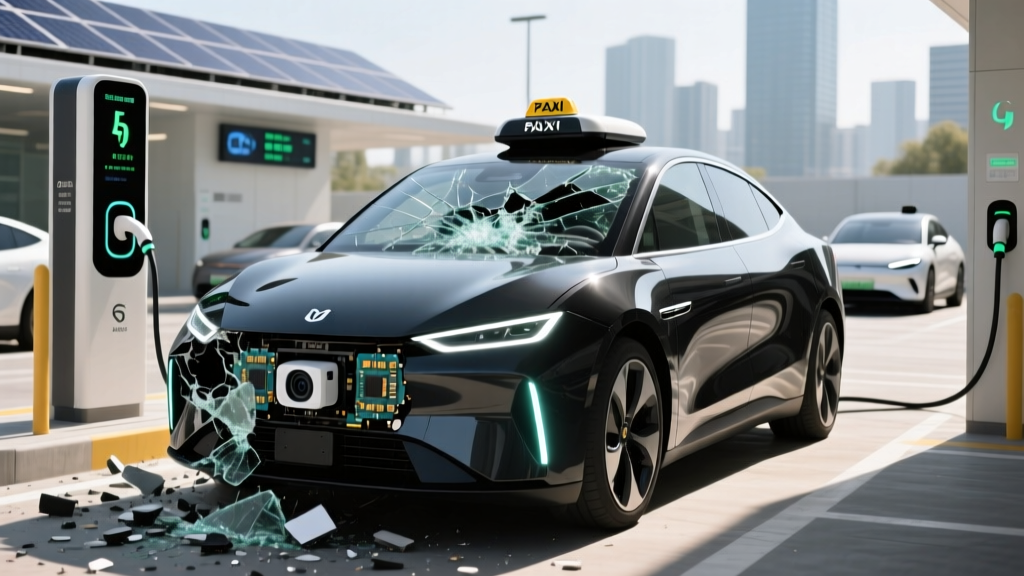
When automakers and dealerships refer to an advanced driver assistance system service, they are talking about the ongoing maintenance, calibration, software updates, and hardware repair required to keep ADAS features functioning safely. Modern ADAS relies on a tightly integrated sensor suite: forward-facing cameras (often mounted behind the rearview mirror), millimeter-wave radar (behind the grille or bumper), ultrasonic sensors (in the bumpers), and in some cases lidar. These components require periodic calibration — especially after windshield replacement, collision repair, suspension work, or even a software update that changes sensor fusion parameters.
Beyond physical calibration, ADAS services increasingly include over-the-air (OTA) software subscriptions that unlock or maintain features like lane-centering, adaptive cruise control, hands-free highway driving, or automated lane changes. This dual nature — hardware servicing plus software licensing — is what makes ADAS ownership costs more complex than traditional vehicle maintenance.
How ADAS Hardware and Sensors Work Together
Understanding what you are paying to service requires knowing the hardware stack:
| Sensor Type | Function | Service Trigger |
|---|---|---|
| Forward camera (mono/stereo) | Lane detection, traffic sign recognition, pedestrian/vehicle detection | Windshield replacement, camera housing damage |
| Millimeter-wave radar (77 GHz) | Adaptive cruise control, AEB, blind-spot detection | Bumper repair, front-end collision, misalignment |
| Ultrasonic sensors (48 kHz) | Low-speed parking assist, proximity alerts | Bumper replacement, sensor paint/dirt obstruction |
| Surround-view cameras (4–6 units) | 360° view, automated parking | Mirror/door handle replacement, calibration drift |
| Lidar (select models) | High-res 3D mapping for hands-free driving | Roof/windshield area damage, sensor replacement |
Camera calibration alone can cost $250–$500 at a dealership, while full radar and camera recalibration after a front-end collision can exceed $1,000. According to IIHS research on ADAS repair costs, vehicles equipped with forward radar and camera systems see average repair bills 2–3× higher than non-ADAS equivalents for minor front-end damage.
Brand-by-Brand ADAS Service: Naming, Availability, and Cost
Every major automaker brands its ADAS differently, and the service model (included, one-time purchase, or subscription) varies significantly. Here is how the major systems compare as of the 2026 model year:
| Brand | System Name | Hands-Free? | Cost Model | Availability |
|---|---|---|---|---|
| Tesla | Autopilot (basic) / FSD (Supervised) | No (hands-on required) | Autopilot: included. FSD: $8,000 one-time or $99/mo subscription | All models; FSD on all 2019+ HW3/HW4 vehicles |
| GM (Chevy/Cadillac/GMC) | Super Cruise / Ultra Cruise | Yes (eyes-on, hands-off on mapped roads) | $2,200 option or included on premium trims; 3 yrs connectivity included, then ~$25/mo | Select trims: Cadillac CT5/Lyriq, Chevy Silverado EV, GMC Sierra EV, Hummer EV |
| Ford / Lincoln | BlueCruise 1.4 | Yes (eyes-on, hands-off on ~130,000 mi of divided highways) | $2,100 one-time or $75/mo (2-year trial included on select trims) | Mustang Mach-E, F-150 Lightning, Lincoln Corsair/Navigator |
| Hyundai / Kia / Genesis | HDA2 / Highway Driving Assist | No (hands-on) | Included on SEL/Limited trims and above | Ioniq 5, Ioniq 6, EV6, EV9, Genesis GV60/GV70 Electrified |
| BMW | Driving Assistant Professional | Yes (hands-off up to 85 mph on highways, eyes-off in traffic jam assist) | ~$1,700 package or included on M Sport/50e trims | i4, i5, i7, iX (2024+) |
| Mercedes-Benz | Drive Pilot (Level 3) / Active Distance Assist | Level 3 (conditional, hands-off/eyes-off up to 40 mph in traffic) | $2,500 annual subscription (Drive Pilot); Active Assist included | EQS, S-Class (Nevada/California approved roads only) |
- ADAS does not drive autonomously. You are legally and physically responsible for the vehicle at all times (except Mercedes Drive Pilot in its approved Level 3 conditions).
- Camera-based systems degrade in heavy rain, fog, snow, direct sun glare, and when lenses are dirty or iced over.
- Lane-centering requires visible lane markings — construction zones, faded paint, and snow-covered roads will cause disengagement.
- Adaptive cruise control may not detect stationary vehicles at highway speeds, especially with radar-only systems.
- Hands-free systems (Super Cruise, BlueCruise) only operate on pre-mapped divided highways — not surface streets or unmapped roads.
Subscription vs. One-Time Purchase: Total Cost of ADAS Ownership
The industry is shifting toward recurring revenue models. Here is what a 5-year ADAS cost actually looks like across the major providers:
| System | Upfront Cost | Monthly/Annual Fee | 5-Year Total |
|---|---|---|---|
| Tesla FSD (Supervised) — purchase | $8,000 | $0 | $8,000 |
| Tesla FSD (Supervised) — subscription | $0 | $99/mo | $5,940 |
| GM Super Cruise (after trial) | $0–$2,200 (trim dependent) | ~$25/mo after yr 3 | $600–$2,800 |
| Ford BlueCruise — purchase | $2,100 | $0 | $2,100 |
| Ford BlueCruise — subscription | $0 | $75/mo | $4,500 |
| Mercedes Drive Pilot (Level 3) | $0 | ~$208/mo ($2,500/yr) | $12,500 |
| Hyundai HDA2 / BMW DAP | Included in trim | $0 | $0 (included in MSRP) |
The subscription model makes sense if you plan to own the vehicle for 3 years or fewer, or if you primarily need hands-free driving for occasional road trips. The one-time purchase pays for itself around the 4–5 year mark for most systems. Mercedes' Drive Pilot remains the most expensive option, but it is also the only system that accepts legal liability during its approved Level 3 operating conditions — a significant distinction documented by NHTSA's ADS guidance.
When Does ADAS Require Service or Recalibration?
Most EV owners will not need ADAS recalibration under normal driving conditions. OTA updates handle software-side improvements. However, physical service is required in these scenarios:
- Windshield replacement: The forward-facing camera module is typically bonded to the windshield. Any replacement requires camera recalibration ($250–$500).
- Front or rear bumper repair: Radar modules behind bumper covers must be realigned after any collision repair ($300–$800 per sensor).
- Suspension or alignment work: Changes to ride height or wheel alignment can shift sensor aiming angles, requiring recalibration.
- Side mirror replacement: Surround-view and blind-spot cameras in mirror housings need recalibration ($150–$350).
- Software-related disengagement: If the system throws persistent fault codes, a dealer diagnostic session ($100–$200) may be needed even if OTA updates are current.
For Tesla owners, most ADAS-related fixes come via OTA software updates. Hardware recalibration is handled at Service Centers or through Mobile Service, typically covered under the 4-year/50,000-mile basic warranty or the 8-year/120,000-mile (Model 3/Y) drive unit warranty if the issue is a manufacturing defect. Out-of-warranty camera replacement runs $400–$700 per unit.
Real-World Performance: What to Actually Expect
Based on extensive highway testing across multiple brands in 2025–2026, here is how these systems perform outside of marketing materials:
- Tesla FSD (Supervised): Strongest on surface streets and complex intersections among camera-only systems. Still requires frequent interventions in construction zones and unprotected left turns. Highway performance is solid but not meaningfully better than basic Autopilot for most scenarios. Camera-only approach struggles more in heavy rain than radar-equipped competitors.
- GM Super Cruise: Exceptionally smooth hands-free operation on its 750,000+ miles of mapped roads. Driver monitoring camera is attentive but occasionally flags sunglasses as inattention. Disengages cleanly at map boundaries. Cannot handle unmapped surface streets at all.
- Ford BlueCruise 1.4: Improved lane-centering stability in crosswinds and curves over prior versions. Hands-free zone coverage has expanded to ~130,000 miles. Still requires hands-on for lane changes. Eye-monitoring system is less intrusive than GM's.
- Hyundai HDA2: Reliable, conservative hands-on system. Machine-learning-based lane-centering has improved, but it does not offer hands-free operation. Strong value because it is included at no additional cost on most trims.
- Mercedes Drive Pilot: Genuine Level 3 capability, but only approved for specific Nevada and California highways, under 40 mph, in clear weather, with a visible lead vehicle. Extremely limited real-world utility in 2026 despite the engineering achievement.
Frequently Asked Questions
Is Tesla FSD actually self-driving?
No. Tesla Full Self-Driving (Supervised) is an SAE Level 2 system. The "Supervised" designation was added specifically because the driver must remain fully attentive and ready to intervene. Tesla's own owner manual states the driver is responsible for all vehicle actions. Only Level 4 systems like Waymo's robotaxi operate without a human driver.
How much does it cost to recalibrate ADAS after a windshield replacement?
Expect $250–$500 for forward camera recalibration, depending on the brand and whether the shop uses OEM or aftermarket calibration targets. Some insurance policies cover this as part of the windshield claim. Always confirm the shop has the correct OEM calibration equipment for your specific model.
Do I need to pay a monthly subscription for basic adaptive cruise control?
No. Basic ADAS features — adaptive cruise control, lane-keeping assist, automatic emergency braking — are included in the vehicle purchase price and do not require ongoing subscriptions on any major brand in 2026. Subscriptions apply only to advanced hands-free or enhanced features (FSD, Super Cruise connectivity, BlueCruise, Drive Pilot).
Will ADAS features transfer if I sell my EV?
Hardware-based features (AEB, lane-keeping, ACC) transfer with the vehicle. Software-locked features vary: Tesla FSD purchased outright transfers with the car to the next owner. Subscription-based features (BlueCruise monthly, Super Cruise connectivity) do not transfer — the new owner must start their own subscription. This affects resale value and should be factored into your purchase decision.
What happens if my ADAS camera or radar fails outside of warranty?
Out-of-warranty sensor replacement costs range from $400–$700 for a camera module to $800–$1,500 for a radar unit, plus calibration labor. Some extended warranty plans and insurance policies cover ADAS component failure. Check whether your policy distinguishes between collision damage (covered) and electronic component failure (sometimes excluded).