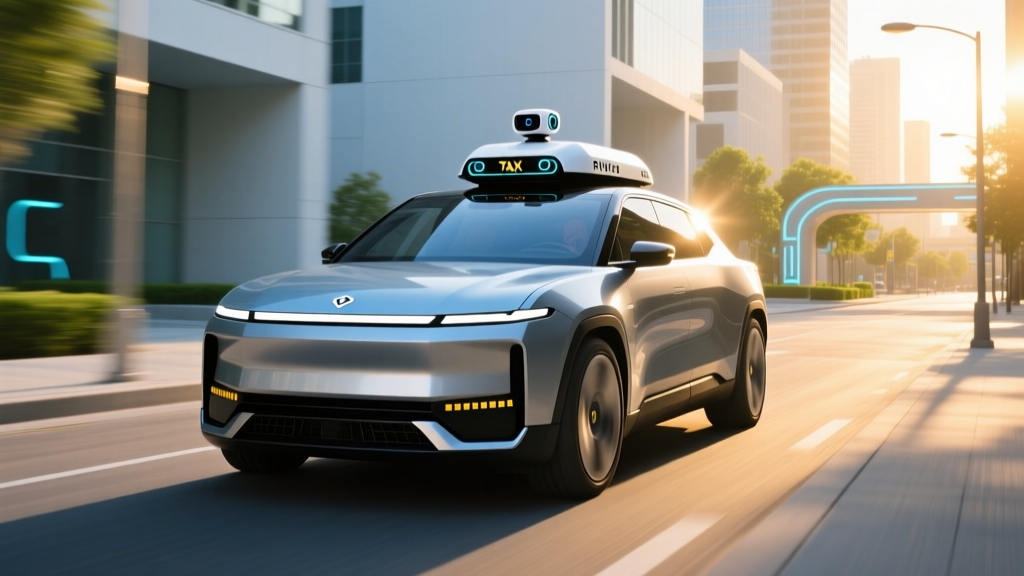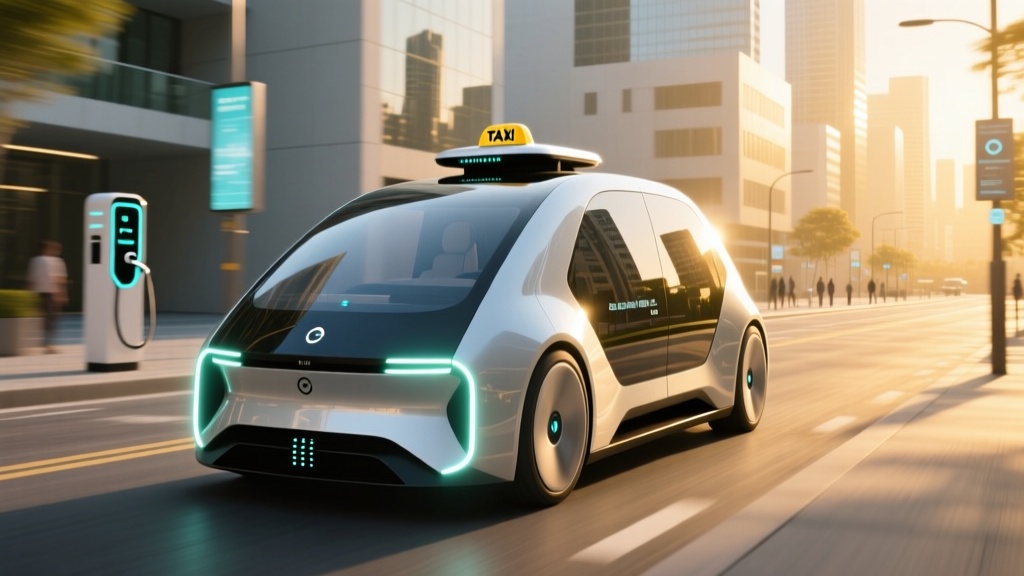
Marketing departments love the phrase "self-driving." But in 2026, the gap between a Tesla Model Y on Autopilot and a Waymo Jaguar I-PACE navigating downtown Phoenix is enormous — and the SAE International J3016 framework is the only reliable way to tell them apart. Understanding the 5 levels of autonomous driving isn't academic trivia; it's the difference between a car that helps you steer and one that genuinely doesn't need you behind the wheel at all.
This guide breaks down every SAE automation level with concrete examples, current operational robotaxi services, real safety data, and the technology stacks that make each level possible. No hype, no timelines — just what exists today.
The SAE Framework: All 5 Levels of Autonomous Driving Defined
SAE International (formerly the Society of Automotive Engineers) published standard J3016 to classify driving automation from zero assistance to full autonomy. The framework has six levels (0 through 5), but the industry commonly references "5 levels of autonomous driving" by grouping Level 0 as the absence of automation. Here's what each level actually means in practice:
| Level | Name | Who Drives? | Who Monitors? | Current Examples |
|---|---|---|---|---|
| 0 | No Automation | Human | Human | Any conventional vehicle without ADAS |
| 1 | Driver Assistance | Human + system (one axis) | Human | Adaptive cruise control OR lane-keeping assist alone |
| 2 | Partial Automation | Human + system (steering AND speed) | Human (must supervise) | Tesla Autopilot, GM Super Cruise, Ford BlueCruise, Toyota Safety Sense |
| 3 | Conditional Automation | System (in defined conditions) | System; human must take over on request | Mercedes Drive Pilot (limited markets), Honda Legend (Japan only) |
| 4 | High Automation | System (in geofenced ODD) | System; no human fallback required within ODD | Waymo One, Zoox, Baidu Apollo Go, Cruise (limited restart) |
| 5 | Full Automation | System (all conditions, all roads) | System exclusively | Does not exist commercially |
Level 2 vs. Level 4: Why the Confusion Matters
The most dangerous misconception in the EV and autonomous space is conflating advanced driver-assistance systems (ADAS) with robotaxi-grade autonomy. Here's why the distinction has real consequences:
- Liability: In a Level 2 vehicle, you are the driver. If you crash while Autopilot is engaged, the accident is on your record. In a Level 4 Waymo ride, Waymo carries liability as the operator.
- Attention requirement: Level 2 demands continuous supervision — eyes on the road, hands available. Level 4 robotaxis have no steering wheel or pedals (Zoox) or the front seats are irrelevant to the passenger (Waymo).
- Operational Design Domain (ODD): Level 2 works on most roads but requires you to handle edge cases. Level 4 operates only within a precisely mapped geofence and specific conditions — but within that domain, it handles everything without human intervention.
As of 2026, no production consumer vehicle you can purchase is Level 3 or above in the United States outside of Mercedes-Benz's Drive Pilot system, which is limited to specific highway traffic-jam conditions under 40 mph in Nevada and California, and only in the S-Class and EQS sedan.
Where Can You Actually Ride a Robotaxi Right Now?
Level 4 robotaxi services are live and carrying paying passengers in a growing but still limited set of cities. Here's the current operational landscape:
| Service | Operator | Active Cities | Hours | Geofence Notes |
|---|---|---|---|---|
| Waymo One | Waymo (Alphabet) | Phoenix (metro), San Francisco, Los Angeles, Austin | 24/7 in most zones | Expanding zones; airport service in PHX; ~80+ sq mi per city |
| Zoox | Zoox (Amazon) | Las Vegas (Strip corridor), Foster City, CA (testing) | Limited hours | Purpose-built vehicle; invite-only in some areas |
| Cruise | Cruise (GM) | Phoenix, Dallas, Houston (phased restart) | Limited hours | Reduced fleet post-2023 SF incident; gradual re-expansion |
| Apollo Go | Baidu | Wuhan, Beijing, Chongqing, Shenzhen (China) | Mostly 24/7 in Wuhan | Largest global fleet; 1M+ cumulative rides in Wuhan alone |
| Motional | Hyundai/Aptiv JV | Las Vegas (Uber integration) | Limited | Hyundai Ioniq 5-based platform; Uber app booking |
How to Use a Robotaxi and What It Costs vs. Uber/Lyft
Booking a Waymo One ride is nearly identical to using Uber or Lyft: open the app, enter your destination, confirm pickup, and a vehicle arrives. The difference is that no human driver is behind the wheel. Here's how the economics compare for a typical urban trip:
| Factor | Waymo One | UberX | Lyft Standard |
|---|---|---|---|
| Base fare | ~$5.50 | ~$3.50 | ~$3.25 |
| Per-mile rate | ~$1.75 | ~$1.50 | ~$1.40 |
| Per-minute rate | ~$0.30 | ~$0.35 | ~$0.32 |
| Estimated 5-mile / 15-min trip | $18.75 | $16.25 | $15.05 |
| Surge pricing | Rare; algorithm-managed | Common during peak | Common during peak |
| Tips | Not expected | Expected ($2-5) | Expected ($2-5) |
| Total with tip | ~$18.75 | ~$19.25 | ~$18.05 |
The takeaway: robotaxi pricing is broadly competitive with rideshare once you remove tipping, but not dramatically cheaper. The value proposition isn't cost savings — it's consistency (no surge spikes, no driver cancellation), privacy (no conversation required), and novelty. Waymo has introduced subscription passes in some markets that reduce per-ride costs for frequent users.
Robotaxi Safety: What the Real Data Shows
Safety is the most contested question in autonomous vehicles. Here's what we know from published data, regulatory filings, and independent analysis:
- Over 30 million fully driverless miles completed across Phoenix, SF, and LA
- Waymo's own analysis (peer-reviewed methodology) showed a 85% reduction in injury-causing crash rates compared to human benchmarks in comparable geographies
- Contact rate (any physical contact, including minor scrapes): approximately 5.3 per million miles vs. human baseline of ~14 per million miles in urban settings
- Zero passenger fatalities in driverless operations
However, the data requires context:
- Cruise's October 2023 incident in San Francisco — where a pedestrian was dragged after being struck by a human-driven vehicle and then run over by a Cruise robotaxi — resulted in California DMV suspending Cruise's permit and a fleet-wide grounding. Cruise has since restarted with reduced operations under enhanced oversight.
- Edge-case failures still occur: construction zones, unusual road configurations, and emergency-vehicle interactions remain challenging scenarios where robotaxis sometimes execute "minimum risk maneuvers" (pulling over and stopping) rather than navigating through.
- Exposure bias: Robotaxis operate in geofenced, generally well-mapped urban areas with favorable weather. They don't yet handle rural roads, unmapped areas, or severe weather — so their safety data reflects favorable conditions.
For comparison, the NHTSA FARS database records approximately 1.35 traffic fatalities per 100 million vehicle miles traveled nationally (all drivers, all conditions). Robotaxi operators are still accumulating the billions of miles needed for statistically definitive fatality-rate comparisons.
The Technology Stack: Lidar, Cameras, and Why It Matters
Every Level 4 robotaxi relies on a sensor suite and compute platform far beyond what any consumer vehicle offers. Here's the technology breakdown:
| Component | Waymo (6th-gen Driver) | Zoox (purpose-built) | Tesla FSD (Level 2) |
|---|---|---|---|
| Primary sensors | Lidar + cameras + radar | Lidar + cameras + radar (redundant, all corners) | Cameras only (8 cameras) |
| Lidar units | 5+ (custom-built) | 4 (roof-mounted, 360°) | None |
| Camera count | 29+ | 16+ | 8 |
| Radar | 6 imaging radars | Multiple imaging radars | None (removed in HW4) |
| HD mapping | Centimeter-precision pre-mapped | Centimeter-precision pre-mapped | No HD map dependency |
| Compute | Custom TPU-based platform | Custom silicon | HW4 FSD computer |
| Redundancy | Dual-redundant steering, braking, compute | Full redundancy on all critical systems | Single compute path; human is redundancy |
The lidar-versus-camera debate is settled at Level 4: every operational robotaxi service uses lidar as a core sensor. Lidar provides precise 3D depth perception independent of lighting conditions — critical for nighttime urban driving, direct sun glare, and detecting objects that camera-based neural networks may misclassify. Tesla's camera-only approach ("Tesla Vision") remains the outlier and operates exclusively at Level 2, where the human driver serves as the redundant perception layer.
Geofencing is equally critical. Level 4 operators build centimeter-resolution maps of every lane, curb, signal, and crosswalk in their service area. The vehicle localizes against this map in real time. When the vehicle exits the geofence or encounters unmapped construction, it executes a minimum-risk maneuver rather than guessing.
The Regulatory Landscape: Who Approves Robotaxi Operations?
Autonomous vehicle regulation in the US is a patchwork of federal and state authority:
- Federal (NHTSA): Sets vehicle safety standards (FMVSS). Currently, NHTSA requires a Standing General Order for all Level 2+ and Level 4 systems to report crashes. NHTSA does not "approve" autonomous systems but can issue recalls and investigate defects.
- State DMVs and PUCs: States control deployment permits. California's DMV and CPUC jointly regulate testing and commercial deployment — the most rigorous framework in the country. Arizona takes a permissive approach (no special permit required for testing). Texas, Nevada, and others have intermediate frameworks.
- Local municipalities: Cities often negotiate operating agreements covering pickup/dropoff zones, emergency-response protocols, and community-engagement requirements.
The key regulatory distinction: Level 2 consumer vehicles (Tesla Autopilot, GM Super Cruise) require no special permit because a licensed human driver is always responsible. Level 4 robotaxi services require state-level deployment permits, commercial passenger-carrier licenses, and insurance minimums that can exceed $5 million per incident.
Internationally, China's regulatory framework has moved faster in some respects — Baidu's Apollo Go operates commercially in over a dozen Chinese cities with municipal permits that allow fully driverless (no safety operator) service. Germany's Act on Autonomous Driving (2021) created a federal framework for Level 4 deployment, though commercial robotaxi services there remain limited.
Current Limitations: What Robotaxis Still Can't Do
Honest assessment of Level 4 limitations in 2026:
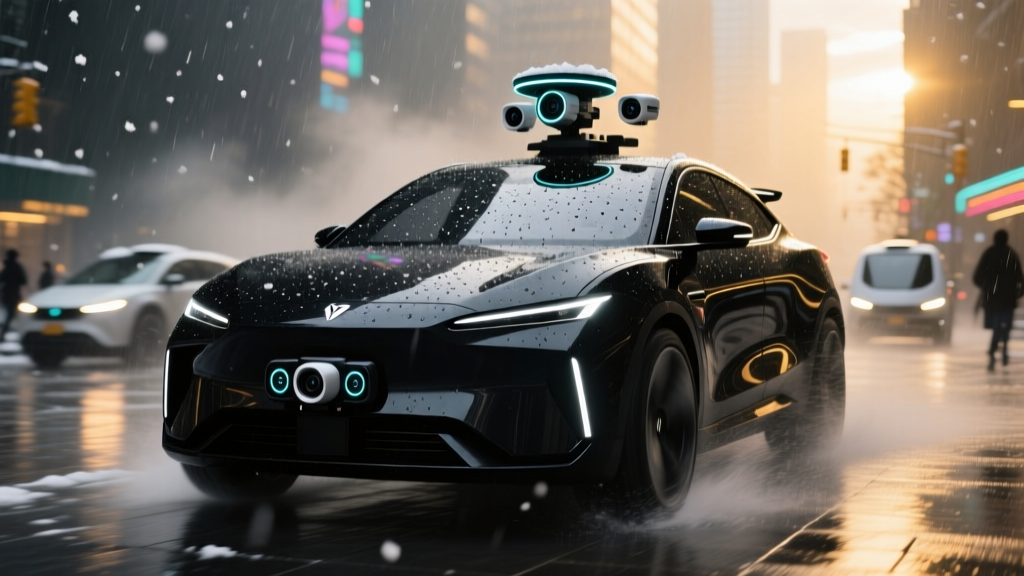
- Heavy rain, snow, and fog: Lidar performance degrades in precipitation. Most services suspend operations or reduce service areas during heavy rain; snow effectively grounds robotaxis entirely.
- Unmapped or recently changed roads: Construction zones, newly opened roads, or changed lane configurations outside the HD map cause the vehicle to pull over and request remote assistance or end the ride.
- Complex unprotected turns: Multi-lane unprotected left turns in heavy traffic remain a high-latency scenario where robotaxis may wait longer than a human driver would.
- Emergency-vehicle interactions: Approaching ambulances and fire trucks trigger cautious behavior — pulling over, stopping — which can delay both the robotaxi passenger and, in rare cases, the emergency vehicle itself.
- Pickup/dropoff precision: Geofence boundaries mean you may need to walk a block to a location inside the service area. Rural areas, airports outside the geofence, and highway on-ramps beyond the ODD are inaccessible.
- Level 5 does not exist: No vehicle on Earth can currently handle all roads, all weather, all conditions without a human fallback. Anyone claiming otherwise is selling something.
These limitations aren't temporary inconveniences — they represent genuine engineering challenges in perception, prediction, and planning that the industry is actively working on but has not solved. Solid-state lidar, improved simulation, and expanded mapping are incrementally pushing the ODD boundary, but the "last 1%" of driving scenarios (the long tail of edge cases) is disproportionately difficult.
Frequently Asked Questions
Where can I use a robotaxi service right now?
As of 2026, Waymo One operates commercially in Phoenix, San Francisco, Los Angeles, and Austin. Zoox runs limited service in Las Vegas. Cruise has restarted in Phoenix, Dallas, and Houston with reduced fleets. In China, Baidu Apollo Go is available in Wuhan, Beijing, Chongqing, and several other cities. You must be within the operator's geofenced service area and download the specific operator's app.
How much does a robotaxi cost vs. Uber or Lyft?
Pricing is broadly comparable. A typical 5-mile Waymo ride costs roughly $18-20, similar to UberX with tip. Robotaxis rarely surge-price during peak demand, and no tip is expected, which can make them slightly cheaper during high-demand periods. Subscription passes in some markets reduce per-ride costs for regular users.
How safe are robotaxis based on real data?
Waymo reports over 30 million driverless miles with an injury-crash rate approximately 85% lower than human benchmarks in comparable urban geographies. Zero passenger fatalities have occurred in Waymo's driverless operations. However, the Cruise October 2023 pedestrian incident in San Francisco demonstrated that serious failures can occur, and the total industry mileage (tens of millions) is still far below the billions needed for definitive statistical comparison to human drivers nationally.
What are the current limitations of robotaxi services?
Robotaxis cannot operate in heavy rain, snow, or fog. They are confined to geofenced, pre-mapped urban areas and cannot handle unmapped roads, rural routes, or recently changed construction zones. Complex scenarios like unprotected multi-lane turns and emergency-vehicle interactions can cause delays. No robotaxi service operates at Level 5 (all conditions, all roads).
Is Tesla Autopilot or FSD considered self-driving?
No. Tesla Autopilot and FSD (Supervised) are SAE Level 2 driver-assistance systems. The driver must remain attentive, keep hands available, and is legally responsible for the vehicle at all times. Tesla's own owner's manual and the NHTSA classify these systems as requiring continuous driver supervision. Only Level 4 services like Waymo, where no human driver is present or required, qualify as genuinely driverless within their operational domain.
Will Level 5 full autonomy ever arrive?
There is no credible timeline for Level 5 autonomy. The engineering challenge of handling all global road conditions, weather scenarios, and edge cases without any human fallback remains unsolved and may require fundamental advances in AI reasoning beyond current deep-learning approaches. Industry leaders, including Waymo's own executives, have publicly stated that Level 5 is not a near-term goal — Level 4 expansion to more cities and conditions is the practical path forward.