The 1st Driverless Car Isn't a Concept — It's a Service
When people search for the "1st driverless car," most imagine a future vehicle they'll own and park in their garage. The reality in 2026 is different: the first true driverless cars are commercial robotaxis — fleets of Level 4 autonomous vehicles you summon with a smartphone, ride in without touching a steering wheel, and pay per mile. No driver behind the wheel. No hands-on requirement. Just an empty driver's seat and a network of sensors doing the work.
But this technology is not available everywhere, it doesn't work in every condition, and its safety record — while strong — is still being written in real time. If you're evaluating whether to ride in one, this guide gives you the exact data, cities, costs, and limitations you need.
Where Can I Use a Robotaxi Right Now?
As of early 2026, fully driverless commercial robotaxi services are operational in a limited number of U.S. cities. Availability expands periodically, but geofencing means you can only hail rides within specific mapped zones — not across an entire metro area.
| Operator | Live Driverless Cities | Service Hours | Vehicle |
|---|---|---|---|
| Waymo (Alphabet) | Phoenix, AZ; San Francisco, CA; Los Angeles, CA; Austin, TX (expanding) | 24/7 in Phoenix & SF; restricted hours in LA | Jaguar I-PACE (5th-gen sensor suite); Zeekr RT (newer fleet) |
| Cruise (GM) | Phoenix, AZ; Dallas, TX; Houston, TX (relaunching post-2024 suspension) | Limited hours, phased ramp-up | Chevrolet Bolt EV; Cruise Origin (purpose-built, no steering wheel) |
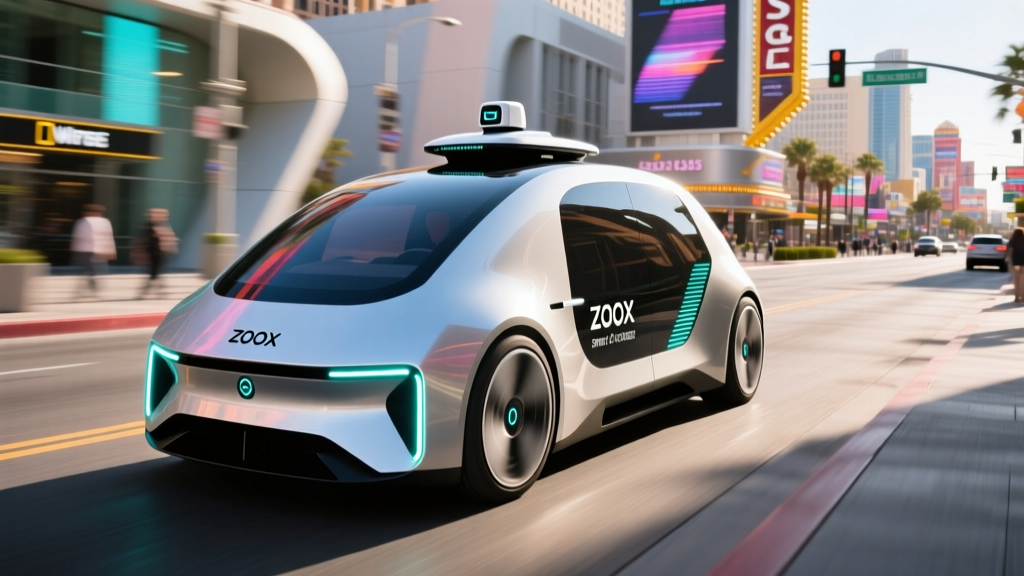
| Zoox (Amazon) | Las Vegas, NV; Foster City, CA (limited public access) | Daytime/evening hours | Zoox purpose-built carriage (bidirectional, no steering wheel) |
| Motional (Hyundai/Aptiv) | Las Vegas, NV (via Uber/Lyft integration) | Limited windows | Hyundai Ioniq 5 robotaxi variant |
Key takeaway: Phoenix and San Francisco remain the most mature robotaxi markets. If you want the highest probability of hailing a truly driverless ride with no safety operator, Waymo in Phoenix is the most accessible option. Check each operator's app for your exact pickup/dropoff zone — geofencing boundaries can end mid-block.
How Much Does a Robotaxi Cost vs. Uber and Lyft?
Robotaxi pricing is designed to compete with traditional rideshare, though it varies by city, time of day, and trip distance. Waymo, the most widely available service, uses dynamic pricing similar to Uber/Lyft surge models but tends to land in a comparable or slightly lower range for equivalent trips.
| Trip Type | Waymo (est.) | UberX (est.) | Lyft (est.) |
|---|---|---|---|
| Short trip (~3 mi, off-peak) | $8–$12 | $9–$14 | $9–$13 |
| Medium trip (~8 mi, off-peak) | $15–$22 | $16–$25 | $15–$24 |
| Airport run (~15 mi) | $28–$40 | $30–$45 | $28–$42 |
| Peak/surge (2× multiplier) | $18–$35 (short) | $20–$38 | $19–$36 |
Waymo occasionally offers promotional credits for new riders, and its pricing does not include a tip expectation (there's no driver to tip). For regular rideshare, a 15–20% tip adds $2–$8 per ride. Over a month of commuting, that gap widens. That said, robotaxi surge pricing during high-demand events can push costs above standard rideshare.
How Safe Are Robotaxis? Real Data, Not Marketing
Safety is the single most important question for anyone considering a driverless ride. The data is substantial but requires context: robotaxis have logged tens of millions of fully autonomous miles, and their collision rates per million miles are generally lower than human drivers — but the types of incidents that do occur draw outsized scrutiny because they involve no human driver to absorb blame.
- Waymo: Over 50 million fully driverless miles completed. NHTSA-reported collision rate approximately 0.41 property-damage-only incidents per 100,000 miles — lower than the human-driver benchmark of ~0.65 per 100,000 miles (based on Waymo's published safety data and third-party analyses).
- Cruise: Suspended California operations in October 2023 after a pedestrian-dragging incident in San Francisco. Relaunched with safety operators in select cities in 2024–2025, with gradual return to driverless operations in Phoenix and Texas by 2026 under stricter regulatory oversight.
- Zoox: Limited public exposure; fewer total autonomous miles. No major public injury incidents reported as of early 2026.
Sources: NHTSA Standing General Order crash reporting, IIHS, operator-published safety reports.
What the numbers mean: Robotaxis are statistically safer per mile than average human drivers in urban environments at moderate speeds. However, they operate under highly controlled conditions (geofenced, mapped, mostly urban, mostly fair weather). They have not been tested at scale in the same chaotic variety of conditions humans navigate daily. The Cruise 2023 incident demonstrated that edge cases — in this case, a pedestrian already struck by a human-driven vehicle entering the robotaxi's path — can produce outcomes that erode public trust rapidly.
Technology Stack: Lidar, Cameras, Radar, and HD Maps
The "1st driverless car" you ride in doesn't rely on a single sensor. It uses a redundant technology stack — multiple overlapping systems that cross-validate what the vehicle "sees" in real time.
- Lidar (Light Detection and Ranging): Roof-mounted and corner-mounted units create a real-time 3D point cloud of the environment, accurate to centimeters out to 200+ meters. Works in darkness. Does not read color (traffic lights require camera fusion).
- Cameras (8–30+ per vehicle): High-resolution surround cameras handle object classification (pedestrian vs. cyclist vs. cone), traffic-light state detection, and lane-marking recognition.
- Radar: Forward and corner radars detect velocity of other vehicles and work reliably in rain/fog where lidar degrades.
- HD Maps: Centimeter-precision pre-mapped routes provide a baseline layer. The vehicle continuously compares live sensor data against the map to localize its position and detect changes (construction zones, new barriers).
- Inertial Measurement Unit (IMU) + GNSS: Provides dead-reckoning position data when GPS is occluded (tunnels, urban canyons).
Camera-only debate: Tesla has famously pursued a camera-only ("Tesla Vision") approach for its Level 2 FSD Supervised system. No commercial Level 4 robotaxi operator uses camera-only as of 2026. Lidar redundancy is considered essential for the safety case at Level 4, where no human is available to intervene if a camera misclassifies an object.
The Regulatory Landscape: Who Approves Driverless Operations?
Robotaxi deployment in the U.S. is governed by a patchwork of state and federal authorities. There is no single national "robotaxi license."
- California Public Utilities Commission (CPUC): Regulates commercial passenger service in California. Operators must obtain permits for both testing and commercial deployment. CPUC can suspend permits (as occurred with Cruise in late 2023).
- State DMVs: Issue testing permits and track disengagement reports (instances where a safety operator or remote assistant took control). California DMV disengagement data is public; other states vary.
- NHTSA (federal): Sets vehicle safety standards (FMVSS) and investigates crashes through its Standing General Order requiring automated-driving-system operators to report incidents. NHTSA does not currently "certify" autonomous driving software but can issue recalls or investigations.
- Local municipalities: City governments and police departments influence operational boundaries, speed limits, and incident response protocols. Some cities have actively welcomed robotaxis; others have pushed back on congestion and emergency-vehicle interaction concerns.
Operators seeking to expand must navigate each jurisdiction independently. This is why robotaxi availability grows city-by-city rather than nationwide.
Current Limitations: What Robotaxis Cannot Do
Level 4 autonomy is impressive within its operational design domain — but that domain is deliberately narrow. Here are the hard constraints as of 2026:
- Weather: Heavy rain, snow, fog, and ice degrade lidar and camera performance. Most services suspend or restrict operations during severe weather. Phoenix and LA are ideal testbeds precisely because of dry, clear conditions.
- Geofencing: Vehicles cannot leave their pre-mapped operational zone. If your destination falls outside the boundary, the app won't let you book the ride. Expansions happen in chunks, not continuously.
- Construction zones: Temporary lane shifts, jersey barriers, and flaggers can confuse the system. Some operators pause routes through active construction or rely on remote-assist operators to guide the vehicle through.
- Unmapped roads: New developments, private roads, and rural routes are inaccessible. HD mapping is expensive and must be refreshed regularly.
- Highway speeds: Most current operations are limited to surface streets at or below 45 mph. Highway-speed autonomous driving (65–80 mph) introduces dramatically more complex physics and sensor-range requirements.
- Emergency-vehicle interaction: Pulling over for sirens, navigating around accident scenes, and interpreting hand signals from police remain challenging edge cases. Cruise's 2023 incident partly involved emergency-vehicle proximity.
- Pickup/dropoff precision: Vehicles may stop slightly off from your exact pin, particularly on narrow streets or near fire hydrants and bus stops. You may need to walk a short distance to the car.
How to Actually Ride in the 1st Driverless Car
If you're in an operational city and want to experience a Level 4 robotaxi, here's the practical process:
- Download the operator's app (Waymo One, Cruise app, or hail via Uber/Lyft where Motional is integrated).
- Enter your destination. The app will confirm whether both pickup and dropoff fall within the geofenced service area.
- Wait for the vehicle. ETA is typically 3–8 minutes in mature markets. The app shows the car approaching on a map.
- Verify the vehicle. License plate, vehicle model, and a rooftop identifier (Waymo uses a pulsing light pattern) help you confirm you're entering the correct car.
- Start the ride. Inside, a screen prompts you to buckle up and tap "Start Ride." The vehicle will not move until all passengers are belted.
- Ride and monitor. There's no steering wheel interaction available to you. An in-app support button connects you to a remote operator if needed. You can watch the vehicle's perception display showing how it sees pedestrians, cars, and cyclists in real time.
- Exit at your destination. Payment is automatic via the app. No tipping required.
Frequently Asked Questions
Is a robotaxi truly self-driving, or is someone watching remotely?
Level 4 robotaxis are truly driverless — there is no human in the vehicle. However, operators maintain remote-assistance centers where trained staff can monitor vehicles and, in rare edge cases, provide high-level guidance (e.g., "proceed around the obstacle" rather than joystick-driving the car). The vehicle's AI makes all real-time driving decisions. Remote operators are a safety net, not a driver.
Can I buy a driverless car for personal use?
Not yet. As of 2026, no consumer vehicle sold in the U.S. is certified for Level 4 or Level 5 autonomy. Tesla's FSD (Supervised) remains Level 2 — you must stay engaged. Mercedes-Benz has received limited Level 3 approval in Nevada and California for its Drive Pilot system, but only at speeds up to 40 mph in heavy highway traffic, with strict conditions. True personal Level 4 ownership is years away at minimum.
What happens if the robotaxi gets into an accident?
The vehicle is programmed to pull over safely, activate hazards, and contact emergency services automatically. The operator's remote team is alerted immediately. Passengers are instructed to remain in the vehicle unless there is an immediate danger (fire, flooding). Insurance liability falls on the operator (Waymo, Cruise, etc.), not the passenger.
Are robotaxis accessible for wheelchair users?
Current robotaxi fleets (Jaguar I-PACE, Chevy Bolt) are not wheelchair-accessible. Zoox's purpose-built vehicle and the Cruise Origin were designed with level-floor entry and wheelchair accommodation in mind, but these are still in limited deployment. Accessibility remains a significant gap in the current robotaxi ecosystem.
Will robotaxis replace Uber and Lyft drivers?
Operators view robotaxis as complementary to human-driven rideshare in the near term, not a wholesale replacement. Robotaxis are constrained by geofencing, weather, and fleet size. Uber and Lyft cover vastly more geography, handle complex requests (multiple stops, large groups, pet transport), and operate in conditions where Level 4 systems cannot. Over the next decade, expect a hybrid model where robotaxis handle a growing share of routine urban trips while human drivers handle the rest.
How do robotaxis handle traffic law enforcement?
Robotaxis are programmed to obey speed limits, stop signs, and traffic signals. They do not receive traffic tickets in the traditional sense. If a vehicle commits a moving violation, the operator is held accountable through regulatory channels. Law enforcement agencies in robotaxi cities have developed protocols for interacting with driverless vehicles, including procedures for pulling one over (the remote team coordinates the stop).
The 1st driverless car you can ride isn't in a showroom — it's on the streets of Phoenix, San Francisco, Los Angeles, and a growing list of cities. The technology is real, the safety data is encouraging, and the cost is competitive with rideshare. But it remains geofenced, weather-limited, and closely regulated. If you're in an operational city, downloading the Waymo One app and taking a 3-mile ride is the fastest way to experience what Level 4 autonomy actually feels like — and to decide for yourself whether the future of transportation has arrived in your zip code.