What Volvo LiDAR Actually Is — and Why It Matters
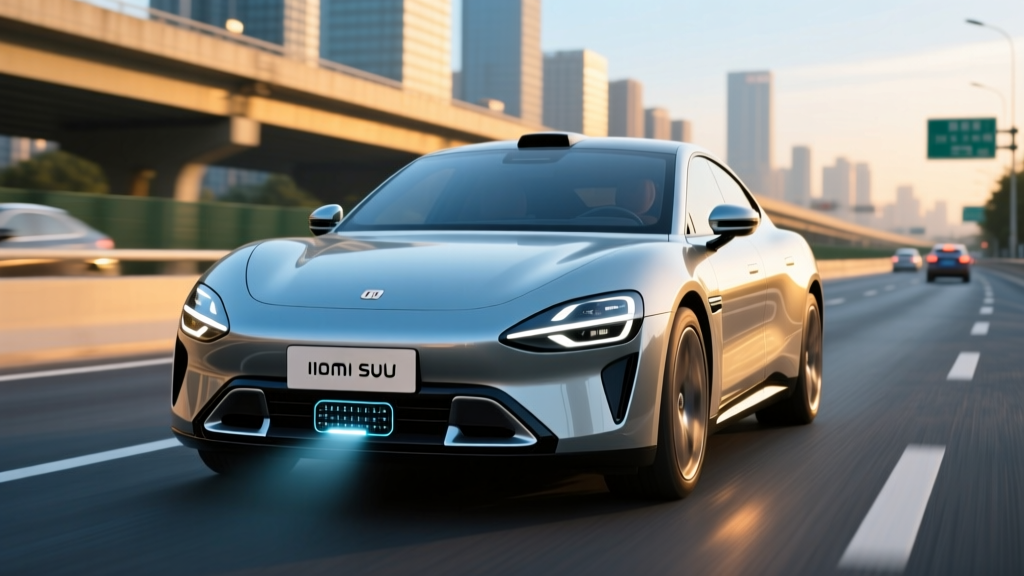
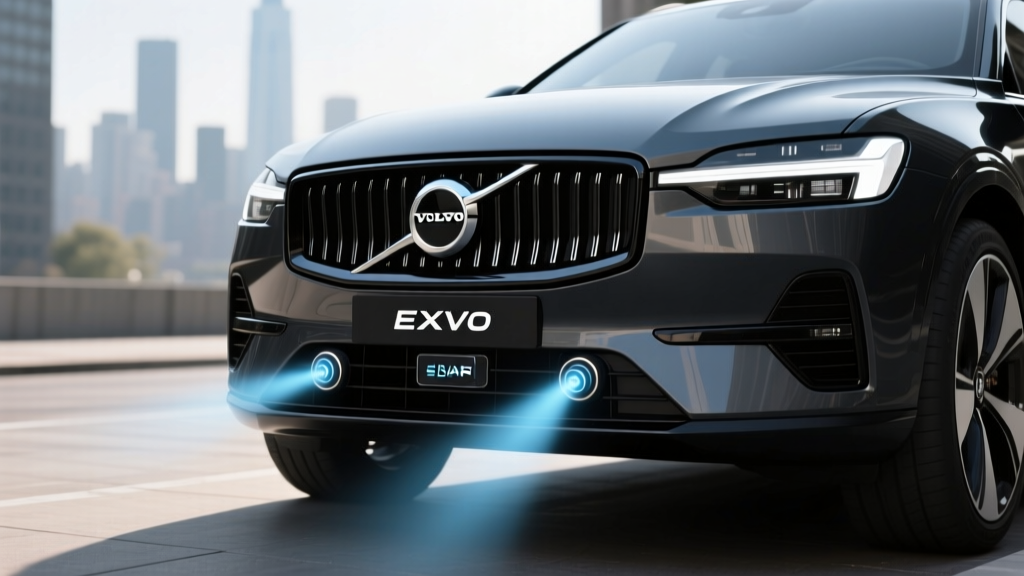
LiDAR (Light Detection and Ranging) fires hundreds of thousands of infrared laser pulses per second and measures how long each takes to bounce back. The result is a precise, real-time 3D point cloud of everything around the vehicle — other cars, pedestrians, debris, guardrails — accurate to the centimeter and independent of ambient light. On the Volvo EX90 and the newly launched EX60, a single Luminar-manufactured 1550-nanometer LiDAR unit sits flush in the roofline above the windshield, giving it an unobstructed 120-degree forward field of view and reliable object detection out to roughly 250 meters. That range matters because at 75 mph, 250 meters equals about 7.5 seconds of look-ahead — far more than the ~150-meter effective range of a typical forward-facing camera and radar suite.
Volvo pairs that LiDAR with five additional radar modules, eight cameras, and two ultrasonic sensors to form what it calls its "sensor shield." The fusion software cross-references data from all three sensor types: cameras classify objects (car vs. pedestrian vs. cyclist), radar tracks velocity, and LiDAR provides the geometric ground truth. When one sensor is degraded — a sun-blinded camera at dusk, a rain-slicked radar — the other two fill the gap. That redundancy is the entire point of adding LiDAR to a production ADAS stack.
SAE Automation Level: What Volvo Pilot Assist Can and Cannot Do
Volvo's roadmap references a future unsupervised highway-driving feature for specific, geo-fenced, low-complexity routes — which would qualify as conditional Level 3 — but as of the 2026 model year, no such feature has been activated on customer vehicles in the United States. Every mile driven on Pilot Assist today is a supervised mile.
Which Volvo Models Have LiDAR, and Which Trims Include It?
Volvo made the controversial decision to install LiDAR hardware standard on every U.S.-spec EX90 regardless of trim, rather than gating it behind a premium package. The EX60, which entered production in late 2025 as a midsize electric SUV, follows the same strategy. The older XC90 Recharge PHEV and C40/XC40 Recharge EVs do not carry LiDAR hardware and cannot receive it via retrofit.
| Model | Model Year | LiDAR Hardware | ADAS Name | Standard / Optional |
|---|---|---|---|---|
| Volvo EX90 | 2025–2026 | Luminar 1550nm (roof-mounted) | Pilot Assist | Standard, all trims (Core, Plus, Ultra) |
| Volvo EX60 | 2026 | Luminar 1550nm (roof-mounted) | Pilot Assist | Standard, all trims |
| Volvo EX30 | 2025–2026 | Not equipped | Pilot Assist (camera + radar) | Standard |
| Volvo XC90 Recharge (PHEV) | 2025–2026 | Not equipped | Pilot Assist | Standard |
Because the hardware is standard, Volvo does not charge a monthly subscription to use the LiDAR-backed Pilot Assist features on the EX90 or EX60. Over-the-air updates may add capabilities over time, but Volvo has committed to keeping core safety and assist functions subscription-free on these vehicles — a notable contrast to competitors that gate their most advanced ADAS behind recurring fees.
Feature Capabilities — What the System Does in Practice
| Function | What It Does | Typical Operating Domain |
|---|---|---|
| Adaptive Cruise + Lane Centering | Maintains set speed, following gap, and lane position | Divided highways, 0–90 mph |
| Automated Lane Change (with confirmation) | Initiates lane change after driver approves via stalk tap | Multi-lane highways above ~40 mph |
| Pedestrian / Cyclist / Large-Animal Detection with Auto-Brake | Warns and applies emergency braking if collision is imminent | City and suburban speeds, day/night |
| Run-off-Road Mitigation | Detects unintended departure and steers/brakes back onto pavement | Rural two-lane roads |
| Intersection Auto-Brake | Brakes when turning across oncoming traffic | Signalized and un-signalized intersections |
| Enhanced Night / Low-Visibility Object Detection | LiDAR-based detection independent of headlights or glare | Dark highways, dusk, fog (moderate) |
The confirmed-lane-change feature is the most "advanced" ADAS maneuver the EX90 performs today. It is not hands-free: the driver must signal intent with the turn-stalk, the system verifies the adjacent lane is clear using the full sensor suite, and only then executes the lane change. If the driver removes hands from the wheel or the driver-monitoring cameras detect gaze away from the road, the system escalates warnings and, if ignored, performs a controlled stop-in-lane with hazard lights activated.
Real-World Limitations: Where Volvo LiDAR Struggles
- Drive the vehicle without an attentive, hands-available driver.
- Navigate city streets, traffic lights, stop signs, or construction zones autonomously.
- Handle heavy snowfall, dense fog, or thick road-salt spray — LiDAR pulses scatter in heavy particulate, reducing effective range dramatically.
- Recognize temporary traffic-control devices (flaggers, handwritten signs) reliably.
- Operate on unmapped or severely lane-marking-degraded rural roads without reduced confidence.
- Replace winter-driving judgment: the system will disengage rather than guess in whiteout conditions.
In cold-weather testing on I-90 in upstate New York, the EX90's LiDAR maintained confident object tracking through light-to-moderate snowfall but issued a "sensor reduced performance" warning and handed control back to the driver within roughly 90 seconds once accumulation on the windshield header — where the unit is housed — exceeded a thin film. Volvo's heated sensor-cleaning system helps, but physics wins in heavy precipitation. Expect similar behavior in freezing rain and road-salt mist common across the Midwest and Northeast.
Lane-centering confidence also drops on two-lane rural highways with faded paint, where the system relies more heavily on the camera's lane-detection algorithm and will occasionally center on ruts or road-edge shadows. This is a limitation shared by every vision-forward ADAS on the market, but it is worth flagging for buyers in states with older highway infrastructure.
Volvo LiDAR vs. Tesla, GM, Ford, and Mercedes ADAS
| System | Brand | LiDAR? | Hands-Free Highway? | Pricing Model | SAE Level |
|---|---|---|---|---|---|
| Pilot Assist (EX90 / EX60) | Volvo | Yes, Luminar 1550nm | No — hands-on required | Included, no subscription | Level 2 |
| Full Self-Driving (Supervised) | Tesla | No (vision-only) | No — hands-on, eyes-on | $8,000 one-time or $99/mo | Level 2 |
| Super Cruise | GM (Cadillac / Chevy) | No (camera + radar + HD maps) | Yes, on ~750k mapped miles | Included 3 yrs, then ~$25/mo | Level 2 |
| BlueCruise | Ford / Lincoln | No (camera + radar) | Yes, on pre-qualified highways | $75/mo or $2,500 2-yr | Level 2 |
| Drive Pilot | Mercedes-Benz | Yes (Valeo, S-Class/EQS) | Yes, geo-fenced < 40 mph | Included on equipped trims | Conditional Level 3 |
The practical takeaway: Volvo's choice is unusual in bundling expensive LiDAR hardware as standard and refusing to subscription-gate the feature. GM Super Cruise and Ford BlueCruise offer a more relaxed hands-free highway experience, but on mapped roads only and at ongoing cost. Tesla FSD pursues the broadest geographic coverage without LiDAR, relying on neural-net vision. Mercedes Drive Pilot is the only production system in the U.S. that legally accepts liability under narrow conditions — but only below 40 mph in heavy traffic on approved highways in Nevada and California, and only on the S-Class and EQS sedan.
Cost, Ownership, and the Bottom Line
Because Volvo includes the LiDAR unit and Pilot Assist functionality in the base MSRP of every EX90 and EX60, there is no separate line-item cost and no recurring subscription for core features. The EX90 Twin Motor Performance Ultra starts at approximately $87,690 for the 2026 model year (before destination and any applicable state or federal incentives). The EX60 undercuts that significantly, with a starting MSRP in the mid-$50,000 range. Consult IRS.gov §30D for current federal clean-vehicle credit eligibility, which depends on MSRP caps ($80,000 for SUVs), buyer income limits, and battery critical-mineral sourcing rules that change annually.
From an ownership perspective, the standard-included approach means the vehicle's ADAS capability will not degrade or expire if you decline a subscription renewal — a genuine risk with GM and Ford's models once their complimentary periods end. It also means the LiDAR sensor is covered under Volvo's standard 4-year/50,000-mile bumper-to-bumper warranty and the 8-year/100,000-mile battery and high-voltage-components warranty, which matters because a replacement Luminar unit is a four-figure component.
For buyers whose primary concern is long-haul highway comfort, GM Super Cruise still delivers the most effortless hands-free experience today. For buyers who value sensor redundancy, nighttime and low-visibility robustness, and a no-subscription ownership model, Volvo's LiDAR-equipped Pilot Assist on the EX90 and EX60 is the most conservative and arguably the most durable ADAS package in the premium EV segment.
Frequently Asked Questions
Is Volvo LiDAR truly self-driving?
No. Volvo Pilot Assist with LiDAR is an SAE Level 2 driver-assistance system. The driver must remain engaged, keep hands available on the wheel, and monitor the road at all times. Volvo has discussed a future Level 3 unsupervised feature for limited scenarios, but it is not active on customer vehicles in the U.S. as of the 2026 model year.
How much does Volvo LiDAR cost?
The LiDAR hardware and Pilot Assist software are included in the MSRP of every EX90 and EX60 trim. There is no add-on package and no monthly subscription for the core features. The EX90 starts around $87,690; the EX60 in the mid-$50,000s.
Which Volvo models have LiDAR?
The 2025–2026 EX90 and the 2026 EX60 include roof-mounted Luminar LiDAR as standard equipment. The EX30, XC90 Recharge, C40 Recharge, and XC40 Recharge do not have LiDAR and cannot be retrofitted.
Does LiDAR work in snow and heavy rain?
Partially. Light precipitation is handled well, but heavy snow, freezing rain, and dense road-salt spray scatter the laser pulses and reduce effective range. The EX90 uses a heated sensor-cleaning system, but in severe conditions the system will warn the driver and disengage rather than operate with degraded confidence.
How does Volvo LiDAR compare to Tesla FSD?
Tesla relies on a vision-only camera suite and neural networks, with no LiDAR or radar. Volvo fuses LiDAR, radar, and cameras for redundancy. Tesla FSD covers a wider range of road types geographically, but Volvo's sensor suite offers more robust performance at night and in low-visibility conditions. Both remain SAE Level 2 systems requiring driver supervision.
Will Volvo charge a subscription for future ADAS features?
Volvo has stated that core safety and driver-assistance features enabled by the standard LiDAR hardware will remain subscription-free. The company has not ruled out paid add-ons for future advanced capabilities delivered via OTA updates, but no such paid feature has been announced for U.S. customers as of 2026.
Sources: Volvo Cars USA — EX90 specifications; IIHS — Volvo EX90 safety ratings; NHTSA — Automated Vehicle Safety.