What Tesla Forward Collision Warning Actually Does
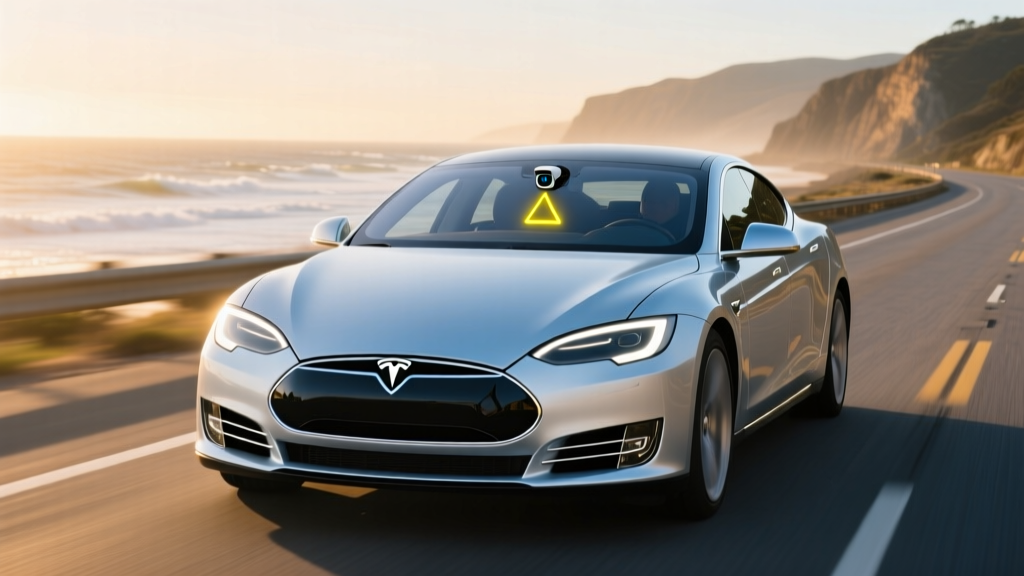
Tesla Forward Collision Warning (FCW) is an active safety feature that monitors the road ahead and alerts the driver when a collision with a vehicle, pedestrian, or cyclist appears imminent. Unlike Tesla's more advanced Autopilot or Full Self-Driving (Supervised) systems, FCW is a passive alert layer — it warns you but does not steer or brake on its own. That braking intervention belongs to Automatic Emergency Braking (AEB), which operates alongside FCW as a separate but complementary function.
On every 2026 Tesla model — Model 3, Model Y, Model S, and Model X — Forward Collision Warning comes standard as part of Tesla's base Active Safety Features suite. You do not need to purchase Autopilot, Enhanced Autopilot, or FSD (Supervised) to get it. The system is active from the moment you start the car.
How the System Detects Hazards
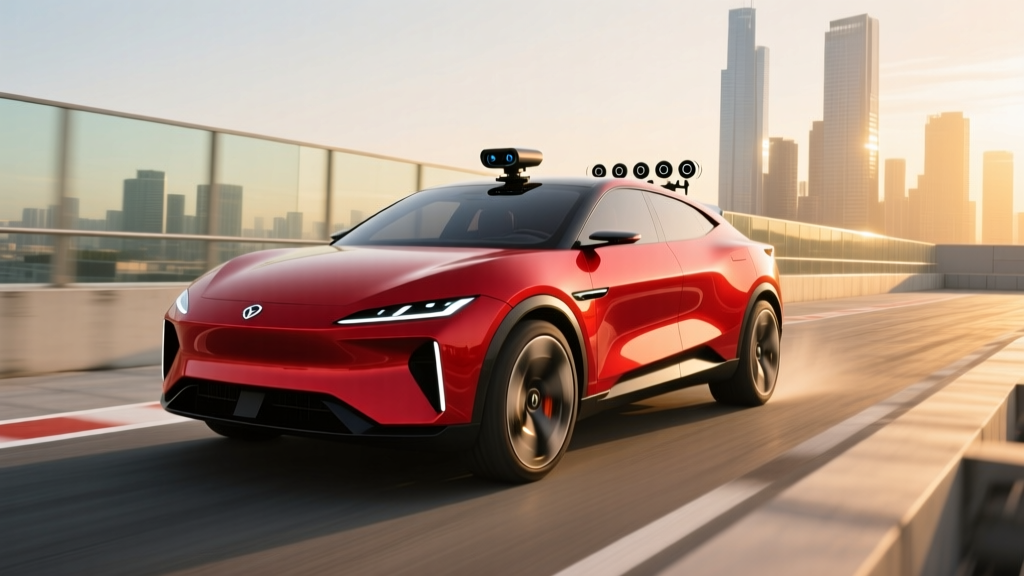
Since late 2022, Tesla has used a camera-only architecture branded Tesla Vision, having removed ultrasonic sensors and radar from production vehicles. The forward-facing camera array — mounted behind the windshield near the rearview mirror — feeds image data to the onboard Hardware 4 (HW4) computer. Neural networks process object detection, distance estimation, and relative velocity in real time.
When the system calculates that your closing speed and distance to a forward object cross a risk threshold, it triggers two escalating alerts:
- Visual warning: A red car icon and audible chime appear on the touchscreen and instrument display.
- Escalation: If you do not react and the collision probability increases, AEB may engage automatically (separate from FCW) to reduce impact speed or avoid the collision entirely.
You can adjust FCW sensitivity in the vehicle settings — choosing between Early, Medium, and Late warning distances. Early gives you more lead time but may produce more false positives in dense traffic.
Tesla Forward Collision Warning is classified as an SAE Level 0 (warning-only) feature. When paired with AEB, the combined system operates at SAE Level 1 — it can intervene with braking but provides no steering automation. The driver remains fully responsible for vehicle control at all times. This is not autonomous driving. Only SAE Level 4 systems (like Waymo's robotaxi service) operate without a human driver.
Tesla Forward Collision Warning: Feature and Capability Breakdown
| Attribute | Detail |
|---|---|
| Feature | Forward Collision Warning (FCW) |
| Sensor Hardware | Tesla Vision (camera-only, HW4 computer) |
| Detects | Vehicles, pedestrians, cyclists, large obstacles |
| Speed Range | Active above ~5 mph; AEB up to highway speeds |
| Alert Type | Visual (touchscreen icon) + audible chime |
| Adjustable Sensitivity | Yes — Early / Medium / Late |
| SAE Level | Level 0 (warning) / Level 1 with AEB |
| Cost | Standard — included on all Tesla vehicles at no extra charge |
| Models (2026) | Model 3, Model Y, Model S, Model X (all trims) |
Real-World Performance and Known Limitations
Tesla Vision's camera-only approach has drawn scrutiny since its adoption. In controlled testing, the Insurance Institute for Highway Safety (IIHS) has evaluated Tesla vehicles for crash avoidance, and results have been mixed relative to competitors using radar-fusion systems. Here is what real-world owners and testers consistently report:
Where FCW Performs Well
- Clear-day highway driving: Reliable detection of stopped or slow-moving vehicles at distances exceeding 300 feet, giving ample warning at 65–80 mph.
- Pedestrian detection in daylight: The system identifies crossing pedestrians and cyclists with reasonable accuracy at speeds under 40 mph.
- Consistent software updates: Tesla's over-the-air (OTA) updates periodically refine detection algorithms, sometimes improving response times without a service visit.
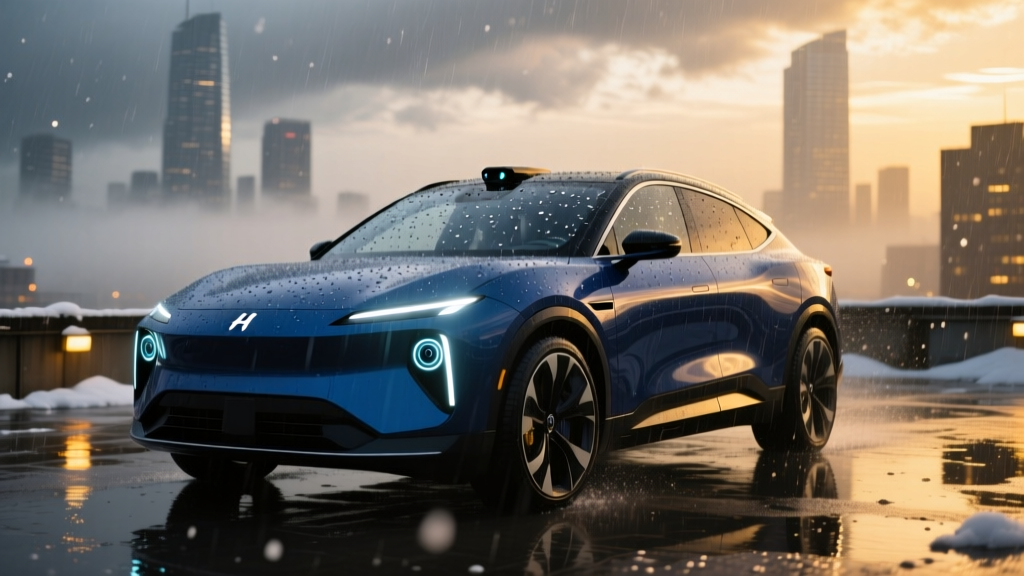
- Heavy rain, fog, or snow: Camera lenses can be obscured by water, ice, or road grime. The system will display a "Tesla Vision degraded" warning and FCW may become unreliable or temporarily unavailable.
- Direct sun glare: Low-angle sunlight hitting the forward cameras can wash out image data, causing delayed or missed warnings.
- Stationary objects at high speed: Like most camera-only systems, FCW can struggle with stationary objects (e.g., a parked fire truck, a concrete barrier) when approaching at highway speeds — a documented edge case in NHTSA incident reports.
- Cut-in scenarios: A vehicle abruptly merging into your lane at close range may not trigger a warning quickly enough for human reaction time.
- Dark or unlit obstacles at night: Without infrared or radar backup, detection of poorly reflective objects in darkness is reduced.
- Does NOT steer or brake: FCW only alerts. Braking intervention requires AEB to activate separately, and AEB itself has speed and scenario limitations.
The Camera-Only Debate: Tesla Vision vs. Sensor Fusion
Most competitors — including Ford (BlueCruise), General Motors (Super Cruise), Hyundai/Kia, and Toyota — use a combination of cameras, millimeter-wave radar, and sometimes lidar. Radar penetrates rain and fog and provides precise distance measurements independent of lighting. Tesla's decision to rely exclusively on cameras means its FCW system is more dependent on visibility conditions than radar-equipped rivals.
How Tesla FCW Compares to Competing Forward Collision Systems
| Automaker | FCW Feature Name | Sensors | Standard? | IIHS Crash Prevention |
|---|---|---|---|---|
| Tesla | Forward Collision Warning | Camera only (Tesla Vision) | Yes, all models | Varies by model/year |
| Toyota | Pre-Collision System (TSS 3.0) | Camera + radar | Yes, all models | Superior (most models) |
| Honda | Collision Mitigation Braking (Honda Sensing) | Camera + radar | Yes, all models | Superior (most models) |
| Ford | Pre-Collision Assist (Co-Pilot360) | Camera + radar | Yes, most trims | Superior (most models) |
| Hyundai | Forward Collision-Avoidance Assist | Camera + radar | Yes, all models | Superior (most models) |
The key takeaway: Tesla's FCW works well in favorable conditions but lacks the radar redundancy that gives competitors an edge in rain, fog, and low-visibility scenarios. For buyers in regions with frequent adverse weather, this is a meaningful consideration.
Cost Breakdown: What's Included Free vs. What Costs Extra
One of the most common points of confusion for Tesla shoppers is which safety and driver-assist features require payment. Here is the clear breakdown for 2026:
| Feature | Cost | What It Adds Beyond FCW |
|---|---|---|
| Forward Collision Warning + AEB | $0 (standard) | Baseline safety — alerts + automatic braking |
| Basic Autopilot | $0 (standard) | Traffic-Aware Cruise Control + Autosteer (lane centering) |
| FSD (Supervised) | $8,000 one-time or $99/month | Navigate on Autopilot, Auto Lane Change, Autopark, Smart Summon, traffic light/stop sign control |
Key point: You never need to pay extra for Forward Collision Warning. It is not locked behind a subscription or trim level. FSD (Supervised) adds convenience and automation features but does not improve the core FCW/AEB detection capability — the same camera hardware and base neural network run regardless of your software package.
FSD (Supervised) remains an SAE Level 2 system. Despite the "Full Self-Driving" name, the driver must maintain active supervision, keep hands on the wheel (or demonstrate attentiveness via torque/camera monitoring), and be prepared to take over at any moment.
Is Tesla Forward Collision Warning Truly Self-Driving?
No. Forward Collision Warning is not self-driving by any definition. It is a warning system — SAE Level 0 — that alerts the human driver to an impending collision. Even when combined with AEB (Level 1) and Autopilot/Autosteer (Level 2), the Tesla system requires continuous driver engagement.
The SAE International automation framework is unambiguous:
- Level 0: Warnings only (FCW, blind-spot monitoring, lane-departure warning)
- Level 1: Single-axis intervention (AEB, adaptive cruise OR lane-keeping — not both simultaneously)
- Level 2: Combined lateral + longitudinal control (Autopilot, BlueCruise, Super Cruise) — driver must supervise
- Level 4: True driverless operation in defined domains (Waymo, Zoox) — no human driver needed
Tesla's entire consumer lineup tops out at Level 2. Marketing language like "Full Self-Driving" has drawn criticism from NHTSA and consumer advocacy groups for potentially misleading drivers about system capabilities. Always treat any Tesla driver-assist feature as requiring your full attention.
Practical Tips for Tesla FCW Owners
Keep Your Cameras Clean
Because Tesla Vision depends entirely on cameras, a dirty windshield or obscured camera housing directly degrades FCW performance. Wipe the camera area (upper windshield, behind the rearview mirror) regularly, especially in winter when road salt spray accumulates.
Adjust Sensitivity to Your Driving Environment
If you commute in dense urban traffic with frequent close-following, setting FCW to "Late" reduces nuisance alerts. On open highways, "Early" provides maximum reaction time. Experiment and find what suits your routes.
Do Not Rely on FCW as a Substitute for Attention
FCW is a backup safety net, not a co-pilot. It can miss edge cases, particularly stationary objects, cut-in scenarios, and low-contrast obstacles. Your eyes and judgment remain the primary collision-avoidance system.
Frequently Asked Questions
Does Tesla Forward Collision Warning work at night?
Yes, but with reduced reliability. The camera system depends on ambient light and headlamp illumination. Well-lit urban roads provide adequate detection, but unlit rural roads or dark-colored obstacles may reduce warning accuracy compared to radar-equipped competitors.
Can I turn off Tesla Forward Collision Warning?
You can adjust the sensitivity between Early, Medium, and Late, but you cannot fully disable FCW permanently. The system resets to its default setting each time you start the vehicle, consistent with NHTSA recommendations that crash-avoidance features remain active.
Does FCW work differently with FSD (Supervised) enabled?
No. The underlying FCW and AEB detection algorithms run on the same Tesla Vision hardware regardless of whether Basic Autopilot or FSD (Supervised) is active. FSD adds higher-level navigation and lane-change features but does not enhance the base collision-warning detection capability.
Why does my Tesla show "Forward Collision Warning unavailable"?
This typically occurs when camera visibility is compromised — heavy rain, snow buildup, direct sun glare, or a dirty windshield. The system will restore automatically once conditions improve and the cameras can see clearly. If the message persists in clear conditions, a camera recalibration or service check may be needed.
How does Tesla's FCW compare to Toyota Safety Sense or Honda Sensing?
Toyota and Honda use camera-plus-radar sensor fusion, which generally provides more consistent performance in adverse weather and low-light conditions. IIHS crash-prevention ratings have historically favored these radar-equipped systems for vehicle-to-vehicle and vehicle-to-pedestrian detection reliability. Tesla's camera-only approach offers strong performance in clear conditions but lacks the all-weather redundancy of radar.
Will Tesla add radar back to improve FCW?
Tesla has not announced plans to return to radar for its consumer vehicles as of early 2026. The company continues to invest in neural-network improvements to Tesla Vision, arguing that a sufficiently advanced camera system can match or exceed radar performance. Independent testing has not yet conclusively validated this claim across all conditions.