Why Tesla Ditched Radar and Lidar — and What Replaced Them
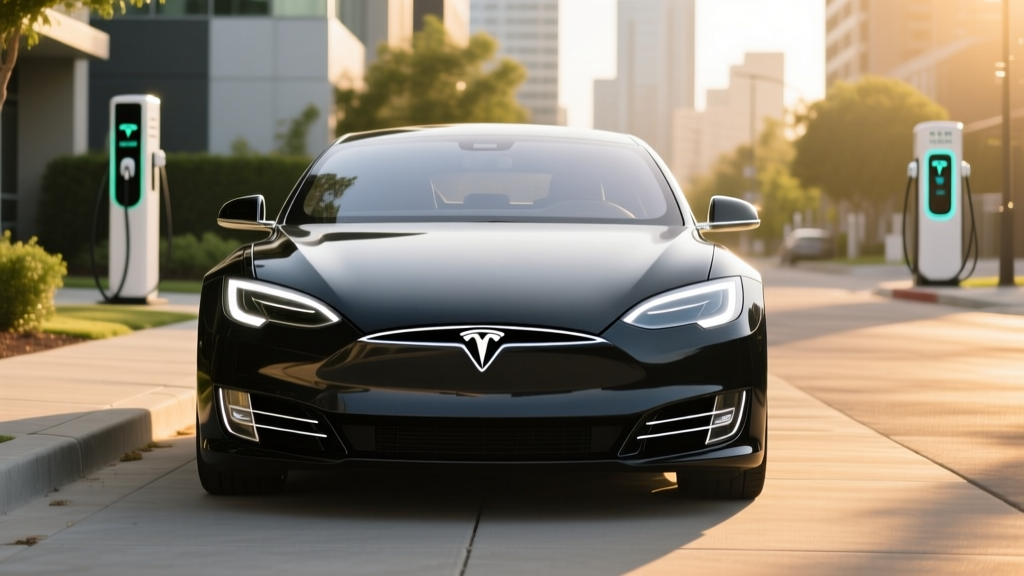
When Tesla began removing millimeter-wave radar from Model 3 and Model Y vehicles in mid-2021, the automotive industry raised eyebrows. By 2023, ultrasonic sensors were gone too. Today, every new Tesla — Model S, 3, X, Y, and Cybertruck — relies exclusively on a camera-only perception stack branded Tesla Vision. No radar. No lidar. No ultrasonic proximity sensors.
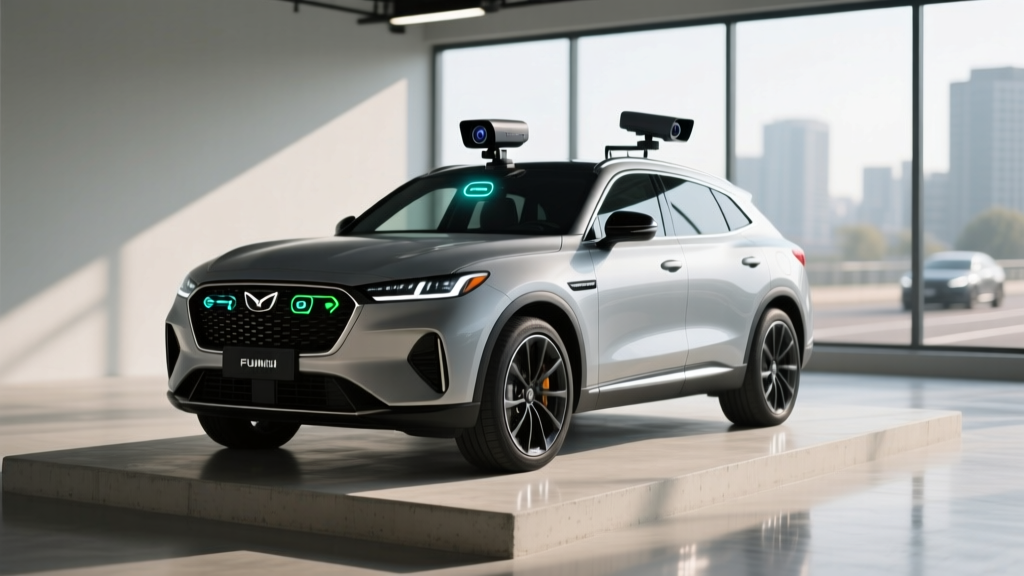
Elon Musk's rationale has remained consistent: humans drive with eyes and a neural network (the brain), so cars should drive with cameras and a neural network. Tesla's approach uses eight external cameras (nine on the Cybertruck and refreshed Model 3 Highland) feeding a custom AI inference computer running vision transformer models that interpret lane lines, objects, traffic signals, and free-space boundaries in real time.
Meanwhile, nearly every other automaker deploying advanced driver-assistance — from Ford's BlueCruise to GM's Super Cruise to Mercedes-Benz's Drive Pilot — fuses cameras with radar and, in premium applications, lidar. The question for buyers is whether Tesla's pure-vision bet delivers equivalent or better safety, and what limitations remain in 2026.
How Tesla Vision Works Technically
Tesla Vision replaces traditional sensor fusion with an end-to-end neural network approach. Here is how the stack operates:
- Hardware: Eight surround cameras (front-facing narrow + wide, forward-looking side repeaters, rearward-looking side pillars, and a rear camera) provide up to 250 meters of forward visibility and 360-degree coverage. HW4 (also called AI4) hardware, standard on all new Teslas since early 2023, offers roughly 3x the compute throughput of HW3, with higher-resolution camera feeds at up to 5 MP.
- Perception: Instead of hand-coded rules for lane-keeping and object detection, Tesla trains deep neural networks on billions of miles of real-world driving video. The system outputs an "occupancy network" — a 3D voxel grid that identifies drivable space and obstacles without requiring a pre-classified object label (useful for unusual obstacles like overturned trucks or debris).
- Planning and control: Since late 2023, FSD (Supervised) has used end-to-end neural networks for lateral and longitudinal control decisions, replacing much of the earlier C++ heuristic rules engine. This means the car learns driving behavior from data rather than following programmer-written if-then rules.
Without radar, Tesla Vision cannot directly measure an object's velocity via Doppler shift the way radar can. Without lidar, it lacks a native high-resolution depth map independent of lighting. Tesla compensates by inferring depth and velocity from sequential camera frames — essentially the same way human stereoscopic vision and motion parallax work, but computed at scale.
Both Autopilot and Full Self-Driving (Supervised) are classified as SAE Level 2 driver-assistance systems. The driver must remain attentive, keep hands on the steering wheel (or demonstrate engagement via the cabin camera), and be prepared to take over instantly. Tesla's system does not meet SAE Level 3, 4, or 5. Only geofenced robotaxi services like Waymo and Zoox operate at Level 4. Never treat any Tesla as self-driving.
What Autopilot and FSD (Supervised) Actually Do
Tesla offers two tiers of driver-assistance, and the naming has historically caused confusion. Here is the current breakdown for 2026 model-year vehicles:
| Feature | Autopilot (Standard) | FSD (Supervised) |
|---|---|---|
| Traffic-Aware Cruise Control | ✓ | ✓ |
| Autosteer (lane centering on highways) | ✓ | ✓ |
| Auto Lane Change | ✗ | ✓ |
| Navigate on Autopilot (highway on/off-ramp) | ✗ | ✓ |
| Traffic Light & Stop Sign Control | ✗ | ✓ |
| City Street Autosteer | ✗ | ✓ |
| Smart Summon (parking lot) | ✗ | ✓ |
| Autopark | ✗ | ✓ |
| SAE Level | Level 2 | Level 2 |
Autopilot comes standard on every new Tesla and handles adaptive cruise control and lane centering on marked highways. Full Self-Driving (Supervised) extends those capabilities to city streets, intersections, and parking lots — but the "Supervised" suffix, added to the branding in 2024 following NHTSA scrutiny, is a deliberate reminder: the driver is legally and operationally responsible at all times.
Real-World Capabilities and Honest Limitations
In 2026 testing, FSD (Supervised) demonstrates impressive competence in well-marked suburban and highway environments. It handles unprotected left turns, multi-lane roundabouts, and construction-zone lane shifts with increasing fluidity. The end-to-end neural network architecture produces smoother, more human-like steering inputs than the older rules-based stack.
However, the camera-only approach introduces specific failure modes that radar- or lidar-equipped competitors handle more gracefully:
- Heavy rain, fog, and snow: Camera lenses can be obscured by water film, ice, or road spray. Without radar to penetrate precipitation, the system may disengage or reduce confidence in conditions where a fused radar system would continue tracking lead vehicles.
- Direct sun glare and camera washout: Low-angle sun at dawn/dusk can saturate camera sensors, particularly on westbound drives at sunset. The system may slow or disengage.
- Faded or absent lane markings: Rural roads, construction zones with conflicting temporary markings, and unmapped private driveways challenge the vision system's ability to determine the correct path.
- Phantom braking: NHTSA has investigated Tesla for sudden, unexpected deceleration events triggered by shadows, overpasses, or roadside objects misclassified as obstacles. This remains a documented issue through 2025.
- Stationary emergency vehicles: Despite firmware updates, Teslas on Autopilot have continued to collide with parked fire trucks and police cars — a scenario where lidar's precise depth mapping would provide a critical redundant check.
- Parking without ultrasonics: The removal of ultrasonic sensors means parking proximity is estimated via camera-based depth inference. Drivers report less precise distance warnings and a higher reliance on the 360-degree camera view.
In contrast, Ford's BlueCruise and GM's Super Cruise use radar + camera fusion and operate on pre-mapped divided highways with highly reliable hands-off driving (still Level 2, but with robust driver-monitoring cameras). Mercedes-Benz's Drive Pilot — available in limited markets — achieves conditional Level 3 in traffic jams under 40 mph on mapped highways, using lidar, radar, cameras, and HD maps, with Mercedes accepting liability when the system is engaged.
How Tesla's Camera-Only Approach Compares to Sensor Fusion
| System | Automaker | Sensors | SAE Level | Hands-Off? | Cost (2026) |
|---|---|---|---|---|---|
| Autopilot | Tesla | Cameras only | Level 2 | No | Standard |
| FSD (Supervised) | Tesla | Cameras only | Level 2 | No | $8,000 one-time or $99/mo |
| BlueCruise | Ford | Cameras + radar | Level 2 | Yes (mapped highways) | $2,100 or included on select trims |
| Super Cruise | GM (Cadillac/Chev) | Cameras + radar + lidar (some) | Level 2 | Yes (mapped highways) | $2,200 or included on premium trims |
| Drive Pilot | Mercedes-Benz | Cameras + radar + lidar + HD maps | Level 3 (conditional) | Yes (under 40 mph, mapped) | $2,500/yr subscription (limited markets) |
| ProPILOT Assist 2.0 | Nissan | Cameras + radar + lidar | Level 2 | Yes (mapped highways) | Included on select trims |
The core trade-off is clear: Tesla's approach scales more cheaply in hardware (cameras cost a fraction of lidar units) and benefits from a massive real-world data fleet of millions of vehicles feeding training data back to the neural networks. But sensor fusion provides hardware-level redundancy that cameras alone cannot replicate in edge cases involving poor visibility or sensor occlusion.
Cost and Availability: What You Actually Pay
| Package | Availability | Pricing (2026) | Transferable? |
|---|---|---|---|
| Autopilot (basic) | All new Tesla vehicles, standard | $0 (included) | N/A — tied to vehicle |
| FSD (Supervised) — Purchase | All new Teslas | $8,000 one-time | No (tied to VIN, with rare promotional exceptions) |
| FSD (Supervised) — Subscription | All Teslas with HW3 or later | $99/month, cancel anytime | No (tied to driver account) |
| FSD (Supervised) — Transfer | Limited-time promotional windows only | Varies; typically offered end-of-quarter | One-time transfer to new Tesla purchase |
At $8,000 upfront or $99/month, FSD (Supervised) is one of the most expensive consumer ADAS packages available. Ford's BlueCruise, by comparison, costs $2,100 for a lifetime license or is bundled on Lariat and Platinum trims of the F-150 Lightning and Mach-E. GM frequently includes Super Cruise for three years on Cadillac Lyriq and Chevrolet Silverado EV high-end trims.
Buyers should also factor in insurance. Some insurers charge higher premiums for Tesla vehicles partly due to repair costs and partly due to ADAS-related incident data. Check quotes before purchasing.
Safety Data: What the Numbers Show
Tesla publishes quarterly safety reports claiming approximately one crash per 4–5 million miles driven with Autopilot engaged, versus one crash per roughly 1.5 million miles without. However, these figures are not directly comparable to NHTSA's national average (one crash per ~670,000 miles) because Tesla's data skews toward highway driving, which is inherently safer, and uses its own definitions of "crash" and "Autopilot engaged."
Independent scrutiny paints a more nuanced picture. The National Highway Traffic Safety Administration (NHTSA) has opened multiple investigations into Tesla's Autopilot and FSD systems, particularly regarding collisions with stationary emergency vehicles and the adequacy of Tesla's driver-engagement monitoring. A 2024 Insurance Institute for Highway Safety (IIHS) study found that partial-automation systems across brands did not significantly reduce crash rates and that driver-monitoring systems varied widely in effectiveness.
Tesla's cabin camera — used to monitor driver attention when FSD is engaged — is more proactive than the torque-sensing steering wheels used by some competitors, but it has drawn criticism for allowing extended inattention before issuing alerts. The bottom line: no consumer ADAS system, Tesla's included, has been conclusively proven safer than an attentive human driver across all conditions.
The Verdict: Who Should (and Shouldn't) Trust Tesla Vision
Tesla's decision to ditch radar and lidar was a bet on software scalability over hardware redundancy. For many daily driving scenarios — highway commuting, suburban errands, well-marked roads in clear weather — Tesla Vision performs at a high level and continues to improve via over-the-air updates. The end-to-end neural network architecture represents a genuine engineering achievement.
But "ditches radar lidar" is not just a headline — it is a design choice with real consequences. If you frequently drive in heavy rain, snow, fog, or rural areas with poor lane markings, a sensor-fusion system from Ford, GM, or Mercedes-Benz may offer more consistent performance. If you want hands-off highway driving on mapped routes, BlueCruise and Super Cruise provide a more relaxed (though still Level 2) experience.
Choose Tesla FSD (Supervised) if you value continuous software improvement, want city-street automation capabilities no other consumer system currently matches, and accept the supervision requirement as a genuine obligation — not a formality. Choose a fused-sensor competitor if hardware redundancy and hands-off highway comfort are your priorities.
Frequently Asked Questions
Is Tesla Full Self-Driving actually self-driving?
No. FSD (Supervised) is an SAE Level 2 driver-assistance system. The driver must remain attentive, keep hands on or near the wheel, and be ready to intervene. The "Supervised" label was added to Tesla's branding in 2024 to reinforce this. Only robotaxi services like Waymo (Level 4) operate without a human driver.
Does Tesla still use radar in any 2026 vehicle?
No. As of 2026, all new Tesla vehicles — Model S, 3, X, Y, and Cybertruck — use Tesla Vision exclusively. A brief experiment with "HD radar" (high-resolution 4D imaging radar) in some Model S and X vehicles in 2023–2024 was discontinued. Tesla has fully committed to its camera-only approach.
Why did Tesla remove ultrasonic sensors?
Tesla removed ultrasonic parking sensors starting in late 2022, arguing that its vision-based occupancy network could replicate and eventually exceed ultrasonic proximity detection. The transition was rocky — early firmware lacked reliable parking-distance warnings — but Tesla has since improved camera-based parking assistance. Some owners still prefer the precision of physical ultrasonic sensors.
How much does Tesla FSD cost in 2026?
FSD (Supervised) costs $8,000 as a one-time purchase or $99 per month as a subscription. Basic Autopilot (adaptive cruise + lane centering on highways) is included standard on all new Teslas. Tesla occasionally offers limited-time FSD transfer promotions at the end of fiscal quarters.
Is Tesla Vision less safe than radar + lidar systems?
The data is inconclusive. Tesla's self-reported safety figures show strong performance on highways, but independent NHTSA investigations have flagged specific failure modes — phantom braking, stationary-object collisions, and poor-weather disengagement — that sensor-fusion systems handle more robustly. No peer-reviewed, apples-to-apples study has definitively ranked Tesla Vision above or below fused ADAS systems across all driving conditions.
Which Tesla models include Autopilot vs. FSD?
Basic Autopilot is standard on every new Tesla (Model S, 3, X, Y, Cybertruck). FSD (Supervised) is an $8,000 option or $99/month subscription available on any Tesla with HW3 or later hardware. All vehicles sold new since approximately April 2022 ship with HW4 (AI4).