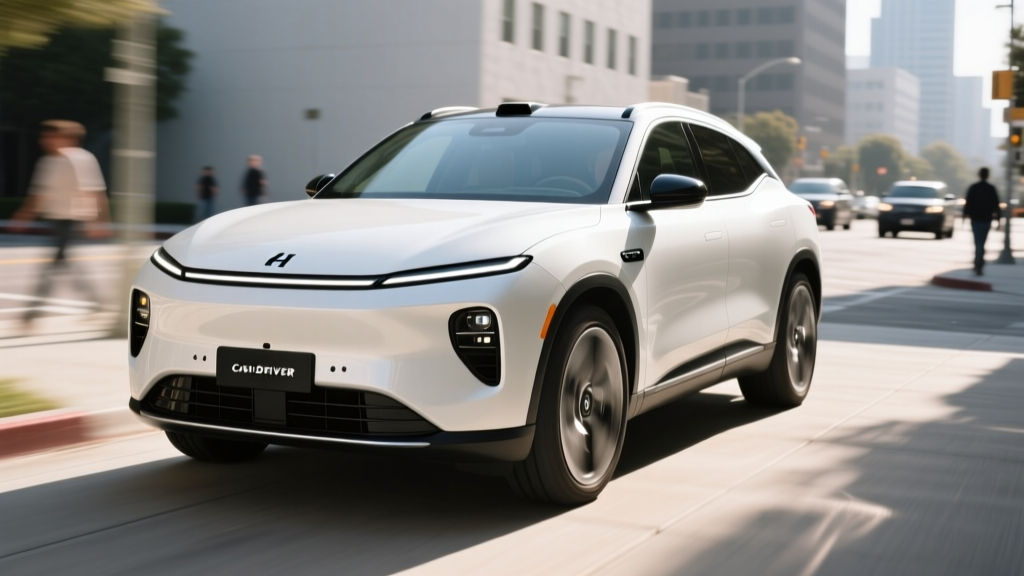
When Rivian unveiled the R2 platform, the company confirmed that the compact electric SUV would ship with its full advanced driver-assistance suite included for the life of the vehicle — no monthly subscription required. As Rivian details R2 launch package features including lifetime driver assistance, the move positions the R2 against Tesla's subscription-based Full Self-Driving and GM's paid Super Cruise tiers, offering buyers a transparent, one-and-done ownership cost.
Here is a technical breakdown of what Rivian's driver-assistance system actually does, the hardware powering it, its real-world limitations, and how it compares to competing Level 2 platforms heading into the 2026 model year.
What Rivian's Driver+ System Actually Does
Rivian brands its ADAS suite as Rivian Driver+. On the R2, the system encompasses two primary feature layers:
- Highway Assist: Adaptive cruise control combined with lane-centering on divided highways, maintaining speed, following distance, and steering input simultaneously.
- Adaptive Cruise + Lane Keeping (Surface Streets): A lower-speed mode that handles stop-and-go traffic and lane-keeping on marked urban roads, though with more conservative steering intervention than highway mode.
Neither mode is autonomous. The driver must keep hands on the wheel (or demonstrate attentiveness through steering-torque input) and eyes on the road at all times. If the system detects prolonged inattention, it issues escalating warnings before disengaging and bringing the vehicle to a controlled stop — a standard SAE Level 2 safety protocol.
Rivian Driver+ on the R2 is an SAE Level 2 system. This means the vehicle can control steering and acceleration/braking simultaneously under certain conditions, but the human driver remains fully responsible for monitoring the environment and must be prepared to take over instantly. This is fundamentally different from Level 4 robotaxi services like Waymo, which operate without a human driver in geofenced areas. Never treat Level 2 as "self-driving."
Sensor Suite and Technical Architecture
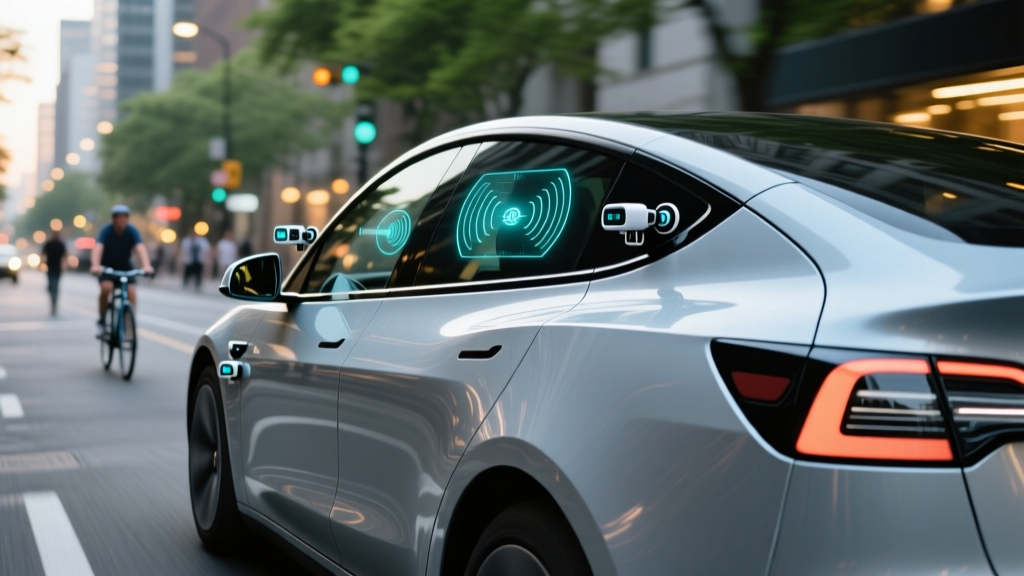
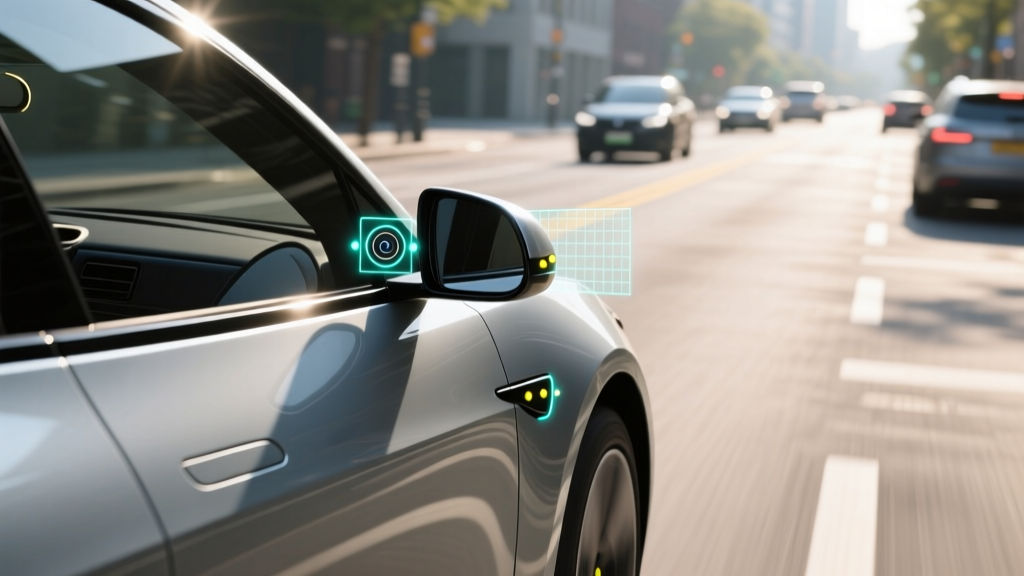
The R2's driver-assistance stack relies on a sensor-fusion approach, combining multiple input types for redundancy and cross-validation. Here is the hardware Rivian has confirmed for the R2 platform:
| Sensor Type | Count | Function |
|---|---|---|
| Forward-facing cameras | 3 (narrow, wide, telephoto) | Lane detection, traffic-sign recognition, object classification, signal-light detection |
| Surround-view cameras | 8 | 360° environment mapping, blind-spot monitoring, parking assist |
| Forward radar | 1 long-range | Vehicle distance/speed measurement in low-visibility conditions |
| Corner radars | 4 | Cross-traffic alert, lane-change assist, blind-spot detection |
| Cabin-monitoring camera | 1 (infrared) | Driver-attention monitoring (eye-gaze and head-position tracking) |
Rivian has not adopted lidar for the R2, opting instead for a camera-and-radar fusion strategy similar to Tesla's current vision-based approach, but with radar redundancy that Tesla removed from its post-2022 vehicles. The inclusion of corner radars gives the R2 a measurable advantage in cross-traffic and blind-spot scenarios where pure vision systems can struggle.
All sensor data feeds into Rivian's onboard compute module, which runs a neural-network perception stack. The R2 uses a centralized zonal electrical architecture, reducing wiring harness weight and enabling over-the-air (OTA) updates to the ADAS models — meaning the system's object-recognition and lane-keeping algorithms can improve post-purchase without hardware changes.
Lifetime Inclusion: What "Lifetime Driver Assistance" Means
The phrase "lifetime driver assistance" in the R2 launch package means that Rivian Driver+ is included with the vehicle at no additional cost — no one-time activation fee, no monthly subscription, and no trial period that expires. This covers:
- Highway Assist (adaptive cruise + lane centering)
- Adaptive Cruise with lane-keeping on surface streets
- Automatic emergency braking (AEB) with pedestrian and cyclist detection
- Rear cross-traffic alert with automatic braking
- Blind-spot warning with steering intervention
- OTA updates to the Driver+ stack for the vehicle's operational life
This is a significant differentiator. Here is how the cost structure compares to competing ADAS platforms available in 2026:
| System | OEM | Cost Model | 5-Year Cost |
|---|---|---|---|
| Rivian Driver+ | Rivian (R2) | Included for life | $0 |
| Full Self-Driving (Supervised) | Tesla | $8,000 one-time or $99/mo | $5,940–$8,000 |
| Super Cruise | GM (Cadillac/Chev) | 3-yr trial, then ~$25/mo | $600 (yrs 4-5) |
| BlueCruise | Ford | $2,100 one-time or $75/mo | $2,100–$4,500 |
| Toyota Safety Sense 3.0 | Toyota | Standard (included) | $0 |
| ProPILOT Assist 2.0 | Nissan | Included on higher trims | $0 |
Rivian's approach mirrors Toyota's philosophy of bundling ADAS as standard safety equipment, while Tesla and Ford treat advanced features as premium add-ons. The lifetime inclusion eliminates a common EV-ownership frustration: paying for a subscription on a vehicle you already purchased outright.
Real-World Capabilities and Honest Limitations
Based on Rivian's published specifications and testing data from the R1S/R1T platforms running the same Driver+ architecture (adapted for R2's updated hardware), here is what the system handles well — and where it falls short.
Where Driver+ Excels
- Divided interstate highways: Smooth lane-centering with confident curve negotiation at speeds up to 85 mph. Lane changes require driver initiation (the system does not auto-change lanes).
- Stop-and-go congestion: Reliable low-speed follow with smooth acceleration and braking transitions. The system handles full-stop resumptions within 3 seconds without driver input.
- Night driving on well-marked roads: The radar layer compensates for reduced camera visibility, maintaining following distance when lane markings are harder for the vision system to resolve.
- Inclement weather (moderate): Light rain and overcast conditions are handled well. The sensor-fusion approach with radar provides redundancy when cameras are partially obscured.
Where Driver+ Reaches Its Limits
- It does not drive autonomously. You must remain attentive, keep hands on the wheel, and be ready to assume full control at any moment.
- It does not handle construction zones reliably. Temporary lane shifts, orange barrels, and altered lane markings can confuse the vision system. Driver takeover is required.
- It does not navigate unmapped or poorly marked rural roads. Faded lane markings, gravel shoulders, and roads without clear edge lines will trigger system disengagement.
- Heavy rain, snow, and fog degrade performance. While radar helps, camera occlusion from heavy precipitation or ice buildup on sensor housings will cause the system to limit functionality or disengage.
- It does not perform automatic lane changes. Unlike Tesla FSD (Supervised) or GM Super Cruise, the R2's Driver+ requires the driver to initiate every lane change manually, even on highways.
- It does not navigate roundabouts or complex intersections autonomously. Surface-street mode provides lane-keeping assist, not full intersection navigation.
The R2's cabin-monitoring camera uses infrared to track driver gaze direction. If your eyes leave the forward road area for more than a few seconds, the system issues a visual alert on the instrument cluster, followed by an audible warning, then steering-wheel haptic feedback. If no driver response is detected, the vehicle will activate hazard lights, decelerate, and come to a controlled stop in its lane. This is a NHTSA-recommended safeguard for all Level 2 systems.
How the R2's ADAS Compares to Key Competitors
| Feature | Rivian Driver+ (R2) | Tesla FSD (Supervised) | GM Super Cruise | Ford BlueCruise 1.4 |
|---|---|---|---|---|
| SAE Level | Level 2 | Level 2 | Level 2 | Level 2 |
| Hands-free allowed? | No (hands-on) | No (hands-on) | Yes (on mapped roads) | Yes (on mapped roads) |
| Auto lane change? | No | Yes | Yes (on mapped roads) | Yes (on mapped roads) |
| Radar included? | Yes (5 radars) | No (vision-only since 2022) | Yes | Yes |
| Driver monitoring | IR cabin camera | Cabin camera | IR eye-tracking | IR eye-tracking |
| Road-type coverage | Highways + surface streets | All roads (variable quality) | Pre-mapped highways only | Pre-mapped highways only |
| Cost to owner | Included for life | $8,000 or $99/mo | Trial + $25/mo | $2,100 or $75/mo |
The R2 trades some feature breadth (no automatic lane changes, no hands-free operation) for a more conservative, predictable system that does not require HD map coverage. GM Super Cruise and Ford BlueCruise only function on pre-mapped divided highways — roughly 400,000+ miles of US roads — while Rivian's Driver+ operates on any road where lane markings and sensor conditions permit, similar to Tesla's approach but with radar redundancy.
For buyers who primarily drive on interstates and want hands-free convenience, Super Cruise or BlueCruise offer a tangible experience advantage. For buyers who encounter a mix of highways, rural roads, and unmapped routes — and who prefer not to pay ongoing subscriptions — Rivian's lifetime-included, radar-backed system is a compelling value proposition.
R2 Trims, Pricing, and ADAS Availability
Rivian has confirmed that Driver+ with lifetime inclusion is standard across all R2 trims at launch — it is not gated behind a premium package or higher trim level. This is consistent with Rivian's approach on the R1S and R1T, where core ADAS features ship standard.
The R2's anticipated launch MSRP starts at approximately $45,000 for the Standard battery (estimated ~270 miles EPA range) and scales upward for the Large battery and tri-motor configurations. At the Standard trim's price point, the R2 may qualify for the §30D federal clean-vehicle credit of up to $7,500, subject to the buyer's modified adjusted gross income limits ($150,000 single / $300,000 joint), the vehicle's MSRP cap ($80,000 for SUVs), and battery-critical-mineral and component sourcing requirements, which remain subject to change. Consult a tax professional for eligibility confirmation.
Rivian's battery and powertrain warranty carries at 8 years / 175,000 miles, with the ADAS hardware covered under the standard 5-year / 60,000-mile vehicle limited warranty. OTA software updates to Driver+ are expected to continue throughout the vehicle's life at no charge.
What This Means for Buyers and the ADAS Market
Rivian's decision to bundle full driver assistance for the life of the R2 signals a strategic bet that ADAS should be treated as safety equipment, not a revenue stream. As NHTSA continues to scrutinize how ADAS features are marketed and deployed, Rivian's conservative, hands-on, radar-redundant approach positions the R2 favorably against systems that have drawn regulatory attention for overstating capability.
For the research-heavy buyer, the calculus is straightforward: the R2 offers a capable, sensor-rich Level 2 system that works on a broader range of roads than map-dependent competitors, costs nothing beyond the vehicle's purchase price, and will receive ongoing improvements via OTA updates. It does not offer hands-free driving or automatic lane changes — features that remain controversial from a safety standpoint and that no Level 2 system has yet demonstrated as reliably superior to an attentive human driver.
The R2 is expected to begin deliveries in early 2026. Specifications, pricing, and feature details remain subject to final confirmation by Rivian prior to launch.
Frequently Asked Questions
Is Rivian Driver+ on the R2 truly self-driving?
No. Rivian Driver+ is an SAE Level 2 driver-assistance system. It controls steering and speed simultaneously under certain conditions, but the driver must remain fully attentive, keep hands on the wheel, and be prepared to take over immediately. It is not autonomous in any sense. Only Level 4 services like Waymo operate without a human driver, and those are limited to geofenced urban areas.
How much does Rivian's driver assistance cost on the R2?
Nothing beyond the vehicle purchase price. Rivian has confirmed that Driver+ is included for the lifetime of every R2 — no subscription, no activation fee, no trial expiration. This contrasts with Tesla FSD ($8,000 or $99/month), Ford BlueCruise ($2,100 or $75/month), and GM Super Cruise (free trial, then ~$25/month).
Does the R2's driver assist work on all roads?
Driver+ operates on divided highways and marked surface streets where lane markings are visible and sensor conditions are adequate. It will not function reliably on unmapped rural roads, in construction zones, in heavy snow or fog, or on roads with faded or missing lane markings. Unlike GM Super Cruise and Ford BlueCruise, it is not limited to pre-mapped highways — but its performance varies with road quality.
Can the R2 change lanes automatically on the highway?
No. The R2's Highway Assist requires the driver to initiate all lane changes manually. This is a deliberate design choice that prioritizes predictable, conservative behavior over feature breadth. Tesla FSD (Supervised) and GM Super Cruise both offer automated lane changes, but these remain Level 2 features requiring driver confirmation and supervision.
Which R2 trims include lifetime driver assistance?
All R2 trims at launch include Rivian Driver+ at no additional cost. The system is not gated behind a premium package or higher trim level. This applies to the Standard, Large, and any tri-motor configurations Rivian offers.
Will Rivian charge for Driver+ updates in the future?
Rivian has stated that over-the-air software updates to the Driver+ system are included for the vehicle's operational life. There is no indication that the company plans to introduce paywalls for ADAS improvements post-purchase, though Rivian reserves the right to adjust its policies. Any new premium features introduced in the future (e.g., a hypothetical hands-free mode) may carry different terms — but the core Driver+ suite as shipped is covered.
How does the R2's sensor suite compare to Tesla's?
The R2 uses 11 cameras plus 5 radars and an IR cabin-monitoring camera — a sensor-fusion approach. Tesla removed radar from its vehicles starting in 2022, relying exclusively on cameras (Tesla Vision). Rivian's radar layer provides redundancy in low-visibility conditions (rain, fog, darkness) where camera-only systems can struggle, giving the R2 a measurable hardware advantage in adverse weather.