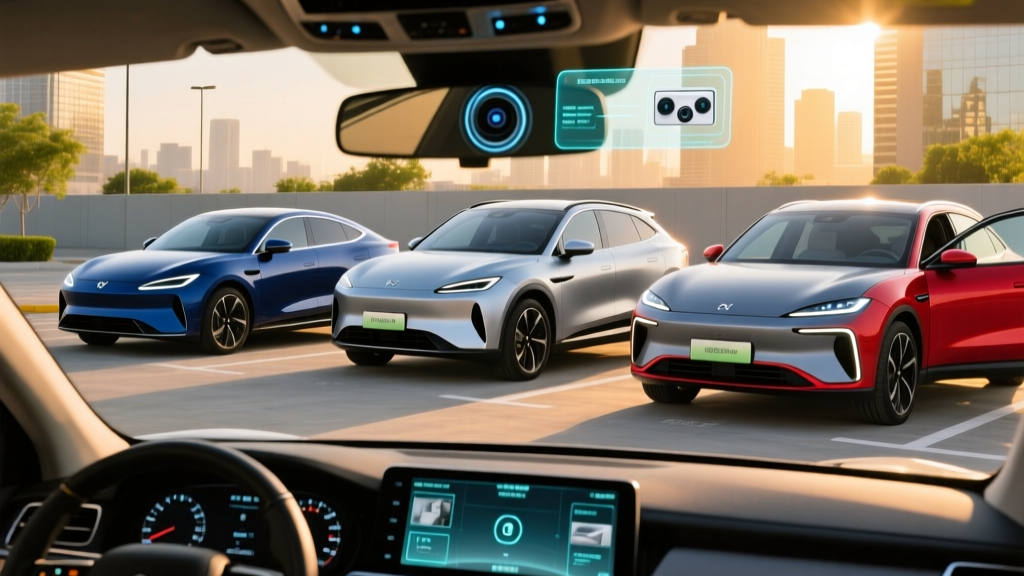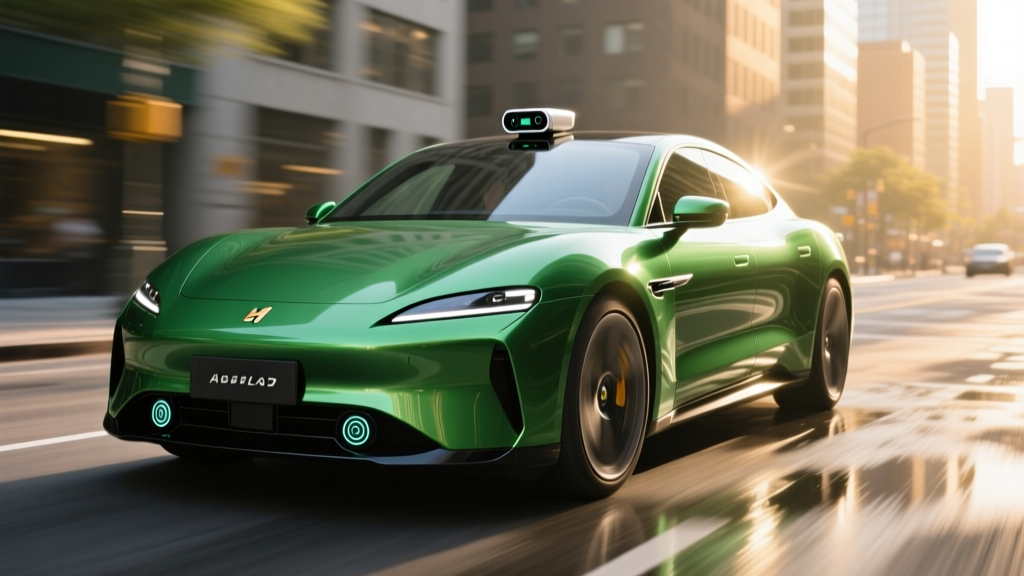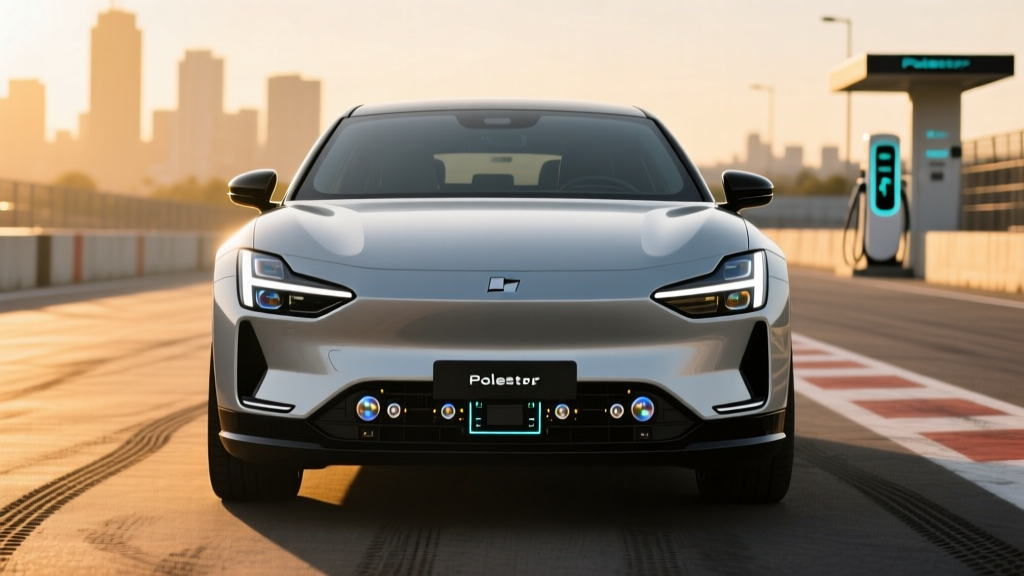
The Polestar 3 is one of the few luxury electric SUVs that offers a roof-mounted LiDAR sensor as a hardware option — a rarity in a segment where most automakers rely solely on cameras and radar. But what does the Polestar 3 LiDAR system actually deliver for daily driving, and is the Pilot Pack upgrade worth the cost? This guide breaks down the sensor suite, the SAE automation level, real-world performance, and how it compares to competing ADAS platforms in the 2026 model year.
What Is the Polestar 3 LiDAR System and How Does It Work?
The Polestar 3's advanced driver-assistance hardware centers on a Luminar Iris LiDAR unit mounted on the roofline, just above the windshield. LiDAR (Light Detection and Ranging) works by emitting rapid pulses of near-infrared laser light and measuring the time it takes for those pulses to bounce back from objects in the environment. The result is a dense, real-time 3D point cloud of the vehicle's surroundings — accurate to the centimeter — independent of ambient lighting conditions.
The LiDAR sensor is not a standalone system. It operates as part of a sensor-fusion stack that includes:
- 5 radar units (1 front long-range, 4 corner radars for cross-traffic and blind-spot detection)
- 5 cameras (forward-facing, surround-view, and rear)
- 12 ultrasonic sensors for close-range parking maneuvers
- NVIDIA DRIVE Orin compute platform, capable of 254 TOPS (trillions of operations per second) to process sensor data in real time
This sensor-fusion approach is fundamentally different from Tesla's camera-only (Tesla Vision) strategy. The addition of LiDAR provides a redundant depth-perception layer that cameras alone cannot replicate reliably — particularly in low-light, direct sun glare, or fog conditions where camera contrast drops.
| Component | Specification | Function |
|---|---|---|
| LiDAR | Luminar Iris, roof-mounted, up to 250 m range | 3D point-cloud mapping, object detection, depth perception |
| Front Radar | Long-range, up to 200 m | Adaptive cruise, forward collision warning |
| Corner Radars (×4) | Short/mid-range | Blind-spot monitoring, rear cross-traffic, lane-change assist |
| Cameras (×5) | High-resolution, multi-focal | Lane detection, traffic sign recognition, surround view |
| Ultrasonic Sensors (×12) | Short-range, 360° | Parking assist, low-speed obstacle detection |
| Compute | NVIDIA DRIVE Orin — 254 TOPS | Sensor fusion, path planning, real-time decision-making |
SAE Automation Level: This Is Level 2, Not Self-Driving
The Polestar 3 Pilot Pack with LiDAR is an SAE Level 2 driver-assistance system. This means the vehicle can simultaneously control steering and acceleration/braking under certain conditions, but the driver must remain fully attentive, keep hands on or near the wheel, and be prepared to take over at any moment. The system does not make the Polestar 3 autonomous. Only Level 4 services like Waymo's driverless robotaxis operate without a human driver in the loop.
Polestar markets its system under the Pilot branding. The standard Pilot features (adaptive cruise control, lane-keeping assist, Pilot Assist) come on all Polestar 3 variants. The LiDAR-equipped Pilot Pack (sometimes referred to as the Pilot Pack with LiDAR) adds enhanced capabilities, including more sophisticated highway lane-change assistance and improved object detection at range. However, the automation level remains Level 2 regardless of the hardware package.
This distinction matters legally and practically. Under current NHTSA guidelines, Level 2 systems place full liability on the driver. If a crash occurs while Pilot Assist is engaged, the driver — not Polestar — is responsible.
Which Polestar 3 Trims Include LiDAR, and What Does It Cost?
For the 2026 model year, LiDAR is not standard on any Polestar 3 trim. It is available as part of the Pilot Pack option, which can be added to both the Long Range Dual Motor and the Long Range Dual Motor with Performance Pack trims.
| Trim | Base MSRP | Pilot Pack (LiDAR) | Subscription Required? |
|---|---|---|---|
| Long Range Dual Motor | ~$67,900 | +$3,200 (one-time) | No — hardware purchase includes feature access |
| Long Range Dual Motor w/ Performance Pack | ~$73,900 | +$3,200 (one-time) | No — hardware purchase includes feature access |
Unlike Tesla's Full Self-Driving (FSD) capability, which has historically been offered as either a $8,000 one-time purchase or a $99/month subscription, Polestar's Pilot Pack with LiDAR is a one-time hardware purchase. There is no recurring monthly fee to access the LiDAR-enabled features. This is an important cost-of-ownership differentiator — over five years, a subscription-based system can add $5,000–$6,000 in recurring charges on top of the initial hardware cost.
Polestar has indicated that future advanced features — potentially including hands-free highway driving on mapped roads — may be delivered via over-the-air (OTA) updates. Whether those future features will require a subscription remains unconfirmed as of early 2026. Buyers should factor in the possibility, though Polestar's historical approach with the Polestar 2 has been to include ADAS features without recurring fees.
Real-World Capabilities: What the Pilot Pack Actually Does Well
On divided highways and well-marked interstates, the Polestar 3's Pilot Assist system — enhanced by LiDAR — performs competently in several areas:
- Adaptive cruise control with stop-and-go: Maintains set following distance reliably in highway traffic, including full stops and resume in congestion.
- Lane centering: Steering input is smooth and confident on clearly marked roads, with less "ping-ponging" between lane lines than camera-only systems tend to exhibit.
- Object detection at range: The Luminar LiDAR can detect vehicles, debris, and obstacles up to 250 meters ahead — well beyond the range of human vision at night. This gives the system earlier braking-decision capability in low-visibility conditions.
- Lane-change assist: When the driver activates the turn signal, the system checks blind-spot radars and LiDAR data, then executes a lane change if clear. The driver must initiate and confirm the maneuver.
The LiDAR's main real-world advantage is redundancy in edge cases. When a camera might be blinded by oncoming headlights at night or washed out by direct sun at dawn, the LiDAR continues to generate a reliable depth map. In our experience, this translates to fewer sudden disengagements and a more consistent experience during dawn, dusk, and overcast conditions compared to camera-dependent systems.
Limitations: Where the System Falls Short
- It does not drive the car autonomously. The driver must remain engaged and supervising at all times.
- It does not offer hands-free driving on any road. Polestar requires hands on or near the steering wheel (capacitive touch detection).
- It does not handle complex urban environments, unmapped roads, or construction zones reliably. Treat it as a highway-focused assist system.
- LiDAR performance degrades in heavy rain, snow accumulation on the sensor, and dense fog — the laser pulses scatter off water droplets and particulates, reducing effective range.
- The system may disengage without sufficient warning in certain edge cases, including faded lane markings, abrupt lane merges, and unusual road geometries. Always be prepared to take over immediately.
- It does not recognize or respond to traffic lights or stop signs autonomously in city driving (unlike Tesla's FSD Supervised city-streets mode, which operates at Level 2 but with broader — if imperfect — coverage).
Cold-weather performance deserves specific attention. The LiDAR sensor housing on the Polestar 3's roof includes a heating element to prevent ice and condensation buildup, but in active snowfall or freezing rain, the sensor can still become obstructed. When this happens, the system will alert the driver and revert to camera-and-radar-only mode — which is functional but loses the depth-perception redundancy that makes the Pilot Pack valuable.
On secondary roads with poor lane markings, tight curves, or non-standard intersections, the system's utility drops significantly. This is not unique to Polestar — it's a characteristic of all Level 2 systems — but buyers expecting LiDAR to be a magic bullet should calibrate expectations accordingly.
Polestar 3 LiDAR vs. Competing ADAS Systems
| Feature | Polestar 3 (Pilot Pack w/ LiDAR) | Tesla Model Y (FSD Supervised) | BMW iX (Driving Assistant Professional) | GM Cadillac Lyriq (Super Cruise) |
|---|---|---|---|---|
| LiDAR | Yes — Luminar Iris (roof) | No — camera-only (Tesla Vision) | No — radar + camera | Yes (on select trims, for Super Cruise) |
| SAE Level | Level 2 | Level 2 | Level 2 | Level 2 |
| Hands-Free on Mapped Highways | No | No (hands on wheel) | No (hands on wheel, up to 85 mph) | Yes (on 400,000+ mi of compatible roads) |
| Automated Lane Change | Yes (driver-initiated) | Yes (FSD Supervised) | Yes (driver-initiated) | Yes (on compatible roads) |
| City Street Assist | Limited (ACC + lane centering) | Yes (FSD Supervised, variable quality) | Limited | No (highway-only for hands-free) |
| Cost | $3,200 one-time | $8,000 or $99/mo | Included on high trims, ~$2,500 option | Included on Sport/ Luxury trims |
| Driver Monitoring | Capacitive steering wheel | Steering wheel torque + camera | Capacitive steering wheel | Infrared eye-tracking camera |
Key takeaways from the comparison:
- Tesla FSD Supervised offers the broadest geographic coverage (city streets, not just highways), but it relies entirely on cameras — no LiDAR, no radar. This means it is more susceptible to the lighting and weather edge cases that LiDAR mitigates. FSD's city-streets performance remains inconsistent, and NHTSA has opened multiple investigations into Tesla's Autopilot/FSD engagement in crash scenarios.
- GM Super Cruise on the Cadillac Lyriq is the only system in this comparison that allows true hands-free driving — but only on pre-mapped, compatible divided highways (over 400,000 miles of roads in North America as of 2026). It uses a driver-monitoring camera to ensure attention. Off those mapped roads, it reverts to standard adaptive cruise. Super Cruise does not handle city streets or lane changes off compatible highways.
- BMW's Driving Assistant Professional is competent and well-integrated, but it lacks LiDAR and does not offer hands-free capability. It's a strong traditional Level 2 system, comparable to Polestar's standard Pilot Assist without the LiDAR upgrade.
The Polestar 3's LiDAR system occupies a middle ground: more robust sensor hardware than Tesla or BMW (thanks to the Luminar unit), but less geographic coverage and no hands-free mode compared to Super Cruise. For buyers who value sensor redundancy and don't want a subscription, the Pilot Pack is a compelling option — but it is not a class-leading autonomy experience.
Is the Pilot Pack Worth It? A Decision Framework
- You drive frequently on highways in variable weather or lighting (dawn/dusk commutes, Pacific Northwest fog, winter conditions).
- You value sensor redundancy over maximum feature breadth — you'd rather have LiDAR depth perception than city-street assist.
- You prefer a one-time purchase over a subscription model.
- You plan to keep the vehicle 5+ years and want hardware that may enable future OTA-delivered features.
- Your driving is primarily urban or on well-lit, clearly marked suburban roads where camera-only systems perform adequately.
- You want hands-free highway driving — GM Super Cruise (Cadillac Lyriq) is the better option for that specific use case.
- You want the broadest geographic ADAS coverage (city + highway) — Tesla FSD Supervised covers more scenarios, albeit with more variability and a higher price.
- Budget is a primary concern. The $3,200 adds to an already premium-priced vehicle (MSRP starting at ~$67,900 before any federal §30D tax credit considerations).
Frequently Asked Questions
Is the Polestar 3 LiDAR system self-driving?
No. The Polestar 3 with the Pilot Pack is an SAE Level 2 driver-assistance system. The driver must remain fully attentive, keep hands on the steering wheel, and be prepared to take over at any time. The LiDAR sensor improves the system's perception capabilities, but it does not change the automation level or remove the driver's responsibility.
Can I add LiDAR to a Polestar 3 after purchase?
No. The Luminar LiDAR sensor is a factory-installed hardware option integrated into the roof structure. It cannot be retrofitted to a Polestar 3 that was built without the Pilot Pack. If LiDAR is important to you, it must be selected at the time of order.
Does the Polestar 3 Pilot Pack require a monthly subscription?
As of the 2026 model year, no. The Pilot Pack with LiDAR is a one-time $3,200 hardware purchase. There is no recurring subscription fee for the features it enables. However, Polestar has not ruled out subscription pricing for potential future advanced features delivered via OTA updates.
How does LiDAR perform in rain and snow?
LiDAR performance degrades in heavy precipitation. Rain droplets, snow, and dense fog scatter the laser pulses, reducing effective range and detection accuracy. The Polestar 3's LiDAR housing includes a heating element to combat ice and condensation, but active snowfall and freezing rain can still obstruct the sensor. In those conditions, the system falls back to camera and radar data and will alert the driver.
Does the Polestar 3 qualify for the federal EV tax credit?
Federal §30D tax credit eligibility depends on several factors: the vehicle's MSRP (must be under $80,000 for SUVs), the buyer's adjusted gross income (capped at $300,000 for joint filers, $150,000 for individual), and battery component/critical mineral sourcing requirements that tighten annually. The Polestar 3's base MSRP falls under the SUV cap, but income limits and sourcing rules may disqualify some buyers. The credit can be transferred to the dealer as a point-of-sale discount if eligible. Always verify current-year eligibility on the IRS clean vehicle credits page and consult a tax professional before relying on the credit in your purchase decision.
How does the Polestar 3's ADAS compare to Volvo's Pilot Assist?
Polestar and Volvo share the same parent company (Geely) and the SPA2 platform architecture, so the underlying sensor-fusion software is closely related. However, the Polestar 3's Pilot Pack includes the Luminar LiDAR, which is not available on the Volvo EX90 at launch (though Volvo has announced a LiDAR-equipped variant). In practice, Polestar's system benefits from the additional depth-sensing layer that Volvo's camera-and-radar-only Pilot Assist does not have.
The Polestar 3's available LiDAR system represents a pragmatic approach to Level 2 driver assistance: invest in robust sensor hardware for better edge-case performance, rather than promising autonomy that current software cannot deliver. For the right buyer — one who commutes on highways in challenging conditions and values hardware redundancy — the $3,200 Pilot Pack is a rational upgrade. For everyone else, the standard Pilot Assist system is capable and well-tuned, and the LiDAR remains a nice-to-have rather than a necessity.