What Nissan ProPILOT Assist Actually Does on the Road
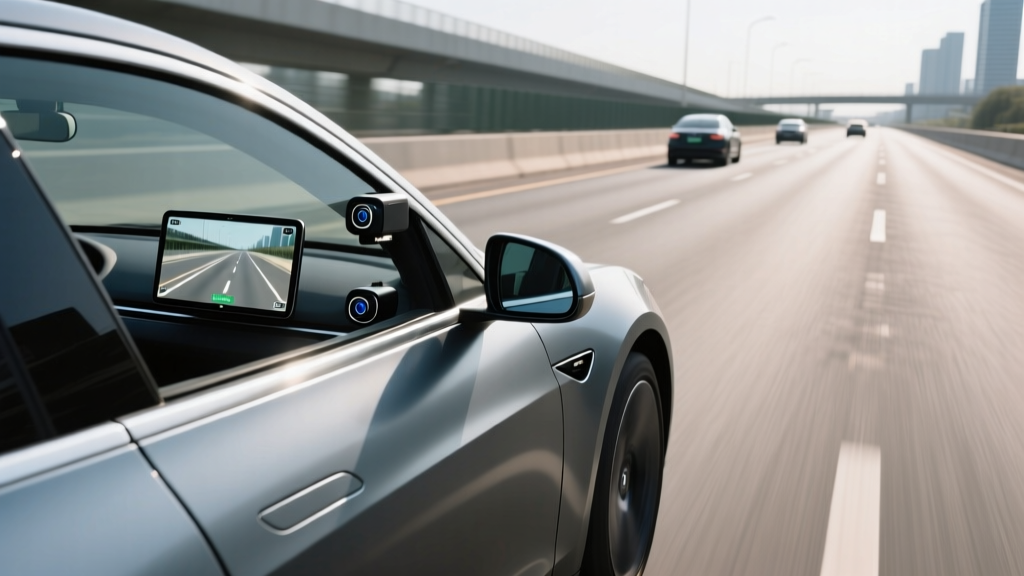
ProPILOT Assist is Nissan's branded Level 2 driver-assistance system, bundling adaptive cruise control (ACC) with lane-centering steering support into a single highway-oriented package. When activated via a steering-wheel button, the system uses forward radar and a windshield-mounted camera to maintain a set following distance from the vehicle ahead while applying continuous micro-steering corrections to keep the car centered in its lane. It handles stop-and-go traffic, including bringing the vehicle to a complete stop and resuming within a brief window — useful in congestion but not a substitute for your attention.
In the 2026 lineup, Nissan offers two tiers: the base ProPILOT Assist (lane centering + ACC) and the upgraded ProPILOT Assist 2.0, which adds hands-off driving under specific highway conditions, lane-change assist, and navigation-linked speed adjustment. The distinction matters enormously for what you can legally and safely do behind the wheel.
Both ProPILOT Assist and ProPILOT Assist 2.0 are classified as SAE Level 2 systems. This means the vehicle can simultaneously control steering and speed, but the driver must continuously supervise, remain alert, and be ready to take over at any moment. ProPILOT Assist 2.0 permits hands-off operation on mapped divided highways only, but eyes-on supervision is still mandatory. This is not Level 4 autonomy — there is no Nissan system that drives itself without a human in the loop.
Under the Hood: Sensors, Cameras, and How the System Sees
ProPILOT Assist relies on a sensor fusion approach combining three primary inputs:
- Forward-facing millimeter-wave radar (mounted behind the front grille): detects vehicles ahead up to roughly 200 meters, measuring distance and relative speed for adaptive cruise control.
- Windshield-mounted monocular camera (behind the rearview mirror): reads lane markings, recognizes road edges, and detects some traffic signs.
- Steering-angle and wheel-speed sensors: feed the vehicle dynamics module to smooth steering interventions and braking.
ProPILOT Assist 2.0 layers on additional hardware depending on the model year and vehicle:
- High-definition map data preloaded for divided highways, enabling the system to know upcoming curves, speed-limit changes, and lane configurations.
- Driver-monitoring camera (infrared, mounted on the instrument cluster): verifies the driver's eyes are directed forward before permitting hands-off operation.
- Additional ultrasonic sensors and corner radars (on equipped models): support lane-change assist by scanning blind spots before executing a suggested lane change.
The result is a system that performs well on clearly marked, well-maintained interstates in fair weather — and degrades predictably when those conditions aren't met.
Real-World Capabilities: Where ProPILOT Assist Shines
| Feature | ProPILOT Assist (Base) | ProPILOT Assist 2.0 |
|---|---|---|
| Adaptive Cruise Control | Yes — full speed range, stop & go | Yes — with nav-linked speed curves |
| Lane Centering | Yes — continuous steering assist | Yes — enhanced with HD map data |
| Hands-Off Driving | No — hands-on detection required | Yes — on mapped divided highways only |
| Lane Change Assist | No | Yes — driver-confirmed, system-executed |
| Navigation-Linked Speed Reduction | No | Yes — slows for curves and toll plazas |
| Driver Monitoring Camera | No | Yes — eyes-on verification |
| Overtake Assist | No | Yes (select models/years) |
In practical highway use, base ProPILOT Assist performs comparably to Toyota Safety Sense 3.0's lane-tracing assist and Honda Sensing's low-speed braking control with lane-keeping. It excels in long, gently curving interstate stretches with fresh lane markings — the system tracks smoothly, reduces fatigue on 300+ mile road trips, and handles the phantom-braking problem (unexpected deceleration when a vehicle merges ahead) better than earlier Nissan iterations thanks to improved radar processing.
ProPILOT Assist 2.0's hands-off capability is most valuable in dense stop-and-go traffic on mapped highways, where it reliably tracks lanes and maintains gaps without constant steering-wheel input. According to IIHS testing of comparable Level 2 systems, driver-monitoring cameras like the one in 2.0 significantly improve attention compliance versus steering-torque detection alone.
Limitations You Need to Know Before You Rely on It
- No traffic-light or stop-sign recognition with automatic stopping. The system does not halt the vehicle at red lights or stop signs in city driving. You are responsible for all intersection behavior.
- No autonomous lane changes (base system). Base ProPILOT Assist stays in its lane. Even 2.0's lane-change assist requires driver confirmation via turn-signal activation before executing.
- Lane centering degrades or disengages when lane markings are faded, absent, or obscured by snow, standing water, or construction-zone overlays.
- Heavy rain, fog, or direct sun glare can blind the forward camera, triggering a system-unavailable warning and reverting control to the driver immediately.
- Construction zones and temporary lane shifts are not reliably recognized. The system may attempt to follow old lane markings or ghost lanes.
- Hands-off (2.0 only) is restricted to pre-mapped divided highways. Surface streets, undivided roads, and unmapped routes default to hands-on mode.
- No pedestrian or cyclist avoidance steering. Forward emergency braking may activate, but the system will not steer around obstacles.
Cold-weather and nighttime performance deserve specific mention. In sub-freezing temperatures, the forward radar and camera can accumulate ice or road-salt film, reducing detection range. Nissan's owner manuals recommend clearing sensor surfaces before relying on ProPILOT in winter conditions. Nighttime lane detection on unlit rural roads is noticeably less confident than on well-lit interstates — the monocular camera depends on reflectivity and contrast that simply aren't present on poorly maintained two-lane roads.
Which 2026 Nissan Models Include ProPILOT Assist?
Nissan has made base ProPILOT Assist standard on most 2026 models above the entry-level trim. ProPILOT Assist 2.0 remains reserved for higher trims and specific models. Availability (based on the 2026 model year lineup):
- Nissan Ariya (EV): ProPILOT Assist standard on Engage+ and above; ProPILOT Assist 2.0 available on Evolve+ and Empower+ trims.
- Nissan LEAF (EV): ProPILOT Assist standard on SV Plus; 2.0 not available.
- Nissan Rogue: ProPILOT Assist standard on SV and above; 2.0 available on Platinum.
- Nissan Pathfinder: ProPILOT Assist standard on SV and above; 2.0 on Platinum and above.
- Nissan Altima: ProPILOT Assist standard on SV and above.
- Nissan Frontier: ProPILOT Assist standard on SV and above; 2.0 not currently offered.
- Nissan Sentra: ProPILOT Assist available on SR (not standard on base S).
Always confirm exact trim availability with a dealer, as mid-year running changes can shift packaging.
Cost: Is ProPILOT Assist Free or a Subscription?
| System Tier | Cost Model | Price | Notes |
|---|---|---|---|
| ProPILOT Assist (Base) | Included in vehicle MSRP | $0 additional / $0 monthly | Standard on most trims above base; no subscription |
| ProPILOT Assist 2.0 | Included in trim price | $0 additional / $0 monthly | Available on select higher trims; no separate subscription as of 2026 |
| NissanConnect Services (connected features) | Subscription (optional) | ~$20–$40/month depending on tier | Remote start, map updates, emergency calling — not required for ProPILOT function |
Unlike Tesla's Full Self-Driving (Supervised), which carries a $8,000 one-time purchase or $99/month subscription as of 2026, Nissan bundles ProPILOT Assist into the vehicle price. There is no separate activation fee, no monthly charge to use the ADAS features, and no paywall on safety-critical functionality. You pay for it once in the MSRP of the trim you choose. This is a meaningful ownership advantage over brands that gate driver-assistance features behind recurring payments.
ProPILOT Assist vs. Competing Level 2 Systems
| System | Brand | Hands-Off Capable? | Driver Monitoring | Cost Model | Highway Lane-Change Assist |
|---|---|---|---|---|---|
| ProPILOT Assist 2.0 | Nissan / Infiniti | Yes (mapped highways) | Camera-based | Included in trim | Yes (driver-confirmed) |
| Super Cruise | GM (Cadillac, Chevy, GMC) | Yes (400k+ mi mapped roads) | Camera-based (eye-tracking) | Included or $2,500 package | Yes (auto & confirmed) |
| BlueCruise | Ford / Lincoln | Yes (130k+ mi Blue Zones) | Camera-based | Subscription ~$75/yr after trial | Yes (select models) |
| FSD (Supervised) | Tesla | No — hands-on required | Camera-based (cabin cam) | $8,000 or $99/mo | Yes (supervised) |
| Toyota Safety Sense 3.0 | Toyota | No | Steering-torque | Included (all trims) | No |
| Honda Sensing | Honda | No | Steering-torque | Included (all trims) | No |
| Highway Driving Assist 2 | Hyundai / Kia / Genesis | No (HDA2 is hands-on) | Steering-torque / camera (varies) | Included in trim | Yes (driver-confirmed, select models) |
Nissan's competitive position is strong on value: ProPILOT Assist 2.0 offers hands-off highway driving without a subscription, which puts it ahead of Ford's BlueCruise model on long-term cost. However, GM's Super Cruise covers a far larger mapped road network (400,000+ miles versus Nissan's more limited divided-highway coverage) and supports automatic lane changes without driver signal initiation on compatible vehicles. Tesla's FSD (Supervised) offers the broadest geographic coverage (any road, not just mapped highways) but requires hands-on-wheel and carries a significant additional cost.
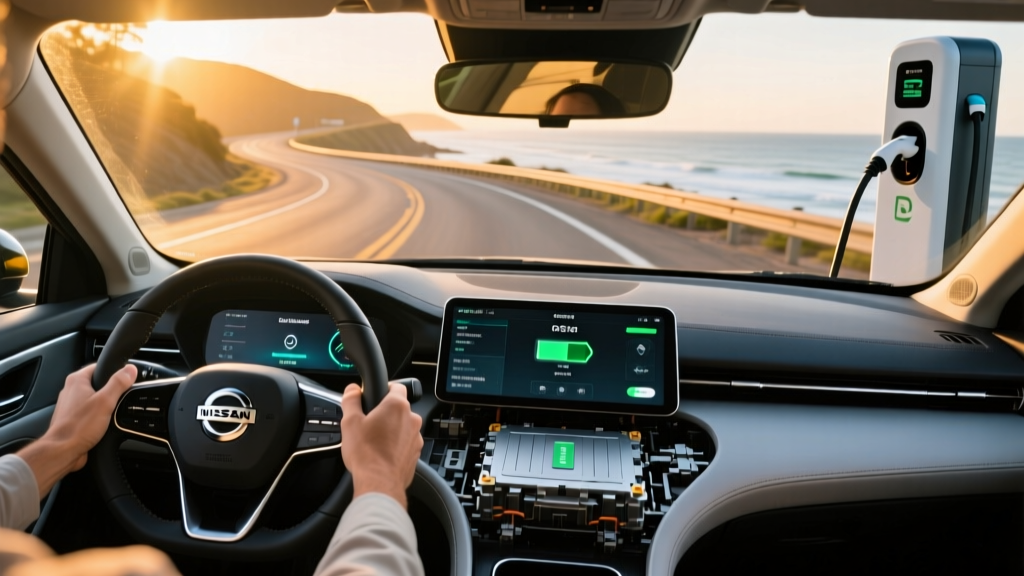
For Nissan Ariya buyers specifically — the brand's flagship EV with up to 304 miles of EPA range on the e-4ORCE Long Range trim — ProPILOT Assist 2.0 pairs well with long-distance highway driving, where the Ariya's 130 kW DC fast-charging capability (10–80% in approximately 35 minutes) means frequent highway corridor use. Source: fueleconomy.gov / Nissan specifications.
Frequently Asked Questions
Is ProPILOT Assist really self-driving?
No. ProPILOT Assist and ProPILOT Assist 2.0 are both SAE Level 2 systems, meaning the driver must supervise at all times. Even the hands-off 2.0 variant requires your eyes on the road and your hands ready to resume control. No consumer Nissan vehicle offers autonomous (Level 4 or 5) driving.
Can I use ProPILOT Assist on city streets?
Base ProPILOT Assist works on any road with visible lane markings, but it is optimized for highway and arterial use. It does not stop for traffic signals or stop signs, so city driving requires full driver control at every intersection. ProPILOT Assist 2.0's hands-off mode is restricted to mapped divided highways and will not activate on surface streets.
Does ProPILOT Assist work in rain or snow?
Light rain generally does not affect the system. Heavy rain, snow, fog, or ice accumulation on sensors can cause the system to degrade or disengage entirely. The forward camera and radar need clear sightlines — Nissan recommends cleaning sensor areas in adverse conditions.
How is ProPILOT Assist different from Nissan Intelligent Cruise Control?
Intelligent Cruise Control (ICC) only manages speed and following distance. ProPILOT Assist adds lane-centering steering support on top of ICC, making it a combined longitudinal and lateral control system — the defining feature of Level 2 automation.
Do I have to pay a monthly fee for ProPILOT Assist?
No. ProPILOT Assist is included in the vehicle's MSRP with no subscription required. This differs from Ford BlueCruise, which requires an annual subscription (~$75/year) after the initial trial period expires.
What happens if I take my hands off the wheel with base ProPILOT Assist?
The system monitors steering-wheel torque. If it detects no input for approximately 10–15 seconds, it issues escalating visual, audible, and haptic warnings. If the driver does not respond, the system will gradually decelerate the vehicle and activate hazard lights. ProPILOT Assist 2.0 uses a driver-monitoring camera instead of torque detection on approved highways.
Is ProPILOT Assist 2.0 available on the Nissan Ariya EV?
Yes. ProPILOT Assist 2.0 is available on the 2026 Ariya in Evolve+ and Empower+ trims. The Ariya's long-range battery (87 kWh usable, LFP on select trims, NMC on others) and highway-oriented efficiency (up to 106 MPGe combined) make it a strong match for the system's highway use case. Verify exact trim packaging with your dealer, as availability can shift mid-year.