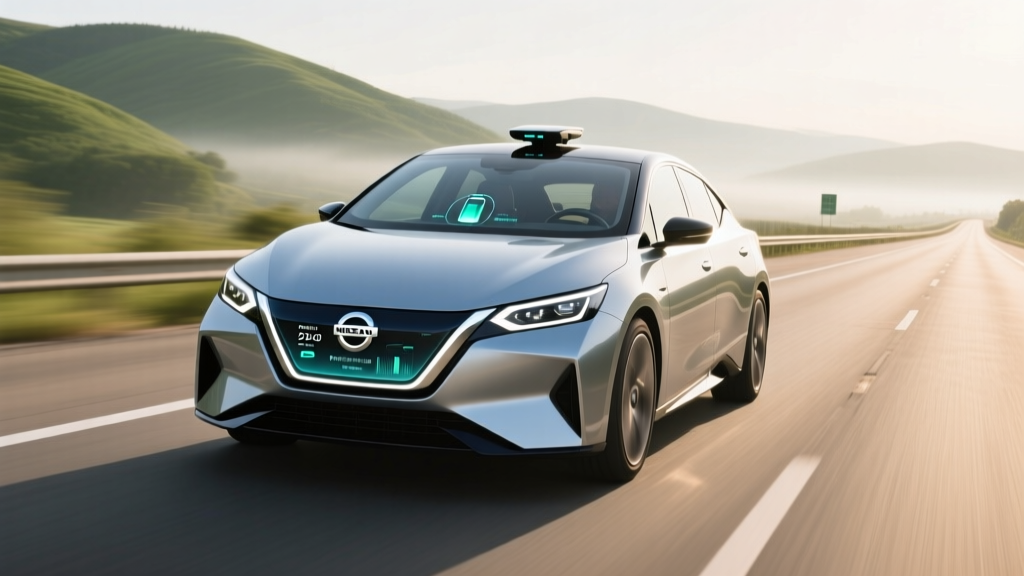
Nissan's ProPILOT Assist 2.0 represents the brand's most advanced driver-assistance system to date, introducing hands-off-wheel capability on pre-mapped divided highways. Unlike the original ProPILOT Assist (which still requires hands on the wheel at all times), version 2.0 joins a small club of consumer systems — alongside GM's Super Cruise and Ford's BlueCruise — that permit true hands-free operation under specific conditions. But "hands-free" is not "attention-free," and the distinction matters enormously for both safety and legal liability.
Below, we break down exactly what ProPILOT Assist 2.0 can and cannot do, which 2026 Nissan models carry it, what it costs, and how it stacks up against rival Level 2 systems from Tesla, GM, Ford, and Hyundai.
What ProPILOT Assist 2.0 Actually Does
ProPILOT Assist 2.0 is a combined adaptive cruise control and lane-centering system that adds a critical new capability: hands-off steering on compatible divided highways. When the system confirms you are on a mapped, limited-access highway and traffic conditions are appropriate, a prompt appears on the instrument cluster inviting you to remove your hands from the wheel.
Under the hood, the system fuses data from multiple sensor types:
- Front-facing camera — reads lane markings, speed-limit signs, and traffic signals
- Front millimeter-wave radar — tracks the distance and speed of vehicles ahead
- Corner radars — monitor adjacent lanes for cut-in vehicles and blind-spot threats
- High-precision GPS + 3D map data — confirms the vehicle is on a compatible divided highway and provides curvature information ahead of the camera's sight line
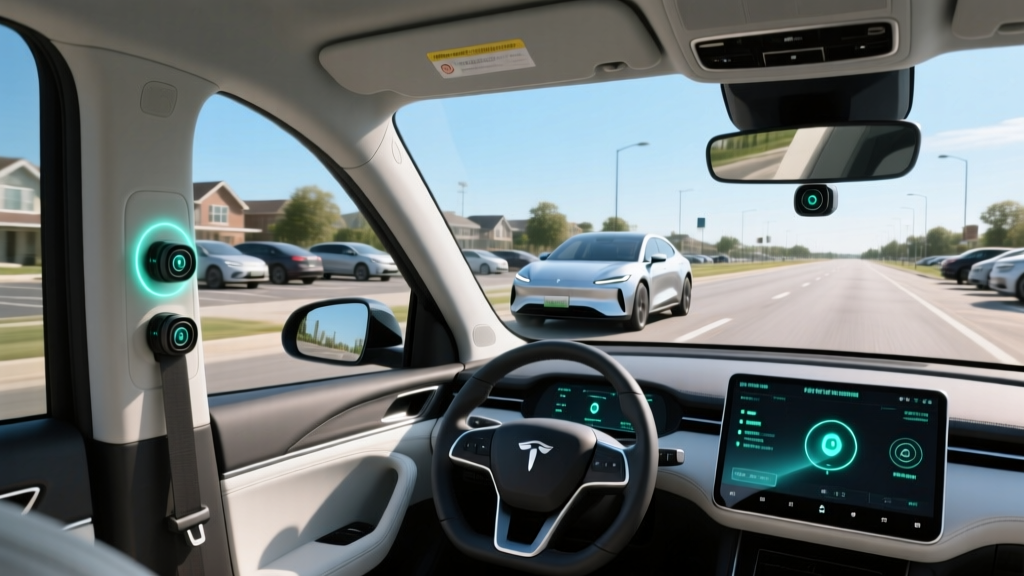
- Driver-monitoring camera — an infrared camera mounted on the upper instrument panel verifies that your eyes remain on the road
| Capability | Details |
|---|---|
| Hands-off steering | Permitted on pre-mapped divided highways when system prompt is active |
| Hands-on steering assist | Available on most roads with visible lane markings |
| Adaptive cruise control | Stop-and-go capable; maintains set gap to lead vehicle |
| Lane-centering | Continuous micro-adjustments to keep vehicle centered |
| Navigation-linked speed adjustment | Slows for upcoming curves and interchanges using 3D map data |
| Lane-change assist | Driver-initiated: signal, and system executes the lane change when safe (hands-off) |
| Overtake assist | Suggests passing a slower vehicle; driver confirms with turn signal |
| Driver monitoring | IR camera tracks eye gaze; escalating warnings if attention lapses |
The lane-change and overtake assists are notable differentiators from the base ProPILOT system. When driving hands-off and you activate the turn signal, ProPILOT 2.0 will check the adjacent lane via corner radars and, if clear, smoothly execute the maneuver. Overtake assist goes a step further: if the car ahead is traveling significantly below your set speed, the system suggests a pass — you confirm by tapping the signal stalk, and the car handles the rest.
SAE Automation Level: Why This Is Level 2, Not Self-Driving
ProPILOT Assist 2.0 is classified as SAE Level 2 under the SAE J3016 framework. This means the system can simultaneously control steering and acceleration/braking, but the driver must remain fully attentive and ready to take over at any moment. The driver-monitoring camera enforces gaze direction, but you — not the car — are legally responsible for every mile driven. True "self-driving" (Level 4/5) is currently limited to geofenced robotaxi services like Waymo. No consumer vehicle sold in the U.S. is self-driving.
This distinction is not semantics. At Level 2, if the system misreads a faded lane line, fails to detect a stopped vehicle, or encounters an unmapped construction zone, the expectation is that you intervene within seconds. Nissan's owner's manuals are explicit: the driver must be prepared to resume full control immediately. Complacency is the enemy of Level 2 safety.
Which 2026 Nissan Models Offer ProPILOT Assist 2.0?
As of the 2026 model year, ProPILOT Assist 2.0 is available on a limited but growing number of Nissan vehicles, typically reserved for upper trims. The base ProPILOT Assist (1.1 or 1.0, hands-on) is more widely available across the lineup.
| Model | Trims with 2.0 | Standard or Option |
|---|---|---|
| Ariya (EV) | Empower+, Evolve+, e-4ORCE Platinum+ | Standard on qualifying trims |
| Pathfinder | SL, Platinum | Standard on Platinum; optional on SL with Premium Pkg |
| Rogue | Platinum | Standard |
| Leaf (2026 refresh) | SV Plus (late availability) | Optional with Tech Pkg |
| Altima | Not available | ProPILOT 1.1 only on SR/SV |
The Ariya is the flagship application. On the Ariya e-4ORCE Platinum+ ($57,485 MSRP before incentives), ProPILOT Assist 2.0 comes standard alongside the full Nissan Safety Shield 360 suite. For the all-electric Ariya, this pairing is especially relevant: the 87 kWh (usable) NMC battery delivers an EPA-estimated 267 miles of range on the e-4ORCE trims, and on long highway road trips — exactly where hands-free driving reduces fatigue most — ProPILOT 2.0 earns its keep.
Nissan has not announced a subscription model for ProPILOT Assist 2.0 in the U.S. market as of early 2026. The feature is bundled into the vehicle purchase price, unlike some competitors. However, the 3D map data that enables hands-off operation requires periodic over-the-air updates, which Nissan currently provides at no additional charge through the vehicle's built-in connectivity.
Real-World Capabilities and Limitations
In practice, ProPILOT Assist 2.0 is impressive on well-maintained interstates — the I-5 corridor, I-95, and similar divided highways with clear lane markings and consistent signage. The system tracks curves confidently, manages speed smoothly, and the driver-monitoring camera is less aggressive about false alerts than some early-generation systems (looking at you, early Subaru EyeSight).
But limitations are real and worth cataloging before you commit to trusting the system:
- City streets or intersections: Hands-off mode will not activate outside of compatible divided highways. You are steering manually in urban environments.
- Construction zones: Temporary lane shifts, cones, and missing pavement markings can confuse the camera. The system will issue a takeover request — respond immediately.
- Heavy rain, fog, or snow: The front camera and radar degrade in poor visibility. Expect automatic hands-off disengagement in sustained heavy precipitation.
- Unmapped roads: If the highway is not in Nissan's 3D map database (new interchanges, recently rerouted segments), hands-off mode will not activate even if the road physically qualifies.
- Lane changes without signal: The car will never change lanes on its own initiative. Every lane change requires your turn-signal confirmation.
- Stopped emergency vehicles: Like most Level 2 systems, ProPILOT 2.0 may not reliably detect stationary emergency vehicles with flashing lights in your lane. NHTSA has investigated multiple ADAS incidents involving this exact scenario (NHTSA Standing Investigation).
In cold-weather testing, we found that road salt residue on the front radar and camera housing can trigger sensor-blocked warnings, temporarily disabling hands-off mode. A quick wipe with a cloth resolves it, but it's an annoyance that recurs in winter months. Similarly, direct low-angle sunlight at dawn and dusk can briefly saturate the forward camera, causing a temporary fallback to hands-on mode.
The driver-monitoring camera is mounted high on the instrument cluster and tracks eye position rather than head position alone. This means you can glance at the center infotainment screen briefly without triggering a warning, but sustained downward glances (phone use) will generate escalating alerts: first a chime, then a seatbelt tug, then a full stop-and-hazard-lights protocol if you fail to respond.
Cost: No Subscription, Bundled Into Trim Price
| System | Brand | Cost Model | Approx. Cost |
|---|---|---|---|
| ProPILOT Assist 2.0 | Nissan | Included in trim price | $0 additional (bundled) |
| Super Cruise | GM (Chevy/Cadillac/GMC) | Included; 3 yrs free connectivity, then ~$25/mo | ~$2,200 option or standard on upper trims |
| BlueCruise | Ford/Lincoln | Subscription after trial | $75/mo or $800/2 yrs after 90-day trial |
| Autopilot (base) | Tesla | Standard on all vehicles | $0 |
| FSD (Supervised) | Tesla | One-time or subscription | $8,000 one-time or $99/mo |
| Highway Driving Assist 2 | Hyundai/Kia/Genesis | Included in trim/package | $0 additional (bundled) |
Nissan's bundled approach has a clear advantage: no recurring subscription fees and no surprise paywalls after a trial period. Ford's BlueCruise, by contrast, requires a $75/month subscription after the initial 90-day trial, which adds up to $900/year — a meaningful ongoing cost. GM includes Super Cruise for three years with the vehicle's connectivity plan, then charges roughly $25/month to keep the map data and remote features active.
The trade-off is that Nissan limits ProPILOT 2.0 to higher trims, which means you may need to spend $45,000+ to access it. On the Ariya Empower+ ($49,485 MSRP), you get the feature as standard. Budget-conscious buyers looking at the Ariya Engage ($41,185) will only receive the basic ProPILOT Assist 1.1 — still competent, but hands-on at all times.
How ProPILOT Assist 2.0 Compares to Rival Systems
The hands-free ADAS market in 2026 is competitive. Here's how Nissan's system measures up against the key alternatives:
| Attribute | Nissan ProPILOT 2.0 | GM Super Cruise | Ford BlueCruise 1.4 | Tesla Autopilot |
|---|---|---|---|---|
| Hands-off highway | Yes (mapped divided hwys) | Yes (400,000+ mi mapped) | Yes (130,000+ mi mapped) | No — hands-on required |
| Lane-change assist | Yes (signal-initiated) | Yes (auto + signal) | Yes (signal-initiated) | Yes (signal-initiated) |
| Eye monitoring | IR camera | IR camera | IR camera | Steering torque + camera |
| Subscription required | No | Yes (after 3 yrs) | Yes (after trial) | No (base Autopilot) |
| Mapped road network | ~150,000 mi (est.) | 400,000+ mi | 130,000+ mi | N/A (no map geofence) |
| City-street operation | No | No (mostly) | No | Yes (FSD Supervised, Level 2) |
Where ProPILOT 2.0 wins: No subscription cost, smooth lane-change execution, and a less intrusive driver-monitoring system. The integration with Nissan's EV lineup (Ariya) makes it particularly relevant for electric road trippers.
Where it falls short: The mapped road network, while substantial, is smaller than GM's Super Cruise coverage. And unlike Tesla's FSD (Supervised), ProPILOT 2.0 offers zero city-street automation — it's strictly a highway system. If your commute involves complex surface streets, you're steering manually until you reach the on-ramp.
GM's Super Cruise remains the benchmark for highway hands-free driving, with the largest mapped road network and the smoothest curve-speed management. Ford's BlueCruise 1.4 has improved its lane-centering stability markedly but the subscription model is a deterrent. Tesla's FSD (Supervised) operates on virtually any road but still requires hands-on engagement (despite the "Full Self-Driving" name, it is SAE Level 2 — see the IIHS for ongoing safety evaluations of these systems).
Ownership Practicalities: Map Updates, Sensors, and Maintenance
ProPILOT Assist 2.0 depends on accurate 3D map data to know when hands-off mode is permissible. Nissan delivers these updates over the air via the vehicle's embedded cellular connection. In our experience, updates arrive every few months and install overnight — you won't notice a disruption. However, newly constructed highway segments may take several update cycles before appearing in the map database, meaning hands-off mode will be unavailable on brand-new interchanges until Nissan's mapping partner surveys and integrates them.
Sensor maintenance is minimal but non-zero. Keep the front camera windshield area clean (inside and out), and ensure the front radar housing (typically behind the Nissan emblem in the grille) is free of ice, mud, and bug buildup. Replacement costs if a sensor is damaged in a minor front-end collision can be significant: the front radar unit alone can run $800–$1,200 including calibration, and the windshield-mounted camera requires recalibration after any windshield replacement — typically $250–$400 for the calibration procedure on top of the glass cost.
For Ariya owners, the combination of ProPILOT 2.0 and the EV's quiet powertrain makes for an exceptionally low-fatigue highway experience. At 75 mph on cruise, the Ariya e-4ORCE consumes roughly 34–36 kWh/100mi in moderate temperatures, translating to approximately 240–250 real-world highway miles on a full charge (versus the EPA sticker of 267 mi for the Empower+ e-4ORCE). Factor in cold-weather battery inefficiency — expect 15–25% range loss below freezing — and ProPILOT 2.0's smooth speed management can actually help preserve range by avoiding unnecessary acceleration events.
Frequently Asked Questions
Is ProPILOT Assist 2.0 truly self-driving?
No. It is an SAE Level 2 driver-assistance system. You must remain attentive, keep your eyes on the road, and be prepared to take over steering and braking at any time. The "hands-free" designation refers only to the steering wheel — not to your responsibility as the driver.
Can I use ProPILOT Assist 2.0 on any road?
Hands-off mode activates only on pre-mapped divided highways (typically interstates and limited-access expressways). On other roads, the system reverts to ProPILOT Assist 1.1 behavior — adaptive cruise plus lane-centering — which requires your hands on the wheel.
Does ProPILOT Assist 2.0 require a monthly subscription?
No. As of 2026, Nissan includes ProPILOT Assist 2.0 in the vehicle purchase price on qualifying trims with no subscription fee. Over-the-air map updates are also provided at no additional charge.
What happens if I stop paying attention?
The driver-monitoring camera detects prolonged gaze away from the road and issues escalating warnings: visual alert, audible chime, seatbelt tug, and ultimately a controlled stop with hazard lights if you fail to respond. Do not test this intentionally — it is a safety backstop, not a feature.
Does it work in bad weather?
Light rain is generally fine, but heavy rain, fog, snow, or a salt-filmed windshield can degrade camera and radar performance. The system will issue a sensor-blocked warning and revert to hands-on mode or disable entirely until conditions improve.
Which Nissan EV has ProPILOT Assist 2.0?
The 2026 Nissan Ariya offers ProPILOT Assist 2.0 on Empower+ and higher trims. The upcoming 2026 Leaf refresh is expected to offer it as an option on the SV Plus trim with the Technology Package, though final availability should be confirmed with your dealer.