What Nissan ProPILOT 2.0 Actually Does on the Highway
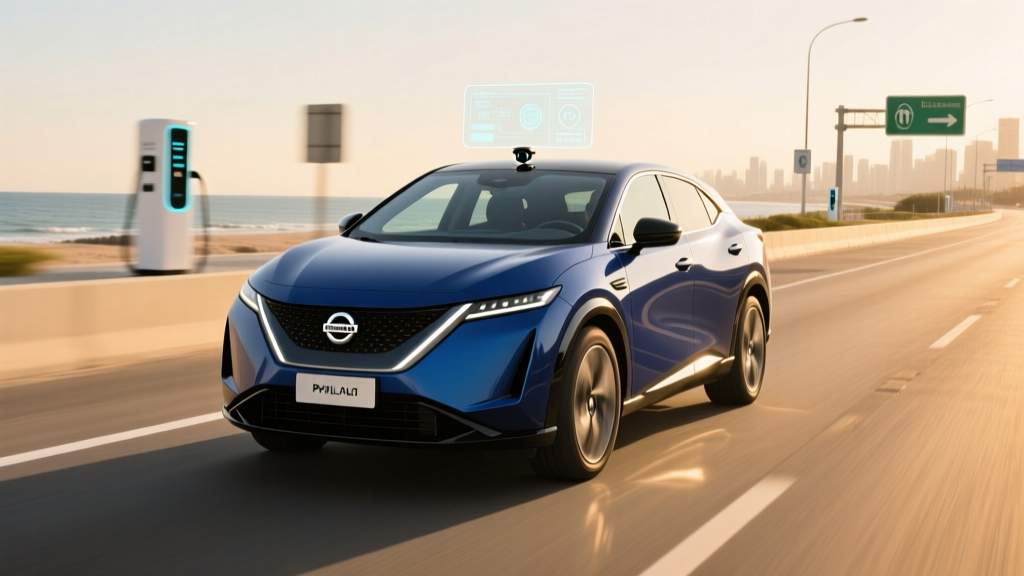
Nissan ProPILOT 2.0 is the automaker's most advanced driver-assistance system available in the U.S. market for the 2026 model year. Unlike the base ProPILOT Assist found on lower trims — which requires hands on the wheel at all times — ProPILOT 2.0 permits hands-off, eyes-on driving on pre-mapped divided highways at speeds up to approximately 85 mph. The system handles steering, acceleration, and braking within a single lane, and it can execute lane changes and overtaking maneuvers when the driver confirms the action.
On supported roadways, the system uses high-definition 3D map data combined with real-time sensor input to maintain lane position, adjust speed to traffic, and navigate gentle curves. When the navigation system has a destination set, ProPILOT 2.0 can also suggest lane changes to prepare for exits or pass slower vehicles — though the driver must approve each maneuver by pressing a button on the steering wheel.
SAE Automation Level: Level 2 (Partial Driving Automation)
Nissan ProPILOT 2.0 is classified as SAE Level 2 under the SAE J3016 framework. This means the system can control steering and speed simultaneously, but the driver must remain fully attentive, monitor the road environment, and be prepared to resume manual control at any moment. The vehicle's driver-monitoring camera tracks eye gaze and head position; if the system detects inattention, it escalates warnings and eventually disengages. This is not Level 4 autonomy — it is an advanced cruise-and-steering assist that reduces fatigue, not responsibility.
Sensor Suite and Technical Architecture
ProPILOT 2.0 relies on a multi-layer sensor array that gives it a more complete picture of the driving environment than the base ProPILOT Assist system:
- 7 cameras (including a forward-facing unit behind the windshield and a driver-monitoring camera on the steering column)
- 5 radar units (one long-range front radar plus four corner radars for cross-traffic and blind-spot detection)
- 12 ultrasonic sensors for close-range object detection
- High-definition 3D map data covering approximately 650,000 miles of divided highways in the U.S., updated via over-the-air (OTA) downloads
The HD map data is critical: ProPILOT 2.0 cross-references its real-time camera and radar perception against stored map information to confirm lane geometry, speed limits, and road curvature. If the vehicle enters a road segment not covered by the HD map database, the system downgrades to standard ProPILOT Assist behavior — meaning hands-on-wheel is required again.
The driver-monitoring camera is the gatekeeper for hands-off operation. It uses infrared illumination to track pupil direction and eyelid state, functioning even when the driver wears sunglasses. If your eyes leave the forward road zone for more than a few seconds, a visual alert appears on the instrument cluster, followed by an audible chime, then a steering-wheel vibration, and finally a controlled deceleration with hazard lights if no response is detected.
Which 2026 Nissan Models Include ProPILOT 2.0?
Availability is limited to higher trims, and the feature set differs between models:
| Model | Trim(s) with ProPILOT 2.0 | Hands-Off Highway | Hands-Free Lane Change | Standard or Subscription |
|---|---|---|---|---|
| 2026 Nissan Ariya (EV) | Evolve+, Empower+, Engage+, e-4ORCE variants | Yes | Yes (driver-confirmed) | Included in MSRP (3-year trial for connected features) |
| 2026 Nissan Rogue | Platinum | Yes | Yes (driver-confirmed) | Included in MSRP (3-year trial) |
| 2026 Nissan Pathfinder | Platinum (with Premium Package) | Yes | Yes (driver-confirmed) | Included in MSRP (3-year trial) |
| 2026 Nissan LEAF | Not available | No | No | N/A — ProPILOT Assist only on SV Plus |
For the all-electric Ariya, ProPILOT 2.0 is one of the key differentiators of the mid-and-upper trims. The Ariya Empower+ starts at approximately $48,700 MSRP (before any federal tax credit), and the e-4ORCE dual-motor Engage+ with ProPILOT 2.0 sits around $52,200. The base Ariya Engage (FWD, ~$40,700) includes only ProPILOT Assist — the hands-on system — not 2.0.
On the Rogue, the Platinum trim with ProPILOT 2.0 starts at roughly $42,300. Buyers should verify the window sticker specifically lists "ProPILOT 2.0" rather than "ProPILOT Assist" — the naming is confusing, and dealer inventory sheets sometimes conflate the two.
Cost: No Separate Subscription, but a Trial Clock Is Ticking
Unlike Tesla's Full Self-Driving (Supervised), which requires a $8,000 one-time purchase or $99/month subscription as of early 2026, Nissan bundles ProPILOT 2.0 into the vehicle's MSRP at no additional charge. There is currently no separate monthly fee for the hands-off driving functionality itself.
| Cost Element | Nissan ProPILOT 2.0 | Tesla FSD (Supervised) | GM Super Cruise |
|---|---|---|---|
| Upfront purchase price | Included in trim MSRP | $8,000 add-on | Included in trim MSRP |
| Monthly subscription | None (as of 2026) | $99/mo | None for base; $25/mo for premium on select models |
| Free trial period | 3 years (connected services for map updates) | N/A (purchased outright) | 3 years (varies by model) |
| Post-trial cost | TBD — likely connected-services subscription (~$200-$400/yr) for HD map updates | Ongoing $99/mo if subscribed | ~$25/mo for continued connectivity |
⚠️ Critical: Post-Trial Map Updates
ProPILOT 2.0's hands-off capability depends on HD map data that is delivered via connected services. After the included 3-year trial expires, you will likely need to maintain a NissanConnect services subscription to receive ongoing map updates. Without updated maps, the system will revert to hands-on ProPILOT Assist mode on roads where map data is outdated or missing. Nissan has not published final post-trial pricing for 2026 models as of this writing — confirm with your dealer before purchase.
Real-World Capabilities and Where ProPILOT 2.0 Excels
In real-world testing on mapped interstate highways — including I-95, I-5, I-10, and I-80 corridors — ProPILOT 2.0 delivers a noticeably smoother and more confident experience than base ProPILOT Assist. Specific strengths include:
- Lane centering precision: The HD map reference allows tighter, more consistent lane positioning than camera-only systems, particularly on long sweeping curves where purely vision-based systems tend to "hunt" within the lane.
- Speed adaptation: The system reads speed-limit data from the HD map (not just camera-recognized signs) and adjusts cruise speed accordingly, reducing the mismatch between posted limits and actual traffic flow that plagues some competing systems.
- Driver-monitoring calibration: The infrared camera is forgiving of brief glances at mirrors or the center display, but will flag prolonged downward gaze (e.g., phone use) within 3-5 seconds.
- Lane-change assists: When the system identifies a slower vehicle ahead and an adjacent lane is clear, it prompts the driver to confirm a lane change. The maneuver itself is smooth and well-timed, though it will not initiate a change without driver approval.
On a 280-mile highway drive in the Ariya e-4ORCE Engage+, ProPILOT 2.0 maintained hands-off operation for roughly 82% of the route — with disengagements occurring mainly at construction zones, toll plazas, and unmapped interchange ramps.
Limitations and Edge Cases You Must Understand
No Level 2 system is infallible, and ProPILOT 2.0 has specific boundaries that every buyer should internalize before relying on it:
- Divided highways only: The system will not engage hands-off mode on undivided roads, surface streets, or rural two-lane highways — even if lane markings are pristine. The HD map must identify the road as a qualifying divided highway.
- Construction zones: Temporary lane shifts, barrel lines, and modified barriers frequently cause the system to disengage and return control to the driver with minimal warning. Expect this on any active work zone.
- Weather degradation: Heavy rain, snow, fog, or ice accumulation on the windshield camera or radar units will cause ProPILOT 2.0 to restrict or disable hands-off capability. The system is functional in light rain but degrades noticeably in moderate-to-heavy precipitation.
- Faded or missing lane markings: While HD maps provide a reference, the system still cross-checks with camera-detected lane lines. Severely faded markings can trigger a downgrade to hands-on mode.
- No stoplight or intersection handling: ProPILOT 2.0 does not navigate intersections, respond to traffic signals, or handle pedestrian crossings. It is strictly a highway cruising assistant.
- Toll plazas and merges: Complex multi-lane merges and toll-booth areas require immediate driver takeover. The system will alert you, but the transition window can be short (3-5 seconds).
⚠️ This Is Not Self-Driving
Nissan's marketing occasionally uses language that implies high autonomy. To be explicit: ProPILOT 2.0 does not drive the car for you. It assists with steering and speed on qualifying highways while you monitor the entire environment. You are legally and operationally responsible for every action the vehicle takes while ProPILOT 2.0 is active. If you zone out, nap, or leave the driver's seat, you are misusing a Level 2 system — and the driver-monitoring camera will escalate disengagement warnings accordingly.
How ProPILOT 2.0 Compares to Competing Systems
| Feature | Nissan ProPILOT 2.0 | GM Super Cruise | Ford BlueCruise | Tesla FSD (Supervised) | Honda Sensing 360+ |
|---|---|---|---|---|---|
| Hands-off highway | Yes (mapped roads) | Yes (mapped roads) | Yes (mapped roads, Blue Zones) | Yes (most roads, vision-based) | Yes (mapped highways, 2026 Accord/Touring) |
| Hands-free lane change | Driver-confirmed | Driver-confirmed | Driver-confirmed | Automatic (no confirmation) | Driver-confirmed |
| Road coverage | ~650,000 mi mapped U.S. | ~750,000+ mi mapped | ~130,000+ mi Blue Zones | Nearly all roads (no map dependency) | ~450,000 mi (expanding) |
| Driver monitoring | IR camera (eye tracking) | IR camera (eye + head) | IR camera (eye tracking) | Camera (steering torque + cabin cam) | IR camera (eye + head) |
| City-street capability | No | No (highway only) | No (highway only) | Yes (stop signs, lights, turns) | Limited (hands-off lane change on highways) |
| Cost to buyer | Included in upper trims | Included in upper trims | Included + $75/yr after trial | $8,000 or $99/mo | Included in Touring trims |
ProPILOT 2.0 occupies a middle ground. It offers more highway coverage than Ford BlueCruise's Blue Zone network but less than GM's Super Cruise map. It does not attempt city-street navigation like Tesla FSD (Supervised), which means fewer edge-case disengagements but also less overall capability. For buyers who primarily need highway fatigue reduction on interstates, ProPILOT 2.0 is competitive — and because it's included in the trim price rather than sold as an expensive add-on, the total cost of ownership is lower than Tesla's approach.
One area where Super Cruise holds an advantage: GM's map coverage is broader, and its driver-monitoring system has a longer track record of refinement. Ford's BlueCruise has a tighter road network but offers a slightly more intuitive activation workflow. Honda's Sensing 360+ is the newest entrant for 2026 and is still expanding its U.S. map database.
Frequently Asked Questions
Can ProPILOT 2.0 change lanes without my input?
No. When the system detects an opportunity to pass a slower vehicle or prepare for an upcoming exit, it displays a prompt on the instrument cluster and requires the driver to press a confirmation button on the steering wheel. The lane change will not execute without explicit driver approval. This is a deliberate design choice that prioritizes driver authority over automation speed.
Does ProPILOT 2.0 work at night?
Yes. The system uses radar (which is unaffected by darkness) and the HD map database for lane geometry. The driver-monitoring camera uses infrared illumination, so it tracks your eyes regardless of ambient light. However, if road construction has altered lane configurations and the map data is outdated, the system may disengage more frequently at night when the camera has less visual confirmation of temporary markings.
What happens if the system disengages suddenly?
ProPILOT 2.0 follows a graduated alert sequence: visual warning → audible chime → steering-wheel vibration → controlled deceleration with hazard-light activation. If you do not resume control, the vehicle will slow to a stop in its lane and contact Nissan's emergency assistance via the connected-services module. This is standard behavior for Level 2 systems and is why continuous driver attention is non-negotiable.
Is ProPILOT 2.0 available on the Nissan LEAF?
No. The 2026 LEAF (including the SV Plus trim) offers only ProPILOT Assist — the hands-on-wheel system. ProPILOT 2.0 is reserved for the Ariya, Rogue Platinum, and Pathfinder Platinum. If hands-off highway driving is a priority and you want a Nissan EV, the Ariya is currently the only option.
Do I need to keep my NissanConnect subscription after the trial?
To maintain full ProPILOT 2.0 hands-off functionality with up-to-date HD map data, yes — you will likely need an active connected-services subscription after the 3-year trial period. Without it, the system will fall back to ProPILOT Assist (hands-on) behavior on roads where map data is expired. Nissan has not finalized 2026 post-trial pricing, so confirm exact costs with your dealer at the time of purchase. Per Nissan's connected services page, plans typically range from $200 to $400 annually depending on the service tier.
How does ProPILOT 2.0 affect the Ariya's real-world range?
The system itself has a negligible direct impact on energy consumption. However, because ProPILOT 2.0 tends to drive at or near the posted speed limit with smooth, anticipatory inputs, some drivers report a modest efficiency improvement (1-3%) versus their own manual highway driving — particularly if they tend to accelerate and brake aggressively. The Ariya e-4ORCE Engage+ carries an EPA-estimated range of 272 miles; expect 230-250 miles in real-world highway driving at 70-75 mph in moderate temperatures, dropping to 200-220 miles in sub-30°F conditions due to battery thermal losses and cabin heating demand. For detailed efficiency data, see fueleconomy.gov's Ariya listing.