What Nissan Ariya ProPILOT 2.0 Actually Does
Nissan Ariya ProPILOT 2.0 is the brand's most advanced driver-assistance system, and it represents a meaningful step beyond the original ProPILOT Assist found on earlier Nissan models. Where the first-generation system required hands on the wheel at all times, ProPILOT 2.0 permits hands-off, eyes-on driving under specific highway conditions — namely, when the vehicle is traveling on a mapped, divided highway at speeds typically between 0 and 85 mph.
Technically, the system combines adaptive cruise control, lane-centering assist, and lane-change functionality into a single integrated package. When conditions are met, the Ariya can maintain a set speed, keep the vehicle centered in its lane, adjust following distance, and even execute lane changes when the driver confirms the maneuver via the turn signal stalk. On supported roads, the driver may remove their hands from the steering wheel entirely.
ProPILOT 2.0 is classified as SAE Level 2 — partial driving automation. Despite the hands-off capability, the driver must remain attentive, keep their eyes on the road, and be ready to take over immediately. The in-cabin driver-monitoring camera will issue escalating alerts and eventually bring the vehicle to a stop if it detects the driver is not paying attention. This is not "self-driving." No production consumer vehicle sold today operates above Level 2 without a human driver in the loop. Only purpose-built robotaxi services like Waymo operate at Level 4 in geofenced areas.
How the Sensor Suite Works
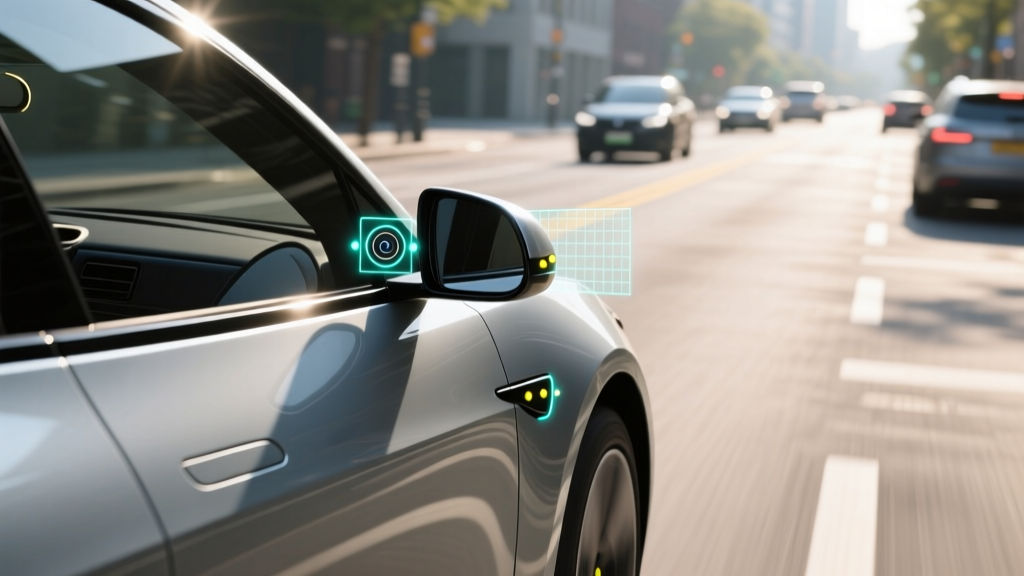
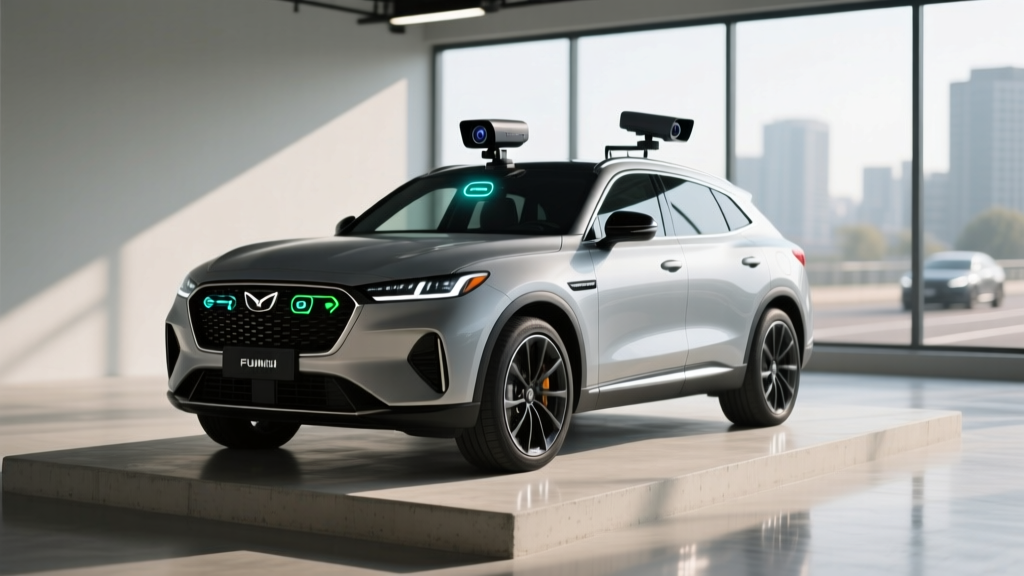
ProPILOT 2.0 relies on a multi-sensor fusion approach. The 2026 Nissan Ariya equips the following hardware for the system:
- Front-facing camera — mounted behind the rearview mirror, reads lane markings, traffic signs, and detects vehicles/pedestrians
- Front radar (77 GHz) — tracks the distance and relative speed of vehicles ahead for adaptive cruise functionality
- Corner radars (rear) — used for blind-spot monitoring and supporting lane-change assist decisions
- Ultrasonic sensors — short-range proximity detection at low speeds, primarily for parking assist
- Driver-monitoring camera — infrared camera mounted on the steering column that tracks eye gaze and head position to verify driver attentiveness during hands-off operation
- High-definition map data — pre-loaded and updated via over-the-air (OTA) connectivity, this is the critical enabler for hands-off mode. The system cross-references GPS position against HD map data to confirm the road is a supported divided highway
The HD map dependency is what separates ProPILOT 2.0 from the base ProPILOT Assist. Without map confirmation that the road geometry, lane count, and speed limits are known, the system will not engage hands-off mode — it will default to hands-on ProPILOT Assist behavior instead.
Real-World Capabilities and Limitations
In practice, ProPILOT 2.0 performs well on well-marked, divided interstates where it was designed to operate. Lane centering is confident and steady, speed management through curves is smooth, and the system handles moderate traffic flow with predictable braking and acceleration. The lane-change assist feature — where you tap the turn signal and the car executes the lane change — works reliably when adjacent lanes are clear and markings are fresh.
However, the system has real-world limitations every buyer should understand before relying on it:
- No city-street or surface-road hands-off mode — hands-off only activates on mapped divided highways
- No automatic lane changes without driver confirmation — you must initiate via turn signal; the car will not change lanes on its own
- No stop-light or stop-sign recognition — the system does not handle intersections
- Weather degradation — heavy rain, snow, fog, or direct sun glare can blind the front camera and disable hands-off mode
- Faded or missing lane markings — construction zones, freshly repaved roads without restriping, and rural highways with worn markings will cause the system to disengage or refuse hands-off activation
- Driver-monitoring sensitivity — wearing sunglasses (especially polarized or dark lenses) can interfere with the IR driver-monitoring camera, triggering "eyes on road" warnings even when you are looking forward
- Not a navigation-aware system — unlike some competitors, ProPILOT 2.0 does not automatically take exits based on your navigation route
Cold-weather performance deserves specific mention. In winter testing, the front camera and radar can accumulate ice or road-salt spray, which will cause the system to issue a "sensor blocked" warning and revert to basic cruise control. Keeping the windshield and front grille area clean is a practical requirement for reliable operation in northern climates.
Which Ariya Trims Include ProPILOT 2.0?
For the 2026 model year, Nissan has expanded ProPILOT 2.0 availability across the Ariya lineup, but it is not standard on every trim. Here is how the system breaks down:
| Trim Level | ADAS Package | ProPILOT 2.0 (Hands-Off) | Base MSRP (2026) |
|---|---|---|---|
| Engage (FWD) | ProPILOT Assist (hands-on) | Not available | $39,590 |
| Venture+ (FWD) | ProPILOT Assist (hands-on) | Not available | $43,590 |
| Evolve+ (FWD/e-4ORCE) | ProPILOT 2.0 standard | Included | $47,590 |
| Empower+ (FWD) | ProPILOT 2.0 standard | Included | $51,590 |
| Platinum+ (e-4ORCE) | ProPILOT 2.0 standard | Included | $57,590 |
ProPILOT 2.0 is included at no additional cost on Evolve+ and above trims — there is no subscription fee and no separate activation charge. This is a notable advantage over competing systems that require monthly payments. The map data updates are delivered over-the-air via the Ariya's built-in connectivity, also at no recurring cost.
Buyers stepping into the Engage or Venture+ trims receive ProPILOT Assist (1.0), which offers adaptive cruise and lane-centering but requires hands on the steering wheel at all times. This is still a capable Level 2 system for daily commuting, just without the hands-off highway relaxation that defines the 2.0 upgrade.
Cost Comparison: ProPILOT 2.0 vs. Competing Systems
One of the strongest arguments for Nissan's approach is the pricing model. Here is how ProPILOT 2.0 stacks up against the major competing hands-off and advanced ADAS systems available in 2026:
| System | Brand | Hands-Off? | Cost Model | Annual Cost |
|---|---|---|---|---|
| ProPILOT 2.0 | Nissan | Yes (highway) | Included in trim price | $0 |
| Super Cruise | GM (Cadillac/Chevy) | Yes (highway) | Included 3 yrs, then ~$25/mo | $0 → $300/yr |
| BlueCruise | Ford/Lincoln | Yes (highway) | Included trial, then ~$75/mo or $800/yr | $0 → $800/yr |
| FSD (Supervised) | Tesla | No (hands-on required) | $8,000 one-time or $99/mo | $1,188/yr (sub) |
| Highway Driving Assist 2 | Hyundai/Kia/Genesis | Partial (select models) | Included in trim price | $0 |
Nissan's decision to bundle ProPILOT 2.0 into the vehicle price with no subscription is a genuine differentiator. Over a 5-year ownership period, that saves $1,500 or more compared to Ford's BlueCruise subscription model after the trial expires. Tesla's FSD, while feature-rich with city-street capability, remains a hands-on Level 2 system and costs significantly more upfront.
How ProPILOT 2.0 Compares to Super Cruise and BlueCruise
Among true hands-off highway systems, the three main competitors are Nissan ProPILOT 2.0, GM Super Cruise, and Ford BlueCruise. All are SAE Level 2. All require driver attention. But there are meaningful differences in execution:
Map coverage: GM's Super Cruise has the largest mapped road network in North America, covering over 750,000 miles of divided highways as of 2026. Ford's BlueCruise covers approximately 130,000+ miles. Nissan's ProPILOT 2.0 map coverage is more limited — Nissan has not published an exact mileage figure, but in testing, the system activates on major interstates and primary divided highways. Rural two-lane roads and many state highways are not supported. If your commute is primarily on I-95, I-5, or I-80, you will likely have full coverage. If you frequently drive secondary highways, expect more frequent hands-on fallback.
Lane-change behavior: Super Cruise offers navigation-integrated lane changes — the car will change lanes automatically to follow your route, including taking exits. ProPILOT 2.0 and BlueCruise both require the driver to initiate lane changes via the turn signal. This is a meaningful convenience gap for long road trips.
Driver monitoring approach: All three systems use in-cabin cameras, but GM and Ford tend to be slightly more permissive with brief glances away (checking mirrors, adjusting climate controls) before issuing warnings. Nissan's driver-monitoring system is stricter — extended glances at the center screen or down at a phone will trigger warnings quickly. Some owners report the system is more "nagging" than competitors, which can be either a positive (safer) or negative (annoying) depending on your perspective.
Speed range: ProPILOT 2.0 operates from 0 to approximately 85 mph in hands-off mode, including stop-and-go traffic. Super Cruise and BlueCruise have similar upper limits but can vary by model year and specific vehicle calibration.
The Ariya Itself: Key Specs for Context
For buyers evaluating the Ariya as a complete package alongside its ADAS offering, here are the core 2026 specifications:
| Spec | FWD (63 kWh) | FWD (87 kWh) | e-4ORCE AWD (87 kWh) |
|---|---|---|---|
| Battery (usable) | 63 kWh, NMC | 87 kWh, NMC | 87 kWh, NMC |
| EPA Range | 216 mi | 304 mi | 272 mi |
| Real-World Range (highway/cold) | ~170–185 mi | ~240–260 mi | ~215–230 mi |
| Horsepower | 214 hp | 238 hp | 389 hp |
| 0–60 mph | 7.5 sec | 7.2 sec | 4.8 sec |
| Max DC Fast Charge | 130 kW (CCS) | 130 kW (CCS) | 130 kW (CCS) |
| 10–80% DC Charge | ~35 min | ~40 min | ~40 min |
| MPGe (combined) | 97 MPGe | 95 MPGe | 92 MPGe |
The Ariya's 130 kW peak DC charging rate is its most notable competitive weakness — rivals like the Hyundai Ioniq 5 (peak 240 kW) and Tesla Model Y (peak 250 kW) charge significantly faster on compatible stations. The 10–80% time of roughly 35–40 minutes is acceptable for road trips but noticeably slower than the 18-minute benchmarks set by 800V-architecture competitors. For ProPILOT 2.0 use cases (long highway drives), plan for slightly longer charging stops.
The Ariya uses a CCS1 connector. With the industry's ongoing transition to NACS (Tesla's connector), Nissan has confirmed that future model years will adopt NACS natively. For 2026 models, a CCS-to-NACS adapter may be needed for Supercharger access depending on network availability in your region.
Frequently Asked Questions
Is Nissan Ariya ProPILOT 2.0 truly self-driving?
No. ProPILOT 2.0 is SAE Level 2, meaning the driver must remain fully attentive and ready to take control at any moment. The system allows hands-off operation on mapped highways, but your eyes must stay on the road. The driver-monitoring camera enforces this — if you look away for too long or close your eyes, the system will issue visual and audible warnings, then gradually slow the vehicle to a stop with hazard lights activated. Only Level 4 systems like Waymo's robotaxi service operate without a human driver.
Does ProPILOT 2.0 require a subscription?
No. On the 2026 Ariya, ProPILOT 2.0 is included in the purchase price of Evolve+, Empower+, and Platinum+ trims. There is no monthly fee, no annual renewal, and no separate activation cost. Map updates are delivered over-the-air at no charge. This contrasts with GM Super Cruise ($25/month after the 3-year trial) and Ford BlueCruise ($75/month or $800/year after trial).
Can ProPILOT 2.0 handle stop-and-go traffic?
Yes. The system operates from 0 mph up to approximately 85 mph, meaning it will bring the Ariya to a complete stop and resume automatically in highway traffic jams. This is one of the most practical use cases — on congested interstates, the system manages following distance, braking, and acceleration while you keep your eyes on the road.
Will ProPILOT 2.0 work on any road?
No. Hands-off mode only activates on mapped, divided highways — primarily interstates and major expressways. Surface streets, two-lane rural roads, parking lots, and unmapped highway segments will not support hands-off operation. The system will default to ProPILOT Assist (hands-on required) on these roads. If you frequently drive on non-interstate highways, you may find the system engages hands-off mode less often than expected.
Does the 2026 Ariya qualify for the federal EV tax credit?
The 2026 Nissan Ariya's eligibility for the §30D federal clean vehicle credit depends on several factors that change periodically: the buyer's modified adjusted gross income (caps at $150,000 single / $300,000 joint), the vehicle's MSRP (must be under $80,000 for SUVs — all Ariya trims qualify), and battery component/critical mineral sourcing requirements. As of 2026, the Ariya's battery sourcing has historically made partial or full credit eligibility uncertain. Check the latest IRS guidance and consult a tax professional before relying on credit eligibility in your purchase decision. The credit can now be transferred to the dealer at point of sale as an instant discount if you qualify.
How does ProPILOT 2.0 handle construction zones?
Not well. Construction zones with shifted lanes, temporary barriers, missing or conflicting lane markings, and reduced speed limits are explicitly outside the system's comfort zone. Nissan's own owner's manual advises drivers to disengage ProPILOT 2.0 in work zones and take full manual control. The HD map data will not reflect temporary construction configurations, and the camera may misread or fail to detect temporary lane markings.
What happens if the system disengages suddenly?
If ProPILOT 2.0 loses the conditions required for hands-off operation (e.g., you exit a mapped highway, lane markings disappear, or a sensor becomes obstructed), the system will issue a clear audible and visual alert requesting you to place your hands on the wheel. You typically have several seconds to respond before the system escalates to more urgent warnings and eventually initiates a controlled deceleration. In real-world use, the transitions are smooth and predictable — the system does not abruptly "dump" control back to the driver without warning.
Sources: Nissan USA Ariya specifications, EPA Fuel Economy – Nissan Ariya, IIHS Nissan Ariya ratings. All MSRP figures are base prices before destination charges and reflect 2026 model year pricing as published by Nissan. Tax credit eligibility is subject to change; verify current rules at IRS.gov.