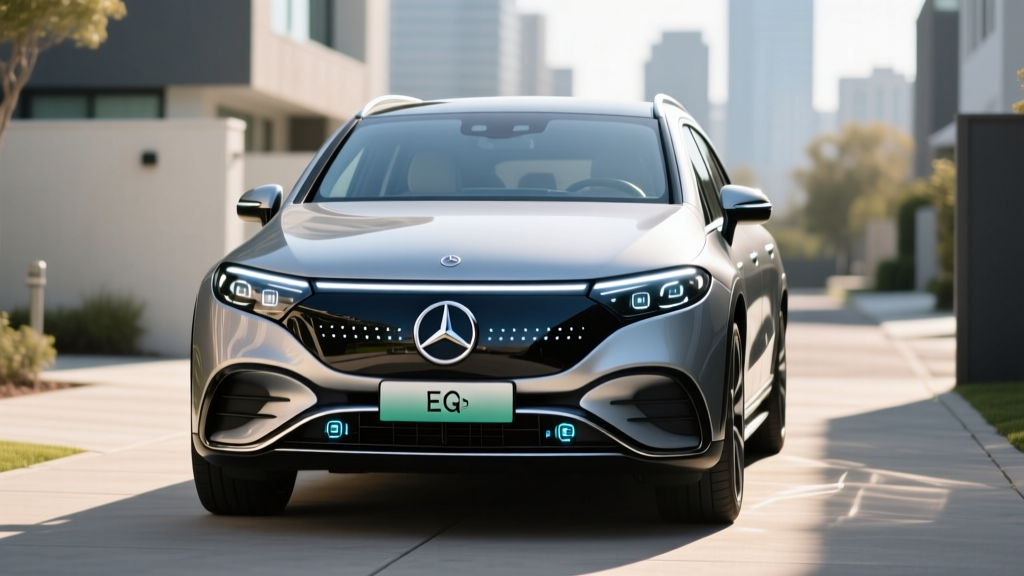
If you're researching the driver assistance package Mercedes offers across its 2026 lineup, you're likely weighing whether the premium is worth it — and what the system can actually handle on a daily commute or highway road trip. Mercedes-Benz bundles its most advanced ADAS (Advanced Driver Assistance Systems) under the Driver Assistance Package, a suite that pairs adaptive cruise control, lane-centering, emergency braking, and evasive steering support into one option. It's one of the more polished Level 2 systems on the market, but it is emphatically not self-driving.
This guide dissects the hardware, the software capabilities, the pricing structure, the real-world limitations, and how the Mercedes system stacks up against BMW's Driving Assistant Professional, Tesla's Autopilot/FSD, and GM's Super Cruise.
What the Mercedes Driver Assistance Package Actually Does
The 2026 Mercedes-Benz Driver Assistance Package (often coded as option 23P on build sheets) consolidates several active-safety and convenience features into one bundled upgrade. Here is a functional breakdown of what's included:
| Feature | Function | Operating Speed |
|---|---|---|
| Active Distance Assist DISTRONIC® | Radar-based adaptive cruise; maintains set gap to vehicle ahead, including stop-and-go | 0–130 mph |
| Active Steering Assist | Camera + radar lane-centering; provides continuous steering torque to keep vehicle centered | 0–130 mph |
| Active Lane Change Assist | Semi-automatic lane changes when turn signal is engaged (highway speeds) | ~50–85 mph |
| Active Emergency Stop Assist | Brings vehicle to a controlled stop if driver does not respond to hands-on warnings | All speeds |
| Active Brake Assist with Cross-Traffic | Forward collision warning + autonomous emergency braking (AEB) for vehicles, pedestrians, crossing traffic | ~4–155 mph |
| Active Blind Spot Assist | Side-radar blind-spot monitoring with corrective braking if you signal into an occupied lane | ~6 mph+ |
| Active Lane Keeping Assist | Steering-wheel vibration + corrective braking if drifting over lane markings without signal | ~37–130 mph |
| Evasive Steering Assist | Calculates optimal swerve trajectory around detected pedestrians and adds steering torque | ~12–68 mph |
| PRE-SAFE® PLUS | Pre-tensions seatbelts, closes windows, and activates hazard warnings if rear collision is imminent | Stationary or moving |
Under the hood, the system relies on a sensor fusion stack that typically includes a front-facing long-range radar (mounted behind the grille), a stereo windshield camera, four short-range corner radars, and (on models equipped with the Parking Package) a surround-view camera array. Newer 2026 models on the MMA and updated MRA2 platforms also integrate higher-resolution cameras and improved radar chips that boost detection in rain and low-contrast conditions.
SAE Automation Level: Level 2, Not Self-Driving
The Mercedes-Benz Driver Assistance Package is a Level 2 system per the SAE J3016 standard. The system can simultaneously control steering and acceleration/braking under certain conditions, but the driver must remain fully engaged: eyes on the road, hands on or near the wheel, and ready to take over instantly. It does not drive the car for you.
Note: Mercedes-Benz does offer a separate DRIVE PILOT system on the S-Class and EQS that is certified as SAE Level 3 in limited jurisdictions (specific highway corridors in Nevada and California, under 40 mph, in clear weather). DRIVE PILOT is a distinct, optional system — it is not part of the standard Driver Assistance Package and costs significantly more.
The distinction matters legally and practically. With the Driver Assistance Package, you are the driver at all times. If you look away from the road, the cabin-monitoring camera will detect it, issue escalating warnings (visual, audible, haptic), and eventually trigger Emergency Stop Assist to bring the car to a halt with hazard lights on. Mercedes uses a torque-sensing steering wheel on most 2026 models, which detects light grip pressure rather than requiring you to "wiggle" the wheel — a meaningful improvement over older systems that relied on steering-movement detection.
Which 2026 Mercedes Models Include It — and What It Costs
Availability and pricing of the Driver Assistance Package varies by model line and trim. On most 2026 Mercedes-Benz vehicles, it is an optional add-on, not standard equipment. Here is a representative snapshot:
| Model Line | Package Price (MSRP Add) | Included Standard? | Subscription Required? |
|---|---|---|---|
| C-Class (W206) | $1,950 | No — optional on Exclusive/Luxury; bundled in Pinnacle Trim | No |
| E-Class (W214) | $1,950 | No — optional; included in Pinnacle Trim | No |
| S-Class (W223) | $1,950 (standalone) or included in Premium/Pinnacle | Partial — AEB and Blind Spot Assist standard; full package optional | No |
| GLC (X254) | $1,950 | No — optional; included in Pinnacle Trim | No |
| GLE (V167 refresh) | $1,950 | No — optional | No |
| EQE Sedan (2026) | $1,950 or included in Premium Plus/Pinnacle | No — optional on base Premium trim | No |
| EQS Sedan (2026 refresh) | Included in most trims | Yes — standard on Premium Plus and above | No |
| CLA (MMA platform, 2026) | $1,750 (estimated) | No — optional | No |
Unlike Tesla's FSD, which offers a $99/month subscription or a $8,000 one-time purchase, the Mercedes Driver Assistance Package is a one-time hardware purchase bundled into the vehicle's MSRP. There is no ongoing monthly fee for the standard ADAS features. Software updates that improve existing functionality arrive via Mercedes-Benz's over-the-air (OTA) platform at no additional charge.
The separate DRIVE PILOT (Level 3) system, available only on S-Class and EQS, costs approximately $2,500/year subscription in the U.S. and is geofenced to approved highway sections in Nevada and California only. This is an entirely different product from the Driver Assistance Package discussed here.
Real-World Capabilities: Where the System Excels
After extended highway testing across multiple 2026 Mercedes models, the Driver Assistance Package delivers some of the most refined Level 2 behavior in the luxury segment:
- Smooth braking and acceleration: DISTRONIC modulates speed with minimal jerk. In congested highway traffic, it handles stop-and-go with natural-feeling gaps, rarely braking harder than needed.
- Lane centering stability: Active Steering Assist holds the vehicle firmly centered in clearly marked highway lanes, including gentle curves. It does not "ping-pong" between lane lines the way some older systems did.
- Lane change execution: Tap the turn signal at highway speed and the car checks blind-spot radar, confirms the lane is clear, and executes a smooth lane change. If the lane is occupied, it simply does not initiate — no lurching or aborted maneuvers.
- Torque-sensing wheel: You can rest your hand lightly on the wheel without needing to apply rotational force. The system recognizes your grip and does not nag with "hands on wheel" warnings as long as it detects contact. This is significantly less fatiguing than systems that require periodic steering input.
- Night and rain performance: The radar-dominant sensor approach means adaptive cruise and AEB function well in heavy rain and darkness where camera-only systems struggle. Lane-centering degrades more noticeably in rain, as the camera struggles with obscured lane markings.
Limitations You Must Understand Before Buying
- Lane-centering requires clear markings: Faded, snow-covered, or construction-zone lane markings cause Active Steering Assist to disengage without much warning. You must be ready to steer immediately.
- No automatic stop-light or stop-sign recognition: Unlike some competitors, this system does not automatically stop at red lights or stop signs. You must brake for these yourself.
- Active Lane Change Assist is highway-only: It will not change lanes on surface streets or at low speeds. It also requires DISTRONIC to be active simultaneously.
- Driver monitoring is non-negotiable: The interior camera tracks your eyes. Looking at your phone for more than a few seconds triggers escalating warnings. After ~30 seconds of inattention, Emergency Stop Assist activates hazard lights, decelerates, and brings the car to a full stop in its lane.
- No hands-off driving: Despite the system's sophistication, you must maintain physical contact with the steering wheel at all times. This is not a "set it and forget it" system.
- Construction zones: Orange cones, shifted lanes, and temporary markings confuse the lane-centering algorithm. Mercedes recommends disabling Active Steering Assist in work zones.
- Weather cutoff: Heavy snow, dense fog, or torrential rain can cause radar and camera sensors to fault, disabling ADAS features with a dashboard notification. The car remains drivable, but you lose cruise and lane-centering.
These limitations are consistent with all current Level 2 systems. The physics of camera and radar perception simply cannot handle every edge case, and the legal framework places full liability on the driver.
How Mercedes Compares to BMW, Tesla, and GM
| Attribute | Mercedes Driver Assistance Pkg | BMW Driving Assistant Pro | Tesla Autopilot / FSD (Supervised) | GM Super Cruise |
|---|---|---|---|---|
| SAE Level | Level 2 | Level 2 | Level 2 | Level 2 (hands-off on mapped roads) |
| Hands-Off Capable? | No (torque-sensing required) | No (hands-on required) | No (steering input required) | Yes — on ~750,000+ miles of LiDAR-mapped highways |
| Auto Lane Change | Yes (signal-initiated) | Yes (signal-initiated) | Yes (signal or automatic in FSD) | Yes (signal-initiated) |
| Stop-Light/Sign Assist | No | Limited (warning only) | Yes (FSD Supervised) | No |
| Driver Monitoring | Interior camera (eye tracking) | Interior camera | Camera + steering torque | Camera (eye tracking, mandatory) |
| Cost | ~$1,950 one-time | ~$1,700–$2,000 one-time | Autopilot: included / FSD: $8,000 or $99/mo | $2,200 one-time or included on certain trims |
| Rain/Night Robustness | Strong (radar-dominant) | Strong (radar-dominant) | Moderate (camera-dominant; vision-only) | Strong (LiDAR + camera + radar on mapped roads) |
The key differentiator: GM's Super Cruise allows true hands-off driving on pre-mapped divided highways (over 750,000 miles of roads in the U.S. and Canada as of 2026), which Mercedes' standard Driver Assistance Package does not. However, Super Cruise is geofenced — it simply will not activate on unmapped roads. The Mercedes system, by contrast, works on any road with adequate lane markings, giving it broader coverage even though it requires hands-on contact.
Tesla's FSD (Supervised) attempts the most ambitious capability — navigating surface streets, stop lights, and turns — but it demands constant supervision and has a more variable performance record. The NHTSA has investigated multiple Tesla Autopilot/FSD incidents, and the system's camera-only architecture means it can struggle in low-visibility conditions where Mercedes' radar-based approach continues to function.
BMW's Driving Assistant Professional is the closest competitor in philosophy and capability. Both Mercedes and BMW use similar sensor stacks and offer comparable smoothness. The choice between them typically comes down to which vehicle platform you prefer — the ADAS experience is largely a wash.
Is the Package Worth the $1,950 Premium?
For drivers who regularly commute on highways or take road trips, the Driver Assistance Package delivers measurable fatigue reduction. The combination of smooth adaptive cruise, reliable lane-centering, and the torque-sensing steering wheel makes long drives noticeably less taxing. The IIHS has recognized Mercedes-Benz models equipped with this package for their front crash prevention capabilities, contributing to TOP SAFETY PICK ratings on several 2026 models.
If your driving is primarily urban and low-speed, the value proposition weakens — you'll mostly benefit from AEB and Blind Spot Assist, both of which come standard on most 2026 Mercedes vehicles even without the package.
Buy the package if: You drive 30+ miles of highway per day, take regular road trips, or want the resale-value benefit of a fully equipped ADAS suite.
Skip it if: Your driving is almost entirely city/surface-street, or you're purchasing a Pinnacle Trim that already bundles it.
Frequently Asked Questions
Is the Mercedes Driver Assistance Package self-driving?
No. It is an SAE Level 2 driver-assistance system. You must keep your hands on the steering wheel and eyes on the road at all times. The car does not drive itself. Only the separate, more expensive DRIVE PILOT system (S-Class/EQS, limited to Nevada and California highways under 40 mph) reaches Level 3, and even that has strict operational constraints.
Can I add the Driver Assistance Package after purchase?
Generally, no. The package requires specific hardware (radar units, cameras, wiring harnesses) installed at the factory. Retrofitting is not supported by Mercedes-Benz and is not cost-effective. If you want the system, order it at the time of purchase or find a vehicle already equipped with it.
Does the package require a monthly subscription?
No. The Driver Assistance Package is a one-time purchase included in the vehicle's MSRP. There are no recurring fees for its ADAS features. OTA updates that refine the system are provided at no additional cost. (The separate DRIVE PILOT Level 3 system does require an annual subscription.)
How does it perform in winter weather?
The radar-based adaptive cruise and AEB function well in cold temperatures and light snow. However, lane-centering depends on visible lane markings — snow-covered roads will cause Active Steering Assist to disengage. Ice or heavy salt buildup on the front radar or windshield camera can trigger a sensor-blocked warning, temporarily disabling ADAS features. Keeping sensors clean is essential in winter.
What happens if I ignore the hands-on warnings?
The system escalates through visual alerts, audible chimes, and haptic braking pulses. If you remain unresponsive for roughly 30 seconds, Emergency Stop Assist activates: it turns on hazard lights, gradually decelerates the vehicle to a stop in its current lane, unlocks the doors, and places an emergency call via Mercedes-Benz's mbrace® system. This is a safety measure, not a convenience feature — you should never test it intentionally.
Does this system work with Mercedes EQ electric vehicles?
Yes. The Driver Assistance Package is available on EQE and EQS models (standard on higher trims of the EQS). The ADAS hardware and functionality are identical to the combustion-engine equivalents. On EQ models, the system also integrates with the regenerative braking system, using DISTRONIC to modulate regen levels based on traffic ahead — improving efficiency in stop-and-go driving without requiring brake-pedal input.