What the Mercedes-Benz Driver Assistance Package Actually Does
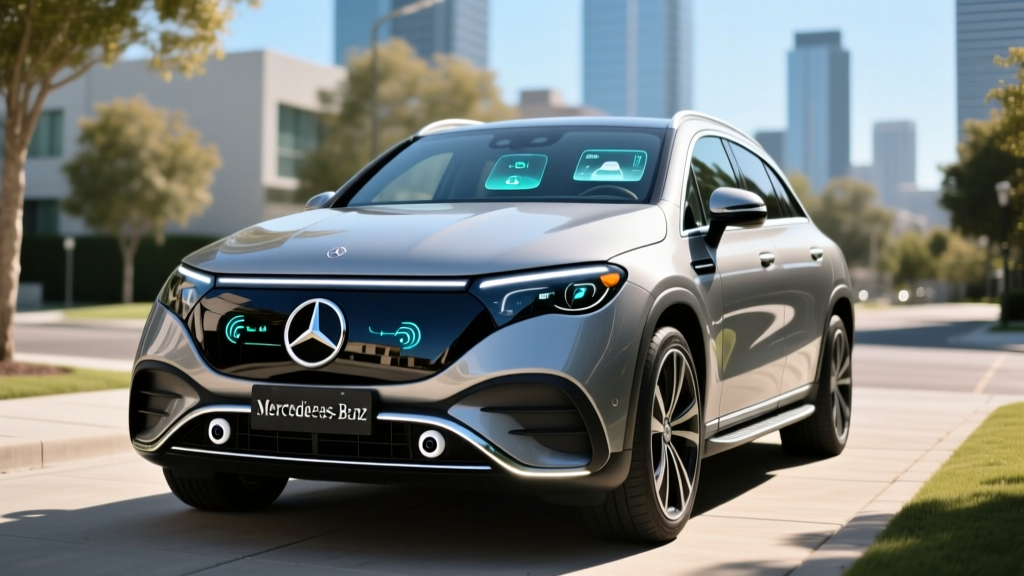
The Mercedes-Benz Driver Assistance Package bundles the brand's most advanced active-safety and driver-assist technologies into a single option group. In the 2026 model year, this package spans two very different tiers of automation: conventional Level 2 driver-assistance (which Mercedes markets under names like Active Distance Assist DISTRONIC, Active Steering Assist, and Active Lane Keeping Assist) and, on select EQS and S-Class sedans, the available DRIVE PILOT system — one of the first certified SAE Level 3 conditional automated driving features sold in the United States.
At its core, the standard Driver Assistance Package uses a sensor suite that includes:
- Long-range radar (up to ~200 meters forward) for adaptive cruise and emergency braking
- Short- and mid-range radar at the front corners and rear bumper for cross-traffic, blind-spot, and lane-change assist
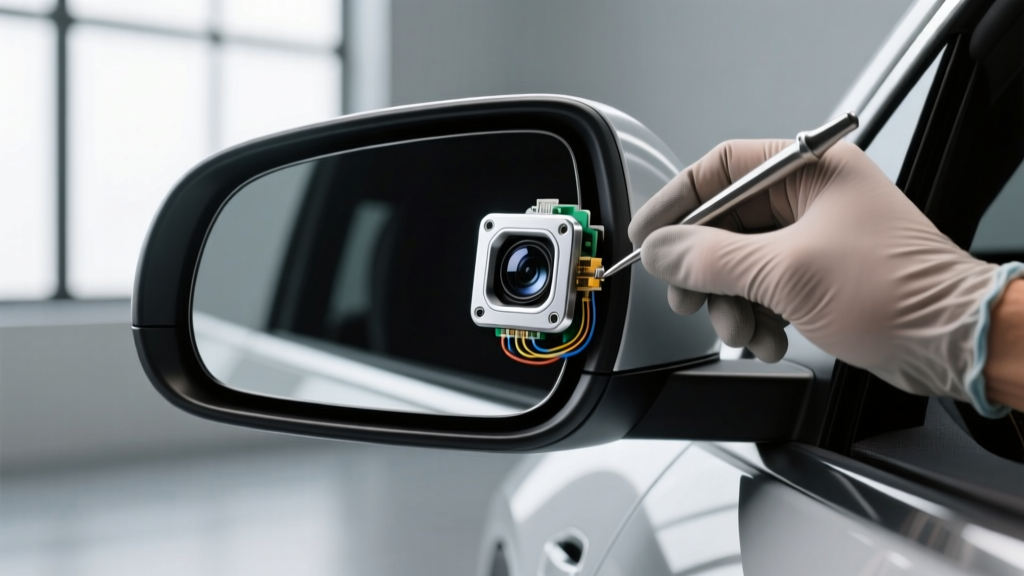
- A forward-facing stereo camera behind the windshield for lane-line detection, traffic-sign recognition, and pedestrian/cyclist identification
- Surround-view cameras for 360° parking assist and low-speed maneuvering
- Ultrasonic sensors for close-proximity parking detection
On vehicles equipped with DRIVE PILOT (Level 3), Mercedes adds a rear-facing LiDAR sensor, a high-definition digital map, redundant steering and braking actuators, and a driver-monitoring camera to confirm the driver's eyes are open and oriented forward. This hardware upgrade is what allows the system to assume full driving responsibility under tightly defined conditions.
SAE Automation Level: Know the Difference
Level 2 (standard Driver Assistance Package): The system can simultaneously control steering, acceleration, and braking — but you remain the driver. You must keep your hands on or near the wheel, monitor the road, and intervene instantly. This applies to Active Steering Assist, DISTRONIC, and Active Lane Change Assist.
Level 3 (DRIVE PILOT, where available): Under specific conditions (mapped divided highways, speeds ≤40 mph, clear weather, daylight), the car is legally the driver. You may look away from the road but must be ready to resume control within ~10 seconds when prompted. This is not Level 4 or Level 5 autonomy.
Source: SAE International J3016
Feature Breakdown: What's Inside the Package
The 2026 Mercedes-Benz Driver Assistance Package is not a single feature — it is a suite. Here is what each component does in practice:
| Feature | Function | SAE Level |
|---|---|---|
| Active Distance Assist DISTRONIC | Adaptive cruise control; maintains set gap to vehicle ahead, works in stop-and-go traffic, can resume from a full stop. | Level 1 |
| Active Steering Assist | Lane-centering on highways; pairs with DISTRONIC for combined longitudinal + lateral control. | Level 2 |
| Active Lane Change Assist | Executes a lane change when the driver activates the turn signal, after confirming the lane is clear. | Level 2 |
| Active Emergency Stop Assist | Brings the car to a controlled stop in its lane if the driver becomes unresponsive. | Level 2 |
| Active Brake Assist w/ Cross-Traffic | Automatic emergency braking for vehicles, pedestrians, cyclists, and cross-traffic at intersections. | Level 0–1 |
| Active Blind Spot Assist | Warns of vehicles in blind spots; can apply corrective braking to avoid a side collision. | Level 0–1 |
| Active Lane Keeping Assist | Steering intervention if the vehicle drifts over a lane marking without a turn signal. | Level 1 |
| DRIVE PILOT (where available) | Conditional automated driving on mapped highways ≤40 mph. Driver may disengage from driving tasks but must be ready to resume. | Level 3 |
Which Models and Trims Include It?
For the 2026 model year, Mercedes-Benz structures the Driver Assistance Package differently across its lineup. On EVs (the EQE Sedan, EQE SUV, EQS Sedan, EQS SUV, and EQB), the package is typically a standalone option or bundled into a mid-to-upper trim package. On the S-Class and EQS, DRIVE PILOT is an additional, separate option layered on top of the standard Driver Assistance Package.
| Model (2026) | Driver Assistance Pkg Availability | DRIVE PILOT (Level 3) |
|---|---|---|
| EQS Sedan | Optional on 450+; included in Pinnacle Trim / Executive Line | Available — $2,500 add-on (CA & NV approved highways) |
| EQS SUV | Optional on 450+; included in Pinnacle Trim | Not available (as of early 2026) |
| EQE Sedan | Optional on 350+; included in AMG Line or Premium Plus | Not available |
| EQE SUV | Optional across trims | Not available |
| EQB | Optional on 300+; standard on 350 | Not available |
| S-Class (ICE/hybrid) | Standard on S 580; optional on S 500 | Available — $2,500 add-on (CA & NV) |
| C-Class / GLC / GLE | Optional package ($1,700–$1,950 depending on model) | Not available |
Mercedes does not sell the Driver Assistance Package as a subscription on current models — it is a one-time purchase at the time of vehicle order. DRIVE PILOT, however, may require periodic software validation through Mercedes me connect services.
Pricing and Cost Breakdown
| Component | Cost (2026 MSRP) | Payment Model |
|---|---|---|
| Driver Assistance Package (Level 2 suite) | $1,700 – $1,950 (varies by model) | One-time at purchase |
| DRIVE PILOT (Level 3, EQS / S-Class) | $2,500 | One-time at purchase |
| Included in Pinnacle / Executive Trim | Bundled (no separate charge) | Included in trim price |
| Mercedes me connect (required for map updates) | Complimentary 3 yrs, then ~$199/yr | Subscription (post-trial) |
Unlike Tesla's Full Self-Driving (Supervised), which costs $8,000 as a one-time purchase or $99/month as a subscription, Mercedes does not currently offer its Level 2 suite as a monthly subscription in the U.S. market. You either order the car with the package or you don't — it cannot be added over-the-air after delivery.
Real-World Capabilities and Limitations
⚠️ Critical Limitations — Read Before You Buy
- Not self-driving. The Level 2 Driver Assistance Package requires continuous driver supervision. Hands must remain on the steering wheel. If you remove your hands for more than ~15–30 seconds, the system escalates warnings and eventually triggers Emergency Stop Assist.
- Lane markings required. Active Steering Assist relies on clearly visible lane lines. Faded markings, construction zones, snow-covered roads, and temporary lane shifts will cause the system to disengage or behave unpredictably.
- Weather degrades performance. Heavy rain, fog, snow, and direct low-angle sunlight can blind cameras and attenuate radar. The system will display a "Sensor Blocked" warning and disable assisted steering.
- Active Lane Change Assist is not automatic. It only initiates a lane change when you physically tap the turn signal stalk. It will abort if a vehicle is detected in the target lane.
- DRIVE PILOT is geofenced. Level 3 operation is limited to pre-mapped divided highways in approved jurisdictions (currently portions of I-5, I-15, and I-805 in California, and select highways in Nevada). Speed must be ≤40 mph, weather must be clear, and it is daytime-only.
- Not a substitute for attention. NHTSA data confirms that Level 2 systems can fail to detect stationary objects, emergency vehicles, and unusual road geometries. You are the failsafe.
In real-world highway testing, the Mercedes-Benz Level 2 suite performs well on well-marked interstates with consistent lane geometry. The steering assist is smooth and confident on gentle curves, and DISTRONIC handles stop-and-go traffic with minimal jerkiness. However, on two-lane rural roads with no shoulder markings, on highway interchanges with complex lane merges, and in heavy precipitation, the system requires frequent driver takeovers. Expect roughly 1–3 interventions per 10 miles on mixed suburban/highway driving, and significantly more in construction zones.
DRIVE PILOT, where available, is a more transformative experience — but its operational design domain (ODD) is extremely narrow. On an approved stretch of I-5 near Los Angeles at 35 mph in clear conditions, you can legally read a book or check email. But the moment speed exceeds 40 mph, you exit the mapped zone, or the system detects rain, it hands control back with a ~10-second countdown.
How It Compares to Competing ADAS Systems
| System | SAE Level | Hands-Off? | Cost | Geofenced? |
|---|---|---|---|---|
| Mercedes Driver Assistance Pkg | Level 2 | No | $1,700–$1,950 | No |
| Mercedes DRIVE PILOT | Level 3 | Yes (≤40 mph, mapped roads) | $2,500 | Yes (CA & NV) |
| GM Super Cruise | Level 2 | Yes (mapped roads only) | $2,200 + $25/mo after 3 yrs | Yes (~750k mi mapped) |
| Ford BlueCruise | Level 2 | Yes (mapped roads only) | $2,100 or $75/mo sub | Yes (~130k mi mapped) |
| Tesla Autopilot | Level 2 | No | Included (basic) | No |
| Tesla FSD (Supervised) | Level 2 | No | $8,000 or $99/mo | No |
| BMW Highway Assistant | Level 2 | Yes (≤85 mph, eyes-off, hands-off) | Included in Driving Assistant Pro (~$1,700) | Yes (divided highways) |
Mercedes holds a unique position: it is the only automaker with a certified Level 3 system on U.S. roads. However, BMW's Highway Assistant offers a broader Level 2 hands-free experience at highway speeds (up to 85 mph on divided highways), while GM's Super Cruise covers over 750,000 mapped miles across North America — far more than DRIVE PILOT's limited California and Nevada freeway segments. For most buyers, the standard Mercedes Level 2 package is competitive with BMW's Driving Assistant Pro and superior to Tesla's base Autopilot in steering smoothness, but it lacks the hands-free highway capability of Super Cruise or BlueCruise.
Is the Mercedes-Benz Driver Assistance Package Worth It?
Choose the Driver Assistance Package if:
- You commute on well-marked highways and want smooth adaptive cruise + lane centering.
- You value Mercedes' integration quality — the system feels natural, not robotic.
- You're ordering an EQS or S-Class and want DRIVE PILOT for future-proofing as geofenced areas expand.
- You want robust active safety (AEB, blind-spot, cross-traffic) bundled in one package.
Skip it if:
- You primarily drive on rural or poorly marked roads where the system will disengage constantly.
- You want hands-free highway driving — GM Super Cruise or Ford BlueCruise offer broader hands-off coverage today.
- You're buying a base-trim EQB or EQE and the $1,700+ option pushes you beyond budget.
Frequently Asked Questions
Is the Mercedes-Benz Driver Assistance Package self-driving?
No. The standard Driver Assistance Package is SAE Level 2, meaning it assists with steering, acceleration, and braking simultaneously, but the driver must remain fully engaged and keep hands on the steering wheel. Only the optional DRIVE PILOT system (available on EQS and S-Class in limited areas) reaches Level 3, where the car assumes driving responsibility under strict conditions — but even this is not full autonomy.
Can I add the Driver Assistance Package after buying the car?
No. The hardware (radar, cameras, wiring) is installed at the factory. The package must be selected at the time of vehicle order. Unlike Tesla's FSD, Mercedes does not offer over-the-air activation of the Driver Assistance Package after delivery.
Does the package work in rain and snow?
Partially. DISTRONIC (adaptive cruise) works in light-to-moderate rain, but Active Steering Assist may disengage if the forward camera's view is obscured by heavy precipitation, road spray, or snow buildup on sensors. The system will display a "Sensor Dirty" or "Sensor Blocked" alert. Always clear cameras and radar surfaces before driving in winter conditions.
What is the difference between Active Steering Assist and DRIVE PILOT?
Active Steering Assist is Level 2: you must supervise and keep hands on the wheel. DRIVE PILOT is Level 3: on approved mapped highways at ≤40 mph in clear weather, the car is legally driving and you may look away (but must be ready to resume in ~10 seconds). DRIVE PILOT is a $2,500 add-on available only on the EQS Sedan and S-Class in California and Nevada.
Does the Driver Assistance Package affect my insurance rate?
It can. Many insurers offer a 5–10% discount for vehicles equipped with ADAS features like automatic emergency braking and lane-keeping assist. However, repair costs for sensor-equipped bumpers and windshields are higher, which can partially offset savings. Check with your insurer for specific discounts.
How does it compare to Tesla Autopilot?
Tesla's base Autopilot (Traffic-Aware Cruise Control + Autosteer) is included standard on all Teslas and offers similar Level 2 functionality. Mercedes' system uses more redundant sensor hardware (radar + camera vs. Tesla's camera-only approach since 2022), which generally provides better performance in low-visibility conditions. However, Tesla's FSD (Supervised) at $8,000 or $99/month offers broader city-street capability — though it remains Level 2 and requires full driver attention. According to IIHS, both systems earn top safety marks when used with proper supervision.
Where can I use DRIVE PILOT?
As of early 2026, DRIVE PILOT is approved for use on specific mapped highway segments in California (portions of I-5, I-15, and I-805 in the greater Los Angeles and San Diego areas) and Nevada (select stretches near Las Vegas). Mercedes is working to expand coverage, but availability remains extremely limited compared to GM Super Cruise's 750,000+ mapped miles. Check the Mercedes-Benz DRIVE PILOT page for the latest approved routes.