Every advanced driver-assistance system (ADAS) on the road in 2026 relies on a combination of sensors to perceive the world around the vehicle. But the specific mix — cameras, radar, lidar, and ultrasonic detectors — varies dramatically by automaker, and those differences directly affect what the system can and cannot do in rain, fog, construction zones, and low-light conditions. If you've been searching for a "lidar radar detector" breakdown to understand what's actually on your car, this guide maps every major EV sensor stack to its real-world capabilities.
What Do Lidar, Radar, and Camera Sensors Actually Do?
Modern ADAS doesn't use a single sensor type. It fuses data from multiple sources to build a real-time 3D model of the driving environment. Here's what each component contributes:
| Sensor Type | What It Detects | Strengths | Weaknesses |
|---|---|---|---|
| Camera | Lane markings, traffic signs, lights, object classification | High resolution, color/text reading, low cost | Struggles in heavy rain, fog, direct sun glare, darkness |
| Radar (typically 77 GHz) | Distance and relative speed of vehicles and large objects | Works in rain, fog, snow, darkness; long range (200m+) | Low resolution; poor at detecting pedestrians, cyclists, stationary objects |
| Lidar (light detection and ranging) | Precise 3D point-cloud mapping of surroundings | Centimeter-level depth accuracy; works in low light; excellent object detection | Performance degrades in heavy rain/snow; higher cost; limited range vs radar (~150-250m) |
| Ultrasonic | Nearby objects (0.2–5m) | Cheap, reliable for parking and low-speed maneuvers | Very short range; useless at highway speed |
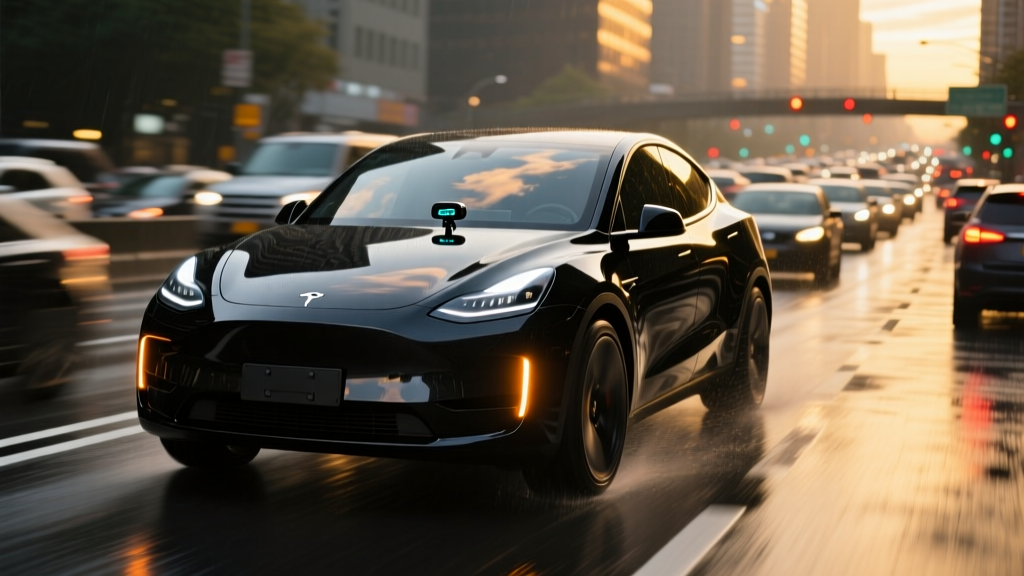
The key insight: no single sensor is sufficient. Camera-only systems (Tesla's approach) rely on neural networks to extract depth information from 2D images — powerful but inherently limited in edge cases where training data is sparse. Sensor-fusion systems (most other automakers) layer radar and/or lidar on top of cameras for redundancy, trading cost for robustness.
SAE Automation Level: What Your ADAS Can — and Cannot — Do
Every consumer ADAS system available for purchase in 2026 — including Tesla FSD (Supervised), GM Super Cruise, Ford BlueCruise, Mercedes DRIVE PILOT (in limited markets), Hyundai/Kia HDA2, and others — operates at SAE Level 2. This means the system can control steering, acceleration, and braking simultaneously, but the human driver must remain fully engaged, monitor the road at all times, and be prepared to take over instantly. You are legally and operationally the driver.
Only purpose-built robotaxi services like Waymo (Level 4) operate without a human driver, and those are not available for consumer purchase.
The SAE International defines six levels of driving automation (0–5). Understanding where your car falls is critical to using it safely:
| SAE Level | Name | Who's Driving? | Example |
|---|---|---|---|
| 0 | No Automation | Human | Basic cruise control |
| 1 | Driver Assistance | Human (one feature assists) | Adaptive cruise OR lane-keeping |
| 2 | Partial Automation | Human (system assists steering + speed) | Tesla Autopilot, Super Cruise, BlueCruise |
| 3 | Conditional Automation | System (in limited conditions, human on standby) | Mercedes DRIVE PILOT (approved in NV/CA, 40 mph limit) |
| 4 | High Automation | System (in defined areas, no human needed) | Waymo robotaxi |
| 5 | Full Automation | System (everywhere, all conditions) | Does not yet exist |
Sensor Stack Showdown: How Each Automaker Builds Its ADAS
Not all sensor stacks are created equal. Here's how the major EV manufacturers configure their hardware in 2026 model-year vehicles:
| Automaker / System | Cameras | Radar | Lidar | Ultrasonic | Approach |
|---|---|---|---|---|---|
| Tesla (Autopilot / FSD Supervised) | 8 surround cameras | None (removed 2022+) | None | None (removed 2022+) | Camera-only ("Tesla Vision") |
| GM (Super Cruise) | 8 cameras | 5 radar (long + short range) | 1 roof-mounted lidar (on select models) | 12 ultrasonic | Sensor fusion + HD map |
| Ford (BlueCruise) | 8 cameras | 1 forward + 4 corner radar | None | 12 ultrasonic | Sensor fusion (camera + radar) |
| Hyundai/Kia (HDA2) | 5 cameras | 5 radar (1 forward, 4 corner) | None (standard); lidar on Genesis GV60 with HDA2+ | 12 ultrasonic | Sensor fusion |
| Mercedes-Benz (DRIVE PILOT) | Multiple cameras | Multiple radar | 1 rear-window lidar | Ultrasonic + moisture sensors | Multi-redundant fusion (Level 3, limited) |
| Rivian (Driver+) | 11 cameras | 5 radar | 1 roof-mounted lidar | 12 ultrasonic | Sensor fusion + lidar |
| Volvo/Polestar (Pilot Assist) | 5 cameras | 5 radar | 1 roof-mounted lidar (EX90 standard) | 12 ultrasonic | Sensor fusion + lidar (Core Compute platform) |
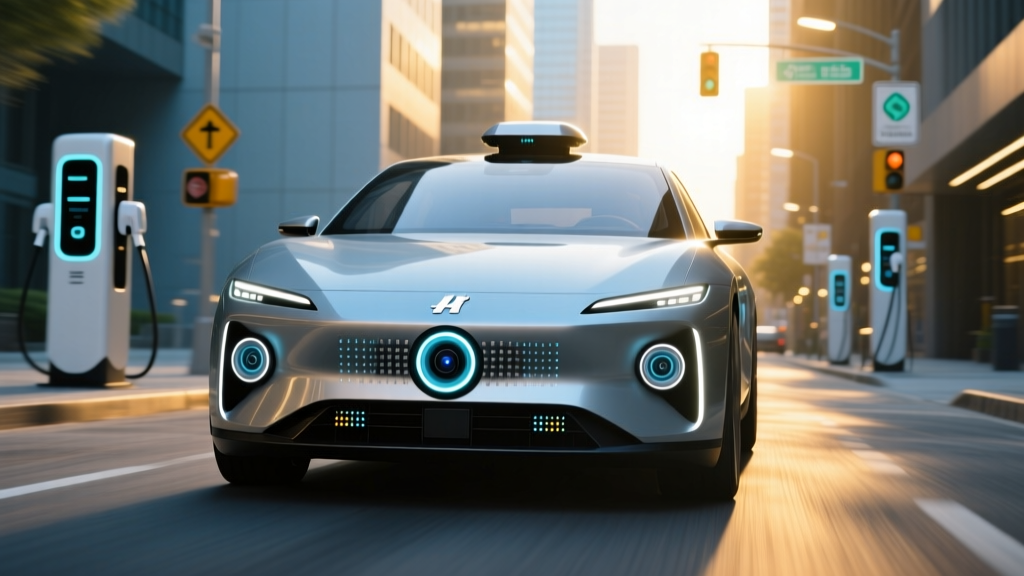
The trend in 2026 is clear: premium EV platforms are increasingly adding lidar as a standard or available sensor, while Tesla remains the notable outlier with its pure-vision approach. Volvo's EX90 made lidar standard across all trims — a first for a mass-market luxury EV — while Rivian includes it on the R1T and R1S as part of the Driver+ package.
Real-World Capabilities and Limitations by Sensor Type
Spec sheets tell only part of the story. Here's how these sensor configurations actually perform in the conditions EV owners encounter daily:
- Construction zones: Cones, temporary barriers, and shifted lanes confuse all systems. Camera-only systems are especially vulnerable when lane markings are painted over or absent.
- Heavy rain and snow: Camera lenses and lidar windows get obscured. Radar performs best in precipitation, but even radar-fusion systems will issue "sensor blocked" warnings and disengage in heavy accumulation.
- Direct sun glare: Cameras can be blinded by low-angle sun, particularly at dawn and dusk. Radar and lidar are unaffected.
- Stationary objects: Radar has difficulty distinguishing stationary vehicles from overhead bridges and signs. This is a known factor in several NHTSA-investigated incidents. Lidar and cameras handle stationary objects better.
- Faded or missing lane markings: Camera-dependent systems (all of them, to varying degrees) will struggle or disengage on poorly marked rural roads.
- Phantom braking: All systems can brake unexpectedly for shadows, roadside objects, or oncoming traffic on curves. Camera-only systems have drawn specific NHTSA scrutiny for this behavior.
Camera-Only Systems (Tesla Vision)
Tesla's decision to remove radar and ultrasonic sensors was controversial, and the real-world results are mixed. The system's neural-network approach excels in well-marked, well-lit highway environments and has improved substantially through over-the-air updates. However, independent testing by the IIHS and consumer reports have documented higher rates of phantom braking and reduced performance in low-visibility conditions compared to sensor-fusion competitors. Tesla's FSD (Supervised) subscription has also drawn NHTSA investigation into driver-monitoring adequacy.
Radar + Camera Fusion (Ford BlueCruise, Hyundai HDA2)
Adding radar provides a critical redundancy layer for speed and distance measurement that doesn't depend on visibility. Ford's BlueCruise 1.0 and Hyundai's HDA2 both deliver reliable hands-free driving on pre-mapped divided highways. The radar layer is particularly valuable in rain and fog, where camera-only systems degrade first. Limitation: without lidar, these systems still rely on cameras for fine-grained object classification at close range.
Lidar + Radar + Camera Fusion (GM Super Cruise, Volvo EX90, Rivian Driver+)
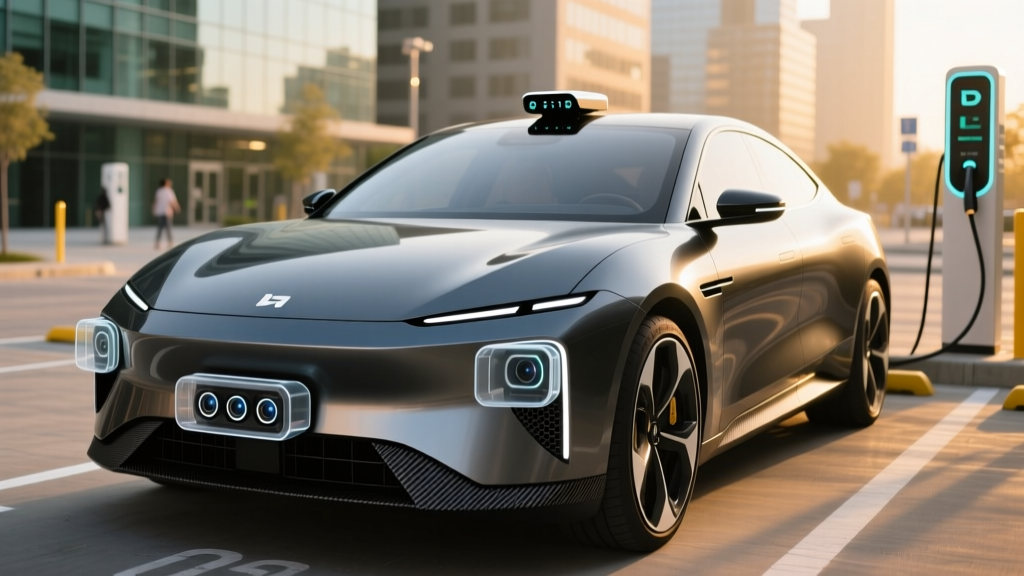
The most redundant consumer configuration. Lidar provides a high-resolution 3D point cloud that doesn't depend on ambient light and offers precise depth measurement independent of camera interpretation. GM's Super Cruise uses lidar in combination with HD map data to enable hands-free driving on over 750,000 miles of pre-mapped roads in North America. Volvo's EX90 uses its roof-mounted lidar to create a "safety cocoon" with claimed detection of a pedestrian at up to 250 meters in darkness — a scenario where cameras alone struggle significantly. The trade-off is cost: these systems add $1,500–$2,500+ to vehicle MSRP or are bundled into higher trims.
Cost Breakdown: What You'll Pay for ADAS Features
ADAS pricing varies from standard equipment to expensive subscriptions. Here's the current landscape for 2026 model-year EVs:
| System | Pricing Model | Cost | What's Included |
|---|---|---|---|
| Tesla Autopilot (Basic) | Standard | $0 (included) | Traffic-Aware Cruise Control, Autosteer (lane-centering) |
| Tesla FSD (Supervised) | One-time or subscription | $8,000 one-time or $99/month | Auto lane change, Navigate on Autopilot, Smart Summon, traffic light/stop sign control, city streets |
| GM Super Cruise | Subscription after trial | 3-year trial included; then ~$25/month or $250/year | Hands-free driving on 750,000+ mapped miles; requires Driver Attention camera |
| Ford BlueCruise | Subscription after trial | 90-day trial; then ~$75/year or $15/month (BlueCruise 1.0); hands-free on 130,000+ mapped miles | Hands-free highway driving, lane change assist |
| Hyundai/Kia HDA2 | Standard on SEL+ / GT trims | $0 (included in trim price) | Highway driving assist with lane-centering and curve speed reduction; hands-on required |
| Volvo EX90 Pilot Assist + Lidar | Standard on all trims | $0 (included) | Lidar-enabled ADAS with enhanced pedestrian/cyclist detection |
| Rivian Driver+ | Standard on Adventure, Ascend trims | $0 (included) | Highway assist with lidar, hands-on required; hands-free expected via future OTA |
| Mercedes DRIVE PILOT | Subscription (Level 3, limited) | ~$2,500/year (CA/NV only) | Conditional hands-off driving up to 40 mph in heavy traffic on approved highways |
The subscription trend is accelerating. Tesla's shift from an $8,000 one-time FSD purchase to a $99/month option lowered the barrier to entry but created a recurring cost that adds up to more than the purchase price after roughly 7 years. GM and Ford both bundle trial periods to hook owners into subscriptions. If you plan to keep your EV for 5+ years, calculate the total subscription cost versus a one-time purchase where available.
Which Models Include Lidar in 2026?
If lidar redundancy is a priority for your ADAS sensor stack, here are the 2026 consumer EVs that include it:
- Volvo EX90 — Lidar standard on all trims (base price ~$79,990). Roof-mounted unit from Luminar.
- Rivian R1T / R1S — Lidar standard on Adventure and Ascend trims (starting ~$74,800). Roof-mounted.
- GM Cadillac LYRIQ / Escalade IQ — Lidar included on models equipped with Super Cruise (available on Premium Luxury and above, ~$65,000+).
- Mercedes-Benz EQS / S-Class — Lidar included with DRIVE PILOT option (Level 3, limited to CA/NV).
- Lotus Eletre — 4x lidar units standard (base ~$85,000+). Most lidar-dense consumer vehicle available.
- Genesis GV60 (HDA2+) — Available lidar on top Prestige trim with advanced HDA.
Notably absent: Tesla (no lidar by design), Ford (no lidar on any current consumer model), and most Hyundai/Kia models (lidar limited to Genesis sub-brand).
Decision Framework: Which Sensor Stack Is Right for You?
Choose camera-only (Tesla) if: You prioritize frequent over-the-air feature updates, drive primarily in fair weather on well-marked roads, and are comfortable with an iterative, neural-network-driven approach where capability improves with software releases.
Choose camera + radar fusion (Ford BlueCruise, Hyundai HDA2) if: You want proven hands-free or hands-on highway driving with better rain/fog performance than camera-only, without paying a lidar premium. This is the best value-to-capability ratio for most buyers.
Choose lidar + radar + camera fusion (Volvo EX90, GM Super Cruise, Rivian) if: You want maximum sensor redundancy, drive frequently in low-light or variable conditions, and are willing to pay a higher upfront cost or subscribe for the most robust ADAS hardware available in a consumer vehicle.
Choose Level 3 (Mercedes DRIVE PILOT) if: You live in California or Nevada, commute in heavy traffic under 40 mph on approved highways, and want the only system where you are legally permitted to look away from the road (within strict conditions). Availability is extremely limited.
Frequently Asked Questions
Is a lidar radar detector the same as a police radar detector?
No. A "lidar radar detector" in the context of EVs refers to the sensor suite (lidar and radar units) that your car uses to perceive its surroundings for driver-assistance features. A police radar detector (like those sold by Escort or Valentine) is an aftermarket device that alerts you to police speed-measurement radar — an entirely different product category that is illegal in some jurisdictions (Virginia, Washington D.D., and on military bases).
Can I add lidar to my EV after purchase?
No. Lidar is integrated into the vehicle's sensor architecture, computing platform, and software stack at the factory. It cannot be retrofitted. If lidar redundancy matters to you, it must be a factor in your initial vehicle purchase decision.
Does lidar work in heavy rain or snow?
Lidar performance degrades in heavy precipitation because water droplets scatter the laser pulses. In moderate rain, modern units (like those from Luminar and Innoviz) maintain functional performance, but in heavy snow or downpours, the system will alert the driver and may disengage — just as camera-based systems do. Radar remains the most weather-resistant sensor in the stack.
Is Tesla's camera-only approach less safe than lidar-equipped systems?
The data is mixed and evolving. Tesla's camera-only system benefits from a massive real-world data fleet that continuously trains its neural networks. However, NHTSA has opened multiple investigations into Tesla Autopilot/FSD incidents, particularly involving stationary emergency vehicles and phantom braking. Independent testing by IIHS has shown that driver-monitoring systems in sensor-fusion vehicles (like GM Super Cruise's infrared attention camera) are more effective at ensuring driver engagement. There is no definitive public crash-rate comparison that isolates sensor type as the variable, but the engineering consensus outside Tesla favors sensor redundancy.
Will lidar become standard on all EVs?
The cost trajectory suggests wider adoption. Lidar units that cost $10,000+ in 2018 now cost automakers roughly $500–$1,000 per unit at scale. Volvo's decision to include lidar standard on the EX90 signals that premium EV makers see it as a safety differentiator. However, Tesla's continued refusal to adopt lidar and the improving performance of vision-only AI models mean the industry is not converging on a single approach. Expect lidar to become standard on most luxury EVs by 2028–2030, while remaining optional or absent on cost-sensitive models.
What happens when my ADAS sensors need repair?
Sensor replacement is expensive. A single lidar unit can cost $1,000–$3,000 to replace. Radar units run $300–$800 each. Camera modules are $200–$600. After any windshield replacement or front-end collision repair, sensor recalibration is required — typically $250–$500 at a dealership or certified shop. This is a real ownership cost that EV buyers should factor in, especially for vehicles with lidar. Comprehensive insurance coverage is strongly recommended.