Why Lidar Privacy Suddenly Matters for EV Owners
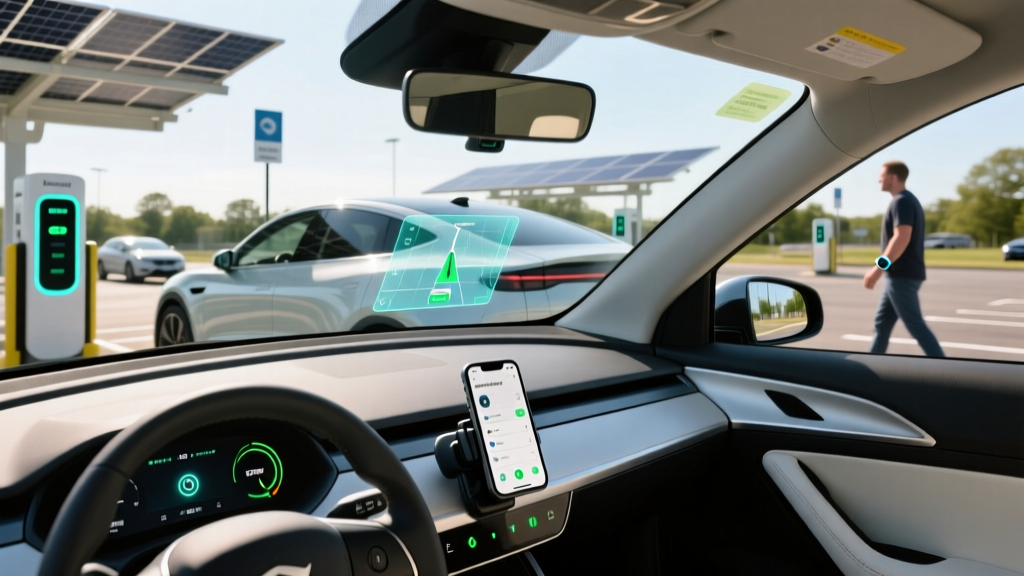
As advanced driver-assistance systems (ADAS) proliferate across the EV market, vehicles are generating terabytes of environmental data every hour they're driven. Lidar — light detection and ranging sensors that map surroundings using laser pulses — sits at the center of a growing privacy conversation. Unlike cameras that capture faces and license plates, lidar creates anonymized 3D point clouds of the physical world. But when combined with GPS, cameras, radar, and ultrasonic sensors in a modern EV's ADAS stack, the aggregate picture of where you drive, when, and what surrounds your vehicle raises legitimate questions about data ownership, retention, and third-party access.
This guide breaks down exactly what sensor data your EV collects, which brands use lidar versus camera-only approaches, how that data is handled, and what the real privacy implications are for owners in 2026.
How ADAS Sensors Work: Lidar, Cameras, Radar, and What They Capture
Modern EV driver-assistance systems fuse input from multiple sensor types to build a real-time model of the driving environment. Each sensor has different privacy implications based on the type and granularity of data it produces.
| Sensor Type | What It Detects | Privacy Risk Level | Typical Count per Vehicle |
|---|---|---|---|
| Lidar (Light Detection and Ranging) | 3D point clouds of objects, distances, shapes within ~200m range | Low — no color, faces, or text readable; anonymized geometry | 1–6 units |
| Cameras (visible spectrum) | High-resolution color imagery: lane markings, signs, pedestrians, faces, plates | High — captures identifiable visual information | 8–12 units |
| Radar (millimeter-wave) | Object distance, speed, and direction; works through rain/fog | Low — no visual detail, only position and velocity | 1–5 units |
| Ultrasonic Sensors | Near-range proximity (parking, low-speed obstacles) within ~5m | Very Low — minimal environmental detail | 12–16 units |
| GPS + IMU | Precise vehicle location, heading, acceleration | Medium — reveals travel patterns and routines | 1 unit |
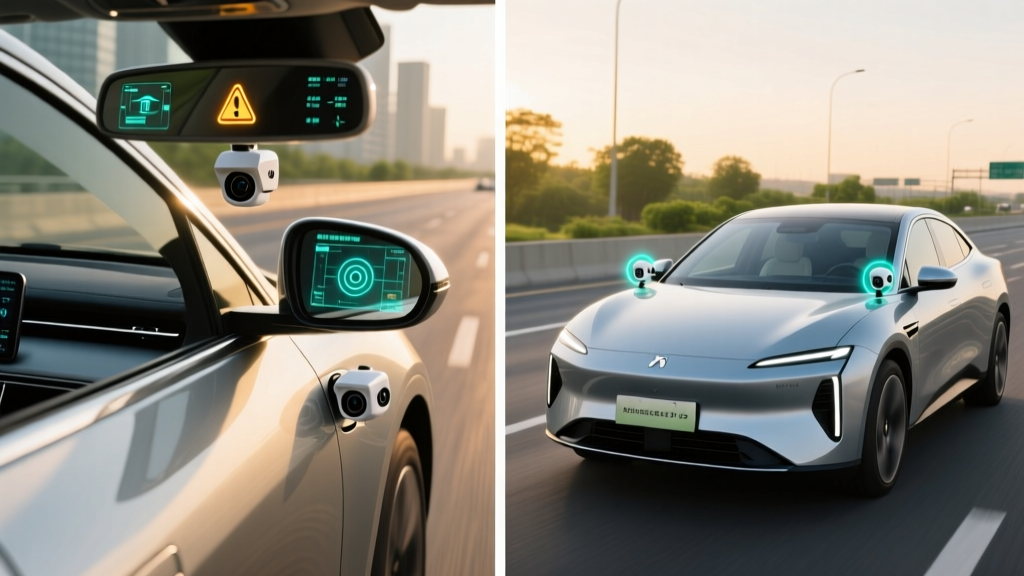
Lidar's privacy profile is inherently stronger than camera-based systems. A lidar point cloud shows that something is 1.7 meters tall and standing 15 meters away — but it cannot resolve facial features, clothing details, or text on signs. The raw data is geometric, not photographic. This is why manufacturers like Mercedes-Benz, Volvo/Polestar, and Lotus have invested in lidar for their higher-level ADAS systems: it provides excellent object detection without the surveillance-grade imagery that cameras produce.
However, lidar never operates in isolation. It's fused with camera data, GPS tracks, and telematics to create a comprehensive environmental model. The privacy question isn't just about lidar — it's about the combined sensor suite and what the manufacturer does with that aggregate data.
Which EV Brands Use Lidar — and What It Means for Your Data
The EV market has split into two distinct ADAS sensor philosophies, and the choice directly affects your data footprint.
| Brand / System | Lidar | Camera Count | Radar | ADAS Name | SAE Level |
|---|---|---|---|---|---|
| Mercedes-Benz (EQS, EQE) | 1 roof-mounted (Valeo) | 8+ | 5 | DRIVE PILOT | L3 (limited) / L2 |
| Volvo (EX90, EX30) | 1 roof-mounted (Luminar) | 8 | 5 | Pilot Assist / Core Computing | L2 |
| Polestar (Polestar 3) | 1 roof-mounted (Luminar) | 8 | 5 | Pilot Pack | L2 |
| Lotus (Eletre) | 4 (front + sides + rear) | 7 | 6 | Lotus Pilot | L2 |
| GM (Cadillac Lyriq, Escalade IQ) | 0 | 8+ | 5 | Super Cruise | L2 |
| Ford (Mach-E, F-150 Lightning) | 0 | 8 | 2 | BlueCruise | L2 |
| Tesla (Model 3/Y/S/X) | 0 | 8 (Tesla Vision) | 0 | Autopilot / FSD Supervised | L2 |
| BMW (i7, iX) | 0 (as of 2026) | 8+ | 5 | Driving Assistant Pro | L2 |
| Hyundai/Kia (Ioniq 5, EV9) | 0 | 5–8 | 3 | Highway Driving Assist 2 | L2 |
Camera-only systems (Tesla, Ford, GM) rely on neural networks processing visual data. This means the vehicle is constantly capturing high-resolution imagery of its surroundings — including pedestrians, neighboring vehicles, and private property. Tesla's FSD Supervised system processes this imagery on-device via its HW4 computer, and Tesla states that video clips are only transmitted to the company when the driver flags an event or when specific triggers occur (disengagements, collisions, or Autopilot anomalies). However, the capability to capture identifiable imagery exists at all times.
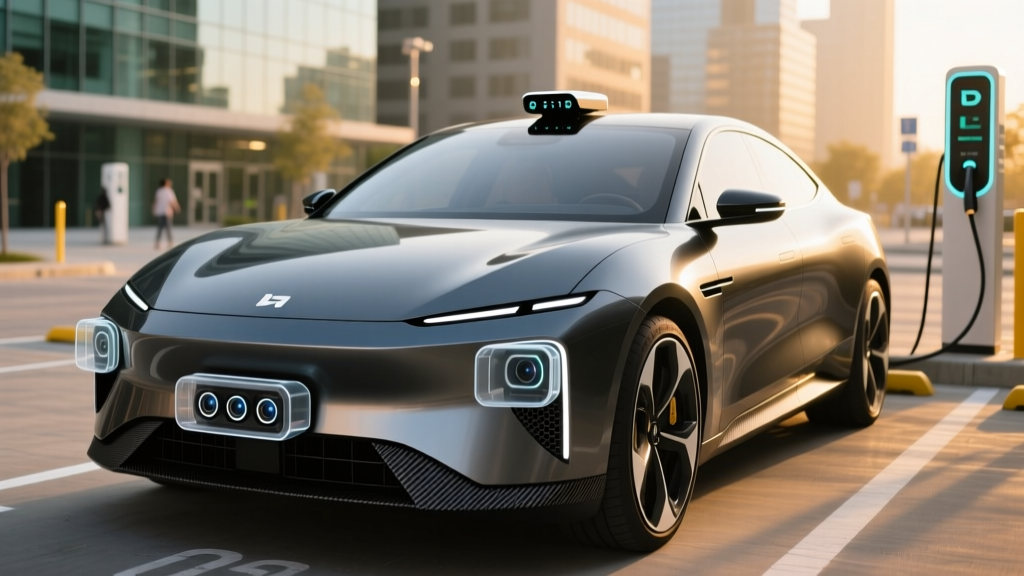
Lidar-equipped systems (Mercedes, Volvo/Polestar, Lotus) supplement cameras with laser-based 3D mapping. The lidar sensor itself doesn't capture personally identifiable information — a point cloud cannot resolve a face or read a license plate. But these vehicles still carry cameras for sign recognition, lane detection, and driver monitoring, so the privacy advantage is relative, not absolute.
Data Collection, Transmission, and Retention: What Actually Leaves Your Car
The distinction between data processed on-device and data transmitted to the cloud is where lidar privacy gets practical. Here's how major manufacturers handle sensor data as of 2026:
On-Device Processing (Edge Computing)
Most real-time ADAS decisions — braking, steering corrections, object avoidance — happen on the vehicle's local compute hardware. Tesla's HW4, Mobileye EyeQ6 (used by VW Group and others), NVIDIA DRIVE Orin (Mercedes, Volvo, Lotus), and Qualcomm Snapdragon Ride platforms all process sensor fusion locally. The raw lidar point cloud and camera feeds are analyzed in milliseconds and discarded from active memory. They are not continuously streamed to manufacturer servers.
Cloud-Transmitted Data
What does leave the vehicle typically falls into these categories:
- Telematics: Vehicle speed, location (GPS), battery state of charge, diagnostic codes — transmitted for connected services, navigation, and over-the-air updates.
- Event-triggered clips: Short video or sensor snapshots captured during collisions, near-misses, or driver-flagged incidents. Tesla calls these "shadow mode" disengagement clips; Mercedes captures DRIVE PILOT session logs.
- Map and road-condition data: Some systems (GM Super Cruise, Tesla FSD) contribute anonymized road-surface and lane-marking data to shared mapping services.
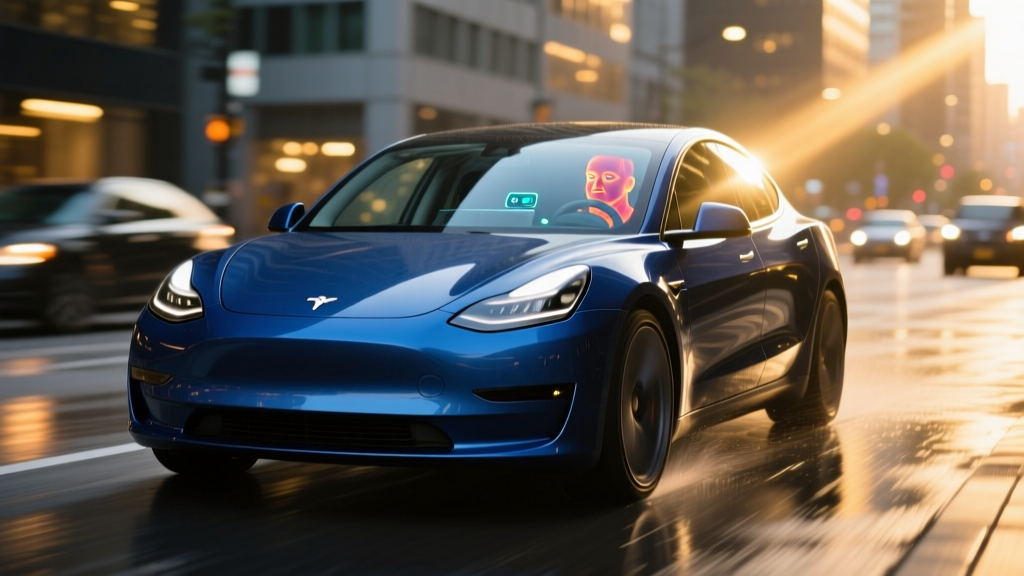
- Driver monitoring camera: Interior-facing cameras (standard on GM Super Cruise, Ford BlueCruise, Tesla FSD) track eye gaze and head position. This data is processed on-device and, per manufacturer policies, not transmitted as video — only binary "attentive/not attentive" states.
- Manufacturer privacy policies can change with a software update and revised terms of service — you may not be explicitly notified of data-handling changes.
- Third-party data brokers can obtain anonymized location and driving-pattern data from connected-car services, as NHTSA has noted in ongoing rulemaking discussions.
- Insurance companies increasingly offer usage-based programs (telematics) that collect driving data — this is opt-in but can affect premiums.
- Law enforcement can subpoena stored sensor data (event clips, GPS logs) with a warrant, just as they can with phone records.
- Aftermarket OBD-II dongles and third-party apps connected to your vehicle's CAN bus may access and transmit data outside manufacturer controls.
Lidar Privacy vs. Camera Privacy: The Core Trade-Off
For privacy-conscious EV buyers, the sensor architecture choice matters. Here's a direct comparison of what each approach means for your data exposure:
| Factor | Lidar-Equipped (Mercedes, Volvo, Polestar) | Camera-Only (Tesla, Ford, GM) |
|---|---|---|
| Exterior identifiable data captured | Cameras still present; lidar adds non-identifiable geometry | All environmental perception relies on high-res cameras |
| Face / license plate resolution | Cameras can resolve these; lidar cannot | Cameras can resolve these; core to the system |
| Data transmitted to cloud | Event-triggered clips + telematics | Event-triggered clips + telematics; Tesla "shadow mode" data |
| On-device processing | NVIDIA Orin — local fusion | Tesla HW4 / GM Super Cruise module — local fusion |
| Driver monitoring camera | Yes (interior) — processed locally | Yes (interior) — processed locally |
| Privacy policy transparency | Mercedes/Volvo publish detailed data-handling docs | Tesla publishes privacy policy; less granular on FSD data |
| Opt-out options | Can disable connected services; ADAS still functions | Can disable data sharing in settings; ADAS still functions |
The practical takeaway: lidar doesn't eliminate privacy concerns — cameras are still present on every lidar-equipped vehicle. But lidar's inherent inability to capture identifiable visual information means that the primary sensor for obstacle detection and distance measurement produces privacy-neutral data. In a camera-only system, the primary perception sensor is inherently surveillance-capable, even if the manufacturer's policies restrict how that data is used.
Cost of Lidar-Equipped ADAS Systems (2026 Pricing)
Lidar hardware adds cost, and that expense shows up in vehicle pricing and ADAS package structures:
| Brand / System | Lidar Hardware Cost | ADAS Package Price | Subscription Option | Included on Which Trims |
|---|---|---|---|---|
| Mercedes DRIVE PILOT | Included in vehicle | $2,500 (Pinnacle Trim package) | None — one-time purchase | EQS 580, EQS AMG (Pinnacle trim) |
| Volvo EX90 Pilot Assist | Included in vehicle | Standard on Ultra trim ($67,990+) | None | All EX90 Ultra trims |
| Polestar 3 Pilot Pack | Included | $3,200 (Plus Pack w/ Pilot) | None — one-time | Optional on Long Range Dual Motor |
| Lotus Eletre Lotus Pilot | Included | Standard on all Eletre trims | None | All trims ($107,400+) |
| Tesla FSD Supervised | N/A (no lidar) | $8,000 one-time | $99/month | Available on all trims (camera-only) |
| GM Super Cruise | N/A (no lidar) | $2,200–$2,500 depending on model | $25/month after 3-year trial | Premium/Luxury trims |
| Ford BlueCruise | N/A (no lidar) | $2,100 one-time (3 years included) | $75/year or $10/month renewal | Available on Premium trims |
Lidar-equipped vehicles tend to cluster in the premium and luxury segments, where the sensor cost is absorbed into higher MSRPs. The Volvo EX90 is the most accessible lidar-equipped EV in 2026, starting around $67,990 with lidar standard on Ultra trims. For comparison, Tesla's camera-only FSD Supervised costs $8,000 upfront or $99/month — a significant software premium on a vehicle that starts at roughly $38,990 for the Model 3.
Real-World ADAS Limitations: What Sensors Can't See
Privacy considerations exist alongside performance limitations. Both lidar and camera systems have documented edge cases that require driver vigilance:
Lidar Limitations
- Heavy precipitation: Dense rain, snow, or fog scatter laser pulses, reducing effective range from ~200m to under 50m. The system will alert the driver and may disengage automated steering.
- Reflective surfaces: Highly reflective objects (chrome bumpers, wet road signs at certain angles) can create phantom returns or reduce detection accuracy.
- Sensor contamination: Mud, ice, or road salt on the lidar dome degrades performance. Most systems detect this and alert the driver to clean the sensor.
- Resolution at distance: While lidar excels at detecting objects, classifying small objects (debris, animals) at 150m+ still relies on camera fusion.
Camera-Only Limitations
- Low light and glare: Direct sun at certain angles, unlit nighttime roads, and transition zones (tunnel exits) can temporarily blind cameras.
- Weather degradation: Rain on the camera lens, fog, and snow accumulation reduce image clarity more severely than they affect lidar or radar.
- Faded lane markings: Camera-dependent lane-centering systems struggle with worn or absent lane lines — a common issue on rural roads.
- Adversarial conditions: Construction zones with temporary markings, unusual vehicle shapes, and unexpected road configurations remain challenging for neural-network-based perception.
According to IIHS testing, vehicles with sensor-fusion approaches (combining lidar or radar with cameras) show more consistent performance in adverse weather than camera-only systems, though both require the driver to take over in edge cases. The driver is always the final safety system.
Regulatory Landscape: Vehicle Data Privacy in 2026
As of 2026, the United States has no comprehensive federal vehicle-data privacy law equivalent to the EU's GDPR. However, several frameworks apply:
- California Privacy Rights Act (CPRA): California residents can request deletion of personal data collected by connected vehicles, including GPS logs and driver-monitoring data. Manufacturers must comply within 45 days.
- NHTSA data-sharing guidelines: The National Highway Traffic Safety Administration has issued voluntary guidance on vehicle data transparency, but compliance is not mandatory.
- Manufacturer self-regulation: The Alliance for Automotive Innovation published privacy principles in 2014 (updated 2022) committing members to transparency, choice, and data minimization. Signatories include GM, Ford, BMW, Mercedes, Toyota, and others — but these are non-binding commitments.
- Insurance implications: Usage-based insurance programs (Progressive Snapshot, GM OnStar Smart Driver, Tesla Insurance) collect driving data that can affect premiums. Participation is opt-in but increasingly incentivized with discounts.
For lidar-specific data, the regulatory picture is simpler: because lidar point clouds don't contain personally identifiable visual information, they fall outside most privacy frameworks' definition of "personal data." The GPS tracks and camera clips associated with ADAS sessions, however, do qualify as personal data under state laws like CPRA.
Practical Steps EV Owners Can Take to Protect Sensor Data Privacy
If lidar privacy and broader ADAS data collection concern you, here are actionable steps within your control:
- Review your vehicle's privacy settings. Every major EV brand offers a privacy or data-sharing menu in the infotainment system. You can typically disable telemetry sharing, location history, and event-clip uploads without affecting core ADAS functionality.
- Disable connected services you don't use. Features like remote start via app, location sharing with contacts, and driving-score gamification all transmit data. If you don't need them, turn them off.
- Opt out of insurance telematics programs unless the discount meaningfully outweighs the data exposure. These programs collect granular speed, braking, and location data.
- Remove aftermarket OBD-II devices from your vehicle's diagnostic port unless you trust the manufacturer's data practices. Fleet trackers and third-party dongles can bypass manufacturer privacy controls.
- Submit data-deletion requests if you're in California or a state with similar privacy laws. Contact the manufacturer's privacy office (listed in the owner's manual or website) to request deletion of stored driving data.
- Keep sensor surfaces clean. This is a safety step, not a privacy step — but a contaminated lidar dome or camera lens will cause ADAS disengagements that generate event-triggered data uploads.
Frequently Asked Questions About Lidar Privacy
Does lidar on my car record my neighbors or people walking by?
No. Lidar produces 3D point clouds — geometric representations of shapes and distances — not images. A lidar sensor cannot resolve a face, read a license plate, or capture any identifiable visual detail. However, the cameras on the same vehicle can capture this information, which is why manufacturer data-retention policies matter more than the lidar sensor itself.
Can law enforcement access my car's ADAS sensor data?
Yes, with a valid warrant or subpoena. Event-triggered clips (collision recordings, disengagement snapshots), GPS logs, and telematics data are stored either on the vehicle's local storage or on manufacturer servers. Law enforcement has successfully subpoenaed Tesla, GM, and other manufacturers' vehicle data in criminal investigations. This is functionally identical to subpoenaing phone records or security camera footage.
Is Tesla's camera-only approach worse for privacy than lidar-equipped cars?
From a pure data-capture perspective, camera-only systems generate more potentially identifiable imagery than lidar-based systems. However, Tesla states that FSD Supervised processes all imagery on-device and only transmits short clips when specific triggers occur. The privacy risk depends more on the manufacturer's data-retention and sharing policies than on the sensor type alone. Tesla's policy is less granular than Mercedes' or Volvo's published data-handling documentation.
Does turning off data sharing affect my ADAS features?
Generally, no. Core ADAS functions — adaptive cruise control, lane centering, automatic emergency braking, blind-spot monitoring — operate entirely on local compute hardware and do not require a cloud connection. Disabling data sharing may affect connected features like real-time traffic navigation, remote app access, or over-the-air update delivery, but your driver-assist system will continue to function normally.
Will solid-state lidar make privacy concerns worse or better?
Better, in principle. Next-generation solid-state lidar (expected broadly in 2027–2028 model-year vehicles) offers higher resolution for object classification but still produces geometric point clouds, not images. The privacy advantage of lidar over cameras will persist as the technology evolves. The greater privacy variable remains the camera systems that accompany lidar in every production vehicle.
Which EV has the most privacy-friendly ADAS in 2026?
Among mainstream EVs, the Volvo EX90 and Polestar 3 offer the strongest combination of lidar-based perception (privacy-neutral primary sensor) and transparent data-handling policies. Volvo publishes detailed data-processing documentation and operates under EU GDPR standards globally, which provides stronger baseline protections than US-only policies. Mercedes-Benz DRIVE PILOT similarly benefits from GDPR-aligned data practices. For buyers prioritizing privacy alongside ADAS capability, these European-manufactured options currently lead the field.