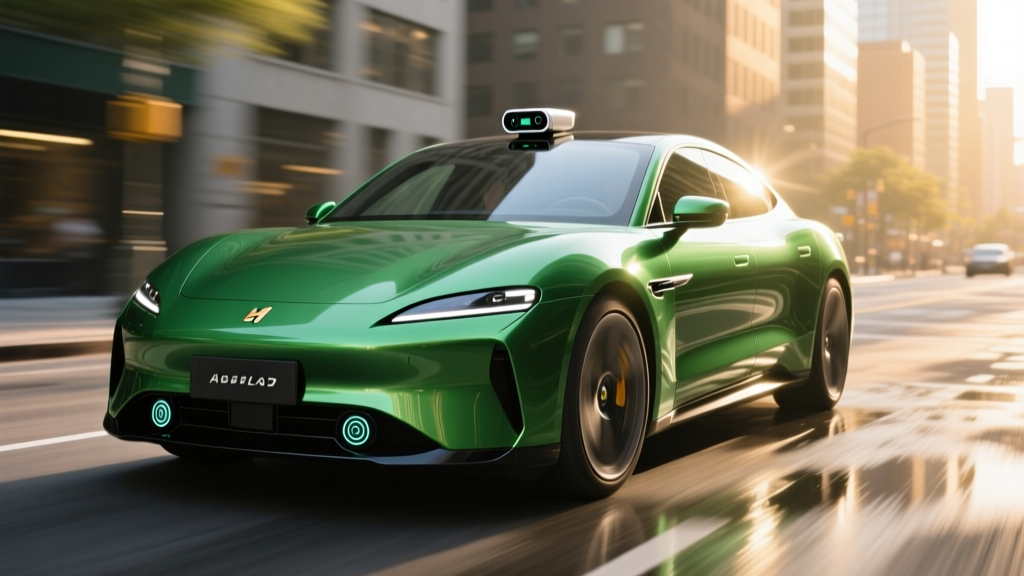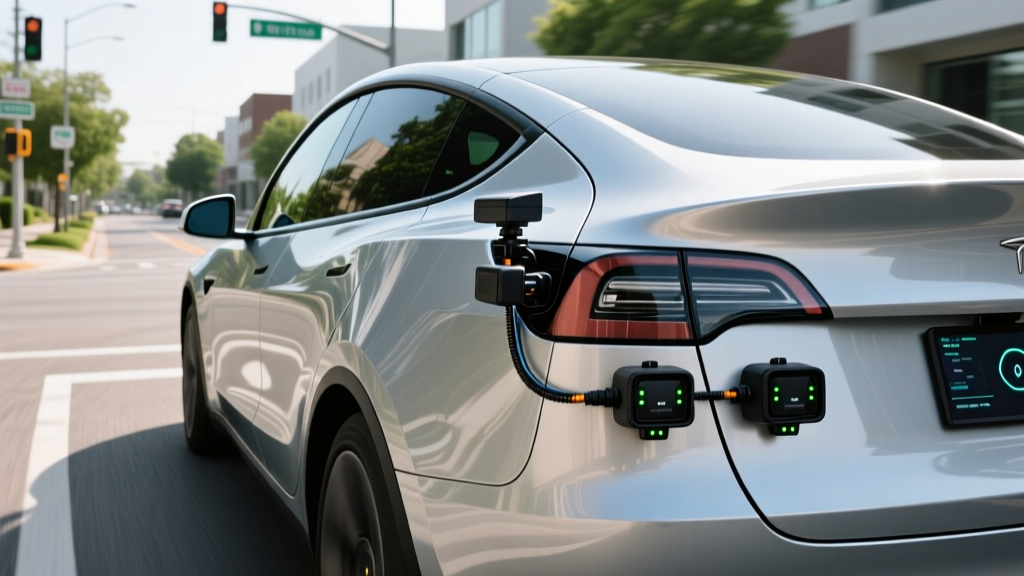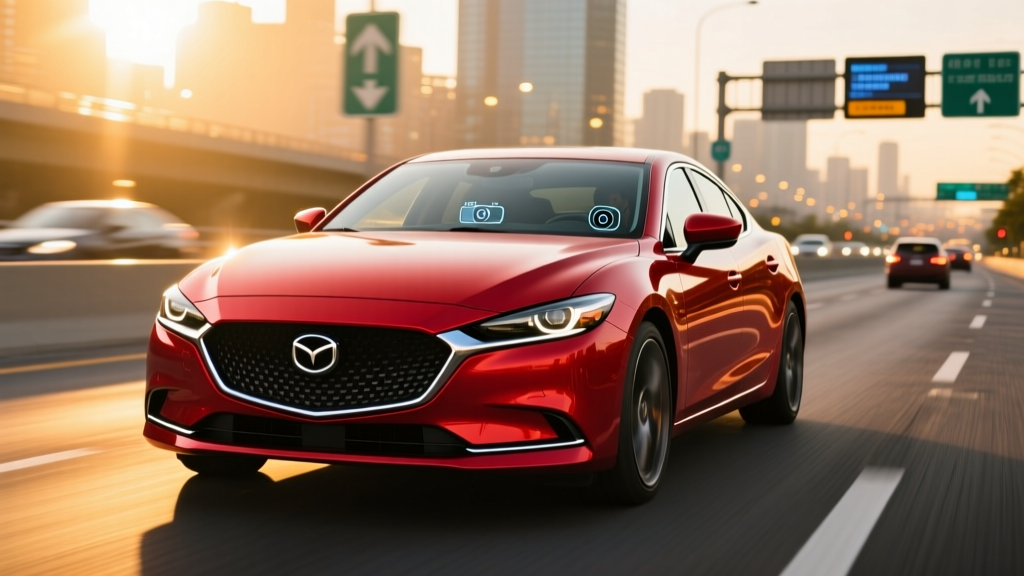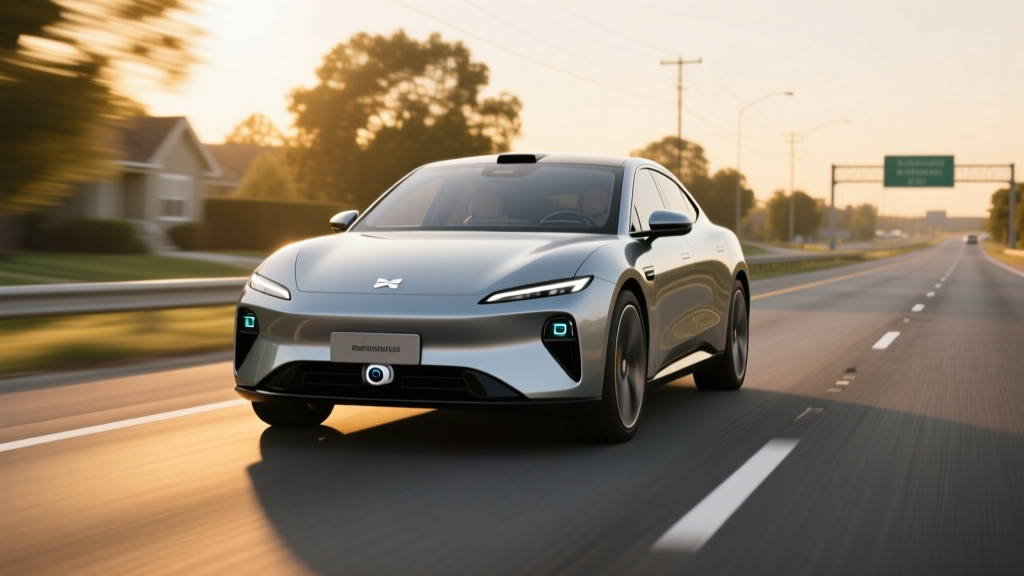
You're cruising at 70 mph on the interstate when your EV drifts slightly toward the shoulder. Before you react, you feel a subtle tug on the steering wheel and the car recenters itself in the lane. That's Lane Keep Assist (LKA) — one of the most widely deployed driver-assistance features on modern electric vehicles. But what's actually happening behind the scenes, and how reliable is it when conditions aren't perfect?
This guide explains the hardware, software, and real-world behavior of lane keep assist systems across major EV brands, from Tesla's Autopilot to Ford's BlueCruise to Hyundai's Highway Driving Assist. We'll cover exactly what these systems can do, where they fall short, and what you'll pay for them.
What Lane Keep Assist Actually Does
Lane Keep Assist is a SAE Level 2 driver-assistance feature that uses a forward-facing camera (and sometimes radar fusion) to detect lane markings on the road. When the system detects that your vehicle is drifting out of its lane without a turn signal activated, it applies small corrective steering inputs to guide the car back toward the lane center.
There are two distinct modes most systems toggle between:
- Lane Departure Warning (LDW): Alerts you with a visual, audible, or haptic cue (steering wheel vibration) but does not steer.
- Lane Keeping Assist / Lane Centering: Actively applies steering torque to keep the vehicle centered in the lane. More advanced versions maintain centering continuously rather than only intervening at lane edges.
The distinction matters. Basic LKA only reacts when you're about to cross a line. True lane centering — the kind bundled with adaptive cruise control in systems like Tesla Autopilot, Ford BlueCruise, and GM Super Cruise — continuously makes micro-adjustments to hold the vehicle in the middle of the lane, reducing driver fatigue on long highway stretches.
All consumer lane keep assist and lane centering systems are classified as SAE Level 2 partial automation. This means the system can control steering and acceleration simultaneously, but the driver must remain fully engaged — eyes on the road, hands on or near the wheel, and ready to take over instantly. Only robotaxi services like Waymo operate at Level 4 (true driverless in geofenced areas). No production EV sold today is self-driving. (Source: SAE International J3016)
The Hardware: Cameras, Radar, and How They See the Road
Lane keep assist relies primarily on a forward-facing monocular or stereo camera mounted behind the windshield, typically near the rearview mirror. This camera captures real-time video of the road ahead at 30–60 frames per second and feeds that data to an onboard image-processing computer.
Here's the technical pipeline:
- Lane detection: Computer vision algorithms (increasingly neural-network-based) identify painted lane markings — solid lines, dashed lines, Botts' dots, and sometimes road edges or curbs.
- Path prediction: The system calculates your vehicle's position relative to the detected lane boundaries and predicts your trajectory over the next 1–3 seconds.
- Intervention logic: If the predicted path crosses a lane boundary without a turn signal, the system calculates the corrective steering torque needed.
- Actuation: The electric power steering (EPS) motor receives a torque command and applies a small rotational force to the steering column — typically 1–3 Nm of torque, enough to nudge but not wrestle the wheel from your hands.
Some advanced systems fuse camera data with radar (for detecting vehicles in adjacent lanes) and HD mapping (for knowing lane geometry even when markings are faded). GM's Super Cruise and Ford's BlueCruise both use LiDAR-mapped HD road data for their hands-free highway modes, which significantly improves lane centering accuracy on mapped roads.
Tesla takes a different approach with its Tesla Vision system (post-2022), which relies exclusively on cameras — no radar or LiDAR — processed through its custom FSD computer. This camera-only approach works well in clear conditions but has drawn scrutiny for performance in heavy rain, fog, and direct sun glare.
Brand-by-Brand: Naming, Trims, and What You Get
Every major EV manufacturer has its own branding for lane keep assist and its bundled highway driving features. The naming is confusing, and the capability varies significantly between basic LKA and full lane centering with adaptive cruise. Here's how the major systems compare as of the 2025–2026 model year:
| Brand | System Name | Lane Centering? | Hands-Free Mode? | Availability |
|---|---|---|---|---|
| Tesla | Autopilot (Basic) | Yes — Autosteer | No (torque sensing) | Standard on all models |
| Tesla | FSD (Supervised) | Yes — enhanced | No (camera monitoring) | $8,000 one-time or $99/mo |
| Ford | BlueCruise | Yes | Yes (130k+ mi mapped) | $2,100/2 yr or $75/mo (Mustang Mach-E, F-150 Lightning) |
| GM (Chevy/Cadillac) | Super Cruise | Yes | Yes (400k+ mi mapped) | Included on select trims; $25/mo after trial |
| Hyundai/Kia/Genesis | Highway Driving Assist (HDA/HDA2) | Yes (HDA2) | No | Standard on SEL+ trims (Ioniq 5, EV6, GV60) |
| Rivian | Driver+ (Highway Assist) | Yes | No | Standard with Adventure package |
| BMW | Driving Assistant Professional | Yes | Yes (highway, eyes-off to 40 mph) | $1,700 option (i4, i5, i7, iX) |
| Mercedes-Benz | Drive Pilot (Level 3, limited) | Yes | Yes (under 40 mph, specific highways in NV/CA) | $2,500/yr subscription (EQS sedan) |
A few important notes: Tesla's basic Autopilot (Autosteer + Traffic-Aware Cruise Control) comes standard on every new Tesla. FSD (Supervised) is an upsell that adds automatic lane changes, traffic light/stop sign recognition, and city street navigation — but it remains a Level 2 system requiring constant supervision. Ford's BlueCruise and GM's Super Cruise are the only widely available systems that permit true hands-off driving on pre-mapped divided highways, though both require your eyes to remain on the road via infrared driver-monitoring cameras.
Mercedes-Benz's Drive Pilot is a notable exception — it is certified as SAE Level 3 in specific conditions (congested highways under 40 mph in Nevada and California), meaning the driver can legally look away from the road. However, it's extremely limited in scope and currently only available on the EQS sedan.
Real-World Limitations: Where Lane Keep Assist Struggles
Lane keep assist is a convenience feature, not a safety net. It will fail or degrade under these common conditions:
- Faded or missing lane markings: Construction zones, rural roads, and recently repaved roads without fresh striping will cause the system to disengage or wander.
- Weather interference: Heavy rain, snow accumulation, fog, and direct low-angle sunlight can blind the camera. Tesla Vision systems are particularly susceptible to camera obstruction from road grime.
- Lane merges and splits: When a lane ends or a new lane appears, the system may follow the wrong line or become confused about which lane you intend to occupy.
- Sharp curves: Most LKA systems are designed for highway-radius curves (≥500m). Tight on-ramps and mountain roads can exceed the system's steering torque limits.
- Phantom lane markings: Tar seams, shadow lines, old striping remnants, and road edge markings can fool the camera into following a non-existent lane.
- Sudden obstacles: LKA does not steer around debris, stopped vehicles, or pedestrians. That's the job of Automatic Emergency Steering (AES), a separate and less common feature.
In real-world testing across a variety of EVs, lane centering performance varies dramatically. GM's Super Cruise, with its HD map data and LiDAR-validated road geometry, consistently delivers the smoothest centering on compatible highways — the car tracks the lane center with minimal hunting. Ford's BlueCruise 1.3 and 1.4 versions have improved significantly, with natural-feeling steering inputs on mapped routes.
Tesla's Autosteer performs well on clearly marked freeways but exhibits more "ping-ponging" (oscillating between lane edges) on two-lane roads with faded markings. Hyundai's HDA2 on the Ioniq 5 and Ioniq 6 offers competent centering on highways but disengages more readily in construction zones than competitors.
One underappreciated limitation: lane keep assist does not know about adjacent traffic when making corrections. If you drift toward a lane occupied by a semi-truck, basic LKA systems will still steer you toward that lane boundary. More advanced systems like Tesla's Autosteer and BMW's Driving Assistant Pro factor in adjacent vehicles and will resist centering you next to a close obstacle, but this behavior is not universal.
What Lane Keep Assist Costs: Purchase vs. Subscription
The cost of lane keep assist varies from "included on every trim" to "$2,500/year subscription," depending on the brand and capability tier:
| System | Cost Structure | Price | Notes |
|---|---|---|---|
| Tesla Autopilot (Autosteer) | Included | $0 | Standard on all new Teslas |
| Tesla FSD (Supervised) | One-time or subscription | $8,000 or $99/mo | Adds city streets, auto lane change |
| Ford BlueCruise | Subscription after trial | $2,100/2yr or $75/mo | Free trial typically 90 days |
| GM Super Cruise | Included + subscription | $25/mo after 3-yr trial | Hardware included on select trims |
| Hyundai HDA2 | Included | $0 | Standard on SEL and above |
| BMW Driving Assistant Pro | One-time option | $1,700 | i4, i5, i7, iX |
| Mercedes Drive Pilot (Level 3) | Annual subscription | $2,500/yr | EQS only, NV/CA highways only |
The trend is clear: basic lane keep assist (departure warning + minor steering corrections) is becoming standard equipment across most EV brands, bundled into the vehicle's base price. However, the more capable systems — true lane centering with adaptive cruise, hands-free highway modes, and automatic lane changes — increasingly require either a premium trim, a one-time package purchase, or an ongoing subscription.
If you're buying an EV specifically for highway driver assist, factor in the subscription cost over your ownership period. BlueCruise at $75/month adds $4,500 over five years. Tesla's FSD at $99/month totals $5,940 over the same period — though the one-time $8,000 purchase may retain some resale value if you sell the car privately.
Lane Keep Assist vs. Full Highway Driving Systems
It's useful to think of driver-assist lane features on a spectrum:
| Feature Tier | Steering | Speed Control | Lane Changes | Hands-Free? |
|---|---|---|---|---|
| Basic LKA (departure warning) | Nudge at lane edge only | No | No | No |
| Lane Centering + ACC | Continuous centering | Yes (adaptive) | No (driver initiates) | No |
| Highway Assist (Autopilot, HDA2) | Continuous centering | Yes (adaptive) | Auto (with confirmation) | No |
| Hands-Free Highway (BlueCruise, Super Cruise) | Continuous centering | Yes (adaptive) | Auto (Super Cruise) | Yes (mapped roads) |
| Level 3 Conditional (Drive Pilot) | Full control | Full control | System-managed | Yes (eyes-off, <40 mph) |
Most EV buyers will find that the middle tiers — lane centering combined with adaptive cruise control — offer the best balance of capability and cost. You get meaningful fatigue reduction on highway commutes without paying subscription fees, and you maintain full situational awareness as the responsible driver.
Safety Data and Driver Monitoring
The safety case for lane keep assist is supported by insurance and crash data. The Insurance Institute for Highway Safety (IIHS) has found that vehicles equipped with lane departure warning systems show a reduction in single-vehicle, sideswipe, and head-on crashes. However, the data on active lane centering (as opposed to departure warning alone) is still accumulating.
A critical component of modern LKA systems is driver monitoring. Since these are Level 2 systems, manufacturers must ensure the driver stays engaged. Methods vary:
- Torque sensing (Tesla, Hyundai): The system detects resistance on the steering wheel. You must apply periodic light pressure. This can be gamed by hanging a weight on the wheel — which is dangerous and explicitly warned against by manufacturers.
- Camera-based eye tracking (Ford BlueCruise, GM Super Cruise, BMW): An infrared camera on the steering column or instrument cluster monitors your eye gaze direction. If your eyes leave the road for more than a few seconds, escalating warnings lead to system disengagement and, ultimately, the vehicle slowing to a stop with hazard lights activated.
Camera-based monitoring is generally considered superior because it directly measures attention rather than inferring it from hand position. The National Highway Traffic Safety Administration (NHTSA) has been increasingly focused on ADAS misuse and has issued standing general orders requiring manufacturers to report crashes involving Level 2 and higher systems.
Frequently Asked Questions
Is lane keep assist the same as self-driving?
No. Lane keep assist is a Level 2 driver-assistance feature. It helps with steering corrections but requires the driver to remain fully attentive and in control at all times. No production vehicle sold in the U.S. is self-driving. Even Mercedes' Level 3 Drive Pilot only operates under very specific conditions (below 40 mph, on mapped highways, in clear weather) and is limited to Nevada and California.
Does lane keep assist work in the rain?
It depends on severity. Light rain typically doesn't affect camera-based systems. Heavy rain, however, can obscure lane markings and degrade camera visibility, causing the system to disengage. Snow-covered roads almost always defeat LKA. If your windshield camera area is dirty or covered in road salt residue, clean it — a blocked camera is one of the most common reasons LKA stops working.
Can I turn off lane keep assist?
Yes, every system allows you to disable LKA, typically through a button on the steering wheel or turn signal stalk, or via the infotainment settings. Some drivers prefer to turn it off on winding rural roads or in construction zones where lane markings are confusing. Note that in some regions, lane departure warning must remain enabled by default due to safety regulations (Euro NCAP and NHTSA requirements).
Why does my lane keep assist fight me when I'm changing lanes?
LKA systems interpret an un-signaled lane departure as unintentional drift. If you change lanes without using your turn signal, the system will apply corrective steering to keep you in your original lane. Always use your turn signal — this tells the system the lane change is intentional and suppresses the intervention.
Which EV has the best lane keep assist in 2026?
For hands-free highway driving on mapped roads, GM's Super Cruise (400,000+ miles of compatible highways) remains the benchmark for smoothness and reliability. Ford's BlueCruise has closed the gap with its 1.4 release. For the broadest coverage without map dependency, Tesla's Autosteer works on virtually any marked road, though it requires hands-on-wheel engagement and exhibits more lane-centering variability. For the best value (standard, no subscription), Hyundai/Kia's HDA2 on the Ioniq 5, EV6, and EV9 offers solid centering performance bundled into the vehicle price.
Does lane keep assist affect my EV's range or efficiency?
Minimally. The electric power steering motor draws a small amount of current when making corrections, but the energy impact is negligible — typically well under 1% of total consumption. Smooth lane centering can actually improve efficiency slightly by reducing unnecessary steering oscillation and maintaining a more consistent path, which reduces rolling resistance from tire scrub.
The Bottom Line for EV Buyers
Lane keep assist has matured from a novelty into a genuinely useful highway companion, but it remains a tool — not a replacement for an attentive driver. When shopping for your next EV, look beyond the marketing names and ask specifically: Does this trim include lane centering (not just departure warning)? Is adaptive cruise bundled in? Is there a subscription required, and what happens if I don't renew?
The best approach is to test the system during your pre-purchase drive on a stretch of highway that represents your typical commute. Pay attention to how aggressively it centers, how it handles curves, and how the driver monitoring behaves. The right system, used within its design limits, can meaningfully reduce fatigue on long drives — and that's exactly what this technology is built to do.