The automotive industry is undergoing a monumental shift as vehicles transition from passive machines to intelligent, semi-autonomous platforms. At the heart of this revolution are Advanced Driver Assistance Systems (ADAS), which rely on a complex network of sensors to perceive the environment, make split-second decisions, and intervene when necessary. According to the National Highway Traffic Safety Administration (NHTSA), ADAS technologies are critical to reducing human error, which remains a leading cause of traffic fatalities. However, the sensors powering these systems are not static; they are evolving rapidly. Understanding the current landscape of ADAS sensor types—including radar, lidar, cameras, and ultrasonic sensors—and the future trends shaping them is essential for automotive enthusiasts, EV buyers, and industry watchers alike.
The Core Four: Current ADAS Sensor Types Explained
To appreciate where the industry is heading, we must first understand the foundational technologies currently deployed in modern vehicles. Each sensor type possesses unique physical properties, strengths, and inherent limitations.
1. Cameras (Optical Vision)
Cameras are the most ubiquitous ADAS sensors, serving as the "eyes" of the vehicle. They capture high-resolution 2D images and use sophisticated machine learning algorithms to classify objects, read traffic signs, and detect lane markings. Modern EVs often utilize 8-megapixel or higher cameras capable of seeing hundreds of meters ahead. However, cameras are fundamentally limited by lighting and weather conditions. Heavy rain, fog, snow, and direct sun glare can blind optical sensors, severely degrading their reliability.
2. Radar (Radio Detection and Ranging)
Radar sensors emit radio waves that bounce off objects, allowing the vehicle to calculate distance and relative velocity via the Doppler effect. Operating primarily in the 77 GHz band, automotive radar is exceptionally resilient to adverse weather conditions like fog, rain, and snow. It is the backbone of Adaptive Cruise Control (ACC) and Automatic Emergency Braking (AEB). The traditional limitation of standard radar has been its poor spatial resolution; it can detect that an object is ahead but struggles to determine the exact shape or whether the object is a stopped car or a metallic manhole cover, leading to "phantom braking" events.
3. Ultrasonic Sensors
Ultrasonic sensors use high-frequency sound waves to detect objects at very close ranges, typically under 10 meters. They are inexpensive, highly reliable for near-field detection, and are the primary technology behind parking assist systems and cross-traffic alerts. While they are not suitable for high-speed highway driving, their low cost ensures they will remain a staple in vehicle architectures for low-speed maneuvering and valet parking features.
4. Lidar (Light Detection and Ranging)
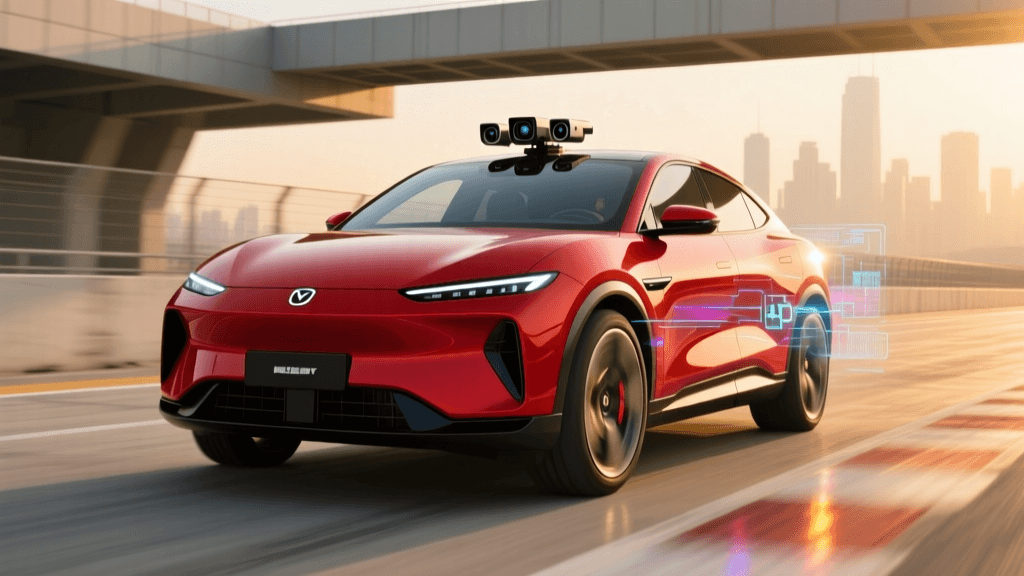
Lidar shoots millions of laser pulses per second to create a highly accurate, real-time 3D point cloud of the vehicle's surroundings. It provides unparalleled depth perception and spatial awareness, making it a favorite for Level 4 autonomous robotaxis like Waymo and Cruise. Historically, mechanical spinning lidar units were prohibitively expensive (often exceeding $75,000 per unit) and bulky. Today, the industry is rapidly shifting toward automotive-grade, semi-solid-state units that cost a fraction of the price, though they are still largely reserved for premium EVs and flagship trims.
The Industry Outlook: Next-Generation Sensor Breakthroughs
As automakers push toward higher levels of autonomy (Level 3 and beyond), the limitations of legacy sensors are driving rapid innovation. The future of ADAS hinges on three major technological breakthroughs.
4D Imaging Radar: The Game Changer
The most significant near-term disruption in the ADAS supply chain is the advent of 4D imaging radar. Traditional radar measures distance, azimuth (horizontal angle), and velocity. 4D radar adds elevation (vertical angle) to the mix, utilizing advanced multiple-input multiple-output (MIMO) antenna arrays. This allows the radar to generate a dense point cloud that rivals lower-resolution lidar. Companies like Continental, Bosch, and startups like Arbe Robotics are bringing 4D imaging radar to market, enabling vehicles to distinguish between a stationary vehicle and an overhead highway sign. Because it operates in the radio spectrum, 4D radar maintains its all-weather superiority while solving the resolution issues that plagued legacy systems.
Solid-State Lidar: Dropping Costs and Sizes
The future of lidar is solid-state. By eliminating moving mechanical parts and utilizing silicon photonics or optical phased arrays (OPAs), manufacturers are drastically reducing the size, weight, and cost of lidar units. Companies like Luminar, Hesai, and Innoviz are securing contracts with major OEMs (including Volvo, Mercedes-Benz, and Polestar) to integrate solid-state lidar into consumer vehicles. The industry outlook suggests that by 2027, the cost of automotive-grade lidar will drop below $500 per unit, enabling widespread adoption in mid-market EVs and unlocking true hands-off, eyes-off Level 3 highway autonomy.
AI-Driven Sensor Fusion and Neural Networks
Hardware is only half the equation. The future of ADAS lies in "deep sensor fusion," where raw data from cameras, radar, and lidar are combined at the pixel/point level before being processed by a central neural network. Instead of each sensor making its own decision and voting on an outcome (late fusion), deep fusion allows the AI to cross-reference data instantly. For example, if a camera is blinded by sun glare, the neural network seamlessly relies on the lidar and 4D radar point clouds without dropping the object track. The Insurance Institute for Highway Safety (IIHS) notes that robust sensor fusion is critical for achieving the reliability needed to earn top safety ratings in increasingly complex urban environments.
ADAS Sensor Technology Comparison Matrix
To visualize how these technologies stack up against one another and where they are heading, review the comparison chart below:
| Sensor Type | Current Capability | Future Trend (2025-2030) | Cost Trajectory | Primary Limitation |
|---|---|---|---|---|
| Camera | High-res 2D object classification, lane reading | Neuromorphic sensors, HDR, AI edge-processing | Stable / Low | Blinded by weather, glare, and darkness |
| Standard Radar | Velocity and distance tracking, all-weather | Being replaced by 4D Imaging Radar | Decreasing | Low resolution, phantom braking |
| 4D Imaging Radar | High-res 3D point clouds, elevation mapping | Becoming the primary sensor for L2+/L3 fusion | Moderate / Dropping | Signal interference in dense urban radar zones |
| Lidar | Millimeter-accurate 3D mapping, limited range | Solid-state, long-range (300m+), mass adoption | High to Moderate ($500 target) | Performance degradation in heavy snow/fog |
| Ultrasonic | Near-field obstacle detection, parking | Potential replacement by high-res radar/cameras | Very Low | Extremely short range, low processing speed |
Vision-Only vs. Multi-Sensor Fusion: The Great Debate
A major ideological split defines the current industry outlook: Tesla's "Tesla Vision" (vision-only, camera and AI-based) versus the multi-sensor fusion approach championed by Mobileye, Waymo, and legacy OEMs. Tesla argues that since humans drive using only vision and a biological neural network, cars should do the same, leveraging massive fleet data to train their AI. Conversely, the broader industry insists that true redundancy requires diverse physics. If a camera fails, a radar or lidar must be present as a fallback. As Consumer Reports highlights in their ADAS evaluations, systems utilizing multi-sensor fusion (incorporating radar and lidar) currently demonstrate more consistent behavior in edge-case scenarios, such as detecting stopped emergency vehicles on dark highways.
Practical Advice for EV Buyers and Owners
As sensor technology advances, it directly impacts the cost of ownership, repairability, and insurance premiums. Here is what buyers should consider when evaluating modern EVs and smart vehicles:
- Calibration Costs: Modern ADAS sensors require precise calibration. If your windshield is replaced, the forward-facing camera and lidar modules often require dynamic or static recalibration, which can add $300 to $800 to a standard glass replacement bill. Always verify that your auto glass provider has OEM-certified calibration targets.
- Repairability and Bumpers: Radar and ultrasonic sensors are frequently hidden behind front and rear bumpers. A minor fender bender that would have cost $500 to repair a decade ago can now exceed $2,500 due to the need to replace sensor brackets, wiring harnesses, and perform radar alignment.
- Insurance Implications: While ADAS features reduce the frequency of accidents, the severity of repair costs is rising. When purchasing a vehicle equipped with premium solid-state lidar or 4D radar arrays, ensure your insurance policy adequately covers OEM sensor replacement and specialized recalibration labor.
- Future-Proofing: If you are buying a vehicle today with the intention of keeping it for 5 to 7 years, prioritize models that utilize hardware-capable sensor suites (like Mobileye SuperVision or Nvidia DRIVE Orin platforms) that can receive Over-The-Air (OTA) software updates, ensuring your ADAS improves as sensor fusion algorithms advance.
Conclusion
The landscape of ADAS sensors is transitioning from fragmented, single-purpose hardware to a deeply integrated, AI-driven sensory nervous system. While cameras will remain essential for semantic understanding, the rapid maturation of 4D imaging radar and solid-state lidar is poised to solve the edge-case limitations that have historically bottlenecked autonomous driving. For consumers, this means safer, more capable vehicles are on the horizon, but it also demands a new level of awareness regarding maintenance, calibration, and the true cost of cutting-edge automotive technology.