The Hidden Dangers of Night Driving
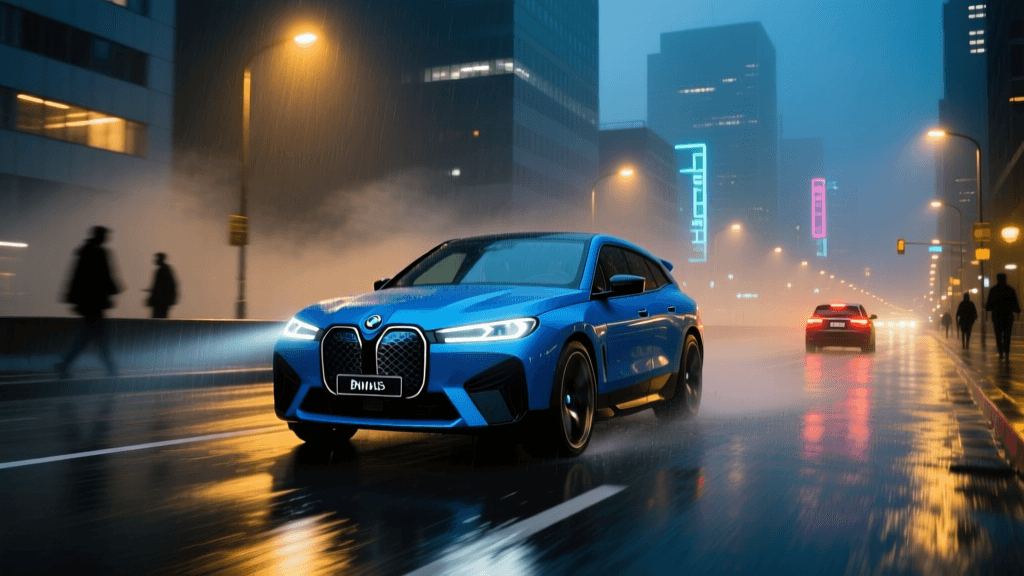
Driving at night presents a unique set of hazards that standard headlights and optical cameras simply cannot overcome. Glare, deep shadows, and the limitations of human night vision create a dangerous environment, particularly for vulnerable road users. According to the Insurance Institute for Highway Safety (IIHS), the vast majority of pedestrian fatalities occur in dark or unlit conditions. Standard automatic emergency braking (AEB) systems rely heavily on optical cameras and radar, which can struggle with contrast and total darkness.
To bridge this safety gap, luxury automakers have developed advanced thermal imaging and night vision systems. These Advanced Driver Assistance Systems (ADAS) act as a second set of eyes, piercing through the darkness to detect pedestrians and large animals long before they enter the beam of your headlights. In this head-to-head product showdown, we pit the industry leaders against one another: BMW Night Vision, Mercedes-Benz Night View Assist Plus, and the Audi Night Vision Assistant. Which system offers the ultimate nocturnal safety net?
Understanding the Technology: Thermal vs. Active Infrared
Before diving into the brand-specific implementations, it is crucial to understand the underlying technology. Modern luxury night vision systems primarily utilize Passive Far-Infrared (FIR) thermal imaging. Unlike older Active Near-Infrared (NIR) systems that bounced invisible light off objects, FIR cameras detect the heat signatures emitted by living beings. This means thermal systems are entirely unaffected by oncoming headlight glare and can detect a pedestrian's body heat up to 300 meters away, even if the person is dressed in dark clothing against a dark background.
BMW Night Vision with Dynamic Light Spot
BMW has been a pioneer in thermal night vision, and its current iteration is widely considered one of the most cohesive systems on the market. The thermal camera is discreetly mounted behind the front grille, feeding a high-resolution heat map to the central iDrive display or the digital instrument cluster.
Where BMW truly excels is the Dynamic Light Spot feature. When the system's AI identifies a pedestrian or large animal in a potential collision path, it does not just alert the driver with a visual warning. It commands the adaptive LED headlights to emit a targeted, flashing beam of light directly onto the hazard. This serves a dual purpose: it immediately draws the driver's eyes to the exact location of the threat, and it warns the pedestrian without blinding them with full high beams. The system can track multiple targets simultaneously and calculates the vehicle's speed and steering angle to minimize false alerts.
Mercedes-Benz Night View Assist Plus
Mercedes-Benz integrates its Night View Assist Plus deeply into the MBUX (Mercedes-Benz User Experience) ecosystem. Utilizing a highly sensitive thermal camera mounted in the grille, the system projects a clear, grayscale thermal image onto the digital instrument cluster when activated.
Mercedes employs an advanced image-processing algorithm that highlights detected humans in red boxes and animals in yellow boxes. If a pedestrian is deemed to be in an acute danger zone—such as stepping off a curb into the vehicle's path—the system can trigger a 'Spotlight' function. Similar to BMW, this flashes the LED headlights at the pedestrian. Furthermore, the MBUX system provides an audible chime and a stark visual warning on the dash, ensuring the driver is fully aware of the encroaching hazard. The integration with the S-Class and GLE's ambient lighting and haptic feedback in the steering wheel creates a multi-sensory warning environment.
Audi Night Vision Assistant
Audi approaches night vision with its signature focus on lighting technology and digital displays. The Audi Night Vision Assistant uses a thermal imaging camera positioned behind the iconic Singleframe grille, often integrated near the Audi rings. The thermal image is displayed in the Audi Virtual Cockpit, utilizing a sophisticated color-coding system: humans are highlighted in yellow, while animals are marked in yellow or cyan, depending on the specific model year and software generation.
Audi's secret weapon is its synergy with the Matrix LED headlightsEuro NCAP, the combination of thermal detection and targeted lighting is highly effective in mitigating nighttime collisions.
Head-to-Head Comparison Table
| Feature | BMW (Night Vision) | Mercedes-Benz (Night View Assist Plus) | Audi (Night Vision Assistant) |
|---|---|---|---|
| Sensor Type | Passive Far-Infrared (Thermal) | Passive Far-Infrared (Thermal) | Passive Far-Infrared (Thermal) |
| Max Detection Range | Up to 300 meters | Up to 250 meters | Up to 300 meters |
| Display Integration | iDrive Central / Digital Cluster | MBUX Digital Instrument Cluster | Audi Virtual Cockpit |
| Pedestrian Highlighting | Red/Yellow bounding boxes | Red (Humans) / Yellow (Animals) | Yellow (Humans) / Cyan (Animals) |
| Headlight Warning | Dynamic Light Spot (Targeted Flash) | Spotlight Function (Targeted Flash) | Matrix LED Zone Flashing |
| Approx. Option Cost (USD) | $2,500 - $3,000 | $2,650 - $3,200 | $2,500 - $2,900 |
Pedestrian Detection and AEB Integration
A critical distinction in modern ADAS is how night vision systems interact with Automatic Emergency Braking (AEB). It is important to note that in most current production vehicles from these three brands, the thermal night vision camera is primarily an information and warning tool. The actual AEB Pedestrian Detection (AEB VRU) relies on the vehicle's forward-facing optical cameras and millimeter-wave radar.
However, the thermal camera drastically improves the driver's situational awareness, allowing for manual evasive action or braking long before the optical AEB system registers the threat. In newer architectures, such as BMW's latest iX and Mercedes' newest S-Class, sensor fusion is beginning to blend thermal data with radar inputs to prime the AEB system earlier in low-light scenarios, reducing the reaction time of the braking hydraulics.
Real-World Limitations and Maintenance Costs
While thermal imaging is a technological marvel, it is not without limitations:
- Weather Interference: Heavy rain, dense fog, and snow can absorb infrared radiation, reducing the effective range of the thermal camera. Furthermore, because the sensors are mounted behind the front grille, a buildup of slush, mud, or road salt can completely blind the system.
- Temperature Masking: In extremely hot climates, the ambient temperature of the road and surroundings can closely match the body temperature of a pedestrian, slightly reducing the contrast and detection range of the thermal sensor.
- Replacement Costs: The thermal camera is an expensive piece of optics. In the event of a minor/center front-end collision—such as hitting a deer or another vehicle—the replacement cost for the thermal sensor alone can easily exceed $1,500 to $2,000, not including calibration and grille replacement.
The Verdict: Which System Wins?
When evaluating these three luxury titans, the competition is remarkably close, but distinct winners emerge based on specific criteria.
Best Visual Interface: Mercedes-Benz. The MBUX integration and the stark red/yellow color-coding make identifying threats instantaneous. The multi-sensory warnings (audio, visual, haptic) ensure the driver is never caught off guard.
Best Lighting Synergy: Audi. The way the Night Vision Assistant communicates with the Matrix LED headlights to selectively dim zones around pedestrians while keeping the rest of the road illuminated is a masterclass in adaptive lighting technology.
Overall Winner: BMW. BMW takes the crown for the most balanced and proactive approach. The Dynamic Light Spot remains the most intuitive and effective warning mechanism in the industry. By physically illuminating the hazard with a targeted beam, BMW bridges the gap between digital warnings and real-world physics, ensuring both the driver and the pedestrian are acutely aware of the danger. Combined with its reliable 300-meter detection range and seamless iDrive integration, BMW Night Vision sets the gold standard for nocturnal ADAS.
Ultimately, while standard AEB and optical cameras continue to improve, thermal night vision remains a vital, life-saving layer of redundancy for those who frequently navigate unlit rural roads or dark urban environments. For the premium buyer, adding this option is one of the most justifiable safety investments available on the modern market.