What a Blind Spot Detection System Actually Does
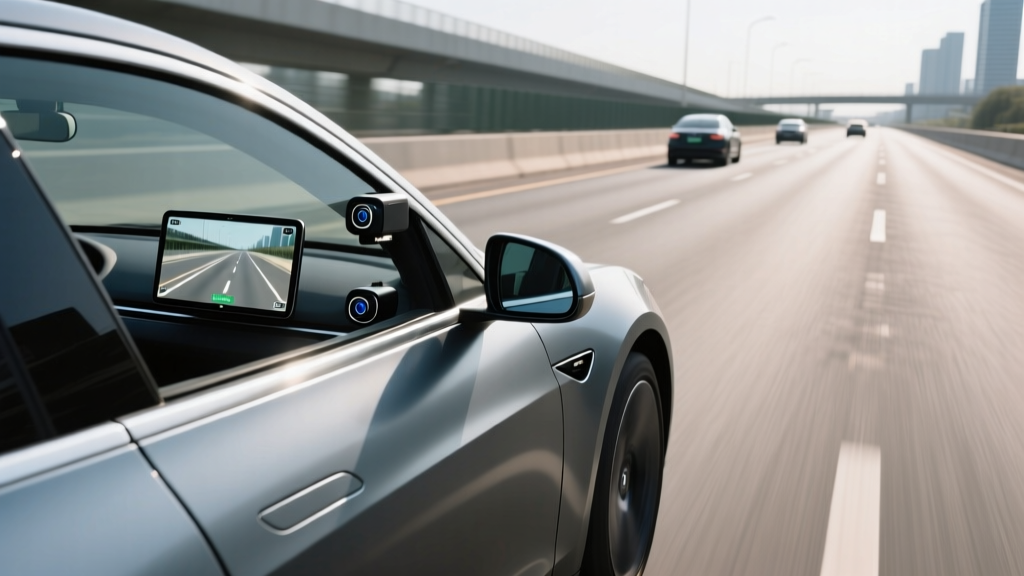
At its core, a blind spot detection system monitors the lanes immediately beside and slightly behind your vehicle, warning you when another car, truck, or cyclist occupies the zone your side mirrors can't cover. In most 2026 EVs, the system triggers a visual alert in the side mirror housing (or A-pillar) and may escalate to an audible chime or steering-wheel vibration if you activate your turn signal while a vehicle is detected.
More advanced implementations go further. Blind Spot Intervention or Rear Cross-Traffic Braking can apply corrective steering torque or automatic braking if you begin to change lanes into an occupied space. This is not a passive warning light anymore — it's an active safety net.
How It Works: Radar, Cameras, and Ultrasonic Sensors
Automakers deploy three primary sensor technologies for blind spot monitoring, often combining two or more for redundancy:
| Sensor Type | Typical Range | Strengths | Weaknesses |
|---|---|---|---|
| Millimeter-wave radar (24 GHz or 77 GHz) | Up to ~160 ft rearward | Works in rain, fog, darkness; excellent at detecting moving metal objects | Can miss cyclists or pedestrians; may false-trigger on guardrails |
| Side-view cameras | ~80-100 ft | Classifies objects (car, truck, bike); enables 360° surround-view displays | Performance degrades in heavy rain, snow, direct sun glare |
| Ultrasonic sensors | ~10-15 ft | Low-cost, reliable at parking speeds for cross-traffic | Too short-range for highway-speed blind spot monitoring |
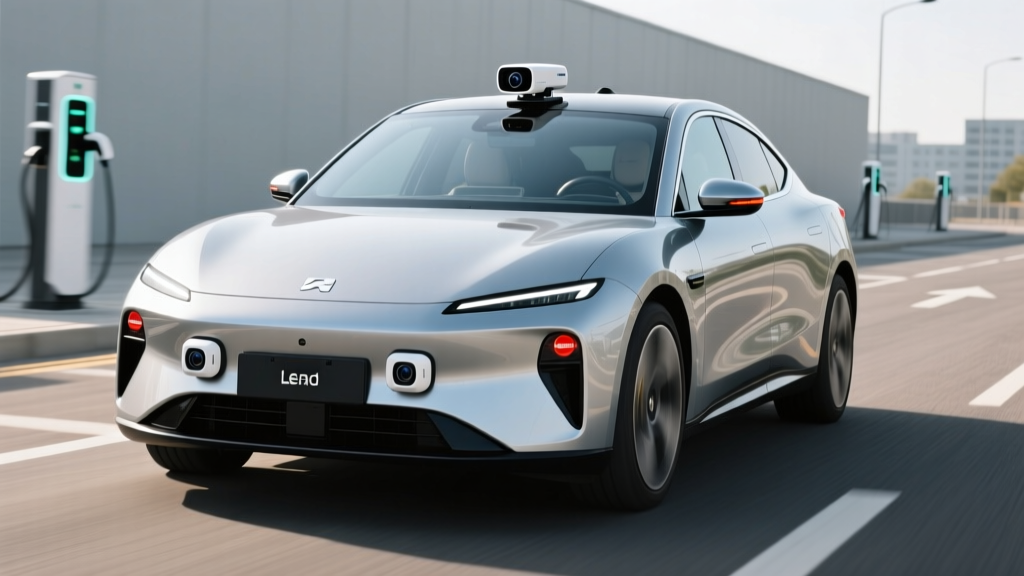
In vehicles like the Tesla Model Y and Hyundai Ioniq 5, radar sensors are mounted behind the rear bumper fascia on each side. When the car is moving above ~20 mph, these corner radars sweep adjacent lanes continuously. Camera-based systems, such as those used in the Genesis GV60's digital side mirrors, supplement radar by providing object classification — distinguishing a semi-truck from a motorcycle, for instance.
According to the IIHS, vehicles equipped with blind spot warning show a 14% lower rate of lane-change crashes with injuries compared to identical models without the feature.
SAE Automation Level: This Is Level 2, Not Self-Driving
Blind spot detection and intervention systems operate at SAE Level 2. You remain the driver. You must keep your hands on the wheel, monitor traffic, and make all lane-change decisions yourself. The system warns and can assist, but it does not replace your judgment. No production blind spot system qualifies as Level 3 or above.
Some buyers conflate advanced ADAS suites with autonomous driving. They are not the same. Even Tesla's Full Self-Driving (Supervised), which includes blind spot visualization on the center display, requires continuous driver attention per NHTSA guidance. Blind spot detection is a supplement to your situational awareness, not a replacement for it.
Brand-by-Brand: Naming, Availability, and Cost
Every major automaker brands its blind spot detection system differently, and inclusion varies widely by trim level. Here's a breakdown of how the feature appears across popular 2026 EVs:
| Brand | Feature Name | Standard / Optional | Cost (if not standard) |
|---|---|---|---|
| Tesla | Blind Spot Camera + Warning (via Autopilot) | Standard on all models | Included (no extra charge) |
| Hyundai / Kia | Blind-Spot Collision-Avoidance Assist (BCA) | Standard on SEL trim and above (Ioniq 5, EV6) | Included from ~$47,000 MSRP |
| Ford | BLIS (Blind Spot Information System) with Cross-Traffic Alert | Standard on most trims (Mustang Mach-E, F-150 Lightning) | Included |
| Chevrolet | Side Blind Zone Alert | Standard on 2LT and above (Equinox EV, Blazer EV) | Part of ~$2,000 Driver Confidence package on lower trims |
| Rivian | Blind Spot Warning + Rear Cross-Traffic | Standard on all R1T and R1S trims | Included |
| BMW | Active Blind Spot Detection | Standard on most 2026 iX and i4 trims | Included |
| Mercedes-Benz | Active Blind Spot Assist | Standard on EQE, EQS | Included |
Most mainstream EVs priced above $45,000 now include blind spot detection as standard equipment. The feature remains optional or unavailable only on base trims of some lower-priced models. Unlike features such as GM's Super Cruise or Ford's BlueCruise hands-free driving, blind spot detection rarely involves a subscription — it's typically a one-time hardware inclusion.
Real-World Limitations: Where the System Falls Short
- It does not detect fast-approaching vehicles more than ~160 feet back in adjacent lanes.
- It may not reliably detect motorcycles, bicycles, or pedestrians in all conditions.
- Snow, ice, or heavy mud covering rear-bumper radar sensors will disable the feature — a dashboard alert typically notifies you.
- Stationary objects (parked cars, barriers) are usually filtered out to prevent false alerts, which means the system won't warn you about a lane ending into construction.
- Intervention features (steering correction or braking) may not activate fast enough at highway speeds above 70 mph if a vehicle is rapidly closing from behind.
In real-world highway testing, radar-based blind spot systems prove highly reliable for detecting sedans and SUVs in adjacent lanes. However, we've observed delayed or missed alerts for motorcycles approaching at high speed differentials (e.g., a bike traveling 30+ mph faster than the host vehicle). Camera-based classification helps here, but not all EVs combine both sensor types.
Cold-weather EV owners should note that radar sensors behind the rear bumper can become obscured by road salt buildup and ice. Tesla's sensor-blocking detection alerts the driver via the touchscreen, but if you ignore the warning, the system simply goes silent — leaving you without coverage until the sensor is cleared.
Rear cross-traffic alert, which uses the same sensors when reversing out of parking spaces, performs well at speeds under 15 mph but can struggle with cross-traffic approaching from behind large parked vehicles or walls, where the radar line-of-sight is blocked until the last moment.
Blind Spot Detection vs. Full ADAS Suites: Where It Fits
Blind spot monitoring is one component of a broader ADAS stack. Here's how it integrates with other driver-assist features in modern EVs:
| Feature | Function | SAE Level | Requires Subscription? |
|---|---|---|---|
| Blind Spot Warning (BSW) | Visual/audio alert for vehicles in blind zone | Level 1 | No |
| Blind Spot Intervention (BSI) | Steering or brake correction to avoid lane-change collision | Level 2 | No |
| Rear Cross-Traffic Alert (RCTA) | Warns of approaching traffic when reversing | Level 1 | No |
| Rear Cross-Traffic Braking | Auto-brakes to avoid reversing collision | Level 2 | No |
| Lane Centering + Adaptive Cruise | Steering and speed management on highways | Level 2 | Varies (e.g., Ford BlueCruise: $75/yr after trial) |
| Hands-Free Highway Driving | Hands-off on pre-mapped highways (eyes monitored) | Level 2 | Yes (GM Super Cruise: ~$25/mo; Ford BlueCruise subscription) |
The key distinction: blind spot features are almost universally included at no recurring cost, while hands-free driving suites (Super Cruise, BlueCruise) increasingly require annual or monthly subscriptions after an initial trial period.
Buying Advice: Which EVs Offer the Best Blind Spot Coverage?
If blind spot detection is a priority for your purchase, here's a practical decision framework:
Choose Hyundai/Kia (Ioniq 5, EV6, EV9) if: You prefer radar-backed blind spot intervention with physical mirror indicators and active steering correction. Hyundai's BCA system is standard from the SEL trim (~$47,000 MSRP for the Ioniq 5) and includes rear cross-traffic collision-avoidance braking.
Choose Ford (Mach-E, F-150 Lightning) if: You want BLIS as standard across nearly all trims with reliable radar detection plus a tow-mode enhancement that extends the blind zone monitoring length for trailers — a feature unique to Ford's truck lineup.
Regardless of brand, verify the specific trim's equipment sheet before purchasing. Base trims of some models still omit the feature, and dealer-installed packages can add $1,000-$2,500 to the MSRP.
Frequently Asked Questions
Is a blind spot detection system the same as self-driving?
No. Blind spot detection is an SAE Level 1 or Level 2 driver-assist feature. It warns you or can apply brief corrective action, but you remain fully responsible for driving. No consumer vehicle is self-driving; only Level 4 robotaxi services like Waymo operate without a human driver.
Does blind spot detection work in heavy rain or snow?
Radar-based systems work well in rain and fog since millimeter-wave radar penetrates precipitation. However, heavy snow or ice accumulation on the rear bumper can block sensors entirely. Camera-based systems degrade more noticeably in rain and glare. Most vehicles display a "sensor blocked" warning when coverage is compromised.
Can I add blind spot detection to an EV that didn't come with it?
Aftermarket blind spot monitoring kits exist (typically $300-$600 installed), but they use simpler ultrasonic sensors with shorter range and less reliable detection than factory radar systems. We recommend choosing a trim with factory-installed blind spot detection rather than relying on aftermarket add-ons.
Does blind spot detection increase my EV insurance cost?
Generally, no. Most insurers consider blind spot warning a safety feature that may qualify you for a small discount (typically 2-5% off comprehensive/collision premiums). However, EVs as a class tend to carry higher insurance premiums due to repair costs — the blind spot system itself does not increase your rate.
What's the difference between blind spot warning and blind spot intervention?
Warning alerts you (visual, audible, or haptic). Intervention takes action — applying steering torque to keep you in your lane or braking to prevent a collision. Intervention is the more advanced, and safer, implementation, but requires the driver to still be in control per SAE Level 2 requirements.