What Blind Spot Detection Actually Does — and What It Doesn't
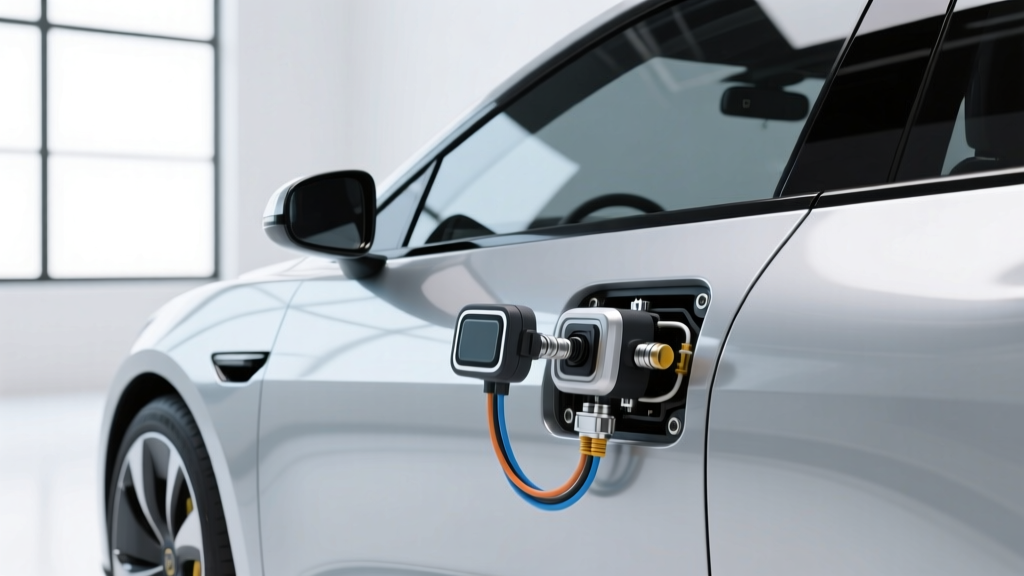
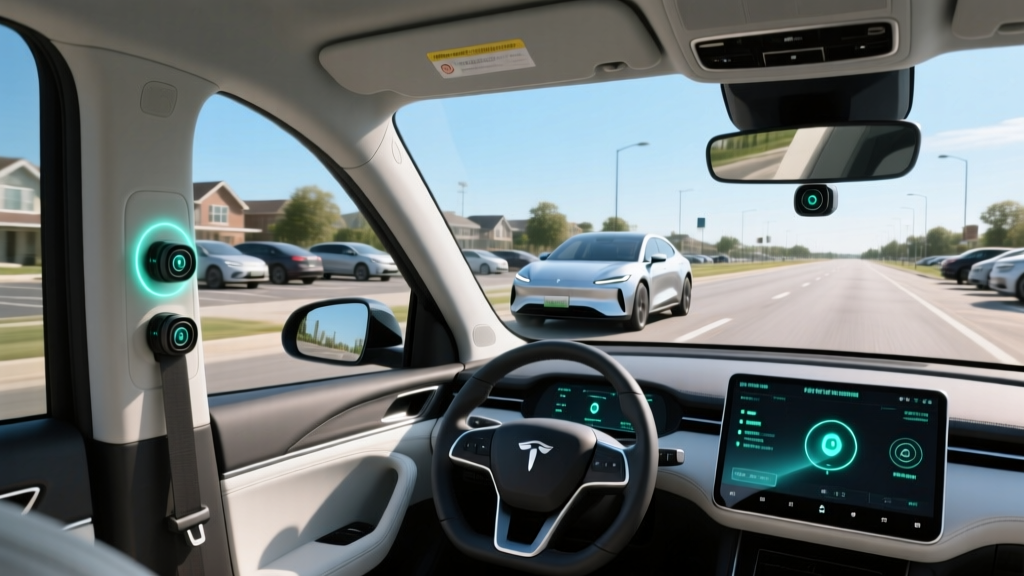
Blind spot detection (BSD) uses radar sensors, ultrasonic transducers, or camera modules mounted on a vehicle's rear corners and side mirrors to monitor adjacent lanes. When a vehicle enters the driver's blind zone — typically the area extending from the B-pillar rearward about one lane width — the system triggers a visual alert on the mirror housing or A-pillar, sometimes paired with an audible warning or steering intervention if the driver initiates a lane change.
On modern EVs and hybrids, BSD rarely exists as a standalone feature. It's bundled into broader advanced driver-assistance suites (ADAS) that also include rear cross-traffic alert, lane-keeping assist, and automatic emergency steering. The result: a driver-assist ecosystem that can warn you of hidden vehicles and, in some implementations, actively resist a lane change if a collision is imminent.
Blind spot detection is classified as SAE Level 1 (warning-only) or Level 2 (when combined with active steering intervention in a broader ADAS suite). The driver remains fully responsible for vehicle control at all times. BSD is not autonomous driving — it is a safety assist feature that requires an attentive human behind the wheel.
How Blind Spot Detection Works Technically
Three sensor architectures dominate the blind spot detection landscape in 2026:
- Millimeter-wave radar (24 GHz or 77 GHz): Mounted behind the rear bumper fascia, these solid-state units detect moving objects up to ~70 meters back. Radar works in rain, fog, and darkness — making it the most robust BSD sensor. Used by Hyundai, Ford, BMW, Toyota, and most legacy OEMs.
- Camera-based systems: Side-rear cameras feed object-detection algorithms. Tesla relies primarily on its vision-only "Tesla Vision" architecture after removing radar from its sensor suite. Camera-based BSD can struggle in heavy rain, direct sun glare, or when lenses are obscured by road grime.
- Ultrasonic sensors: Short-range (~5 meters), typically used for parking assist rather than highway-speed BSD, but some systems blend ultrasonic data with radar or camera inputs for low-speed blind zone coverage.
Most implementations also integrate rear cross-traffic alert (RCTA), which scans perpendicular to the vehicle when reversing out of a parking space — a genuinely useful extension of the same sensor hardware.
Which EVs and Hybrids Include Blind Spot Detection?
Blind spot detection availability varies dramatically by brand, model, and trim level. Some automakers include it standard on every trim; others gate it behind mid-level packages or premium subscriptions. Here's how the major electrified vehicles stack up for 2026:
| Brand / System Name | EV/PHEV Models | Standard or Optional | Sensor Type |
|---|---|---|---|
| Tesla — Autopilot (includes BSD) | Model 3, Model Y, Model S, Model X, Cybertruck | Standard on all trims | Camera-only (Tesla Vision) |
| Hyundai/Kia/Genesis — Blind-Spot Collision-Avoidance Assist (BCA) | Ioniq 5, Ioniq 6, Ioniq 9, EV6, EV9, GV60, Electrified GV70 | Standard on SEL/above (Hyundai); most trims (Kia) | 77 GHz rear-corner radar |
| Ford — BLIS (Blind Spot Information System) | Mustang Mach-E, F-150 Lightning, Escape PHEV | Standard on Select/above (Mach-E); Lariat+ (Lightning) | Radar + camera fusion |
| Toyota — Blind Spot Monitor (BSM) + Safety Sense | bZ4X, RAV4 Prime, Prius Prime, Highlander Hybrid | Standard on XLE/above (bZ4X); mid-trim+ (others) | Rear-corner radar |
| BMW — Active Blind Spot Detection | i4, i5, i7, iX, X5 xDrive50e (PHEV) | Included in Driving Assistance Package | Radar + camera |
| GM (Chevrolet/Cadillac) — Side Blind Zone Alert | Equinox EV, Blazer EV, Silverado EV, Lyriq, Optiq | Standard on 2LT/above (Chevy); most Cadillac trims | Rear-corner radar |
| Rivian — Blind Spot Warning | R1S, R1T (2025+ refresh) | Standard on all trims | Camera + radar fusion |
Source: Manufacturer spec sheets and IIHS vehicle ratings. Trim availability reflects 2026 model-year configurations; verify with your dealer as mid-year updates can shift packaging.
Feature Capability Comparison
Not all blind spot detection systems are created equal. Some merely illuminate an icon; others actively intervene with steering torque or braking to prevent a collision. Here's how the leading systems compare on capability depth:
| Capability | Tesla Autopilot | Hyundai BCA | Ford BLIS | Toyota BSM | GM Side Blind Zone |
|---|---|---|---|---|---|
| Visual mirror alert | ✓ (screen-based) | ✓ | ✓ | ✓ | ✓ |
| Audible warning | ✓ | ✓ | ✓ | ✓ | ✓ |
| Active steering intervention (collision avoidance) | ✓ (with Autosteer) | ✓ (BCA-Avoidance) | Partial (Evasive Steer Assist separate) | ✗ (warning only) | ✗ (warning only) |
| Rear cross-traffic alert | ✓ | ✓ (with braking) | ✓ | ✓ | ✓ |
| Trailer coverage (extended detection zone) | ✗ | ✓ (select models) | ✓ (BLIS with Trailer Coverage, F-150 Lightning) | ✗ | ✗ |
| Blind spot camera display (mirror or screen feed) | ✓ (screen pop-up) | ✓ (cluster view, Ioniq 5/6) | ✗ | ✗ | ✗ |
Real-World Limitations You Need to Know
BSD systems have well-documented limitations that every driver should understand before relying on them. This feature assists — it does not replace — mirror checks and head checks.
Weather degradation: Radar-based systems maintain functionality in rain and fog better than camera-based ones. Tesla's camera-only BSD has been reported to generate more false positives or momentary lapses during heavy precipitation, direct sun glare into side cameras, or when camera lenses are coated in road salt or mud. If you drive frequently in adverse weather, radar-based BSD (Hyundai, Ford, Toyota, GM) has a reliability edge.
Motorcycle and bicycle detection: Most BSD systems are calibrated primarily for passenger vehicles and light trucks. Narrow-profile objects like motorcycles, bicycles, or e-scooters may not trigger alerts reliably — or may trigger them later than a full-width vehicle would. The NHTSA notes that ADAS sensors are not universally validated for all road-user types.
Stationary objects: BSD is designed to detect moving vehicles approaching from behind or traveling alongside. Parked cars, guardrails, and roadside barriers are filtered out by most algorithms to reduce nuisance alerts. A cyclist stopped next to you at a light may not register.
Speed thresholds: Many systems activate only above a minimum speed — typically 20–30 mph. In stop-and-go urban traffic below this threshold, BSD may not provide alerts. Hyundai's BCA and Ford's BLIS tend to have lower activation thresholds than some competitors, making them more useful in city driving.
Sensor obstruction: Rear-bumper-mounted radar can be blocked by trailer hitches, bike racks, or heavy snow/ice buildup. Camera-based systems are compromised by dirty lenses. Most vehicles will display a "sensor blocked" warning on the dash, but drivers sometimes ignore these notifications.
Cost Breakdown: Standard, Packaged, or Subscription?
The cost of blind spot detection depends on how the automaker packages it. In 2026, most brands include BSD as standard equipment on mid-level trims and above, but there are important exceptions and nuances:
| Brand | BSD Cost Structure | Details |
|---|---|---|
| Tesla | Included (no extra cost) | BSD is part of base Autopilot, standard on every Tesla. No subscription required for BSD. Full Self-Driving (Supervised) at $8,000 one-time or $99/month adds lane-change automation but does not enhance BSD itself. |
| Hyundai / Kia | Included on SEL+ trims | BCA is standard on most trims above base SE. No subscription. One-time cost is built into trim pricing (~$2,000–$4,000 step from SE to SEL on Ioniq 5). |
| Ford | Included on Select+ trims / Ford Co-Pilot360 2.0 | BLIS is bundled into the Co-Pilot360 suite. Standard on most non-base trims. BlueCruise (hands-free highway driving) is a separate subscription at ~$75/month or $800/year but does not replace BLIS. |
| Toyota | Included on mid+ trims | BSM is standard on XLE and above. Toyota Safety Sense (TSS 3.0) is standard on all trims but BSM specifically is trim-dependent. No subscription model. |
| BMW | Package-dependent | Active Blind Spot Detection is part of the Driving Assistance Package (~$700–$1,000 option). No subscription for BSD. BMW's Highway Assistant (Level 2 hands-off on select highways) is a separate one-time purchase or included in higher trims. |
| GM (Chevy / Cadillac) | Included on 2LT+ / most Cadillac | Side Blind Zone Alert is standard on mid-level trims. Super Cruise (hands-free, $2,200 one-time or $25/month subscription) includes enhanced BSD integration but is not required for basic blind spot alerts. |
Key takeaway: In 2026, you should not have to pay a monthly subscription for basic blind spot detection. It's a safety feature that automakers bundle into mid-level trims. Subscription services like Ford BlueCruise, GM Super Cruise, and Tesla FSD (Supervised) add higher-level lane-centering and hands-free capabilities — not the BSD function itself.
Safety Data: Does Blind Spot Detection Actually Reduce Crashes?
Yes — but with caveats. The Insurance Institute for Highway Safety (IIHS) has published research showing that blind spot detection systems are associated with a 14% reduction in lane-change crashes and a 23% reduction in lane-change crashes with injuries compared to vehicles without the technology.
However, the same research notes that the overall crash-prevention benefit depends heavily on driver behavior. Drivers who become over-reliant on BSD and stop performing manual head checks may negate the system's advantage. The feature works best as a redundant layer — catching what your mirrors and eyes miss — not as a replacement for situational awareness.
For EV buyers specifically, the added weight of electric vehicles (typically 500–1,000 lbs more than comparable ICE vehicles due to battery mass) means longer braking distances and higher kinetic energy in a collision. This makes collision avoidance features like active BSD with steering intervention marginally more valuable on EVs than on lighter gas-powered counterparts.
Frequently Asked Questions
Is blind spot detection the same as self-driving?
No. Blind spot detection is an SAE Level 1 or Level 2 driver-assist feature. It warns you of vehicles in your blind zone and, in some systems, can apply corrective steering or braking to avoid a side collision. The driver must remain fully engaged — hands on the wheel, eyes on the road — at all times. True self-driving (SAE Level 4) is currently limited to geofenced robotaxi services like Waymo in select cities.
Can I add blind spot detection to an EV that doesn't have it?
Not through the manufacturer. BSD relies on integrated radar or camera hardware and factory-calibrated software. Aftermarket blind spot kits exist (typically $200–$500 installed), but they lack the integration quality, active steering intervention, and reliability of OEM systems. If BSD is a priority, choose a trim that includes it from the factory.
Does Tesla's camera-only BSD work as well as radar-based systems?
In clear conditions, Tesla's vision-based BSD performs comparably to radar systems. However, radar has a physical advantage in low-visibility conditions (heavy rain, fog, snow, direct sun glare) because millimeter-wave frequencies penetrate obscurants that block visible light. If you live in a region with frequent adverse weather, a radar-equipped vehicle may offer more consistent BSD reliability.
What's the difference between blind spot detection and rear cross-traffic alert?
Blind spot detection monitors adjacent lanes while you're driving forward. Rear cross-traffic alert activates when you're in reverse, scanning perpendicular to the vehicle for approaching traffic — critical when backing out of a parking space with limited visibility. Most modern EVs bundle both features together in the same ADAS suite.
Does the federal EV tax credit cover ADAS features like BSD?
The IRS §30D clean vehicle credit applies to the vehicle purchase, not individual features. If the EV you buy qualifies (meeting MSRP caps of $55,000 for cars / $80,000 for SUVs and trucks, buyer income limits, and battery sourcing requirements), the credit applies to the full purchase — which includes whatever ADAS features are on that trim. For 2026, the credit can be transferred to the dealer at point of sale, reducing your out-of-pocket cost directly. Consult a tax professional for your specific eligibility.