Most new EVs and hybrids ship with blind-spot monitoring (BSM) as standard or low-cost-package equipment. But if you're driving an older Tesla Model 3, a base-trim Nissan Leaf, a used Chevy Bolt EV, or a first-generation Toyota Prius Prime without the technology package, your lane-change safety net might be nothing more than a pair of side mirrors. That's where aftermarket blind spot monitors enter the picture — and the question is whether they're actually worth the investment on an electrified vehicle.
This guide breaks down how aftermarket BSM systems work technically, what they can and cannot do, how they compare to factory-installed systems on modern EVs, and what you'll actually pay to get one installed. We'll also cover the specific quirks that come with adding aftermarket radar or ultrasonic sensors to vehicles with high-voltage battery packs and regenerative braking systems.
What Aftermarket Blind Spot Monitors Actually Do
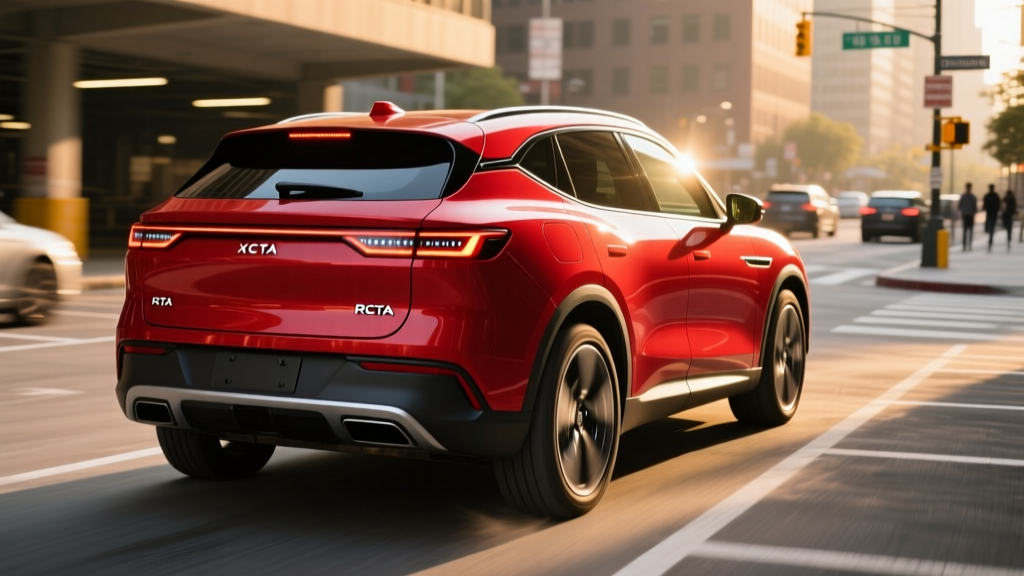
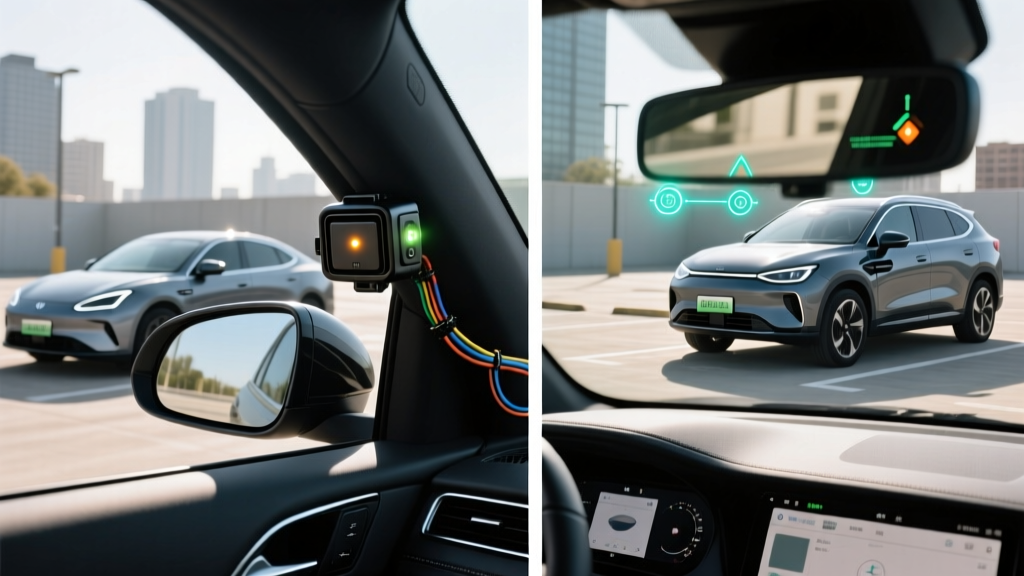
Aftermarket blind spot monitors detect vehicles traveling in the zones alongside and slightly behind your car — areas your side mirrors don't fully cover. When a vehicle enters that zone, the system triggers a visual alert (typically an LED indicator in or near the side mirror), an audible chime, or both. More advanced kits add rear cross-traffic alert (RCTA), which warns of approaching traffic when you're reversing out of a parking space.
The core function is identical to OEM blind-spot monitoring systems found on vehicles like the 2026 Hyundai Ioniq 5 (standard on all trims) or the Toyota RAV4 Prime (standard on XSE and above). The difference lies in sensor quality, integration depth, and how seamlessly alerts appear in your driving environment.
Aftermarket blind spot monitors are classified as SAE Level 0 warning systems. They provide alerts only — they do not steer, brake, or accelerate the vehicle. The driver retains 100% responsibility for lane-change decisions. Even OEM BSM systems with active steering assist (like Toyota's Blind Spot Monitor with rear cross-traffic braking) remain Level 0 or Level 1 at most. This is not autonomous driving in any capacity.
How Aftermarket BSM Systems Work: Radar vs. Ultrasonic vs. Camera
Aftermarket blind spot monitor kits fall into three sensor categories, each with distinct detection characteristics and installation requirements.
| Technology | Detection Range | Weather Resilience | Typical Kit Cost | Install Complexity |
|---|---|---|---|---|
| 24 GHz Microwave Radar | Up to 50 ft rear, 10 ft lateral | Excellent — works in rain, fog, darkness | $250–$600 | Moderate — bumper removal often required |
| Ultrasonic Sensors | Up to 15 ft rear, 5 ft lateral | Fair — heavy rain or ice can degrade accuracy | $80–$200 | Low — drill holes in bumper, wire to 12V |
| Camera-Based (Side-View) | Visual range, AI object detection | Poor — compromised by rain, glare, nighttime | $150–$450 | Moderate — camera mount + display routing |
24 GHz microwave radar is the same technology used by OEM systems from Bosch, Continental, and Valeo that supply automakers. Radar-based aftermarket kits mount behind the rear bumper cover (no drilling visible) and detect moving metallic objects at highway-relevant distances. These are the closest you'll get to factory-equivalent performance from an aftermarket product.
Ultrasonic kits are the budget option. They work well at low speeds — parking lots, urban traffic under 30 mph — but their short range makes them unreliable for highway lane-change scenarios where a vehicle may be approaching at 15+ mph relative speed from 40 feet back. If you primarily need parking-lot awareness on a compact EV like a used Chevy Bolt EV, ultrasonic may suffice. For highway driving, it falls short.
Camera-based systems use small side-mounted cameras feeding a dashboard display. While they provide a visual feed of your blind zone (more information than a simple alert), their object-detection reliability depends on lighting conditions and software quality. Budget kits often lack sophisticated filtering, resulting in false positives from roadside barriers, guardrails, and shadow patterns.
OEM vs. Aftermarket: What Factory BSM Does Better
If you're considering an aftermarket kit, it's worth understanding exactly what you're giving up compared to a vehicle with factory blind-spot monitoring. The gap matters more than most buyers assume.
- No integration with your vehicle's CAN bus — the system cannot know your speed, turn-signal status, or steering angle, leading to more false alerts or missed context.
- No active intervention — aftermarket kits warn only. They cannot apply corrective steering or braking if you begin a lane change into an occupied lane.
- Alert placement is suboptimal — most aftermarket LEDs mount on the A-pillar or dashboard rather than inside the mirror housing where your eyes naturally check.
- No rear cross-traffic braking — even advanced aftermarket RCTA will beep at you but cannot stop the car.
- Warranty considerations — tapping into your EV's 12V electrical system with non-OEM wiring could complicate warranty claims if electrical issues arise. Document your installation thoroughly.
Factory BSM systems on vehicles like the 2026 Kia EV6 or Hyundai Tucson PHEV benefit from deep vehicle integration. The car's computer knows your exact speed, whether your turn signal is active, and your steering angle. This context allows OEM systems to suppress irrelevant alerts (a car two lanes over on a curve) and prioritize urgent ones (a fast-approaching motorcycle in your target lane when your signal is on).
Aftermarket radar kits lack this context. They detect objects in a fixed zone and alert regardless of whether you're changing lanes or simply cruising. The result: more frequent alerts that can train drivers to ignore them — a phenomenon human-factors researchers call "alert fatigue."
| Feature | OEM (Factory BSM) | Aftermarket Radar Kit | Aftermarket Ultrasonic Kit |
|---|---|---|---|
| Blind-zone detection | ✓ Up to ~65 ft | ✓ Up to ~50 ft | ✓ Up to ~15 ft |
| Rear cross-traffic alert | ✓ Standard on most | ✓ On mid/high-end kits | Limited or none |
| Turn-signal context filtering | ✓ | ✗ | ✗ |
| Active steering/brake intervention | Available on select brands | ✗ | ✗ |
| Mirror-integrated alert | ✓ | Rare (add-on possible) | ✗ (A-pillar LED) |
| Speed-adaptive sensitivity | ✓ | Limited (GPS-based kits) | ✗ |
Real-World Performance: What to Expect on the Road
Aftermarket radar-based BSM kits from reputable brands (Brandmotion, Rydeen, Echomaster) perform adequately in straightforward highway scenarios: a sedan traveling in your adjacent lane at a similar speed, or a vehicle approaching from 30–40 feet behind in the next lane. Detection latency is typically 200–500 milliseconds — fast enough for awareness, but noticeably slower than OEM systems that react in under 100 ms.
The real-world gaps emerge in edge cases:
- Motorcycles and bicycles: Narrow-profile targets return weaker radar reflections. Aftermarket kits with single-antenna designs frequently miss motorcycles, particularly at the edge of their detection zone. OEM systems from Bosch and Continental use multi-antenna arrays with better angular resolution.
- Curved roads: Without GPS or steering-angle data, aftermarket radar cannot distinguish a vehicle in the next lane from one on a curving adjacent road. Expect nuisance alerts on highway cloverleaf ramps and winding roads.
- Stationary objects: Guardrails, concrete barriers, and parked cars can trigger false positives on budget kits. Higher-end radar kits use Doppler filtering to ignore stationary objects, but the implementation is less refined than OEM algorithms.
- Heavy rain and road spray: While 24 GHz radar penetrates rain better than cameras or ultrasonic sensors, water film on the bumper cover (where the antenna is mounted behind the plastic) can attenuate signal strength and reduce effective range by 30–50%.
- Cold-weather ice buildup: Ice or hard-packed snow over the sensor area effectively blinds the system. This affects OEM radar too, but factory systems typically display a "sensor blocked" warning on the instrument cluster. Aftermarket kits may simply stop alerting without notification.
For EV owners specifically, one advantage works in your favor: electric vehicles produce less underbody vibration and exhaust heat than ICE vehicles, which can reduce long-term sensor-mounting degradation and wiring stress. However, the high-voltage cable routing under many EVs (running from the battery pack to the inverter and motor) requires careful planning during installation to avoid interference or damage.
Installation Costs and Considerations for EVs and Hybrids
Adding an aftermarket blind spot monitor to an EV or hybrid introduces a few installation considerations that don't apply to conventional vehicles.
| Component | Radar Kit | Ultrasonic Kit |
|---|---|---|
| Hardware (kit) | $250–$600 | $80–$200 |
| Professional installation | $200–$450 | $100–$250 |
| Wiring harness / fuse tap | $15–$40 | $10–$25 |
| Mirror-replacement LED housings (optional) | $60–$150 | N/A |
| Total estimated cost | $525–$1,240 | $190–$475 |
EV-specific installation notes:
- 12V battery tap only: Aftermarket BSM kits draw minimal current (typically under 0.5A). They connect to the vehicle's 12V accessory circuit via a fuse tap — never to the high-voltage traction battery. Any installer suggesting otherwise should be avoided immediately.
- Regenerative braking interaction: There is no direct interaction between BSM sensors and regenerative braking. However, if you frequently drive in one-pedal mode (common in the Nissan Leaf, Chevy Bolt, and Tesla vehicles), your lane-change cadence may differ from ICE driving — you may change lanes more deliberately with less speed differential. This doesn't affect the sensor, but it's worth noting your driving pattern may reduce the frequency of blind-zone encounters.
- Bumper material: Many EVs use plastic bumper covers with integrated aerodynamic features. Radar sensors mount behind these covers. Verify with your kit manufacturer that the bumper thickness and material (some include metallic paint or embedded heating elements for ADAS) won't interfere with 24 GHz signal propagation.
- Existing parking sensors: If your EV already has rear parking sensors (ultrasonic), adding aftermarket ultrasonic BSM can cause interference between the two systems operating at similar frequencies (~40 kHz). Radar-based BSM kits avoid this conflict entirely.
Which EVs and Hybrids Already Include BSM — And What It Costs to Get It
Before investing in an aftermarket kit, verify whether your vehicle already has BSM that may be disabled, or whether a trim upgrade or software package delivers it more effectively.
| Vehicle | BSM Standard? | Package/Cost to Add | OEM System Name |
|---|---|---|---|
| Tesla Model 3 (2025+ Highland) | Yes — camera-based, all trims | Included | Tesla Blind Spot Camera / Autopilot |
| Tesla Model Y (2025+ Juniper) | Yes — camera-based, all trims | Included | Tesla Blind Spot Camera / Autopilot |
| Hyundai Ioniq 5 (2026) | Yes — all trims | Included | Blind-Spot Collision-Avoidance Assist (BCA) |
| Kia EV6 (2026) | Wind trim and above | ~$3,000 trim step-up from Light | Blind-Spot Collision-Avoidance Assist |
| Ford Mustang Mach-E (2026) | Yes — all trims via Co-Pilot360 2.0 | Included | BLIS (Blind Spot Information System) |
| Chevy Equinox EV (2026) | 2LT and above | ~$2,500 trim step or package | Side Blind Zone Alert |
| Toyota Prius Prime (2026) | XSE and above | ~$2,800 trim step from SE | Blind Spot Monitor with RCTA |
| Nissan Leaf (2025–2026) | SV Plus trim | ~$4,000 trim step from S | Blind Spot Warning (BSW) |
As the table shows, most 2025–2026 EVs now include BSM standard or within a modest trim upgrade. The gap is narrowing — which means aftermarket kits are increasingly relevant only for older EVs (2018–2023 models) or base-trim vehicles where the BSM-equipped trim costs significantly more.
According to IIHS research, blind-spot monitoring reduces lane-change crashes by approximately 14%, and the combination of BSM with rear cross-traffic alert reduces backing crashes by an additional margin. The safety case for adding BSM to a vehicle that lacks it is well-supported by data — the question is whether aftermarket or a vehicle upgrade is the better path.
Is an Aftermarket Kit or a Vehicle Upgrade the Better Move?
Here's the practical decision framework for EV and hybrid owners:
- You own a 2018–2023 EV without BSM (e.g., early Model 3, first-gen Bolt EV, older Leaf) and plan to keep it 3+ more years.
- The trim upgrade to get factory BSM costs $3,000+ more than your current trim's market value differential.
- You primarily need low-speed awareness (parking lots, urban traffic) — an ultrasonic kit handles this adequately.
- You're comfortable with A-pillar or dashboard-mounted LED alerts rather than mirror-integrated indicators.
Choose a vehicle upgrade (or trade-in) if:
- You do significant highway driving where radar range and context-aware filtering matter.
- You want active intervention (steering or braking assist) if you begin a dangerous lane change.
- You value clean integration — mirror-integrated alerts, instrument-cluster warnings, and no aftermarket wiring.
- You're already considering an EV upgrade and the next trim level includes BSM, RCTA, and a full ADAS suite for a manageable price increase.
Frequently Asked Questions
Can I install an aftermarket blind spot monitor on my Tesla?
Technically yes, but it's rarely advisable. All Tesla vehicles from 2020 onward include camera-based blind-spot detection through the Autopilot system. The visual alert appears on the touchscreen and instrument display. Adding a redundant aftermarket radar system introduces unnecessary wiring complexity and potential warranty complications with Tesla's electrical architecture. If your Tesla's blind-spot alerts feel insufficient, check Settings > Autopilot > Blind Spot Camera and ensure the feature is enabled and the chime volume is adequate.
Will an aftermarket BSM drain my EV's 12V battery?
Quality aftermarket BSM kits draw less than 0.5 amps during operation and shut off with the ignition cycle. Parasitic draw when the vehicle is off should be under 5 milliamps — negligible for a 12V battery. However, EVs are known for 12V battery issues (the Tesla Model 3 and Chevy Bolt have documented 12V drain complaints). If you already experience 12V battery warnings, address that issue before adding aftermarket electronics. Consider a hardwire kit with a low-voltage cutoff module to protect the 12V battery from deep discharge during extended parking.
Do aftermarket blind spot monitors work at highway speeds?
Radar-based kits (24 GHz) work at any vehicle speed and can detect approaching vehicles with up to 15–20 mph of relative speed differential. They're suitable for highway use. Ultrasonic kits are not recommended above 30–40 mph due to their short detection range — by the time a fast-approaching vehicle enters the 15-foot ultrasonic zone, you may already have initiated your lane change.
Are aftermarket BSM kits legal and insurable?
Yes. Aftermarket blind spot monitors are legal in all 50 states and do not require certification. They don't typically affect insurance premiums positively or negatively — insurers generally recognize only OEM-installed ADAS for discounts. Check with your provider, but don't expect a premium reduction from an aftermarket addition. The NHTSA recognizes BSM as a valuable crash-avoidance technology but does not regulate aftermarket implementations.
How long do aftermarket BSM sensors last?
Radar sensors from quality manufacturers (Brandmotion, Echomaster) typically last 7–10 years with no maintenance required. The sensors are sealed units mounted behind the bumper cover, protected from direct weather exposure. Ultrasonic sensors have a shorter lifespan of 4–7 years due to their exposed mounting position (drilled into the bumper) and susceptibility to moisture ingress. Most reputable kits carry a 1–3 year warranty on electronics.