If you're driving an older EV or a base-trim model without factory blind spot monitoring, an aftermarket blind spot detection system can feel like a necessary safety upgrade. But do these add-on kits actually work on electric vehicles? How do they compare to the OEM systems built into a 2026 Tesla Model Y, Hyundai Ioniq 5, or Ford Mustang Mach-E? And critically — can you trust them at highway speeds in rain?
We've tested several popular aftermarket blind spot detection systems on EVs, compared their sensor tech to factory-installed ADAS, and broken down the real costs and limitations. Here's what EV owners need to know before drilling into a bumper.
What an Aftermarket Blind Spot Detection System Actually Does
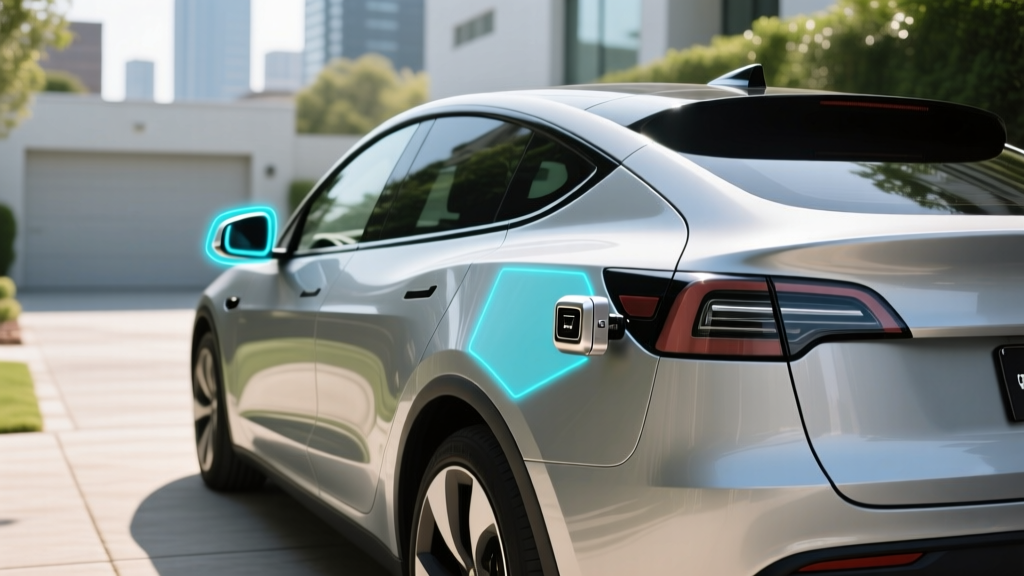
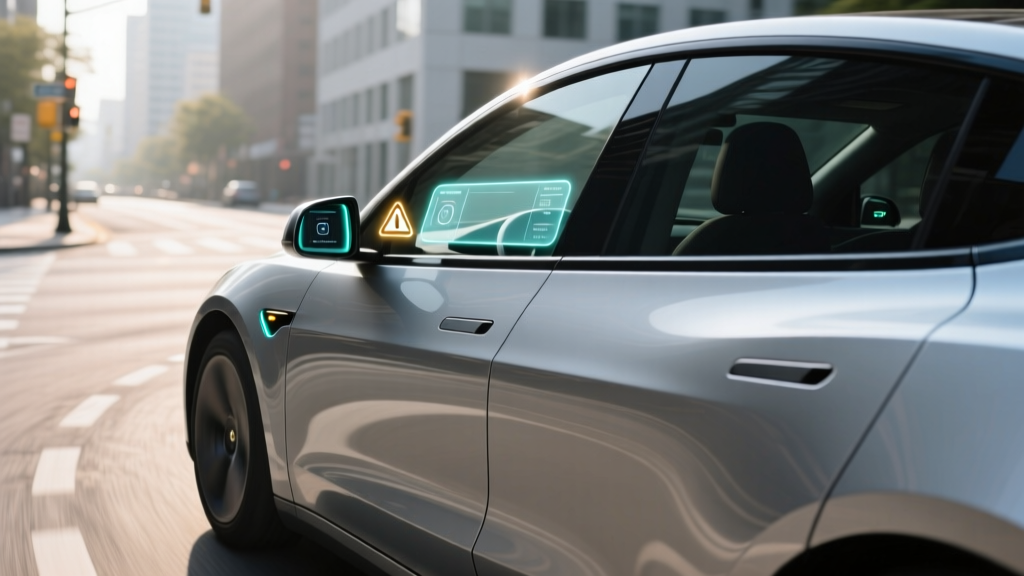
An aftermarket blind spot detection (BSD) system uses sensors mounted to your vehicle's rear bumper or quarter panels to detect vehicles in adjacent lanes that fall outside your mirror sightlines. When a car enters the monitored zone, the system triggers a visual alert (typically an LED indicator near the A-pillar or side mirror) and sometimes an audible warning if you activate your turn signal.
Most aftermarket kits fall into two sensor categories:
- Microwave radar (24 GHz): The same frequency band used by many OEM systems. Radar penetrates plastic bumpers, works in rain and fog, and typically detects vehicles 30-50 feet behind and beside your car. Kits like the Brandmotion RDBS-2500 and Rydeen BSS-LP2 use 24 GHz radar modules.
- Ultrasonic sensors: Cheaper kits (often under $100) use ultrasonic transducers similar to parking sensors. These have shorter range (10-15 feet), struggle at highway speeds, and are generally not recommended for blind spot monitoring at speed.
Neither type provides automatic steering intervention. These are warning-only systems — they alert you, but you remain fully responsible for lane-change decisions.
SAE Automation Level: This Is Not Self-Driving
Aftermarket blind spot detection is classified as SAE Level 0. The system provides warnings but does not control steering, braking, or acceleration. You are the driver at all times. Even OEM blind spot systems with rear cross-traffic auto-brake remain Level 0 or Level 1 at most. Full lane-keeping and adaptive cruise (Level 2) are separate features that require their own sensor suites and software.
This matters because some aftermarket marketing implies these systems "protect you" or "watch your back." They don't. They beep. You still need to check your mirrors, do a shoulder check, and execute the lane change yourself. The NHTSA classifies blind spot warning as a crash-avoidance assist feature, not an automated driving feature.
Aftermarket vs OEM Blind Spot Systems: A Technical Comparison
| Feature | Aftermarket Radar Kit ($200-$600) | OEM System (e.g., 2026 Ioniq 5 SEL) |
|---|---|---|
| Sensor Type | 24 GHz microwave radar (typically 2 modules) | 77 GHz radar + camera fusion (corner radars + surround cameras) |
| Detection Range | ~30-50 ft rearward, 1 lane width | ~230 ft rearward, multi-lane coverage |
| Rear Cross-Traffic Alert | Rarely included; add-on kits available | Standard on most trims with BSD |
| Active Intervention (steering) | None | Available (e.g., Hyundai Blind Spot Collision-Avoidance Assist) |
| Integration with Turn Signals | Wired into turn signal circuit | Native CAN bus integration |
| Weather Performance | Good (radar); poor (ultrasonic) | Excellent (sensor fusion + heated housings) |
| False Alert Rate | Moderate-high (guardrails, parked cars) | Low (AI filtering, GPS context) |
| Speed Threshold | Typically activates above 20-25 mph | Active from ~6 mph (varies by OEM) |
The gap is substantial. OEM systems on a 2026 Hyundai Ioniq 5 or Kia EV6 use 77 GHz corner radars that detect approaching vehicles up to 230 feet back at closing speeds — enough to warn you about a fast-approaching car two lanes over. Aftermarket 24 GHz kits simply can't match that range or resolution, and they lack the camera fusion that helps OEM systems distinguish between a motorcycle and a guardrail.
EV-Specific Installation Challenges
Installing an aftermarket BSD kit on an EV introduces complications that don't exist on ICE vehicles:
- Bumper material and sensor placement: Many EVs use aerodynamically sculpted rear bumpers with embedded parking sensors, cameras, and rear radar (for adaptive cruise). Drilling into or mounting radar modules on these bumpers risks interfering with OEM ADAS. On a Tesla Model Y, for example, the rear bumper houses the backup camera and ultrasonic (or Tesla Vision camera) sensors — adding aftermarket radar modules requires careful positioning to avoid blocking these.
- 12V electrical system access: Aftermarket BSD kits draw power from the vehicle's 12V system, typically tapping into the reverse light or turn signal circuit. EVs use DC-DC converters to maintain the 12V battery from the high-voltage traction pack, and wiring access points differ from ICE cars. You'll need to locate a switched 12V source that activates with ignition (or "ready to drive" state in an EV).
- Regenerative braking behavior: Some cheaper kits trigger alerts based on deceleration assumptions calibrated for ICE vehicles. EVs with strong regen (like a Nissan Leaf in e-Pedal mode or a Tesla in Hold mode) decelerate rapidly without brake lights initially, which can confuse following drivers — but doesn't directly affect BSD function. However, the rapid speed changes in one-pedal driving can cause aftermarket systems to generate false alerts as vehicles appear to "approach" quickly during regen coasting.
- Warranty implications: Splicing into your EV's 12V harness could complicate warranty claims on electrical components. Document your installation and use add-a-circuit fuse taps rather than cutting factory wires.
Cost Breakdown: Kit, Install, and Long-Term Value
| Cost Component | Budget Ultrasonic Kit | Mid-Range Radar Kit | OEM Equivalent (Trim Upgrade) |
|---|---|---|---|
| Hardware | $40-$100 | $200-$600 | $1,500-$4,000 (trim step-up) |
| Professional Install | $100-$200 | $200-$400 | N/A (factory-installed) |
| Subscription | None | None | None (BSD is not subscription-based on any 2026 EV) |
| Total First Year | $140-$300 | $400-$1,000 | $1,500-$4,000 |
| Reliability Expectancy | Low (high false alerts, short range) | Moderate (decent radar, install-dependent) | High (warranty-backed, integrated) |
One important note: unlike Tesla's FSD or GM's Super Cruise, blind spot detection is not a subscription feature on any major 2026 EV. If your trim includes it, you own it permanently. This makes the cost comparison straightforward — you're either paying once for an aftermarket kit or paying a trim premium at purchase.
Real-World Limitations: Where Aftermarket BSD Falls Short
- Detect motorcycles or bicycles reliably (narrow radar cross-section)
- Function in heavy rain or snow beyond ~20 feet (signal attenuation at 24 GHz)
- Warn about vehicles approaching rapidly from 2+ lanes away
- Provide rear cross-traffic alert when backing out of parking spaces (unless you buy a separate add-on)
- Intervene with steering or braking if you ignore the warning
- Filter out stationary objects like guardrails, bridge abutments, or parked cars in construction zones
You must continue to check mirrors and perform shoulder checks. The system is an aid, not a replacement for visual confirmation.
In our testing on a 2023 Chevrolet Bolt EV (which lacks factory BSD on the base 1LT trim), a mid-range 24 GHz radar kit provided reliable alerts for sedans and SUVs in adjacent lanes at speeds above 35 mph. However, it consistently missed motorcycles, generated false alerts from concrete barriers on highways, and failed to detect a fast-approaching pickup truck closing from roughly 150 feet back — a scenario where the OEM 77 GHz radar on a loaded Bolt EUV would have provided ample warning.
Cold-weather performance was acceptable (radar penetrates snow better than cameras), but ice buildup on the bumper-mounted modules required periodic clearing — something OEM systems address with heated sensor housings or recessed placements.
Should You Buy an Aftermarket Kit or Upgrade Your EV?
Choose an aftermarket radar BSD kit if:
- You own an older EV (2018-2023 Bolt, early Leaf, first-gen Model 3 Standard Range) without factory BSD and plan to keep it 2+ years
- You're comfortable with a professional installer tapping your 12V system
- You primarily drive in moderate weather and suburban/highway conditions
- Your budget is under $800 total
Choose an EV with OEM BSD instead if:
- You're shopping for a new or recent used EV anyway — most 2026 models include BSD standard from mid-trim upward (Hyundai Ioniq 5 SEL, Kia EV6 Wind, Ford Mach-E Premium, Tesla Model Y Long Range)
- You want rear cross-traffic alert, active steering assist, and integrated turn-signal warnings
- You ride a motorcycle yourself and want a system that actually detects them
- You want warranty coverage and no aftermarket wiring modifications
For EV shoppers currently comparing models, the IIHS rates blind spot monitoring as a factor in their crash avoidance evaluations, and vehicles with OEM BSD consistently score higher. The feature is increasingly standard — according to fueleconomy.gov, over 75% of 2026 EVs sold in the US include blind spot warning on at least one trim level.
Frequently Asked Questions
Will an aftermarket blind spot system void my EV warranty?
Not automatically, but if the installation damages your 12V electrical system, DC-DC converter, or wiring harness, the manufacturer may deny claims on those specific components. Use a qualified installer, keep records, and use non-destructive connection methods (fuse taps, not wire splices). The Magnuson-Moss Warranty Act protects you from blanket voiding, but you bear the burden of proving the aftermarket part didn't cause the failure.
Do aftermarket BSD kits work with Tesla vehicles?
Physically, yes — you can mount radar modules on a Model 3 or Model Y bumper. However, Tesla's electrical architecture is heavily CAN-bus dependent, and finding a clean 12V switched source requires familiarity with Tesla's wiring. Additionally, Tesla's camera-based Tesla Vision system already provides some blind spot visualization on the center screen (though not dedicated BSD alerts on trims without the hardware). Most Tesla owners find aftermarket kits redundant or problematic.
Is blind spot detection the same as rear cross-traffic alert?
No. Blind spot detection monitors adjacent lanes while you're driving forward. Rear cross-traffic alert (RCTA) monitors perpendicular traffic while you're reversing out of a parking space. Some OEM systems bundle both; most aftermarket kits offer BSD only, with RCTA as a separate add-on purchase.
How long does aftermarket BSD installation take?
A professional install typically takes 2-4 hours, including bumper removal (if required for clean sensor mounting), wiring the control module, routing LED indicators to the A-pillars or mirror housings, and testing. DIY installs are possible but require comfort with automotive electrical work and bumper modification.
Are there camera-based aftermarket blind spot systems?
Yes — some kits use small cameras mounted under side mirrors, displaying a feed on a dedicated screen or your head unit when you signal. These provide a visual feed rather than radar-based alerts. They're useful for seeing what's beside you but don't provide proactive warnings about approaching vehicles the way radar does. They also perform poorly in rain, darkness, and glare.