Blind Spot Detection on EVs: What It Does and How It Works
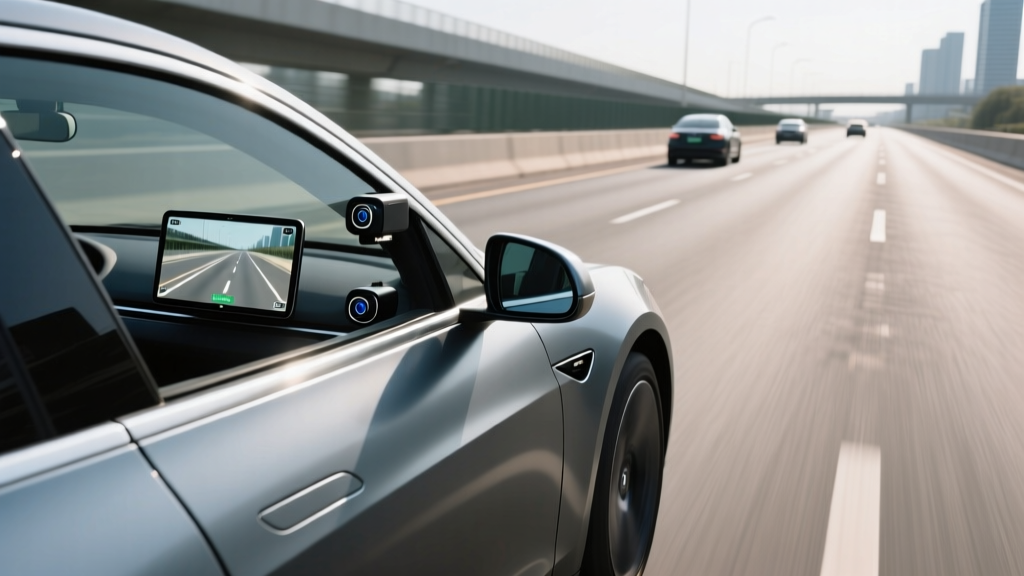
Blind spot detection (BSD), also called blind spot monitoring (BSM), uses radar or ultrasonic sensors mounted behind the rear bumper or within the side mirrors to scan adjacent lanes for vehicles entering your blind zones. When a car is detected, a visual indicator — typically an amber LED in or near the side mirror — illuminates. If you activate your turn signal while a vehicle is present, the system escalates to a flashing warning, audible chime, or haptic steering-wheel pulse.
On modern EVs like the Tesla Model Y, Hyundai Ioniq 5, and Ford Mustang Mach-E, blind spot detection is integrated into a broader ADAS (advanced driver-assistance system) suite that shares sensor data with lane-keeping, automatic emergency braking, and rear cross-traffic alert. The radar units typically operate at 77 GHz (millimeter-wave), offering reliable detection in rain, fog, and darkness — conditions where camera-only systems struggle.
Blind spot detection is classified as an SAE Level 1 feature — it provides warnings or minor interventions but does not control steering or acceleration. Even when bundled with Level 2 systems like Tesla Autopilot, Ford BlueCruise, or GM Super Cruise, the driver must remain fully engaged, hands on or near the wheel, and eyes on the road. BSM is a support tool, not a substitute for mirror checks and shoulder glances.
Can You Add Blind Spot Detection to a Car That Didn't Come With It?
The short answer: yes, but with significant caveats — especially on electric vehicles. There are two paths to adding BSD to a car that lacks it from the factory:
OEM Retrofit (Factory-Option Activation)
Some vehicles are built with pre-wired harnesses and sensor mounting points for blind spot detection, even on base trims where the feature isn't activated. In these cases, a dealer or specialist can install OEM sensors, mirror assemblies with indicator LEDs, and perform the necessary module coding. This is most common on vehicles from Hyundai/Kia, Volkswagen Group, and BMW, where trim-level option packages share common wiring architectures.
For EVs specifically, the Hyundai Ioniq 5 SE (base trim) omits blind spot collision warning, while the SEL and Limited trims include it as standard. An OEM retrofit on an Ioniq 5 SE typically runs $800–$1,400 including parts (sensor modules, mirror caps with LEDs, wiring harness) and dealer coding. Availability depends on whether the vehicle's body control module supports the feature — not all do.
Aftermarket Blind Spot Systems
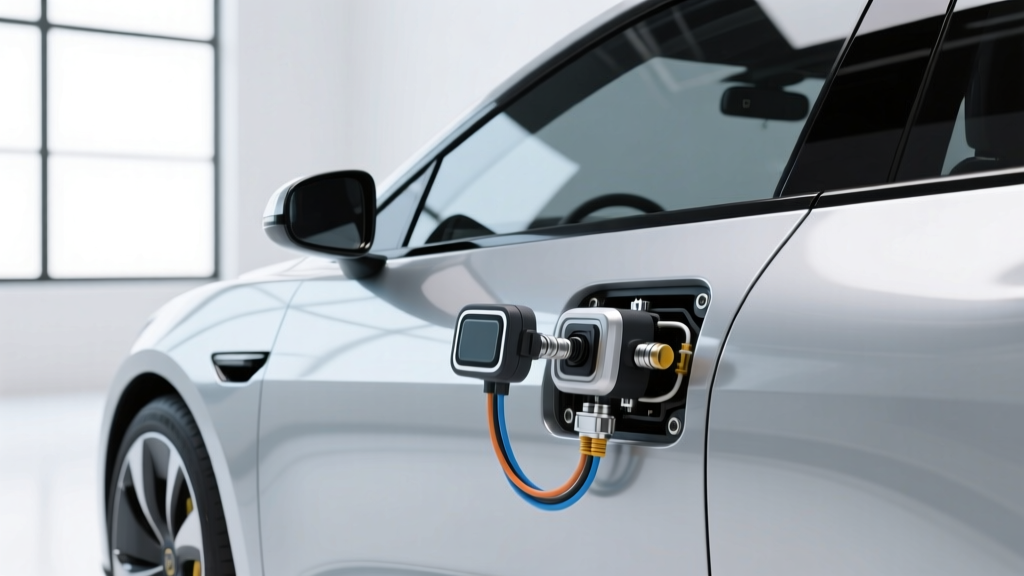
Universal aftermarket BSD kits use standalone radar or ultrasonic sensors paired with indicator lights that mount on your A-pillars or mirror housings. Brands like Brandmotion (RearVision), Rydeen (BSS2LP), and Eway (radar-based kits on Amazon) offer systems ranging from $150 to $600 for parts alone.
However, aftermarket systems carry real trade-offs for EV owners:
- No CAN-bus integration: Aftermarket kits cannot communicate with your EV's existing ADAS, instrument cluster, or turn-signal logic. Warnings are limited to standalone LEDs or buzzers.
- Installation complexity on EVs: Running wiring through an EV's high-voltage-safe body structure and removing bumper covers without disturbing charge-port wiring or ultrasonic park sensors requires a skilled installer. Labor can add $200–$500.
- Detection accuracy: Budget ultrasonic kits have shorter range (~10–15 feet) and slower response times vs. OEM 77 GHz radar (~30–50 feet, <100ms response).
- Warranty risk: Splicing into a 12V accessory circuit on a Tesla, Rivian, or any EV with OTA updates may cause electrical gremlins or void portions of the vehicle's electrical warranty.
OEM vs Aftermarket Blind Spot Systems: Feature Comparison
| Feature | OEM Integrated | OEM Retrofit | Aftermarket Kit |
|---|---|---|---|
| Sensor Type | 77 GHz Radar | 77 GHz Radar (OEM) | 24 GHz Radar or Ultrasonic |
| Detection Range | 30–50 ft lateral | 30–50 ft lateral | 10–25 ft lateral |
| Turn-Signal Integration | Yes (escalated alert) | Yes (if coded) | No |
| Rear Cross-Traffic Alert | Bundled | Often bundled | Rarely |
| Cluster/HUD Display | Yes | Yes (if supported) | No |
| Active Steering Assist | Some (e.g., Hyundai BCA) | Model-dependent | Never |
| Typical Total Cost | Included in trim | $800–$1,800 | $350–$1,100 (installed) |
Blind Spot Detection Across Major EV Brands: What's Included and Where
Blind spot feature naming varies significantly by manufacturer, and availability shifts by model year and trim. Here's how the major EV brands handle it as of the 2025–2026 model years:
Feature name: Blind Spot Camera / Blind Spot Collision Warning
Availability: Standard on all current models (Model 3, Model Y, Model S, Model X, Cybertruck) via side-repeater cameras and neural-net processing. Visual alerts appear on the touchscreen and instrument display. No radar — Tesla uses a camera-only (Tesla Vision) approach.
Active intervention: Blind Spot Collision Avoidance Assist applies corrective steering if you begin a lane change with a detected vehicle.
Cost: Included — no subscription required. (Note: FSD Supervised, a separate Level 2 system at $8,000 or $99/month, includes more advanced lane-change logic but is not required for basic BSM.)
Feature name: Blind-Spot Collision-Avoidance Assist (BCA) / Blind-Spot View Monitor (BVM)
Availability: Standard on Ioniq 5 SEL and above, Ioniq 6 SEL and above, Kia EV6 Wind and above. Omitted on base Ioniq 5 SE. BVM (camera feed in cluster when signaling) is Limited/GT-Line only.
Active intervention: BCA can apply braking to individual wheels to prevent a collision during a lane change.
Cost: Included in qualifying trims — no subscription.
Feature name: Blind Spot Information System (BLIS) with Cross-Traffic Alert
Availability: Standard on Mustang Mach-E Premium and GT; available in the Co-Pilot360 Active 2.0 package on Select trim. Standard on F-150 Lightning Lariat and above.
Active intervention: BLIS with Trailer Coverage extends detection for towing. No active steering correction on BLIS alone — that requires BlueCruise (Level 2, hands-free on divided highways).
Cost: Included in qualifying trims. BlueCruise: $2,100 for 3 years or $75/month subscription.
Feature name: Side Blind Zone Alert / Lane Change Alert with Side Blind Zone Alert
Availability: Standard on Chevrolet Equinox EV 2LT and above, Blazer EV RS, Cadillac Lyriq all trims. Omitted on Equinox EV base 2LT Fleet.
Active intervention: No steering correction via BSM alone. Super Cruise (Level 2, hands-free) includes automatic lane change with blind spot monitoring.
Cost: Included in qualifying trims. Super Cruise: $2,100 for 3 years on Lyriq, then subscription-based.
Feature name: Active Blind Spot Detection
Availability: Standard on iX all trims, i4 eDrive40 and above (included in Driving Assistance Package on base i4 eDrive35).
Active intervention: Steering correction to prevent lane-change collision.
Cost: Included — no subscription on current models.
Feature name: Blind Spot Warning
Availability: Standard on all R1T and R1S vehicles via the Driver+ ADAS suite.
Active intervention: Visual and audible warnings; no active steering correction as of current OTA software.
Cost: Included — no subscription.
Real-World Limitations: When Blind Spot Detection Fails
Blind spot detection is an assistive warning system, not an autonomous safety net. The following conditions can degrade or defeat BSM performance:
- Motorcycles and bicycles: Narrow profiles may not trigger radar or camera detection reliably. The NHTSA notes that ADAS sensors are primarily calibrated for passenger-vehicle-sized objects.
- High-speed differentials: If a vehicle approaches your blind zone at 30+ mph faster than your speed (e.g., you're at 55 mph, they're at 85+ mph), the sensor may not track the object long enough to issue a timely warning.
- Heavy rain, snow, and ice: Radar sensors behind the bumper can be blocked by ice buildup or heavy precipitation. Camera-based systems (Tesla Vision) degrade more noticeably in rain and low-light conditions.
- Stationary objects: BSM is designed to detect moving vehicles. Parked cars, guardrails, and curbs are filtered out to prevent nuisance alerts — meaning the system won't warn you about a stationary obstacle in your blind zone.
- Curved roads: Tight curves can cause the sensor's detection zone to point off-road, missing vehicles in the adjacent lane, or pointing at the lane you're curving into, causing false positives.
- Towing: Trailers extend your vehicle length and alter blind zone geometry. Only select systems (Ford BLIS with Trailer Coverage, GM's trailer-aware alerts) compensate for this.
- Aftermarket bumper accessories: Bike racks, hitch-mounted cargo carriers, and bumper covers can physically block radar sensors.
Bottom line: Always perform a physical shoulder check before changing lanes. BSM is a supplement, not a replacement, for driver awareness.
Cost Breakdown: Adding Blind Spot Detection to Your EV
| Option | Parts Cost | Labor/Install | Total Range | Subscription? |
|---|---|---|---|---|
| OEM Retrofit (dealer) | $400–$900 | $400–$900 | $800–$1,800 | No |
| Aftermarket Radar Kit | $150–$400 | $200–$500 | $350–$900 | No |
| Aftermarket Ultrasonic Kit | $80–$200 | $150–$350 | $230–$550 | No |
| Upgrade to Higher Trim (trade-in) | N/A | N/A | Varies ($2K–$6K delta) | No |
EV-specific installation note: On vehicles with a rear-mounted charge port (like some European-market EVs) or complex rear-bumper sensor arrays (parking sonar, rear cameras, kick-sensor for hands-free liftgate), aftermarket installers must route wiring carefully to avoid interference. Expect labor to be 20–40% higher on an EV than on a comparable ICE vehicle due to additional trim removal and high-voltage safety protocols.
Should You Add Blind Spot Detection or Just Upgrade Your EV?
If you own a base-trim EV without blind spot detection and plan to keep it for several more years, an OEM retrofit (if your vehicle's architecture supports it) is the most reliable path. It preserves factory integration — cluster warnings, turn-signal escalation, and rear cross-traffic alert all work as designed.
If an OEM retrofit isn't supported or exceeds $1,500, consider whether upgrading to a higher-trim used EV makes more financial sense. For example, a 2024 Hyundai Ioniq 5 SEL with BSM, 36 months of remaining battery warranty, and potential eligibility for the $4,000 used-EV federal credit (income-limited, per IRS §25E rules) might cost only marginally more than a retrofit when you factor in the additional features and warranty coverage.
Aftermarket kits are a reasonable stopgap for budget-conscious owners, but understand you're getting a standalone warning light — not the integrated, multi-sensor safety system that OEM engineering provides. For the best crash-test-rated EVs, keeping all factory safety systems intact and functional is the optimal approach.
Blind Spot Detection FAQ
Does Tesla's blind spot detection work without radar?
Yes. Tesla uses its side-repeater cameras and neural-network processing (Tesla Vision) for blind spot detection. It's standard on all current Tesla vehicles. However, camera-based BSM can be slightly less reliable than 77 GHz radar in heavy rain, fog, or direct sun glare. Tesla's system provides visual warnings on the touchscreen and can apply corrective steering via Blind Spot Collision Avoidance Assist.
Can I install blind spot detection on a Tesla that already has it but want better alerts?
Tesla's BSM is software-defined and cannot be enhanced with aftermarket hardware without risking conflicts with Tesla Vision. You can adjust alert sensitivity and enable/disable Blind Spot Collision Avoidance Assist in the Autopilot settings menu. Third-party hardware additions are strongly discouraged on Teslas due to the integrated nature of the electrical architecture and OTA update cycles.
Is blind spot detection included in the federal EV tax credit calculation?
No. The §30D New Clean Vehicle Credit and §25E Used Clean Vehicle Credit are based on the vehicle's battery sourcing, MSRP cap ($55,000 sedans / $80,000 SUVs/trucks for new), and buyer income limits. Individual safety features like BSM do not affect credit eligibility. Always verify current-year rules at IRS.gov or consult a tax professional.
Will an aftermarket blind spot system void my EV warranty?
Under the Magnuson-Moss Warranty Act, a manufacturer cannot void your entire vehicle warranty simply because you installed an aftermarket accessory. However, if the aftermarket BSM installation causes an electrical fault — for example, a short in the 12V system that damages a body control module — the repair for that specific damage may not be covered. On EVs with extensive OTA-managed electronics, the risk of cascading issues is higher than on conventional vehicles.
How does blind spot detection differ from rear cross-traffic alert?
Blind spot detection monitors adjacent lanes while driving forward at typical road speeds. Rear cross-traffic alert uses the same sensors (or shared sensor hardware) but activates when the vehicle is in reverse — scanning perpendicular to your car for approaching vehicles when backing out of a parking space. Most OEM systems bundle both features together; aftermarket kits rarely include rear cross-traffic functionality.
Can blind spot detection detect pedestrians or cyclists?
Generally, no. BSM radar is calibrated for vehicle-sized metallic objects moving at road speeds. Pedestrians and cyclists have smaller radar cross-sections and may not trigger alerts. Some newer camera-based systems (like those with pedestrian-detection AI on the Hyundai Ioniq 5 Limited or BMW iX) can flag cyclists in the blind zone via the camera feed, but this is a separate feature from standard BSM. Always shoulder-check for vulnerable road users.