Does the 2021 Toyota Prius Prime LE Come With a Blind Spot Monitor?
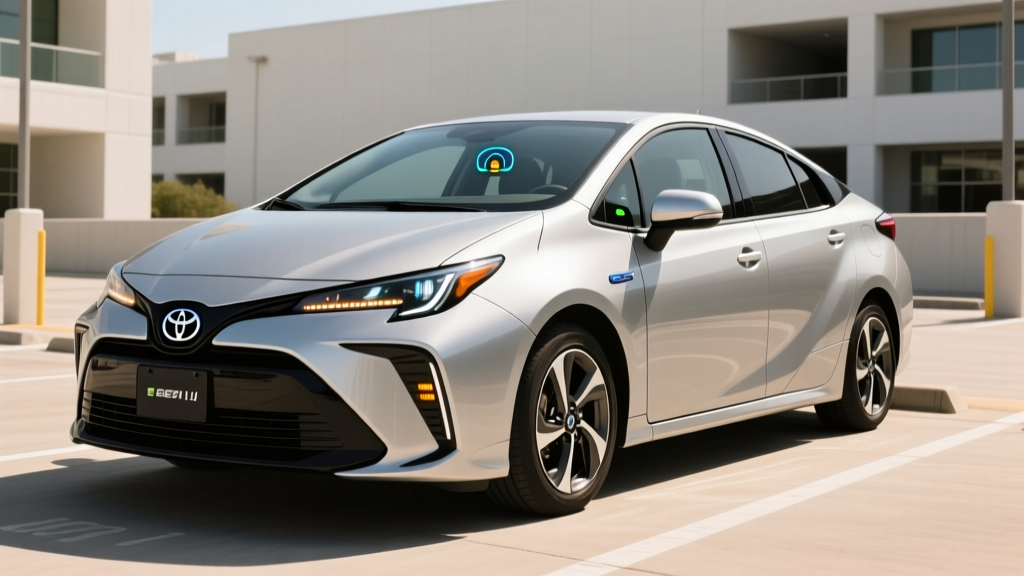
If you've been searching for a definitive answer on whether the 2021 Prius Prime LE blind spot monitor standard equipment list includes it, the short answer is no. For the 2021 model year, Toyota reserved its Blind Spot Monitor (BSM) with Rear Cross-Traffic Alert (RCTA) for the higher-tier XLE and Limited trims of the Prius Prime. The base LE trim did not receive BSM as standard or even as a standalone factory option.
This is a meaningful distinction for shoppers comparing used 2021 Prius Prime LE listings against XLE or Limited examples, particularly those who rely on blind-spot detection for highway merging and lane changes. Let's unpack exactly what the LE does include, how Toyota's driver-assistance suite works technically, and where the real-world limitations lie.
What the 2021 Prius Prime LE Actually Includes: Toyota Safety Sense 2.0
While the LE lacks BSM, it does come standard with Toyota Safety Sense 2.0 (TSS 2.0), Toyota's bundled ADAS suite. This is a significant package and one of the more comprehensive Level 2 driver-assist systems available on a sub-$30,000 plug-in hybrid at the time. Here's what TSS 2.0 covers:
| Feature | Technology | Function | Standard on LE? |
|---|---|---|---|
| Pre-Collision System (PCS) | Camera + millimeter-wave radar | Detects vehicles, pedestrians, cyclists; applies automatic emergency braking | Yes |
| Full-Speed Dynamic Radar Cruise Control (DRCC) | Front radar + camera | Adaptive cruise from 0 mph to highway speeds; maintains set following distance | Yes |
| Lane Departure Alert (LDA) w/ Steering Assist | Forward-facing camera | Warns and gently steers if drifting out of lane without a turn signal | Yes |
| Lane Tracing Assist (LTA) | Camera (lane markings) | Provides continuous centering torque when DRCC is active | Yes |
| Automatic High Beams (AHB) | Forward camera | Switches between high and low beams based on oncoming traffic | Yes |
| Road Sign Assist (RSA) | Forward camera | Reads speed limit, stop, and other signs; displays on instrument cluster | Yes |
| Blind Spot Monitor (BSM) | Side/rear radar sensors | Illuminates indicator in side mirror when vehicle detected in blind zone | No — XLE/Limited only |
| Rear Cross-Traffic Alert (RCTA) | Same rear radar as BSM | Warns of approaching traffic when reversing from a parking space | No — XLE/Limited only |
The LE does include a backup camera as standard (federally mandated since 2018), along with front and rear parking sensors on some build dates. But the radar-based blind-spot and cross-traffic systems require stepping up to the XLE (MSRP ~$30,600 in 2021) or Limited (~$33,500).
How Blind Spot Monitor Works: The Technical Side
Toyota's BSM system uses 24 GHz millimeter-wave radar sensors mounted behind the rear bumper fascia on each side. These sensors scan adjacent lanes roughly 10 feet back from the side mirrors and up to about one lane-width outward. When a vehicle enters the detection zone and the Prius is traveling above approximately 10 mph, an amber indicator illuminates in the corresponding side mirror.
If the driver activates a turn signal toward the occupied lane, the indicator flashes and an audible chime may sound (depending on settings). The system filters out stationary objects like guardrails and parked cars, and it ignores vehicles passing quickly or more than one lane away.
This is fundamentally different from the camera-based lane detection used by TSS 2.0's LDA and LTA. BSM relies on radar, which operates independently of lane markings, lighting conditions, and most weather — a meaningful advantage in rain, fog, or poorly marked roads.
Blind Spot Monitor is classified as an SAE Level 0 warning system (it alerts but does not intervene with steering or braking). When combined with DRCC and LTA in the Prius Prime, the overall TSS 2.0 suite operates at SAE Level 2 — meaning it can simultaneously control longitudinal (speed/distance) and lateral (steering centering) inputs, but the driver must remain fully engaged, hands on or near the wheel, and eyes on the road at all times. This is not self-driving. Toyota does not market it as such, and the system will issue escalating warnings and eventually disengage if it detects driver inattention.
Trim Comparison: LE vs. XLE vs. Limited on ADAS Features
| Feature | LE (~$28,220) | XLE (~$30,600) | Limited (~$33,500) |
|---|---|---|---|
| TSS 2.0 (full suite) | Standard | Standard | Standard |
| Blind Spot Monitor (BSM) | Not available | Standard | Standard |
| Rear Cross-Traffic Alert | Not available | Standard | Standard |
| Front & Rear Parking Assist | Rear only | Front + Rear | Front + Rear |
| Head-Up Display | Not available | Not available | Standard |
| 360° Bird's-Eye Camera | Not available | Not available | Optional (Premium pkg) |
For used-car shoppers in 2026, the XLE represents the value sweet spot if BSM is a priority. The price gap between LE and XLE on the used market has compressed, often to just $1,500–$3,000, and you gain not only BSM/RCTA but also SofTex-trimmed seats, a power-adjustable driver's seat, and wireless phone charging.
Real-World Limitations of Toyota's ADAS Suite
- BSM does not detect motorcycles or bicycles reliably. The radar cross-section of a motorcycle is much smaller than a passenger car, and the system may not alert in time.
- BSM does not function below ~10 mph. It's designed for highway and arterial-road lane changes, not parking-lot maneuvers (that's RCTA's role in reverse).
- LTA centering assist requires visible lane markings. In construction zones, faded lines, or snow-covered roads, the system will disengage and display a warning. It will not navigate unmarked roads.
- DRCC following distance is adjustable but not instantaneous. At highway speeds, a cut-in vehicle may take 1–2 seconds before the radar registers and begins decelerating. Driver intervention is frequently required in aggressive traffic.
- Heavy rain, snow buildup, or mud on the front emblem (radar) or windshield (camera) will disable TSS features. The system will alert the driver but will not operate until sensors are clear.
- LTA does not handle sharp curves. It is designed for gentle highway arcs. On tight on-ramps or winding rural roads, the system will not maintain centering and the driver must take full steering control.
These limitations are consistent across virtually all SAE Level 2 systems from Toyota, Honda, Hyundai, and even Tesla's base Autopilot. The key differentiator among brands is not whether these limitations exist, but how gracefully the system communicates them and how intuitive the handoff-back-to-driver experience feels.
How Toyota's ADAS Compares to Competing PHEV/EV Systems
In the 2021 model year, the Prius Prime competed against PHEVs like the Honda Clarity Plug-In Hybrid (discontinued after 2021), Hyundai Ioniq PHEV, and the Ford Escape PHEV. Here's how Toyota's approach stacked up on driver assistance:
| System | Vehicle | Lane Centering | BSM Standard? | Stop-and-Go ACC |
|---|---|---|---|---|
| Toyota Safety Sense 2.0 | Prius Prime XLE | Yes (LTA) | Yes (XLE/Ltd) | Yes (full-speed DRCC) |
| Honda Sensing | Clarity PHEV | Yes (LKAS) | Standard (Touring only) | Yes (ACC w/ LSF) |
| Hyundai SmartSense | Ioniq PHEV SEL | Yes (LFA) | Yes (SEL and up) | Yes (SCC w/ Stop/Go) |
| Ford Co-Pilot360 | Escape PHEV Titanium | Yes (Lane Centering) | Yes (BLIS on SEL+) | Yes (ACC w/ Stop/Go) |
Toyota's full-speed DRCC was a genuine advantage over some rivals that required a minimum speed (typically 20–25 mph) before adaptive cruise would engage. The Prius Prime could crawl in traffic hands-on-wheel without the system dropping out — a meaningful benefit in urban congestion. However, Hyundai's Lane Following Assist (LFA) was generally regarded as offering more confident centering torque on curves, while Ford's Co-Pilot360 Assist+ (optional on Titanium) offered an early version of hands-free driving on mapped highways, which Toyota did not offer on any 2021 model.
Cost and Ownership Considerations
Unlike Tesla's Full Self-Driving capability (which carries a $8,000 one-time purchase or $99/month subscription as of 2026) or GM's Super Cruise ($2,200–$2,500 package), Toyota Safety Sense 2.0 is included in the vehicle's MSRP at no additional cost across all Prius Prime trims. There is no subscription, no over-the-air paywall, and no feature degradation over time.
| Brand / System | Cost Model | Price |
|---|---|---|
| Toyota Safety Sense 2.0 | Included in MSRP | $0 additional |
| Tesla Autopilot (basic) | Included in MSRP | $0 additional |
| Tesla FSD (Supervised) | One-time or subscription | $8,000 or $99/mo |
| GM Super Cruise | Package option | $2,200–$2,500 (incl. 3 yrs connectivity) |
| Ford BlueCruise (1.0/1.2) | Subscription after trial | $75/mo or $800/yr after 90-day trial |
| Hyundai SmartSense | Included in MSRP | $0 additional |
Toyota's decision to bundle TSS as standard across all trims — not just high-end ones — is a genuine safety differentiator. The only caveat is that BSM specifically requires the XLE or Limited trim, which means the LE buyer misses out on one of the most practically useful daily-driving features in the suite.
Prius Prime PHEV Powertrain Context for 2021
For buyers evaluating the 2021 Prius Prime as a used PHEV in 2026, it's worth reviewing the core specs that define ownership:
- Battery: 8.8 kWh lithium-ion (usable ~6.7 kWh), NMC chemistry
- EPA electric-only range: 25 miles (fueleconomy.gov)
- EPA combined MPGe: 133 MPGe (electric + gas); 54 MPG combined on gas alone
- Level 2 charge time: ~2 hours at 240V / 3.3 kW onboard charger
- 0–60 mph: ~10.2 seconds (combined 121 hp net system output)
- Hybrid battery warranty: 10 years / 150,000 miles (California-emissions states); 8 years / 100,000 miles (federal)
The 25-mile EV range is modest by 2026 standards (the current-generation Prius Prime offers 44 miles), but for a commute under 20 miles with home Level 2 charging, the 2021 model remains an efficient and practical daily driver. The LE trim's lighter curb weight (~3,300 lbs) also gives it a slight efficiency edge over the XLE and Limited.
Frequently Asked Questions
Can I add a blind spot monitor to a 2021 Prius Prime LE after purchase?
Not through Toyota. The LE was not engineered with the rear-bumper radar housings, wiring harness, or mirror indicator assemblies needed for BSM. Aftermarket blind-spot kits exist (typically $300–$600 installed), but they use ultrasonic sensors rather than radar, have shorter detection ranges, and will not integrate with the Prius's instrument cluster or mirror indicators. They also won't provide RCTA functionality. If BSM is essential, purchasing an XLE or Limited is the cleaner solution.
Is Toyota Safety Sense 2.0 considered self-driving?
No. TSS 2.0 is an SAE Level 2 driver-assistance system. It can simultaneously manage speed, following distance, and lane centering, but it requires continuous driver supervision. The steering wheel has a torque sensor that detects whether the driver's hands are on the wheel; if not, the system issues visual, audible, and eventually haptic warnings before disengaging. The driver is legally and practically responsible for all vehicle operation at all times.
Does the 2021 Prius Prime LE have any blind-spot awareness at all?
The LE has side mirrors with manual or power-adjustable glass (depending on build date) but no electronic blind-spot detection. The backup camera provides a wide-angle rear view useful for parking, but it does not monitor adjacent lanes while driving forward. The LE's TSS 2.0 suite monitors the road ahead, not to the sides or rear.
How does the 2021 Prius Prime's ADAS hold up in 2026?
TSS 2.0 remains a competent and well-regarded Level 2 system. It lacks the hands-free highway capability of Ford BlueCruise or GM Super Cruise, and Toyota's lane-centering algorithm is more conservative (less assertive on curves) than Hyundai's or Tesla's. However, the system is reliable, requires no subscription, and has a strong safety record. According to IIHS, the 2021 Prius Prime earned a Top Safety Pick designation when equipped with specific headlights (the Limited trim's LED projector units; the LE's LED reflectors received a lower rating).
Is the Prius Prime LE still eligible for any tax credits in 2026?
The federal §30D new-vehicle tax credit no longer applies to the 2021 Prius Prime, as it is no longer sold new. However, if purchased from a dealer as a used vehicle, the used clean vehicle credit (IRC §25E) may apply: up to $4,000 or 30% of the sale price (whichever is less), subject to buyer income caps ($75,000 single / $150,000 joint), a $25,000 maximum sale price, and the vehicle being at least two model years old. Consult a tax professional and review IRS guidance on the used clean vehicle credit for current eligibility details.