Understanding Honda Sensing Reliability and False Alerts
Honda Sensing is one of the most widely deployed Advanced Driver Assistance Systems (ADAS) on the road today, standard on nearly every new Honda vehicle. While it provides critical safety nets like automatic emergency braking and lane centering, many owners report frustration with system reliability, specifically regarding false alerts and 'phantom braking' events. When the Collision Mitigation Braking System (CMBS) suddenly slams on the brakes for a shadow, or the Lane Keeping Assist System (LKAS) aggressively tugs the steering wheel toward a faded road line, it can erode driver trust and create hazardous traffic situations.
According to research on ADAS reliability by the Insurance Institute for Highway Safety (IIHS), driver acceptance of active safety systems is heavily dependent on minimizing false positives. A system that cries wolf too often leads to automation complacency, where drivers may disable the features entirely. This comprehensive how-to guide will walk you through the exact steps to troubleshoot, mitigate, and maintain your Honda Sensing suite to ensure optimal reliability and reduce false alert frequencies.
How Honda Sensing Hardware Works
Before troubleshooting, it is vital to understand the hardware. Traditional Honda Sensing setups rely on two primary sensors:
- Monocular Camera: Mounted behind the rearview mirror against the windshield, this camera reads lane markings, traffic signs, and pedestrian silhouettes.
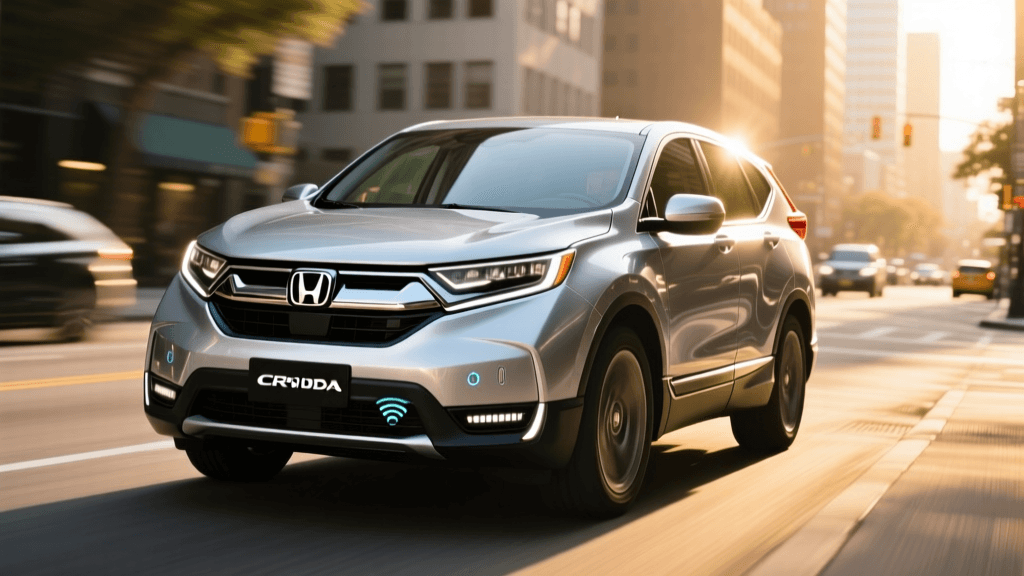
- Millimeter-Wave Radar: Hidden behind the front Honda emblem (or in the lower grille on newer models), this 77 GHz radar measures the distance and closing speed of metallic objects ahead.
False alerts occur when these two sensors disagree, or when environmental factors (heavy rain, direct sun glare, metallic road debris) trick the radar into identifying a non-threat as an imminent collision.
Step-by-Step Guide to Reducing False CMBS Alerts
The Collision Mitigation Braking System (CMBS) is the most common culprit for phantom braking. If your Honda frequently slams on the brakes when approaching shadows, overpasses, or vehicles in adjacent lanes, follow these steps to recalibrate your system's behavior.
Step 1: Adjust CMBS Distance Alert Sensitivity
Honda allows drivers to customize the warning timing of the CMBS. If you are driving in dense, stop-and-go urban traffic, the default settings may be too aggressive, leading to constant visual and auditory false warnings.
- Turn on your vehicle and access the central infotainment display (or the driver information interface on older models).
- Navigate to Settings > Vehicle > Driver Assist System Setup.
- Select CMBS Distance Alert.
- Change the setting from 'Long' to 'Normal' or 'Short'. This tells the system to wait a fraction of a second longer before triggering a forward-collision warning, significantly reducing false alerts caused by vehicles cutting in and out of your lane.
Step 2: Manage the CMBS On/Off Toggle for Specific Routes
If you frequently drive on roads with heavy metallic debris, expansion joints, or dense tree canopies that cause radar multipath errors, you can temporarily disable the CMBS. Press and hold the CMBS button (usually located to the left of the steering wheel or within the touchscreen menu) for three seconds until you hear a beep. Note that the system will reset to 'On' the next time you start the car, as mandated by NHTSA safety guidelines.
Troubleshooting LKAS and RDM False Interventions
The Lane Keeping Assist System (LKAS) and Road Departure Mitigation (RDM) rely entirely on the windshield-mounted camera. False steering interventions usually happen when the camera misinterprets construction zones, faded paint, or adjacent lane vehicles as your intended path.
Step 1: Adjust LKAS Steering Feedback
If the steering wheel feels overly 'heavy' or fights you on winding roads, the system's intervention threshold is likely set too high.
- Go to Settings > Vehicle > Driver Assist System Setup.
- Select LKAS and then Steering Feedback.
- Choose Wide. This setting reduces the aggressive torque applied to the steering wheel and requires the vehicle to drift further toward the lane marker before intervening, effectively eliminating false tugs on curved roads.
Step 2: Optimize RDM Settings for Rural Driving
RDM is designed to prevent you from driving off the road entirely. However, on narrow rural roads without painted shoulders, RDM will frequently trigger false braking and steering alerts. Navigate to the RDM settings menu and toggle Road Departure Mitigation to 'Off' when navigating unmarked country roads, relying instead on standard LKAS for gentle centering assistance.
Sensor Maintenance: The Key to ADAS Reliability
Environmental obstruction is the leading cause of Honda Sensing error messages (e.g., 'Camera Temporarily Unavailable' or 'Radar Obstructed'). Proper maintenance is non-negotiable for system reliability.
Pro-Tip: Never apply ceramic coatings, heavy carnauba waxes, or vinyl wraps over the front Honda emblem. The millimeter-wave radar must pass through the plastic emblem unimpeded. A thick layer of wax or a metallic-flecked wrap will scatter the radar waves, causing constant false phantom braking alerts.
- Windshield Camera Care: Keep the triangular area behind the rearview mirror completely clear of ice, snow, and condensation. Use a high-quality glass cleaner that leaves no streaky residue, as streaks can be misinterpreted by the camera as lane markings.
- Radar Emblem Care: Wipe the front badge with a damp microfiber cloth weekly. If the badge is heavily pitted from rock chips, the radar's focal lens is distorted, and the badge must be replaced by a dealer to restore reliability.
Honda Sensing Generations: Hardware and Reliability Comparison
Honda has continuously iterated on its ADAS hardware. Understanding which generation your vehicle uses will help you set realistic expectations for false alert frequencies.
| Generation | Model Years | Sensor Hardware | False Alert Frequency & Reliability |
|---|---|---|---|
| Gen 1 | 2015 - 2021 | 50-degree Camera + Short-Range Radar | High. Frequent phantom braking in rain; struggles with cut-in vehicles and shadow detection. |
| Gen 2 | 2022 - 2024 | Wider FOV Camera + Long-Range Radar | Moderate. Improved pedestrian detection and better intersection logic, but still susceptible to sun glare. |
| Gen 3 | 2025+ (Civic/Accord) | 90-degree Camera + 120-degree Radar | Low. Near-elimination of intersection false alerts; highly reliable in adverse weather and complex urban environments. |
As detailed on the official Honda Sensing technology page, the transition to a 90-degree field-of-view camera and a wider 120-degree radar in the newest models allows the vehicle to 'see' cross-traffic and adjacent lane vehicles much earlier, drastically reducing the sudden, panicked braking events associated with older generations.
When to Seek Professional Recalibration
Software and settings can only do so much. If your Honda Sensing system is throwing persistent error codes or pulling aggressively to one side, the physical calibration of the camera has likely been knocked out of alignment.
Triggers for Mandatory Recalibration
- Windshield Replacement: If your windshield is chipped or cracked in the camera's field of view, it must be replaced. Following replacement, the camera must undergo a static or dynamic recalibration.
- Suspension Modifications: Lowering springs or changing the ride height alters the pitch angle of the vehicle, blinding the radar to the road ahead and pointing it toward the sky.
- Front-End Collisions: Even a minor fender-bender that requires replacing the front bumper cover can shift the radar bracket by a few millimeters, which translates to a massive aiming error 100 yards down the road.
What to Expect at the Dealership
A professional ADAS recalibration typically costs between $150 and $300. The technician will place a specialized target board exactly 1.5 meters in front of the vehicle's emblem and use Honda's proprietary HDS (Honda Diagnostic System) software to align the radar and camera axes. Ensure you choose a repair shop equipped with OEM-level ADAS calibration tools; improper calibration is a severe safety hazard that will permanently ruin system reliability.
Conclusion
Honda Sensing is a highly capable suite of safety features, but it is not infallible. By understanding the limitations of millimeter-wave radar and monocular cameras, adjusting your CMBS and LKAS sensitivity settings, and maintaining a strict sensor-cleaning routine, you can drastically reduce the frequency of false alerts. Stay vigilant, keep your sensors clean, and ensure your software is up to date via the HondaLink app or your local dealer to enjoy a seamless, reliable semi-autonomous driving experience.