The Dawn of Hands-Free Highway Driving
The transition from reactive safety features to proactive, semi-autonomous driving systems represents one of the most significant paradigm shifts in modern automotive history. As consumers and manufacturers alike look toward a fully autonomous future, Level 2+ Advanced Driver Assistance Systems (ADAS) serve as the critical bridge. Among the most prominent contenders in this space is Ford BlueCruise, a hands-free highway driving system that has rapidly evolved since its inception. In this real-world review and industry outlook, we examine how BlueCruise performs on the open road, how its subscription-based business model reflects broader industry trends, and what its trajectory tells us about the future of smart driving technology.
Unlike basic adaptive cruise control and lane-centering systems that require constant torque on the steering wheel, BlueCruise operates within pre-qualified sections of divided highways, dubbed 'Blue Zones.' According to Ford's Official BlueCruise Technology Page, the system covers over 130,000 miles of compatible roads across North America. But how does it actually feel to relinquish control, and what does this technology mean for the future of daily commuting and long-haul travel?
Real-World Review: Ford BlueCruise in Action
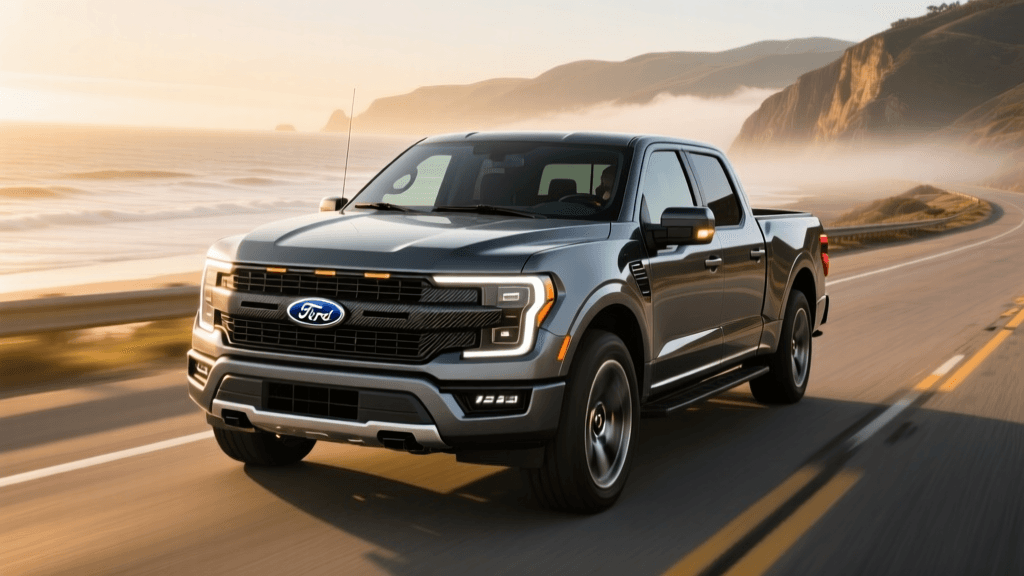
Testing BlueCruise in real-world conditions—specifically in the Ford Mustang Mach-E and the F-150 Lightning—reveals a system that prioritizes driver confidence and stringent safety monitoring. Entering a Blue Zone is seamless; the digital instrument cluster transitions from black to blue, and a clear 'Hands-Free' prompt appears. Once engaged, the vehicle manages steering, braking, and acceleration with a smoothness that often surpasses human input, particularly in stop-and-go traffic scenarios.
The cornerstone of BlueCruise's real-world viability is its Driver Monitoring System (DMS). Utilizing an infrared camera mounted on the steering column, the system tracks the driver's eye gaze and head position. This addresses a primary concern highlighted by the Insurance Institute for Highway Safety (IIHS), which has repeatedly emphasized the dangers of driver disengagement when using partial automation systems. In our testing, the DMS proved highly responsive. Looking down at a phone or turning to speak to a passenger for more than a few seconds triggered a cascading series of visual and auditory warnings, eventually bringing the vehicle to a safe halt if the driver failed to re-engage.
However, the real-world experience is not without minor friction points. Polarized sunglasses can occasionally interfere with the infrared DMS camera, prompting false 'Eyes on Road' warnings. Furthermore, while the system handles sweeping highway curves beautifully, aggressive construction zone lane shifts still require manual takeover, reminding the driver that this is a Level 2 system, not a fully autonomous chauffeur.
The Evolution of BlueCruise: From 1.0 to 1.4
To understand the future trajectory of Ford's ADAS, one must look at its rapid iteration cycle. Ford has treated BlueCruise not as a static hardware package, but as a continuously evolving software platform. Below is a breakdown of the system's evolution, showcasing how over-the-air (OTA) updates are redefining vehicle ownership.
| Version | Key Features | Real-World Impact |
|---|---|---|
| BlueCruise 1.0 | Hands-free driving in Blue Zones, basic DMS, Adaptive Cruise + Lane Centering. | Established baseline trust; reduced fatigue on long, straight interstate drives. |
| BlueCruise 1.2 | Lane Change Assist (hands-free lane changes when turn signal is activated). | Significantly improved utility, allowing the car to pass slower traffic autonomously. |
| BlueCruise 1.3 | Predictive Speed Assist, improved curve handling, enhanced DMS algorithms. | Smoother deceleration into sharp curves; fewer false DMS warnings with eyewear. |
| BlueCruise 1.4 | Enhanced lane centering, intersection assist prep, refined stop-and-go logic. | Near-rail-like stability in crosswinds and degraded lane markings. |
This iterative approach mirrors the software development lifecycle of Silicon Valley tech firms, signaling a massive shift in how legacy automakers deliver value post-purchase.
Industry Outlook: The Subscription Economy and Software-Defined Vehicles
From an industry perspective, BlueCruise is a bellwether for the 'Software-Defined Vehicle' (SDV) movement. Historically, consumers paid a one-time premium for hardware-based options. Today, Ford utilizes a subscription model for BlueCruise (typically around $75 per month or $800 annually after an initial trial period). While this has sparked debates regarding 'subscription fatigue' among consumers, it represents a vital pivot for automakers seeking recurring revenue streams to fund the exorbitant R&D costs of autonomous driving.
Looking ahead, the ADAS industry is moving toward sensor fusion and edge computing. While Tesla relies heavily on a vision-only neural network approach, Ford, alongside GM's Super Cruise, utilizes a robust combination of LiDAR, radar, and high-definition mapping. According to guidelines outlined by the National Highway Traffic Safety Administration (NHTSA), the redundancy provided by multi-sensor arrays is currently viewed as a best practice for ensuring safety in diverse environmental conditions, such as heavy rain or blinding sun glare, where cameras alone may struggle.
The future of ADAS monetization will likely bifurcate: basic safety features will remain standardized and free to satisfy regulatory mandates, while premium, hands-free convenience features will increasingly be gated behind software subscriptions and tiered performance packages.
Furthermore, the integration of Vehicle-to-Everything (V2X) communication in the late 2020s will allow systems like BlueCruise to 'see' beyond the line of sight, receiving real-time data from traffic lights, infrastructure, and other connected vehicles. This will drastically reduce the reliance on pre-mapped Blue Zones, eventually enabling hands-free driving on unmapped rural routes and complex urban corridors.
BlueCruise vs. The Competition: A Glimpse into Tomorrow
When forecasting the future of hands-free ADAS, we must compare Ford's trajectory with its main rivals. GM's Super Cruise currently holds a slight edge in total mapped highway mileage and offers hands-free trailering in the Silverado, a niche but highly lucrative market segment. However, Ford's aggressive OTA update schedule and wider vehicle availability (spanning from the Mach-E to the F-150 and Lincoln Corsair) give it a broader consumer footprint.
Tesla's Autopilot and Full Self-Driving (FSD) beta continue to push the boundaries of AI and machine learning, operating without geofenced restrictions. Yet, Tesla's lack of an infrared DMS and its reliance on steering wheel torque (or cabin cameras that lack dedicated IR focus) leaves it vulnerable to regulatory scrutiny regarding driver engagement. Ford's strict adherence to geofencing and rigorous eye-tracking positions it favorably with safety regulators, potentially shielding it from future legislative crackdowns on partial automation.
Actionable Advice for Consumers and Fleet Managers
Whether you are an individual buyer eyeing a new EV or a fleet manager looking to reduce driver fatigue, here is practical advice for navigating the BlueCruise ecosystem:
- Verify the Hardware Generation: If buying a used Ford, ensure the vehicle is equipped with the necessary hardware for BlueCruise (not just standard Co-Pilot360). Some early 2021 models require dealer retrofits to support the latest DMS and OTA capabilities.
- Factor in the Subscription Cost: Budget for the $800 annual renewal. If you frequently drive on mapped interstates, the reduction in cognitive load and physical fatigue justifies the cost. If your commute is primarily on unmapped local roads, rely on the standard (and free) Adaptive Cruise Control with Lane Centering.
- Optimize Your DMS Setup: Avoid wearing heavily polarized or infrared-blocking sunglasses when using the system. If you must wear them, adjust the steering column so the IR camera has a direct, unobstructed line of sight to your eyes through the lower rim of the glasses.
- Leverage Fleet Telematics: For commercial fleets, BlueCruise can be integrated with Ford Pro telematics to monitor driver engagement and reduce micro-sleep incidents on long-haul routes, potentially lowering insurance premiums and improving overall safety metrics.
Conclusion
Ford BlueCruise is more than just a convenience feature; it is a real-world proving ground for the future of human-machine interaction on the highway. Our real-world testing confirms that while it is not a replacement for an attentive driver, its hands-free capabilities in Blue Zones offer a profound reduction in travel fatigue. As the industry pivots toward software-defined architectures, AI-driven sensor fusion, and V2X connectivity, systems like BlueCruise will inevitably shed their geofenced limitations. For now, it stands as one of the most polished, safety-conscious, and rapidly evolving Level 2+ ADAS suites on the market, offering a compelling glimpse into the semi-autonomous reality of tomorrow.