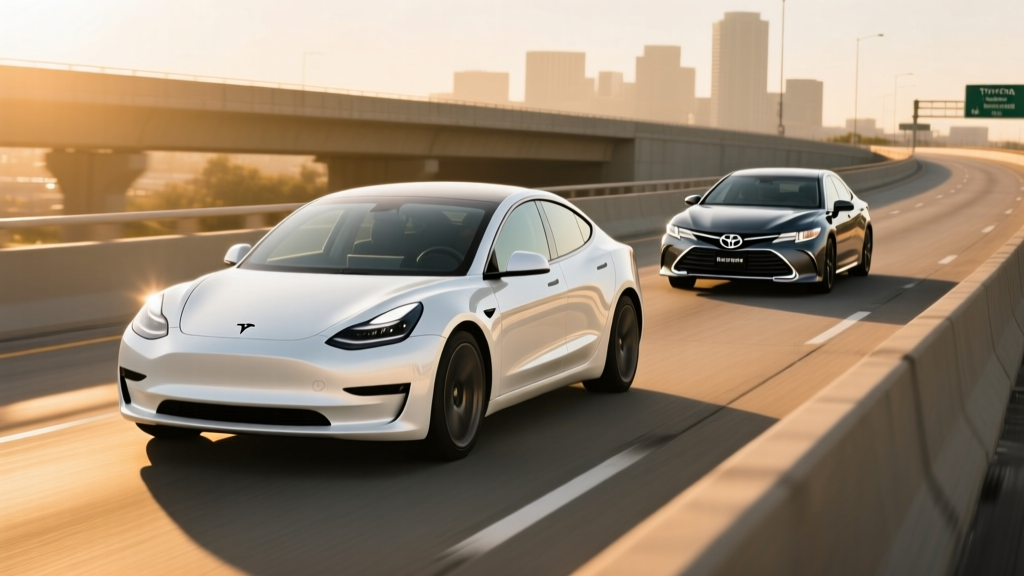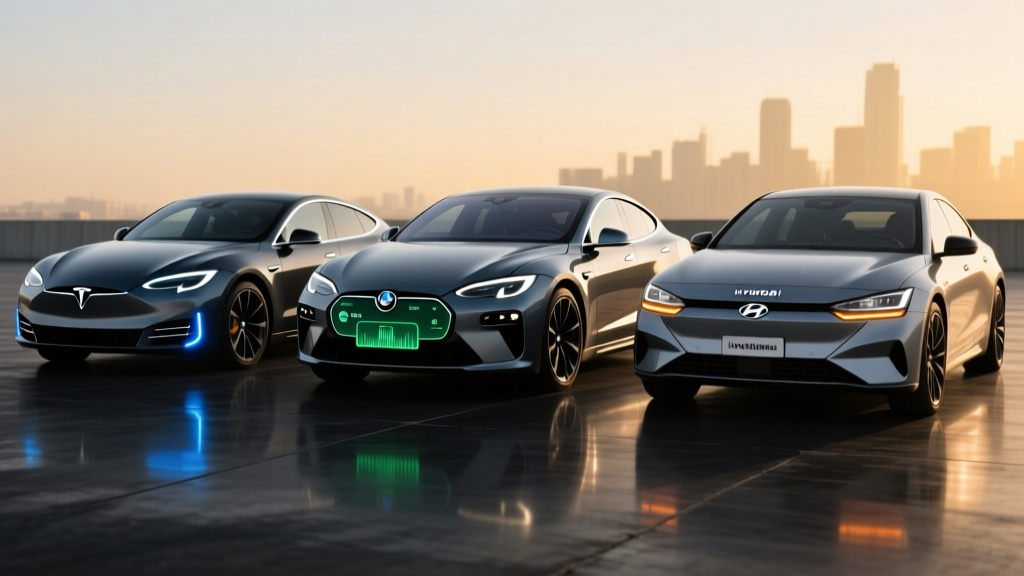
If you've shopped for an electric vehicle in the last two years, you've seen the alphabet soup: Autopilot, FSD, BlueCruise, Super Cruise, HDA2, ProPILOT, Toyota Safety Sense. Each automaker brands its driver assistance package differently, but they share a common foundation — and a common limitation that marketing materials tend to gloss over.
This guide breaks down the major EV driver assistance packages available in the 2026 model year, comparing what they actually do, what they cost, which trims include them, and where they fall short in real-world driving.
What a Driver Assistance Package Actually Does
Every consumer-available driver assistance package combines three core functions using a suite of hardware — typically forward-facing cameras, radar (millimeter-wave or, increasingly, 4D imaging radar), and ultrasonic sensors:
- Adaptive Cruise Control (ACC): Maintains a set speed and following distance from the vehicle ahead, handling stop-and-go traffic.
- Lane Centering Assist (LCA): Applies continuous steering input to keep the vehicle centered in its lane, not just warning when you drift.
- Automatic Emergency Braking (AEB): Detects imminent collisions with vehicles, pedestrians, or cyclists and applies braking if the driver doesn't react.
When ACC and LCA work together, the system handles longitudinal (speed/braking) and lateral (steering) control simultaneously. That combination is what separates a basic cruise control from a true driver assistance package. Additional features like automatic lane changes, navigation-linked speed adjustment, and traffic sign recognition layer on top depending on the system.
Every driver assistance package available to consumers in 2026 — including Tesla's Full Self-Driving (Supervised), Ford BlueCruise, and GM Super Cruise — is classified as SAE Level 2 automation. This means the system assists with steering and speed, but the driver must remain fully engaged, monitor the road at all times, and be prepared to take over instantly. Level 4 (true driverless operation) exists only in commercial robotaxi services like Waymo, not in vehicles you can buy. (Source: SAE International J3016)
How the Major EV Driver Assistance Packages Compare
| Feature | Tesla Autopilot / FSD | Ford BlueCruise | GM Super Cruise | Hyundai HDA2 |
|---|---|---|---|---|
| SAE Level | Level 2 | Level 2 | Level 2 | Level 2 |
| Hands-off allowed | No (steering wheel torque required) | Yes, on pre-mapped highways | Yes, on pre-mapped highways | No (steering wheel contact required) |
| Eyes-off allowed | No | No (driver monitoring camera) | No (infrared driver monitoring) | No |
| Auto lane change | Yes (FSD only, with confirmation) | Yes (1.5+, select models) | Yes (with confirmation) | Yes (with turn signal) |
| Sensor suite | 8 cameras, no radar (Tesla Vision) | Cameras + radar + ultrasonic | Cameras + radar + LiDAR (selected) + ultrasonic | Cameras + radar + ultrasonic |
| Mapped highway coverage | N/A (works on any road) | ~130,000+ miles (Hands-Free Blue Zones) | ~750,000+ miles in US/Canada | Works on any divided highway |
| Driver monitoring | Steering wheel torque sensor + cabin camera | Infrared cabin camera | Infrared cabin camera | Steering wheel torque + camera (trim-dependent) |
Cost Breakdown: Purchase, Subscription, or Standard?
The pricing models for these driver assistance packages vary significantly — and some have shifted from one-time purchases to subscriptions. Here's the 2026 cost landscape:
| System | One-Time Cost | Subscription | Standard (Included) |
|---|---|---|---|
| Tesla Basic Autopilot | — | — | Yes, all models |
| Tesla FSD (Supervised) | $8,000 (as of 2026) | $99/month | No |
| Ford BlueCruise (1.0/1.5) | $2,100 (Mustang Mach-E Premium); included on select trims | $75/year or $25/month (after included trial) | Standard on Mach-E GT, F-150 Lightning Platinum |
| GM Super Cruise | $2,200–$2,500 (depending on model) | $25/month (after 3-year included period) | Standard on Cadillac LYRIQ, included 3 years |
| Hyundai HDA2 | — | — | Standard on Ioniq 5 SEL and above, Ioniq 6 all trims |
Key takeaway: Hyundai's HDA2 offers the best value proposition — it's bundled into the vehicle price with no subscription. GM's 3-year included period on Super Cruise is generous but creates a $300/year liability afterward. Tesla's $99/month FSD subscription lowers the barrier to entry, but at $8,000 upfront, FSD's purchase price remains the most expensive option by far.
Real-World Capabilities: Where Each System Excels
Tesla Autopilot and FSD (Supervised)
Basic Autopilot handles highway lane centering and adaptive cruise well on clearly marked interstates. FSD (Supervised) adds navigation-guided lane changes, city street stop-light/stop-sign recognition, and autosteer on non-highway roads. In our testing on well-maintained California and Arizona highways, FSD handles merges and lane changes competently. However, Tesla's camera-only "Tesla Vision" approach (no radar) can struggle in heavy rain and low-visibility conditions where radar-equipped competitors maintain better object detection confidence.
Ford BlueCruise
BlueCruise's standout feature is genuine hands-free driving on its pre-mapped "Blue Zones" — divided highways covering over 130,000 miles across North America. The infrared driver monitoring camera tracks your eye gaze; you can take your hands off the wheel, but your eyes must stay on the road. On the Mustang Mach-E, BlueCruise 1.5 adds lane-change assist. The system disengages cleanly when you exit a Blue Zone, transitioning to standard ACC+LCA with hands-on requirements. (Source: Ford BlueCruise)
GM Super Cruise
Super Cruise has the most extensive mapped-road network at 750,000+ miles, and its driver monitoring is among the most robust — an infrared camera on the steering column tracks head position and eye direction. On the Cadillac LYRIQ and Chevrolet Silverado EV, Super Cruise handles hands-free highway driving smoothly, including automatic lane changes when you tap the turn signal. The LiDAR-enhanced map data gives the system high confidence in road geometry even when lane markings are faded.
Hyundai HDA2 / Highway Driving Assist 2
HDA2 doesn't allow hands-free operation, but it works on any divided highway without needing pre-mapped roads. It uses navigation data to proactively slow for curves and speed-limit changes. On the Ioniq 5 and Ioniq 6, HDA2 is one of the most intuitive "set and monitor" systems — the steering wheel touch sensor is less intrusive than torque-based systems that require you to jiggle the wheel.
- None of these systems are self-driving. You are the driver. You are legally and physically responsible for the vehicle at all times.
- Weather degrades all systems. Heavy rain, snow, fog, and direct sun glare can blind cameras and reduce radar confidence. Expect disengagements or reduced functionality.
- Construction zones are high-risk. Shifted lane markings, temporary barriers, and irregular traffic patterns challenge all Level 2 systems. Assume manual control in work zones.
- Faded or missing lane markings cause failures. Rural roads, older highways, and freshly repaved roads without restriped markings will trigger system disengagement.
- Stationary objects at speed remain a challenge. NHTSA has documented numerous crashes involving Level 2 systems striking stationary emergency vehicles and barriers. (Source: NHTSA Standing General Order)
Which Trims Include a Driver Assistance Package?
Not every EV comes with the full-featured version. Here's a trim-level breakdown for popular 2026 models:
| Vehicle | Base Trim ADAS | Upgraded ADAS Trim | Full Feature Availability |
|---|---|---|---|
| Tesla Model Y (all trims) | Basic Autopilot (ACC + LCA) | FSD: +$8,000 or $99/mo | Any trim with FSD purchase/sub |
| Ford Mustang Mach-E | Ford Co-Pilot360 Assist 2.0 (ACC + LCA) | BlueCruise: Premium trim or $2,100 add-on | Standard on GT; optional on Select/Premium |
| Cadillac LYRIQ | Super Cruise included 3 years (all trims) | $25/mo after trial | All trims (Luxury, Sport, Premium Luxury) |
| Hyundai Ioniq 5 | SE: basic ACC + LKA | SEL and above: full HDA2 | SEL, Limited ($43,850+ MSRP) |
| Chevrolet Equinox EV | Super Cruise available on 3RS/LTZ | $2,200 option package | 3RS and LTZ trims only |
The Subscription Trap: What Happens After Your Trial Ends
A growing number of driver assistance packages operate on a trial-then-subscription model. Here's what to budget for:
- Ford BlueCruise: Typically includes a 90-day free trial on equipped vehicles. After that, $75/year or $25/month. If you buy a used Mach-E with BlueCruise hardware, verify whether the subscription transferred or if you're starting fresh.
- GM Super Cruise: Includes 3 years of connectivity on new Cadillac LYRIQ and eligible Chevrolet/GMC EVs. After that, $25/month. That's a long runway, but it means a 2026 LYRIQ owner will pay $300/year starting in 2029.
- Tesla FSD: No trial — it's either a $99/month subscription or an $8,000 one-time purchase. Basic Autopilot (ACC + LCA) remains free permanently.
- Hyundai HDA2: No subscription ever. It's bundled into the vehicle's hardware and software permanently.
Resale consideration: Tesla's FSD purchase transfers with the vehicle in private-party sales, which can add $3,000–$5,000 to resale value (though not the full $8,000). Subscription-based FSD does not transfer. Ford and GM subscriptions are tied to the vehicle's connectivity account and can be continued by a new owner.
Is Any Driver Assistance Package Worth the Cost?
The answer depends on your driving profile:
Choose Hyundai HDA2 (no extra cost) if: You want reliable lane centering and adaptive cruise without subscription fees, and you're comfortable keeping your hands on the wheel. On the Ioniq 5 SEL ($43,850 MSRP), HDA2 is one of the best-value ADAS implementations available.
Choose GM Super Cruise if: You drive long highway stretches frequently and value hands-free comfort on mapped roads. The 750,000-mile coverage is the most extensive, and the 3-year included period means no immediate recurring cost. Best experienced on the Cadillac LYRIQ (starting ~$58,590) or the Chevrolet Equinox EV 3RS.
Choose Ford BlueCruise if: You own or plan to buy a Mustang Mach-E or F-150 Lightning and your highway routes fall within Blue Zones. The hands-free experience is smooth, and the $75/year renewal is the cheapest subscription in this group.
Choose Tesla FSD if: You want the broadest road coverage (no pre-mapped limitations) and are willing to supervise actively. The $99/month subscription is a low-risk way to test it. Just understand that FSD's "Supervised" label means exactly that — you are the supervisor, not a passenger.
Frequently Asked Questions
Is Tesla's Full Self-Driving actually self-driving?
No. Tesla's FSD is officially branded "FSD (Supervised)" and is an SAE Level 2 system. The driver must monitor the road and be ready to intervene at any moment. Tesla's own owner's manual states this explicitly. Only Level 4 systems like Waymo's robotaxi operate without a human driver, and those are not available for consumer purchase.
Can I use BlueCruise or Super Cruise on any road?
No. Both systems require pre-mapped, divided highways to enable hands-free mode. Outside those zones, they revert to standard adaptive cruise and lane centering with hands-on requirements. Super Cruise's 750,000-mile map is more extensive than BlueCruise's ~130,000 miles, but neither covers rural two-lane roads, city streets, or unmapped construction zones.
Do these systems work in rain and snow?
With reduced reliability. Camera-based systems (including Tesla's Tesla Vision) are most affected by heavy rain, snow accumulation on lenses, and fog. Radar-equipped systems (Ford, GM, Hyundai) maintain better object detection in poor visibility, but lane-keeping still depends on visible lane markings. Expect more frequent disengagements in adverse weather, and be prepared to take full manual control.
Does a driver assistance package affect my insurance rate?
It depends on your insurer and state. Some insurers offer discounts for vehicles equipped with AEB and ACC, while others charge more for vehicles with advanced ADAS due to higher repair costs for sensor-laden bumpers and windshields. Check with your provider before assuming a discount.
What happens if the system fails while I'm using it?
All Level 2 systems are designed to alert the driver and gradually decelerate if no driver input is detected. If you ignore warnings, the vehicle will typically activate hazard lights, slow to a stop, and in some cases (Tesla, GM) contact emergency services. However, the system cannot handle every edge case — your attention is the final safety layer. NHTSA continues to investigate crashes involving Level 2 systems, and the agency's Standing General Order requires manufacturers to report serious incidents.