What Are Blind Spot Mirrors and Camera-Based Blind-Spot Systems?
For decades, the answer to blind-spot visibility was simple: a small convex mirror stuck to your side mirror's corner. These analog blind spot mirrors shrink the reflection to widen your field of view, letting you spot a car lurking in the adjacent lane before you change lanes. They cost $5–$15 at any auto parts store and require zero electronics.
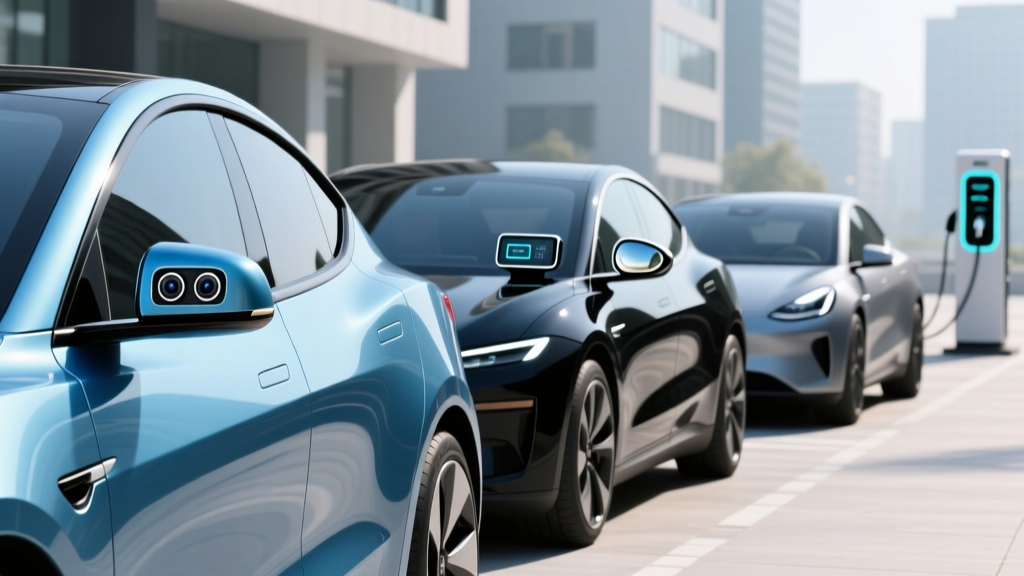
But modern electric vehicles have introduced a far more sophisticated approach. Camera-based blind-spot monitoring (BSM) systems use radar sensors, ultrasonic transducers, and in some cases side-view cameras that display a live video feed on your dashboard or center screen when you activate a turn signal. The result is a dramatic reduction in the blind zone that a traditional mirror — even with an add-on convex lens — simply cannot eliminate.
This article breaks down which 2026 EVs ship with advanced blind-spot systems, how those systems compare to traditional blind spot mirrors, what they cost, and the real-world limitations every driver should understand before relying on them.
Blind-spot monitoring and camera-based blind-spot display systems fall under SAE Level 0 (warning only) or Level 1 (active intervention such as blind-spot steering assist). The driver remains fully responsible for lane changes, steering, and situational awareness. No production consumer vehicle in 2026 offers SAE Level 4 or 5 autonomy for lane changes or highway driving.
How Blind-Spot Camera Systems Work in Modern EVs
There are three main technical approaches to blind-spot awareness in today's EVs, and many vehicles combine two or more of them:
1. Radar-Based Blind-Spot Monitoring (BSM)
Two rear-corner radar modules (typically 77 GHz millimeter-wave) scan the lanes beside and behind your vehicle. When a car enters the blind zone — roughly the area from your B-pillar back about 15 feet — an indicator light in or near the side mirror illuminates. If you activate your turn signal while a vehicle is detected, the light flashes and an audible chime sounds. Some systems also apply gentle steering torque to resist the lane change (e.g., Hyundai's Blind-Spot Collision-Avoidance Assist).
2. Camera-Based Blind-Spot View Displays
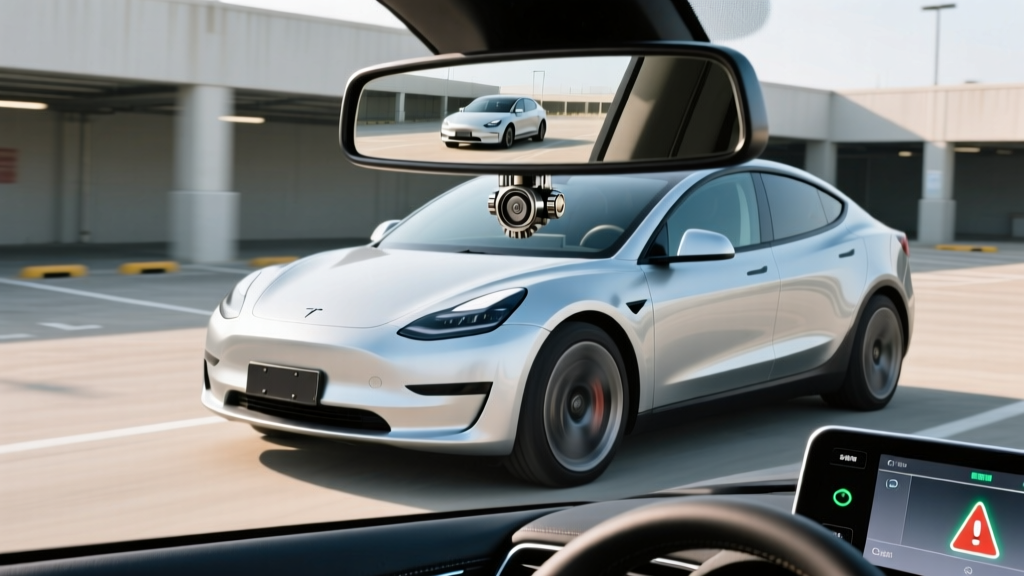
A wide-angle camera mounted under the side mirror housing captures a live video feed of the blind zone. When you signal a lane change, the feed appears on the instrument cluster or center touchscreen. Hyundai and Genesis call this Blind Spot View Monitor (BVM); Honda used LaneWatch (discontinued after 2022 on most models). Tesla's camera-based approach displays the blind-spot feed on the center screen when the turn signal is active.
3. Digital Side Mirrors (Camera Mirror Systems)
The most advanced approach replaces the physical side mirror entirely with a camera and an interior display. Audi's e-tron (now the Q8 e-tron) offered virtual mirrors in certain markets. In the U.S., regulations under FMVSS 111 have historically required physical mirrors, though NHTSA has been evaluating camera-mirror systems. As of 2026, most U.S.-market EVs retain physical mirrors augmented by cameras and radar.
| Technology | Sensor Type | Detection Range | Active Intervention? | Typical Cost |
|---|---|---|---|---|
| Convex blind spot mirror (add-on) | None (optical) | Wide-angle reflection | No | $5–$15 |
| Radar BSM with indicator | 77 GHz radar | ~10–50 ft rearward | Warning only | Standard on most EVs |
| Radar BSM + steering assist | 77 GHz radar | ~10–50 ft rearward | Yes (gentle torque) | Included in safety suite |
| Camera blind-spot view (BVM) | Side camera + display | Adjacent lane, ~30 ft | No (display only) | Mid/high trims |
| Digital camera mirrors | Camera + interior screen | Full side view | No | Premium option / limited markets |
Which 2026 EVs Include Advanced Blind-Spot Systems?
Most 2026-model-year EVs sold in the U.S. include radar-based blind-spot monitoring as standard or available equipment, but the specifics vary significantly by brand and trim level. Here's a breakdown of the major players:
| Brand | Feature Name | Standard On | Camera View Display? | Steering Assist? |
|---|---|---|---|---|
| Tesla | Blind Spot Camera / Autopilot BSM | All models (Model 3, Y, S, X) | Yes (center screen) | Lane departure avoidance (configurable) |
| Hyundai (Ioniq 5, Ioniq 6) | Blind-Spot Collision-Avoidance Assist (BCA) + Blind Spot View Monitor (BVM) | SEL trim and above | Yes (cluster display on BVM-equipped trims) | Yes (BCA active steering) |
| Kia (EV6, EV9) | Blind-Spot Collision-Avoidance Assist + Blind-Spot View Monitor | Wind trim and above (EV6); standard on EV9 Land/GT-Line | Yes (cluster) | Yes |
| Ford (Mustang Mach-E, F-150 Lightning) | BLIS (Blind Spot Information System) with Cross-Traffic Alert | Standard on all Mach-E trims; standard on Lightning Lariat+ | No (radar + indicator only) | No (warning only on most trims) |
| Chevrolet (Equinox EV, Blazer EV, Silverado EV) | Side Blind Zone Alert + Rear Cross Traffic Alert | LT trim and above | No (indicator only) | No |
| Rivian (R1S, R1T) | Blind Spot Warning + Lane Keep Assist | Standard on all trims | Yes (center screen camera feed) | Yes (lane keep) |
| BMW (i4, i5, iX) | Active Blind Spot Detection | Standard on most trims | No (radar + haptic steering) | Yes (active steering intervention) |
| Genesis (GV60, Electrified GV70) | Blind-Spot Collision-Avoidance Assist + BVM | Standard on all GV60 trims | Yes (cluster) | Yes |
A few observations from this comparison: Hyundai Motor Group brands (Hyundai, Kia, Genesis) lead in combining both radar intervention and a camera-based blind-spot view display. Tesla relies entirely on its camera suite — no radar on current Model 3 and Model Y — and displays the blind-spot feed on the center touchscreen. Ford's BLIS is radar-only, which is proven and reliable but lacks the visual camera feed that helps drivers confirm what the system is detecting.
Blind Spot Mirrors vs. Camera Systems: What Each Does Best
Traditional convex blind spot mirrors and electronic camera-based systems serve the same goal but excel in different scenarios:
Where Convex Blind Spot Mirrors Win
- Zero latency: Light travels instantly. No screen refresh rate, no camera boot time, no software glitch can delay what you see in a mirror.
- Always on: No turn signal required. You can glance at the convex mirror at any time, not just during a signaled lane change.
- Weather independent: Rain, snow, and road grime affect mirrors, but a quick wipe restores visibility. Camera lenses can be harder to clean while driving.
- Cost: Under $15 versus potentially thousands in an optional safety package.
Where Camera-Based Systems Win
- Elimination of the blind zone: A well-positioned side camera can show a 180-degree view of the adjacent lane, including vehicles that a convex mirror might still miss at extreme angles.
- Active intervention: Radar-based BSM with steering assist can physically resist a lane change if a vehicle is detected — something a passive mirror cannot do.
- Low-light and night performance: Camera feeds can be brightened and enhanced; radar works regardless of lighting. A convex mirror in pitch darkness is only as good as your headlights' reach.
- Cross-traffic alert: Most radar BSM systems extend to rear cross-traffic detection when reversing out of a parking space — a significant safety advantage.
- Weather degradation: Heavy rain, snow accumulation on radar sensors (rear bumper corners), and ice on camera lenses can disable or degrade BSM performance. Tesla's camera-only system is particularly susceptible to lens obstruction in winter conditions.
- Late detection of fast-approaching vehicles: Most BSM systems are calibrated for vehicles traveling at or near your speed. A motorcycle or car approaching at 30+ mph faster than your speed may not trigger an alert until it is very close.
- Camera feed latency: The video feed on a center screen or cluster typically has 100–300 ms of latency — imperceptible in most cases, but it means you are seeing where the vehicle was, not exactly where it is.
- False positives: Guardrails, roadside barriers, and parked cars in tight urban streets can trigger BSM alerts, causing alert fatigue and tempting drivers to disable the system.
- Camera lens contamination: Road salt, bug splatter, and mud on camera housings (typically under the mirror) require manual cleaning. Many EVs lack camera washer nozzles.
- Motorcycle and bicycle detection: Narrower profiles can be harder for radar to detect reliably, especially at the edge of the sensor's range.
Cost Breakdown: What You'll Pay for Blind-Spot Features in 2026 EVs
Blind-spot monitoring is increasingly standard on EVs, but camera-based view displays and steering intervention often require stepping up to higher trims. Here's how the costs break down:
| Vehicle | Base MSRP | Trim with BSM + Camera View | Trim MSRP | Subscription Required? |
|---|---|---|---|---|
| Tesla Model 3 (2026) | $38,990 | All trims (camera BSM standard) | $38,990 | No (BSM included; FSD Supervised is separate at $99/mo or $8,000) |
| Hyundai Ioniq 5 (2026) | $42,450 (SE) | SEL ($45,200) adds BVM | $45,200 | No |
| Kia EV6 (2026) | $42,900 (Light) | Wind ($47,500) adds BVM + BCA | $47,500 | No |
| Ford Mustang Mach-E (2026) | $42,995 (Select) | All trims (BLIS standard) | $42,995 | No (BlueCruise hands-free is $75/mo but BLIS is separate and included) |
| Chevrolet Equinox EV (2026) | $33,600 (2LT) | 2LT (Side Blind Zone Alert standard on LT+) | $33,600 | No |
| Rivian R1S (2026) | $75,900 (Adventure) | All trims (standard) | $75,900 | No |
| BMW i5 (2026) | $66,800 (eDrive40) | All trims (Active Blind Spot Detection standard) | $66,800 | No |
Key takeaway: unlike Tesla's Full Self-Driving (Supervised) or Ford's BlueCruise hands-free driving, blind-spot monitoring and camera view features are overwhelmingly one-time purchases bundled into the vehicle's trim price. No ongoing subscription is required to maintain BSM functionality. The subscription costs listed above apply to higher-level ADAS features (hands-free highway driving, autosteer), not blind-spot systems themselves.
Safety Data and the Case for Layered Blind-Spot Awareness
According to the Insurance Institute for Highway Safety (IIHS), blind-spot detection systems are associated with a 14% reduction in lane-change crashes with injuries. However, IIHS also notes that the benefit depends on drivers actually using the information the system provides — and not disabling it due to false-positive annoyance.
The National Highway Traffic Safety Administration (NHTSA) classifies blind-spot warning as a crash-avoidance technology and recommends it, but does not mandate it. As of 2026, BSM remains optional equipment in the U.S., though it is standard on the majority of new EVs at mid-range trims and above.
For maximum safety, the most effective approach is layered:
- Radar BSM with intervention as your electronic safety net.
- A physical mirror check (including a convex blind spot mirror add-on if your vehicle lacks a camera view display) as your analog backup.
- A shoulder check — still the gold standard for detecting motorcycles, cyclists, and pedestrians that sensors may miss.
No camera system or radar sensor replaces the habit of a quick over-the-shoulder glance. The data from both IIHS and NHTSA reinforce that driver engagement — not technology alone — is the primary factor in preventing lane-change collisions.
Which Approach Is Right for Your EV?
- You drive frequently in dense urban traffic with constant lane changes.
- You want visual confirmation of what the radar is detecting.
- You're willing to step up to a mid-level trim ($2,000–$5,000 above base).
- You drive a base-trim EV and don't want to pay for a higher trim solely for BVM.
- You frequently drive in winter conditions where camera lenses get obscured.
- You prefer the zero-latency, always-on visibility of a physical mirror supplement.
- You share the vehicle with less experienced drivers.
- You want an active safety layer that physically resists an unsafe lane change.
Frequently Asked Questions
Are blind spot mirrors (convex add-ons) still useful on EVs that already have BSM?
Yes. Even with radar BSM and a camera display, a convex blind spot mirror provides a zero-latency, always-on visual reference that doesn't depend on electronics, turn signals, or software. Many EV owners use both systems together for maximum coverage. At $5–$15, the cost is negligible compared to the safety benefit.
Is blind-spot monitoring the same as self-driving?
No. BSM is an SAE Level 0 or Level 1 driver-assist feature. It warns you of vehicles in your blind zone and, in some systems, can apply gentle steering resistance to discourage an unsafe lane change. The driver remains fully responsible for all steering, lane-change decisions, and situational awareness. No production consumer vehicle in 2026 is self-driving.
Does Tesla's blind-spot camera work at night?
Yes, but with reduced effectiveness compared to daytime. Tesla's side repeater cameras can display a feed on the center screen when the turn signal is active, but in very low light the image may be grainy or dark. Radar-based BSM systems (used by Ford, Hyundai, BMW, and others) are not affected by lighting conditions at all.
Do I need a subscription for blind-spot monitoring?
No. On all major 2026 EVs, blind-spot monitoring is included in the vehicle purchase price — either standard on all trims or bundled into mid/high trims. Subscriptions like Tesla FSD Supervised ($99/month) or Ford BlueCruise ($75/month) cover higher-level features like hands-free highway driving, not basic BSM.
Can I add blind-spot monitoring to an EV that didn't come with it?
Aftermarket radar BSM kits exist (typically $300–$800 installed), but integration quality varies and they lack the deep CAN-bus integration needed for steering intervention. For most buyers, it's more practical to choose a trim that includes BSM from the factory. A convex blind spot mirror add-on is the simplest, cheapest upgrade for any vehicle.
Do camera-based blind-spot systems work in heavy rain or snow?
Performance degrades in heavy precipitation. Camera lenses can accumulate water, road salt, and grime, reducing image quality or causing the system to disable itself. Radar-based BSM is more resilient in bad weather, though heavy snow packed against the rear-bumper radar sensors can also cause temporary disablement. Always check sensor and camera cleanliness before long trips in winter conditions.