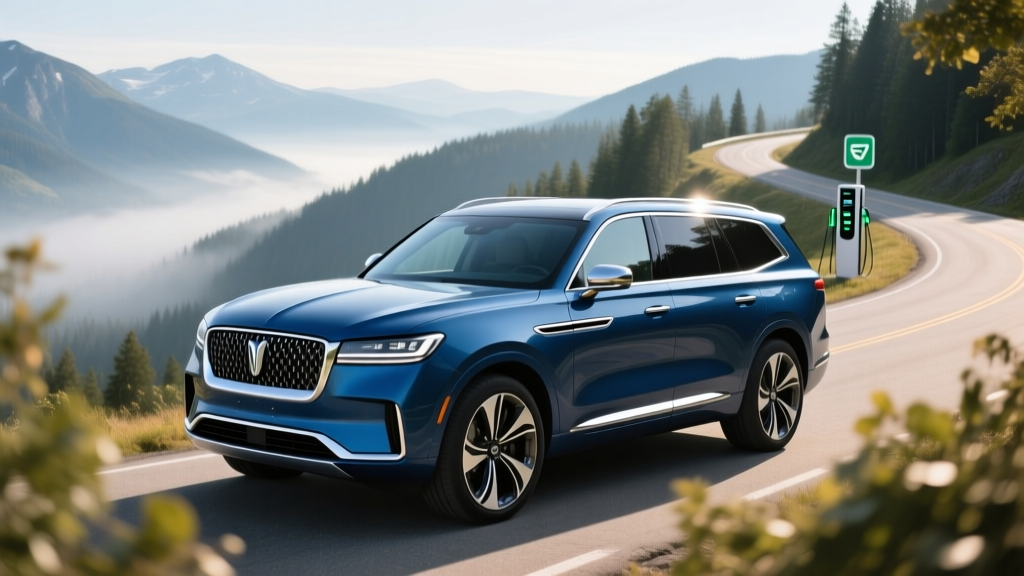
The full-size SUV segment has been slow to embrace electrification, but the 2026 Wagoneer Hybrid aims to change that by pairing Jeep's twin-turbo Hurricane inline-six with an electric motor to cut fuel consumption without sacrificing towing or passenger space. For buyers who need three rows, serious cargo room, and the ability to tow a boat — but are tired of watching the fuel gauge plummet in city traffic — the Wagoneer Hybrid occupies a specific niche. This guide breaks down exactly what you get, what it costs, and whether a conventional hybrid, a plug-in hybrid, or a full EV better fits your garage.
Wagoneer Hybrid at a Glance: Key Specs
| Specification | 2026 Wagoneer Hybrid |
|---|---|
| Powertrain | 3.0L Twin-Turbo Hurricane I-6 + electric motor (HEV) |
| Combined Horsepower | ~420 hp (est.) |
| Combined Torque | ~468 lb-ft (est.) |
| Transmission | 8-speed automatic |
| EPA MPG (City / Hwy / Combined) | 22 / 24 / 23 MPG (est.) |
| Drivetrain | RWD standard, 4WD available |
| Towing Capacity | Up to ~10,000 lbs (est.) |
| Battery Type | ~1.5 kWh lithium-ion (self-charging HEV) |
| Plug-In Required? | No — charges via regen and engine |
| Base MSRP | ~$67,000 (est., including destination) |
| Federal Tax Credit (§30D) | Not eligible (conventional HEV) |
| Hybrid Battery Warranty | 8 years / 100,000 miles |
Note: As of early 2026, Stellantis has announced the Wagoneer Hybrid powertrain but final EPA certification figures may shift. Specs above reflect announced and estimated values. Always confirm with your dealer and check fueleconomy.gov for certified numbers before purchasing.
HEV vs. PHEV: What the Wagoneer Hybrid Actually Is
This is the single most important distinction for shoppers researching the Wagoneer Hybrid. The Wagoneer Hybrid is a conventional hybrid (HEV), not a plug-in hybrid (PHEV). That means:
- No plug, no charging cord. The small battery recharges through regenerative braking and the gasoline engine. You fuel it exactly like a regular Wagoneer.
- No electric-only range. The electric motor assists the engine during acceleration and low-speed driving, but it cannot propel the vehicle on electricity alone for meaningful distances.
- No federal §30D tax credit. The IRS restricts the up-to-$7,500 clean vehicle credit to plug-in electric vehicles (PHEVs and BEVs) meeting battery-sourcing and critical-mineral requirements. Conventional HEVs do not qualify.
Quick Reference: HEV vs. PHEV vs. BEV
| Feature | HEV (Wagoneer Hybrid) | PHEV (e.g., Pacifica Hybrid) | BEV (Full EV) |
|---|---|---|---|
| Plugs in? | No | Yes | Yes |
| Electric-only range | ~0 miles | 25–40 miles typical | 200–400+ miles |
| Federal tax credit | None | Up to $7,500* | Up to $7,500* |
| Fueling | Gas only | Gas + plug | Plug only |
| Best for | No home charging access | Short commutes + road trips | Home charging + daily driving |
*§30D credit eligibility depends on MSRP caps, buyer income limits, and battery-component sourcing rules. Confirm at IRS.gov or with a tax professional.
Fuel Economy: EPA Estimates and Real-World MPG
The Wagoneer's 3.0L twin-turbo Hurricane I-6 already delivers respectable efficiency for a body-on-frame SUV in its non-hybrid form. The hybrid system's primary benefit is recapturing energy during braking and smoothing out the stop-and-go driving where large engines are least efficient.
| Configuration | City MPG | Highway MPG | Combined MPG |
|---|---|---|---|
| 2026 Wagoneer Hybrid 4x2 (est.) | 22 | 25 | 23 |
| 2026 Wagoneer Hybrid 4x4 (est.) | 21 | 24 | 22 |
| 2025 Wagoneer (non-hybrid, 3.0L Hurricane) — baseline | 17 | 24 | 19 |
| Toyota Sequoia Hybrid (2025, 4x2) | 21 | 24 | 22 |
Real-world MPG expectations: Conventional hybrids often exceed their EPA city estimates because regenerative braking works hardest in stop-and-go traffic. On the highway, where the electric motor contributes less and aerodynamic drag dominates, expect numbers closer to — or slightly below — the EPA highway figure. In mixed suburban driving, owners of comparable large hybrid SUVVs typically report 21–24 MPG combined. If you tow frequently, expect 12–15 MPG under load regardless of hybrid assist.
Source: Compare certified figures at fueleconomy.gov once EPA ratings are published for the 2026 model year.
Powertrain and Performance: Hurricane Meets Hybrid
The Wagoneer Hybrid pairs Stellantis's 3.0-liter twin-turbocharged Hurricane inline-six with an electric motor integrated into the transmission housing. The Hurricane I-6 alone produces 420 horsepower and 468 lb-ft of torque in its standard-output form. The hybrid system's electric motor fills in torque at low RPMs, reducing turbo lag and smoothing acceleration from a stop.
The result is a full-size SUV that should feel more responsive off the line than its non-hybrid sibling while returning 3–4 MPG better in city driving. The 8-speed automatic transmission carries over, and Stellantis's Quadra-Trac 4WD system remains available for buyers who need all-weather traction or plan to tow.
For context, the non-hybrid Wagoneer with the Hurricane I-6 posts a 0–60 mph time in the mid-5-second range. The hybrid variant should match or slightly improve on that figure thanks to instant electric torque, though official performance numbers are pending.
Battery, Warranty, and Long-Term Reliability
Hybrid battery longevity is consistently the top concern for first-time hybrid buyers. Here's what you need to know about the Wagoneer Hybrid's battery system:
Wagoneer Hybrid Battery Coverage
- Battery capacity: ~1.5 kWh lithium-ion (small pack — assists engine, does not drive wheels independently)
- Hybrid system warranty: 8 years / 100,000 miles (federally mandated for emissions-related hybrid components)
- Expected battery lifespan: Modern lithium-ion hybrid batteries are designed for 150,000–200,000+ miles before significant degradation. Most outlast the vehicle.
- Replacement cost (if needed out of warranty): $2,500–$5,000 for the hybrid battery pack, plus labor — significantly less than a full EV battery replacement because the pack is small.
Stellantis's hybrid battery warranty aligns with the industry standard set by Toyota, Honda, and Hyundai. The 8-year/100,000-mile coverage is mandated under federal emissions warranty rules, and most manufacturers honor it nationwide. Because the Wagoneer Hybrid's battery is small (~1.5 kWh versus 70+ kWh in a full EV), replacement costs are manageable and the risk of catastrophic failure is low.
From a reliability standpoint, the Hurricane I-6 is relatively new (introduced for 2022), so long-term hybrid-specific data is still accumulating. However, hybrid systems in general have proven durable — Toyota's hybrid synergy drive has logged billions of real-world miles with low failure rates. The electric motor itself has far fewer moving parts than a transmission and rarely fails.
Pricing, Trims, and Tax-Credit Eligibility
The 2026 Wagoneer Hybrid is expected to slot into the lineup at a premium over the standard Hurricane-powered Wagoneer, reflecting the added hybrid hardware. Estimated pricing:
- Wagoneer Hybrid (base, 4x2): ~$67,000 MSRP (est., including destination)
- Wagoneer Hybrid 4x4: ~$70,000 MSRP (est.)
- Grand Wagoneer Hybrid (if offered): ~$90,000+ MSRP (est.)
Tax-credit reality check: Because the Wagoneer Hybrid is a conventional HEV — not a plug-in — it does not qualify for the federal §30D Clean Vehicle Credit. That credit (up to $7,500) is reserved for BEVs and PHEVs that meet battery-component sourcing, critical-mineral, MSRP cap, and buyer income requirements per current IRS rules.
Some states offer their own incentives for hybrid vehicles, though these are less common than EV rebates. Check your state's energy or environmental agency website for current programs. A few utilities also offer reduced electricity rates for hybrid owners who participate in demand-response programs, though this is more relevant to PHEVs and BEVs.
Who Should Buy the Wagoneer Hybrid?
Choose the Wagoneer Hybrid If:
- You need a three-row, body-on-frame SUV with 10,000-lb towing capacity
- You drive primarily in city/suburban traffic where hybrid efficiency shines
- You cannot install a home charger (apartment, street parking, no garage)
- You want better MPG without changing your fueling habits at all
- You take frequent road trips and don't want to plan around charging stops
Look Elsewhere If:
- You want electric-only daily commuting — consider a PHEV like the Chrysler Pacifica Hybrid
- You want to eliminate gas entirely — a full EV like the Rivian R1S or Tesla Model X offers 300+ mile range
- You want the $7,500 federal tax credit — only PHEVs and BEVs qualify under §30D
- Your driving is 90%+ highway — the hybrid advantage diminishes at sustained high speeds
Wagoneer Hybrid vs. the Competition
The large hybrid SUV field is small but growing. Here's how the Wagoneer Hybrid stacks up against its closest rivals:
| Vehicle | Type | Combined MPG | Towing | Starting MSRP |
|---|---|---|---|---|
| 2026 Wagoneer Hybrid | HEV | ~23 (est.) | ~10,000 lbs | ~$67,000 |
| Toyota Sequoia Hybrid | HEV | 22 | 9,520 lbs | ~$62,000 |
| Ford Expedition (3.5L EcoBoost) | Gas | 19 | 9,300 lbs | ~$58,000 |
| Chevrolet Tahoe (6.2L V8) | Gas | 17 | 8,400 lbs | ~$59,000 |
| Rivian R1S (Dual-Motor) | BEV | 2.2 kWh/mi (~69 MPGe) | 7,700 lbs | ~$79,900 |
The Sequoia Hybrid is the closest direct competitor and currently holds the efficiency edge with certified EPA numbers. The Wagoneer Hybrid counters with a more premium interior, available air suspension, and Stellantis's Uconnect infotainment system, which remains one of the best in the segment. The Rivian R1S eliminates fuel costs entirely but costs more upfront, tows less, and requires charging infrastructure.
Frequently Asked Questions
How many MPG does the Wagoneer Hybrid get?
Estimated EPA ratings for the 2026 Wagoneer Hybrid are approximately 22 city / 25 highway / 23 combined MPG for the 4x2 configuration, and 21/24/22 for 4x4. Real-world city MPG may exceed these estimates thanks to regenerative braking, while highway and towing MPG will be lower. Final certified numbers should be available on fueleconomy.gov closer to the on-sale date.
Does the Wagoneer Hybrid need to be plugged in?
No. The Wagoneer Hybrid is a conventional HEV. Its small battery recharges automatically through regenerative braking and the gasoline engine. You fuel it with gasoline exactly like a standard Wagoneer — no charging cord, no plug, no home charger needed.
Does the Wagoneer Hybrid qualify for a federal tax credit?
No. The federal §30D Clean Vehicle Credit applies only to plug-in electric vehicles (PHEVs and BEVs) that meet battery sourcing, MSRP, and buyer income requirements. Conventional hybrids like the Wagoneer Hybrid are not eligible. Some states or utilities may offer separate incentives — check your local programs.
Is the Wagoneer Hybrid reliable? What about battery replacement cost?
Hybrid systems have proven highly reliable across the industry, with many hybrid batteries lasting 150,000–200,000+ miles. The Wagoneer Hybrid's battery is covered by an 8-year/100,000-mile warranty. If replacement is ever needed out of warranty, expect $2,500–$5,000 — far less than a full EV battery because the pack is only ~1.5 kWh.
Hybrid vs. PHEV vs. EV — which should I choose?
If you can't charge at home and need maximum towing, the Wagoneer Hybrid (HEV) is the right call. If you have home charging and a short commute, a PHEV like the Chrysler Pacifica Hybrid gives you 30+ miles of electric-only driving plus gas for road trips. If you want zero tailpipe emissions, have reliable home charging, and don't need 10,000-lb towing, a full EV like the Rivian R1S eliminates fuel costs entirely. Your charging access and daily mileage pattern should drive this decision more than anything else.
How far can the Wagoneer Hybrid go on electric only?
The Wagoneer Hybrid cannot drive on electric power alone for any meaningful distance. Its electric motor assists the gasoline engine but does not independently propel the vehicle. If electric-only driving is a priority, you need a PHEV or a full BEV.