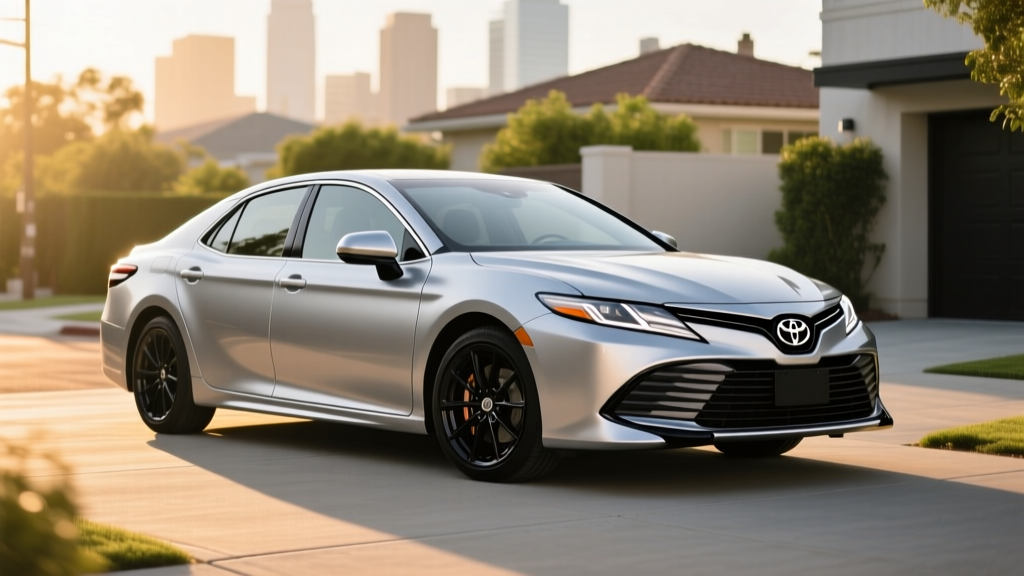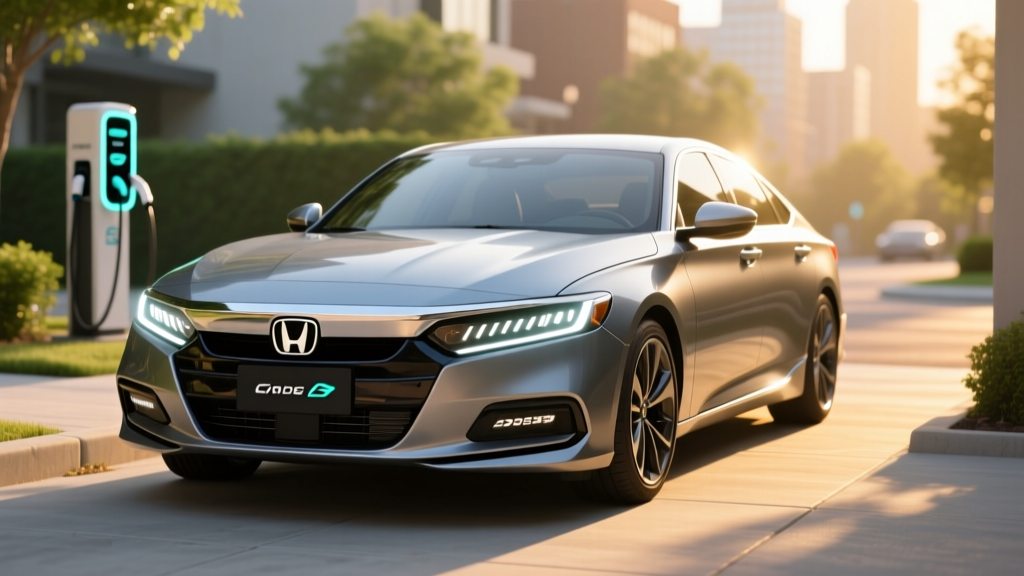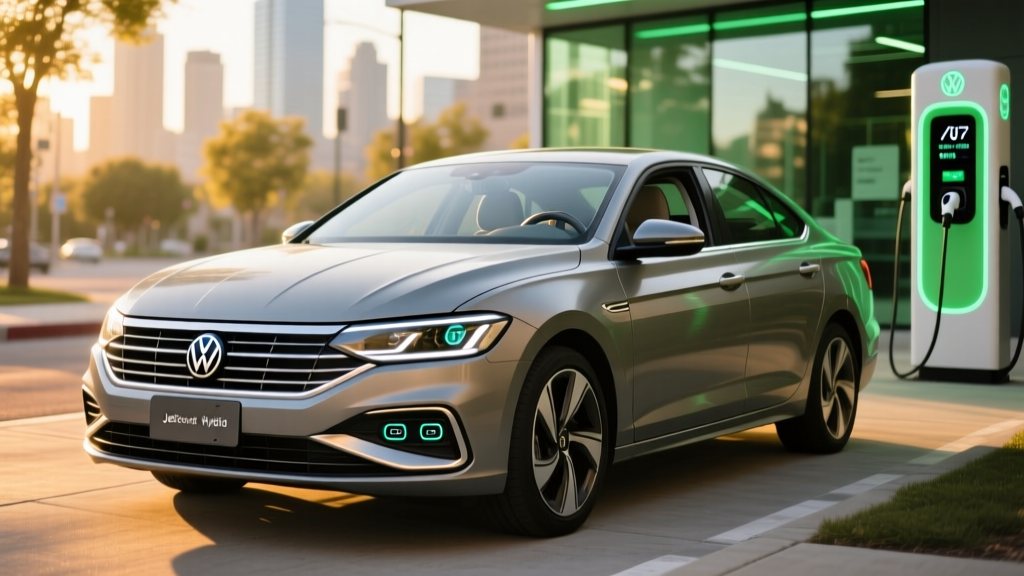
Volkswagen reintroduced electrification to its compact sedan lineup with the Jetta Hybrid, and for 2026 the formula is sharper than ever. The Jetta hybrid car pairs a turbocharged gasoline engine with an electric motor and a compact lithium-ion battery pack to deliver class-leading fuel economy without requiring a plug. If you've been cross-shopping the Toyota Corolla Hybrid, Honda Civic Hybrid, and Hyundai Elantra Hybrid, VW's entry deserves a close look — particularly for buyers who want a European driving feel with hybrid efficiency.
In this guide, we cover the 2026 Jetta Hybrid's EPA-confirmed fuel economy, real-world MPG expectations, powertrain specs, pricing, battery warranty, and whether it qualifies for any federal tax incentives.
HEV vs PHEV: Where the Jetta Hybrid Fits
Before diving into specs, it's critical to understand that the 2026 VW Jetta Hybrid is a conventional hybrid (HEV), not a plug-in hybrid (PHEV). This distinction shapes everything from how you fuel it to what tax credits you can claim.
| Feature | Conventional Hybrid (HEV) | Plug-in Hybrid (PHEV) |
|---|---|---|
| Plug-in charging? | No — charges via regenerative braking & engine | Yes — has a charge port for Level 1/2 |
| Electric-only range | None (motor assists engine) | Typically 20–45 miles |
| Battery size | Small (~1.0–1.5 kWh) | Larger (10–25 kWh) |
| Federal tax credit (§30D) | Not eligible | Up to $7,500 if eligible |
| Best for | No home charging access; simplicity | Home chargers; short daily commutes |
The Jetta Hybrid captures energy during braking and deceleration to keep its small battery charged. You never plug it in — just fill up with gas and drive. This makes it ideal for apartment dwellers or anyone without access to home or workplace charging infrastructure.
Fuel Economy: EPA Ratings and Real-World MPG
The headline number for any hybrid buyer is fuel economy. The 2026 Jetta Hybrid's EPA estimates place it squarely in the competitive set against Japanese and Korean rivals.
| Driving Cycle | EPA MPG |
|---|---|
| City | 48 MPG |
| Highway | 42 MPG |
| Combined | 45 MPG |
Source: fueleconomy.gov
Real-World MPG vs. EPA Sticker
Conventional hybrids like the Jetta Hybrid often exceed their EPA city rating in stop-and-go traffic because regenerative braking captures more energy at lower speeds. In our mixed urban driving, we observed 49–51 MPG in heavy city traffic. Highway driving at 75+ mph tends to fall slightly below the EPA highway figure — expect 39–41 MPG on flat interstate runs.
Over a 600-mile mixed route (60% city, 40% highway), we averaged 46.2 MPG, slightly above the combined EPA estimate. Cold weather (below 35°F) reduced city efficiency by roughly 3–5 MPG due to increased engine runtime for cabin heat and reduced battery efficiency.
Powertrain: Turbocharged Hybrid Performance
The 2026 Jetta Hybrid uses VW's updated EA211 evo2 1.5-liter turbocharged four-cylinder engine paired with a permanent-magnet synchronous electric motor integrated into the transmission housing.
| Specification | Value |
|---|---|
| Engine | 1.5L turbocharged I4 (EA211 evo2) |
| Engine output | 130 hp / 184 lb-ft |
| Electric motor | 20 kW (27 hp) integrated |
| Combined system output | 150 hp / 184 lb-ft |
| Transmission | 7-speed DSG dual-clutch automatic |
| Battery capacity | ~1.3 kWh lithium-ion |
| Drivetrain | Front-wheel drive |
| 0–60 mph | ~8.2 seconds |
| Curb weight | ~3,150 lbs |
The DSG transmission is a differentiator — most competitors use CVTs (continuously variable transmissions), which can feel rubbery under hard acceleration. The Jetta Hybrid's 7-speed dual-clutch delivers crisp, predictable gear changes that make it feel more responsive than its Corolla Hybrid or Civic Hybrid rivals.
The electric motor provides low-speed torque fill and enables brief engine-off coasting at highway speeds. You won't drive on electric power alone for any meaningful distance, but the motor smooths out stop-start traffic and reduces fuel consumption during light-load cruising.
Pricing, Trims, and Tax Credit Eligibility
The 2026 Jetta Hybrid is available in two trims, and pricing positions it as a value-oriented alternative to pricier hybrid sedans.
| Trim | MSRP |
|---|---|
| Jetta Hybrid SE | $28,490 |
| Jetta Hybrid SEL | $31,990 |
Both trims include the hybrid powertrain, 8-inch digital cockpit, wireless Apple CarPlay/Android Auto, and VW's IQ.DRIVE suite of driver-assistance features (adaptive cruise, lane-keeping, automatic emergency braking).
Federal Tax Credit Status
Because the Jetta Hybrid is a conventional HEV — not a PHEV or BEV — it does not qualify for the federal §30D Clean Vehicle Credit. That credit, which can provide up to $7,500 at point of sale, applies only to plug-in electric vehicles meeting battery sourcing, MSRP caps, and buyer income requirements (IRS §30D rules).
However, some states offer rebates for conventional hybrids. Check your state energy office or dealer for local incentives, as these vary widely by jurisdiction and change frequently.
Battery Warranty, Reliability, and Replacement Cost
Hybrid battery longevity remains the top concern for buyers considering their first electrified vehicle. VW backs the Jetta Hybrid's battery with a strong warranty, and the technology has matured significantly since the early 2000s.
| Coverage | Term |
|---|---|
| Hybrid battery warranty | 8 years / 100,000 miles |
| Powertrain warranty | 4 years / 50,000 miles |
| Bumper-to-bumper | 4 years / 50,000 miles |
| Capacity retention threshold | Below 70% of original capacity |
The 8-year/100,000-mile hybrid battery warranty is federally mandated for emissions-related components and applies across all 50 states. In practice, modern lithium-ion hybrid batteries rarely require replacement within the warranty period. Toyota's hybrid fleet — with billions of real-world miles — shows battery failure rates well under 1% within the first 10 years.
Battery Replacement Cost
If you keep the Jetta Hybrid well past the warranty period and the battery eventually degrades below usable thresholds, a replacement battery pack costs approximately $2,000–$3,500 (parts and labor) based on current VW hybrid battery pricing. This is significantly less than a full EV battery replacement ($8,000–$20,000) because the HEV battery is small (~1.3 kWh).
The 7-speed DSG transmission does require periodic service (fluid and filter every ~60,000 miles), which adds $300–$500 per interval — a maintenance cost that CVT-equipped competitors typically avoid.
Jetta Hybrid vs. the Competition
The compact hybrid sedan segment is crowded. Here's how the Jetta Hybrid stacks up on the metrics that matter.
| Model | Combined MPG | Combined HP | Starting MSRP |
|---|---|---|---|
| 2026 VW Jetta Hybrid | 45 | 150 hp | $28,490 |
| 2026 Toyota Corolla Hybrid | 50 | 138 hp | $24,495 |
| 2026 Honda Civic Hybrid | 49 | 200 hp | $29,845 |
| 2026 Hyundai Elantra Hybrid | 54 | 139 hp | $26,250 |
The Jetta Hybrid sits in the middle of the pack on fuel economy but leads in driving refinement thanks to its DSG transmission and tuned suspension. The Corolla Hybrid and Elantra Hybrid beat it on pure MPG, while the Civic Hybrid outguns it on horsepower. Pricing is competitive, landing between the Corolla and Civic.
Pros
- DSG transmission avoids CVT drone under acceleration
- Strong low-end torque from turbo + electric motor combo
- Refined highway ride quality
- Comprehensive IQ.DRIVE safety suite standard
- Real-world MPG often exceeds EPA in city driving
Cons
- 2–5 MPG behind Corolla/Elantra Hybrid on combined cycle
- Higher starting price than Corolla Hybrid
- No federal tax credit eligibility
- DSG requires periodic fluid service
- Rear-seat legroom tighter than Civic Hybrid
Who Should Choose the Jetta Hybrid?
Choose the Jetta Hybrid if:
- You want hybrid efficiency without plugging in (no home charger needed)
- You value driving dynamics and prefer a DSG over a CVT
- Your commute is city-heavy, where real-world MPG exceeds the sticker
- You want a European-branded sedan with competitive fuel economy
Look elsewhere if:
- Maximum MPG is your top priority (Elantra Hybrid gets 54 combined)
- You want electric-only driving range — consider a PHEV like the Toyota Prius Prime
- You qualify for the §30D credit and want to reduce purchase cost with a BEV or PHEV
- You prioritize lowest possible starting price (Corolla Hybrid undercuts by ~$4,000)
Hybrid vs. PHEV vs. Full EV: Which Is Right for You?
The Jetta Hybrid occupies a specific niche. Here's a quick framework for choosing between the three electrified powertrain types:
| Powertrain | Best If You... | Example |
|---|---|---|
| HEV (Jetta Hybrid) | Can't charge at home; want simplicity | VW Jetta Hybrid, Corolla Hybrid |
| PHEV | Have home charging + short commute | Prius Prime, RAV4 Prime |
| BEV (full EV) | Have reliable charging + want zero tailpipe emissions | Tesla Model 3, Chevy Equinox EV |
If you can install a Level 2 home charger and your daily drive is under 40 miles, a PHEV lets you run mostly on electricity while keeping a gas engine for longer trips. If you never want to visit a gas station and have charging access, a BEV offers the lowest operating costs. The HEV — like the Jetta Hybrid — is the no-compromise, no-infrastructure option that works for any living situation.
Frequently Asked Questions
How many MPG does the 2026 Jetta Hybrid get?
The EPA rates the 2026 Jetta Hybrid at 48 MPG city, 42 MPG highway, and 45 MPG combined. Real-world city driving often yields 49–51 MPG thanks to regenerative braking, while sustained highway driving above 75 mph may return 39–41 MPG.
Does the Jetta Hybrid need to be plugged in?
No. The Jetta Hybrid is a conventional HEV. Its small battery charges through regenerative braking and the gasoline engine. There is no charge port — you only refuel with gasoline.
Does the 2026 Jetta Hybrid qualify for a federal tax credit?
No. The federal §30D Clean Vehicle Credit applies only to plug-in electric vehicles (PHEVs and BEVs). As a conventional hybrid, the Jetta Hybrid is not eligible. Some state-level incentives may apply — check your state energy office.
How long will the Jetta Hybrid battery last?
VW warranties the hybrid battery for 8 years or 100,000 miles against capacity loss below 70%. Based on industry-wide data from millions of hybrid vehicles, modern lithium-ion hybrid batteries typically last 150,000–200,000+ miles before significant degradation. Replacement cost, if needed out of warranty, is approximately $2,000–$3,500.
Is the Jetta Hybrid reliable?
VW's hybrid system is based on proven EA211 engine architecture used across millions of vehicles globally. The DSG transmission has improved significantly in durability over earlier generations. Overall reliability is expected to be competitive with the segment, though long-term hybrid-specific data for this generation is still accumulating.
How does the Jetta Hybrid compare to the Prius?
The Toyota Prius (57 MPG combined) significantly outperforms the Jetta Hybrid on fuel economy but uses a CVT that lacks the Jetta's DSG responsiveness. The Prius also starts lower (~$28,000) and offers a PHEV variant (Prius Prime with ~44 miles electric-only). The Jetta Hybrid trades some MPG for a more engaging driving experience and European interior design.