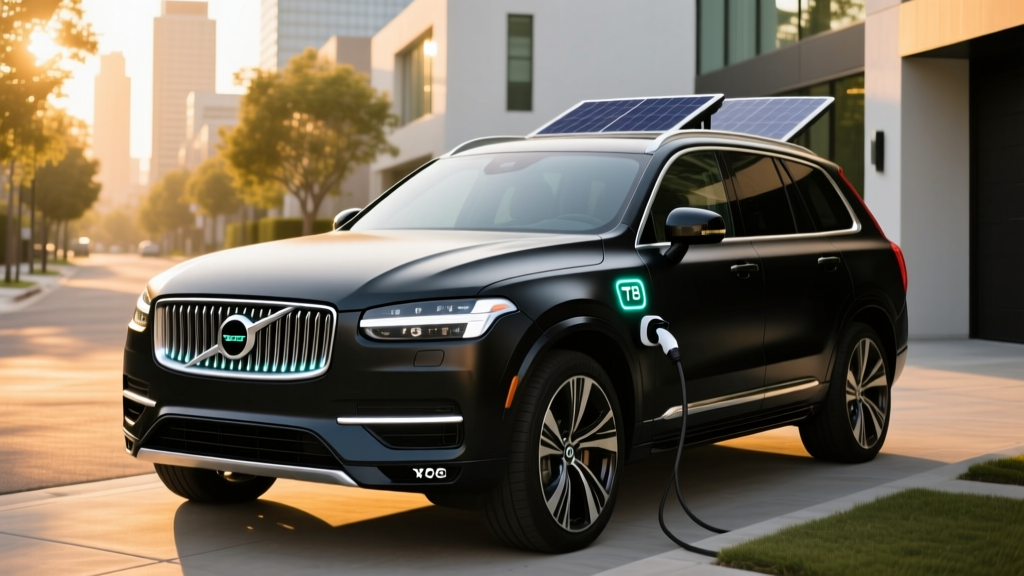
The Volvo XC90 T8 Recharge isn't just a luxury three-row SUV with a plug — it's one of the most powerful plug-in hybrids on the market, producing 455 horsepower from a turbocharged four-cylinder paired with a rear-axle electric motor. But for buyers weighing the Volvo XC90 T8 hybrid against a full EV like the BMW iX or a conventional hybrid like the Toyota Grand Highlander, the real questions are practical: How far does it actually go on electricity? What does it cost to own? And does it still qualify for a tax credit in 2026?
We've spent time analyzing the EPA data, Volvo's official specs, and real-world owner reports to give you the numbers that matter before you sign a lease or purchase agreement.
HEV vs PHEV: Where the XC90 T8 Fits
Volvo sells two hybrid flavors of the XC90, and confusing them is the single most common mistake shoppers make:
XC90 B6 (Mild Hybrid / HEV)
- 48-volt mild-hybrid system — cannot plug in
- No electric-only driving; the small electric motor only assists the gas engine during acceleration and smooths stop-start
- EPA combined: ~25 MPG
- No federal tax credit eligibility
- Lower starting price (~$58,000)
XC90 T8 Recharge (Plug-In Hybrid / PHEV)
- 18.8 kWh (usable) lithium-ion battery — must plug in to realize EV benefits
- Up to 35 miles of electric-only driving before the gas engine engages
- EPA combined (charge-depleting + charge-sustaining): 58 MPGe / 27 MPG gas-only
- Federal §30D tax credit eligible (see eligibility section below)
- Starting price ~$73,100
This guide focuses on the XC90 T8 Recharge PHEV. If you can't charge at home or work, the B6 mild hybrid may be a better fit — but you'll sacrifice the electric commuting capability that makes the T8 compelling.
EPA Range, MPGe, and Real-World Fuel Economy
The EPA rates the 2026 XC90 T8 Recharge at 35 miles of electric-only range and 58 MPGe when operating in combined EV/hybrid mode. Once the battery depletes, the SUV reverts to conventional hybrid operation at an EPA-estimated 27 MPG combined.
| Mode | City | Highway | Combined |
|---|---|---|---|
| Electric-only (charge-depleting) | 35 mi range | 35 mi range | 58 MPGe |
| Gas-only (charge-sustaining) | 26 MPG | 28 MPG | 27 MPG |
Source: fueleconomy.gov
Real-World MPG & Range Reality Check
The 35-mile EPA electric range assumes moderate temperatures (65–75°F), mixed city/highway driving, and no heavy HVAC load. In our experience and owner reports:
- Summer city driving: 32–37 miles electric (regen braking helps in stop-and-go)
- Winter (below 32°F): 22–28 miles electric — battery chemistry and cabin heating cut range 20–35%
- Highway at 75+ mph: 25–30 miles electric; gas engine may engage sooner under heavy load
- Gas-only highway cruising: 28–30 MPG achievable; the 27 MPG combined EPA figure is realistic for mixed driving once depleted
If your daily commute is under 30 miles round-trip and you charge nightly, you may burn gas only on weekend road trips — effectively making the XC90 T8 an EV for weekday use with a 500+ mile total range safety net.
Powertrain, Horsepower, and Battery Specs
The T8 Recharge powertrain is where Volvo's engineering ambition shows. A 2.0-liter turbocharged and supercharged four-cylinder engine drives the front wheels through an 8-speed automatic, while a 143-hp electric motor powers the rear axle. The result is all-wheel drive without a mechanical connection between axles — and a combined 455 horsepower and 523 lb-ft of torque.
| Specification | 2026 XC90 T8 Recharge |
|---|---|
| Combined Horsepower | 455 hp |
| Combined Torque | 523 lb-ft |
| Gas Engine | 2.0L turbo + supercharged I4 (312 hp) |
| Electric Motor (rear axle) | 143 hp / 228 lb-ft |
| Battery (usable capacity) | 18.8 kWh, NMC lithium-ion |
| EPA Electric Range | 35 miles |
| Total Combined Range (EV + gas) | ~520 miles |
| 0–60 mph | 4.5 seconds |
| Transmission | 8-speed automatic (Geartronic) |
| Drivetrain | eAWD (electric rear axle) |
| Towing Capacity | 5,000 lbs |
| Cargo (behind 3rd row / max) | 15.8 / 85.7 cu ft |
Charging: Level 1, Level 2, and the DC Fast-Charging Question
The XC90 T8 Recharge uses a standard J1772 connector for AC charging. Here's what to expect:
| Charging Level | Power | 0–100% Time | Notes |
|---|---|---|---|
| Level 1 (120V outlet) | ~1.4 kW | ~13–14 hours | Emergency/trickle only; too slow for daily use |
| Level 2 (240V home charger) | 3.7 kW (vehicle-limited) | ~5 hours | Overnight charging; full battery by morning |
| DC Fast Charging | Not supported | N/A | No CCS or CHAdeMO port |
Critical detail: The onboard charger is limited to 3.7 kW. Even if you install a 48-amp Level 2 charger capable of 11.5 kW, the XC90 will only draw 3.7 kW. This is adequate for overnight replenishment of an 18.8 kWh battery, but it means the vehicle cannot take advantage of faster public AC chargers or any DC fast-charging infrastructure. On road trips, you're running on the gas engine once the battery depletes — there's no rapid top-up option.
Pricing, Trims, and Federal Tax Credit Eligibility
The 2026 XC90 T8 Recharge starts at approximately $73,100 (Core trim, including destination). Higher trims push well past $80,000:
- Core: ~$73,100
- Plus: ~$77,500
- Ultimate: ~$82,350
Does the XC90 T8 Qualify for the Federal §30D Tax Credit?
As of 2026, the Volvo XC90 T8 Recharge may qualify for up to $7,500 under the IRS §30D Clean Vehicle Credit, but eligibility depends on several factors that change periodically. Here's the checklist:
- MSRP cap: SUVs must be under $80,000 MSRP. The Core and Plus trims qualify; the Ultimate trim may exceed the cap depending on options.
- Buyer income cap: Modified AGI must not exceed $150,000 (single), $225,000 (head of household), or $300,000 (joint).
- Battery sourcing: A percentage of critical minerals and battery components must be sourced from the U.S. or free-trade-agreement countries. Volvo's sourcing compliance changes by model year — verify current status at IRS.gov or fueleconomy.gov before purchasing.
- Point-of-sale transfer: You can transfer the credit to the dealer at purchase for an immediate price reduction, or claim it on your tax return.
- Final assembly: Must occur in North America. The XC90 is assembled in Gothenburg, Sweden — this may disqualify it from the new-vehicle credit under current §30D rules. Verify current assembly-location requirements with your dealer and a tax professional.
Bottom line: The XC90 T8's European assembly is a significant tax-credit hurdle. Always confirm eligibility on the official fueleconomy.gov tax credit page before counting on a credit to reduce your effective price. Some buyers may qualify for state-level PHEV incentives instead — check your state's energy office.
Battery Warranty, Reliability, and Replacement Cost
Volvo covers the T8 Recharge's high-voltage battery with an 8-year / 100,000-mile warranty (whichever comes first), guaranteeing the battery will retain a minimum of approximately 70% of its original capacity. This aligns with the industry standard for PHEV and EV batteries set by federal emissions warranty requirements.
Battery Warranty Summary
- Coverage: 8 years / 100,000 miles
- Capacity threshold: ~70% retention (below this, Volvo replaces or repairs)
- Powertrain warranty: 4 years / 50,000 miles (engine, transmission, electric motor)
- Bumper-to-bumper: 4 years / 50,000 miles
Is the XC90 T8 Reliable?
The XC90 T8's powertrain is complex — a turbocharged and supercharged engine, a high-voltage battery, an electric motor, and sophisticated power electronics. Historically, Volvo's T8 powertrain has drawn mixed reliability reviews. Common concerns reported by owners and tracked by consumer reliability surveys include:
- Onboard charger and charging port issues (intermittent charging failures)
- Software glitches in the powertrain management system
- Higher-than-average repair costs outside warranty compared to simpler Toyota/Lexus hybrid systems
The battery pack itself has proven relatively durable — widespread degradation complaints are uncommon for the 18.8 kWh NMC pack. However, if a battery replacement is ever needed out of warranty, expect a cost in the $8,000–$14,000 range (parts and labor), consistent with luxury-brand PHEV battery pricing. This is significantly less than a full EV battery replacement but still a meaningful long-term ownership consideration.
Real-World MPG: Do Owners Match the EPA?
Owner-reported data suggests the XC90 T8's real-world fuel economy varies dramatically based on charging habits:
- Owners who charge daily and commute under 30 miles: Report using very little gas, achieving effective "MPG" well above 50 MPGe equivalent. Some go months between fill-ups.
- Owners who rarely charge: See 24–28 MPG — essentially using the T8 as a heavy, expensive conventional hybrid. The extra battery weight works against you if you never plug in.
- Highway road trips (depleted battery): 26–30 MPG at 70–75 mph, consistent with the EPA's 28 MPG highway estimate.
The XC90 T8 rewards disciplined charging. If you can't commit to plugging in regularly, you're paying a premium for battery capacity you never use — and a conventional hybrid or efficient gas SUV may serve you better.
Who Should Buy the XC90 T8 — And Who Should Look Elsewhere
Choose the Volvo XC90 T8 Recharge if:
- You need three rows and luxury amenities but want to commute electrically most days
- Your daily round-trip is under 30–35 miles and you have home Level 2 charging
- You want 455 hp performance without committing to a full EV on road trips
- You value Scandinavian interior design, Google Built-in infotainment, and Volvo's safety reputation (IIHS Top Safety Pick history)
- You're willing to accept higher maintenance complexity for the PHEV powertrain
Look elsewhere if:
- You can't charge at home or work — a conventional hybrid like the Toyota Grand Highlander Hybrid (36 MPG combined) makes more sense
- You want DC fast charging for road-trip top-ups — consider the BMW iX, Rivian R1S, or Tesla Model X (all full EVs)
- Budget is a primary concern — the T8 starts at $73k+ and the federal tax credit may not apply due to overseas assembly
- You prioritize long-term reliability above all — Toyota/Lexus hybrid systems have a stronger track record
Pros
- 35-mile EV range covers most daily commutes
- 455 hp / 4.5-second 0–60 — genuinely quick for a three-row SUV
- Premium interior with Google Built-in, Bowers & Wilkins audio available
- 5,000-lb towing with electric torque assist
- 520+ mile total range eliminates road-trip range anxiety
Cons
- 3.7 kW onboard charger limits charging speed; no DC fast charge
- Federal §30D tax credit uncertain due to Swedish assembly
- Complex powertrain = higher repair risk post-warranty
- Third row is tight for adults on long trips
- Starting price of $73k+ is steep for the segment
Frequently Asked Questions
How many MPG does the Volvo XC90 T8 hybrid get?
The EPA rates the 2026 XC90 T8 Recharge at 58 MPGe in combined charge-depleting (EV + hybrid) mode and 27 MPG combined once the battery is depleted and the vehicle runs on gas alone. Real-world results depend heavily on how often you charge — daily chargers may use very little gasoline, while those who never plug in typically see 24–28 MPG.
How far can the XC90 T8 go on electric only?
The EPA estimates 35 miles of electric-only range. In real-world conditions, expect 32–37 miles in moderate city driving, 25–30 miles on the highway, and as little as 22–28 miles in freezing winter weather when battery efficiency drops and cabin heating draws additional power.
Hybrid vs PHEV vs EV — which is right for me?
A conventional hybrid (HEV) like the Toyota Grand Highlander Hybrid needs no plug and delivers ~36 MPG — ideal if you lack home charging. A PHEV like the XC90 T8 gives you 35 electric miles for commuting plus a gas engine for road trips — ideal if you can charge at home but aren't ready to go full electric. A full EV (BEV) like the BMW iX or Rivian R1S offers 300+ miles of range, DC fast charging, and lower maintenance — ideal if you have reliable charging access and want to eliminate gasoline entirely.
Is the XC90 T8 reliable, and what does a battery replacement cost?
The T8 powertrain is more complex than a conventional hybrid, and Volvo's reliability ratings trail Toyota/Lexus. The high-voltage battery is covered for 8 years / 100,000 miles at ~70% capacity retention. Out-of-warranty battery replacement is estimated at $8,000–$14,000. Most owners report the battery itself is durable; concerns center more on charging-system electronics and software.
Does the Volvo XC90 T8 qualify for a federal tax credit?
Potentially, but with significant caveats. The §30D Clean Vehicle Credit requires North American final assembly, and the XC90 is built in Sweden. This likely disqualifies it from the new-vehicle federal credit as of 2026. Always verify current eligibility at IRS.gov and fueleconomy.gov before purchasing. State-level PHEV incentives may still apply depending on your location.
Can the XC90 T8 DC fast charge?
No. The XC90 T8 Recharge supports only AC charging via a J1772 connector at up to 3.7 kW (Level 2). A full charge from empty takes approximately 5 hours on a 240V home charger. There is no CCS, CHAdeMO, or NACS DC fast-charging capability.
What's the total cost of ownership compared to a gas XC90?
Over 5 years, the T8 Recharge saves on fuel (especially if you charge daily and commute electrically) but costs more upfront ($15,000+ over the B6 mild hybrid). Insurance premiums tend to be higher for the T8 due to its powertrain complexity and repair costs. Without the federal tax credit, the break-even point versus the B6 may take 6–8 years of fuel savings depending on your driving and electricity rates. Run the numbers for your specific commute and local electricity cost before deciding.