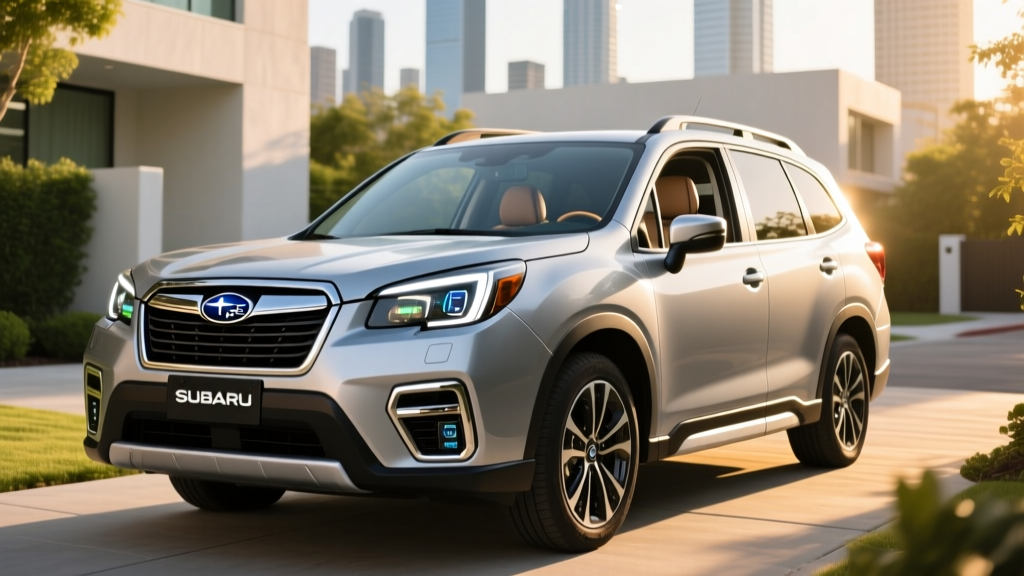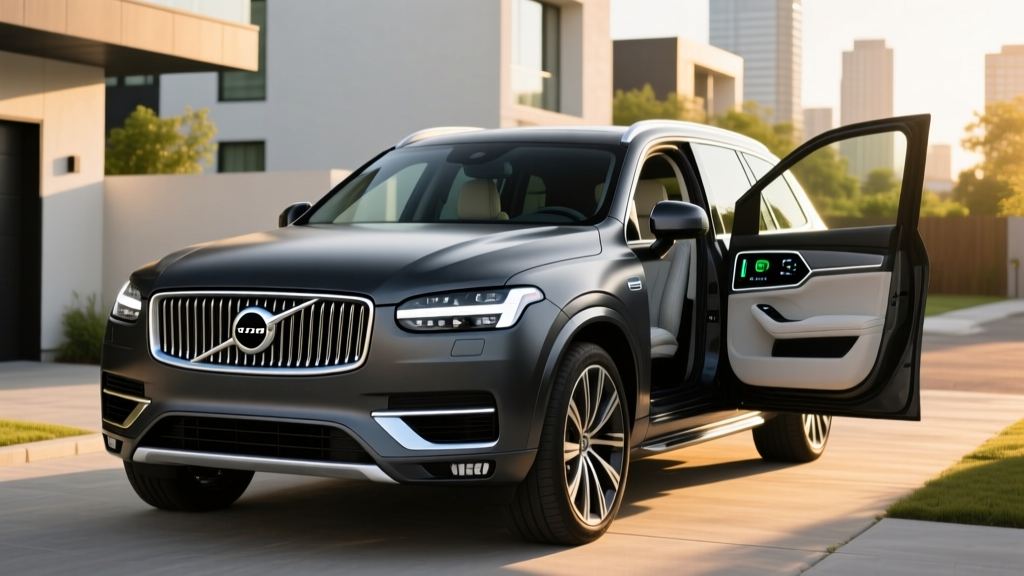
The Volvo XC90 has been a staple of the three-row luxury SUV segment for over a decade, and for 2026, Volvo continues to offer it exclusively with electrified powertrains. If you've been searching for the Volvo XC90 mild hybrid, you're likely looking at the brand's "B" series engines — the B5 and B6 — which pair a turbocharged (or turbo- and supercharged) four-cylinder with a 48-volt mild-hybrid system. These are not plug-in hybrids, and they are not full battery-electric vehicles. They are conventional hybrids designed to squeeze extra efficiency out of a gasoline engine without requiring you to change how you fuel or charge your car.
This guide breaks down exactly what the 2026 Volvo XC90 mild hybrid delivers in fuel economy, powertrain specs, pricing, and real-world ownership — and helps you decide whether the mild hybrid, the plug-in hybrid (Recharge/T8), or a full EV is the right move for your driveway.
What the Volvo XC90 Mild Hybrid Actually Is
The mild-hybrid system in the XC90 B5 and B6 is fundamentally different from the XC90 Recharge (the plug-in hybrid, or PHEV). Here's the critical distinction:
HEV (Mild Hybrid) vs. PHEV (Plug-In Hybrid) — XC90 Lineup
| Feature | XC90 B5/B6 (Mild Hybrid) | XC90 Recharge T8 (PHEV) |
|---|---|---|
| Hybrid type | 48V mild hybrid (MHEV) | Plug-in hybrid (PHEV) |
| Needs to be plugged in? | No — regenerative braking charges the small battery | Yes — plug in for electric-only driving |
| Electric-only driving? | No — electric motor assists only | Yes — up to ~36 miles EPA |
| Battery size | ~0.5 kWh (48V system) | 18.8 kWh usable (lithium-ion) |
| DC fast charging? | No | No (AC Level 2 only) |
| Federal tax credit? | No | Up to $7,500 (§30D, if eligible) |
The 48-volt system in the B5 and B6 recovers energy during braking and coasting, storing it in a small lithium-ion battery. That stored energy is then used to assist the gasoline engine during acceleration, reducing fuel consumption and smoothing out stop-start transitions. You never plug it in. You never see an electric-only range figure on the dash. It simply makes the gas engine slightly more efficient.
Fuel Economy: EPA Ratings and Real-World MPG
For a three-row luxury SUV, the XC90 mild hybrid returns competitive numbers. Here's what the EPA rates and what you can expect in practice:
| Powertrain | Drivetrain | City MPG | Highway MPG | Combined MPG |
|---|---|---|---|---|
| B5 (Turbo + 48V MHEV) | FWD | 23 | 30 | 26 |
| B5 (Turbo + 48V MHEV) | AWD | 22 | 28 | 24 |
| B6 (Turbo + Supercharger + 48V MHEV) | AWD | 21 | 27 | 23 |
Source: fueleconomy.gov — EPA estimates. Actual mileage will vary.
Real-World MPG Expectations
The 48-volt mild-hybrid system shines in stop-and-go city driving, where regenerative braking recovers the most energy and the electric assist reduces engine load during frequent acceleration events. In mixed suburban and city driving, owners commonly report matching or slightly exceeding EPA city figures — hitting 23–25 MPG in the B5 AWD in moderate traffic.
Highway driving is a different story. At sustained 70–80 MPH speeds, the mild-hybrid system has minimal impact because there's little braking to recover energy. Expect highway MPG to land right at or slightly below the EPA estimate, around 26–28 MPG for the B5 AWD. In cold weather (below 30°F), fuel economy drops roughly 10–15% across all trims due to increased engine warm-up time, cabin heating demand, and winter fuel blends.
For context, a comparable non-hybrid three-row SUV like the BMW X5 xDrive40i returns 23 MPG combined, and the Audi Q7 45 TFSI manages 22 MPG combined. The XC90 B5 AWD at 24 MPG combined holds a slight edge, though the gap narrows with the more powerful B6.
Powertrain Specs: B5, B6, and the 48V System
| Specification | B5 AWD | B6 AWD |
|---|---|---|
| Engine | 2.0L turbocharged I4 + 48V MHEV | 2.0L turbo- & supercharged I4 + 48V MHEV |
| Combined horsepower | 247 hp | 295 hp |
| Combined torque | 258 lb-ft | 310 lb-ft |
| 0–60 mph | 7.3 seconds | 6.4 seconds |
| Transmission | 8-speed automatic | 8-speed automatic |
| Drivetrain | AWD | AWD |
| Towing capacity | 4,000 lbs | 4,000 lbs |
| Seating | 7 passengers (standard) | 7 passengers (standard) |
The 48-volt integrated starter generator (ISG) adds roughly 13 hp and 30 lb-ft of assist during hard acceleration, though it's not included in Volvo's published combined horsepower figures — those numbers reflect the gasoline engine's output with the electric assist factored into the torque curve. The ISG also replaces the traditional alternator and starter motor, enabling seamless engine stop-start at traffic lights and reducing the parasitic drag those accessories normally impose.
The B6's supercharger fills in low-RPM torque before the turbo spools, giving it noticeably stronger off-the-line performance. If you frequently carry a full load of passengers and cargo, or tow near the 4,000-pound limit, the B6's extra 48 hp is worth the roughly $4,000 premium and 1 MPG combined penalty.
Pricing and Tax Credit Eligibility
The 2026 Volvo XC90 mild hybrid lineup is positioned as the more accessible entry point into the XC90 range:
| Trim | Powertrain | MSRP (incl. destination) |
|---|---|---|
| Core | B5 AWD | $58,695 |
| Plus | B5 AWD | $63,395 |
| Plus | B6 AWD | $67,395 |
| Ultra | B6 AWD | $72,095 |
Federal Tax Credit Status
The XC90 B5 and B6 mild hybrids do not qualify for the federal §30D clean vehicle tax credit. That credit applies only to plug-in electric vehicles (BEVs and PHEVs) that meet battery capacity, critical mineral sourcing, and MSRP/buyer income thresholds, as outlined by the IRS. Mild hybrids lack the battery capacity and plug-in capability to meet these requirements.
If the federal tax credit is a priority, the XC90 Recharge T8 (PHEV) may qualify for up to $7,500 depending on your income, the vehicle's MSRP cap compliance (SUVs capped at $80,000), and battery component/critical mineral sourcing rules — which change annually. Consult a tax professional and check current IRS guidance before assuming eligibility.
Battery Warranty, Reliability, and Replacement Costs
XC90 Mild Hybrid Battery Warranty
Hybrid battery warranty: 8 years / 100,000 miles (whichever comes first), covering the 48V lithium-ion battery and associated hybrid system components.
General powertrain warranty: 4 years / 50,000 miles.
Corrosion warranty: 12 years / unlimited miles.
The 48-volt mild-hybrid battery is a small, low-stress component compared to the large traction batteries in PHEVs and BEVs. It doesn't undergo deep charge-discharge cycles — it operates in a narrow state-of-charge window, which significantly reduces degradation risk. Volvo's hybrid components are covered under the 8-year/100,000-mile warranty, which aligns with industry standards for hybrid systems.
Reliability Track Record
The XC90's reliability record has been mixed historically. Earlier model years (2016–2019) saw complaints around infotainment glitches, transmission hesitation, and some electrical gremlins. The current-generation powertrain, particularly post-2023 refresh, has been more stable. The 48V mild-hybrid system adds complexity (an ISG, a DC-DC converter, and the small lithium-ion pack), but these components have proven durable in Volvo's broader SPA-platform lineup, including the XC60 and S60.
Battery Replacement Cost
If the 48V battery fails outside warranty, replacement costs are estimated at $1,200–$2,000 for the battery pack itself, plus labor. This is dramatically less than the $10,000–$18,000+ associated with full EV or PHEV traction battery replacements. The smaller size and lower voltage of the 48V system make it a far less expensive component to service.
The XC90 has earned strong safety marks, with the IIHS historically naming it a Top Safety Pick+ when equipped with specific headlights, and NHTSA awarding it 5 stars overall.
XC90 Mild Hybrid vs. PHEV vs. Full EV: Which Fits You?
Choose the XC90 B5/B6 Mild Hybrid If:
- You have no access to home or workplace charging
- You want a three-row luxury SUV under $65,000
- You drive mostly city/suburban miles and want modest fuel savings without changing habits
- You want the simplest ownership experience — gas and go
Choose the XC90 Recharge T8 (PHEV) If:
- You can charge at home (Level 2, 240V) and your daily commute is under 35 miles
- You want to drive on electricity most days but need gas flexibility for road trips
- You may qualify for the §30D federal tax credit, offsetting the higher MSRP
- You want 455 hp combined — the T8 is significantly quicker (0–60 in ~5.0 sec)
Choose a Full EV (e.g., Volvo EX90) If:
- You have reliable home Level 2 charging and access to DC fast charging on road trips
- You want zero tailpipe emissions and the lowest per-mile fuel cost
- You're ready to adapt to charging routines and plan longer trips around chargers
- You want the latest tech platform — the EX90 rides on Volvo's newest architecture
The mild hybrid is the path of least resistance. It doesn't demand infrastructure changes, doesn't require you to learn charging apps, and doesn't carry the premium of a PHEV or BEV. For buyers upgrading from a conventional gas SUV who want slightly better efficiency and a smoother driving experience, the B5 AWD at 24 MPG combined is a rational, low-friction choice.
Pros and Cons at a Glance
Pros
- Competitive fuel economy for a 3-row luxury SUV (24 MPG combined, B5 AWD)
- No charging infrastructure required — gas and go
- Smooth stop-start and low-RPM torque assist from 48V system
- Lower starting price than the Recharge PHEV (~$12,000+ less)
- Top-tier safety ratings and Volvo's reputation for crash protection
- 8-year/100,000-mile hybrid battery warranty
Cons
- No electric-only driving — you always burn gasoline
- No federal tax credit eligibility for the mild hybrid
- B6 fuel economy drops to 23 MPG combined — marginal gain over some rivals
- Infotainment system (Google built-in) can be sluggish vs. competitors
- Third-row space is tight for adults on longer trips
- 48V battery replacement ($1,200–$2,000 out of warranty) is an added long-term cost
Frequently Asked Questions
How many MPG does the Volvo XC90 mild hybrid get?
The 2026 XC90 B5 AWD achieves 22 city / 28 highway / 24 combined MPG per the EPA. The more powerful B6 AWD drops slightly to 21/27/23 MPG. Real-world city driving often matches or slightly exceeds EPA estimates thanks to the 48V regenerative braking assist, while sustained highway driving may fall 1–2 MPG short.
Does the XC90 mild hybrid need to be plugged in?
No. The 48-volt mild-hybrid system charges its small battery exclusively through regenerative braking and engine-driven generation. You fuel it like any conventional gasoline vehicle.
How far can the XC90 mild hybrid drive on electric power alone?
It can't. The mild-hybrid system only assists the gasoline engine — it cannot propel the vehicle on electricity alone. For electric-only driving, you'd need the XC90 Recharge T8 PHEV, which offers approximately 36 miles of EPA-rated electric-only range.
Is the Volvo XC90 mild hybrid reliable?
The current-generation XC90 mild hybrid has shown improved reliability over earlier model years. The 48V system components are relatively low-stress, and Volvo covers hybrid components under an 8-year/100,000-mile warranty. Long-term durability data on the ISG and DC-DC converter is still accumulating, but no widespread failure patterns have emerged in the 2023–2026 model years.
What is the battery replacement cost for the XC90 mild hybrid?
The 48-volt battery replacement is estimated at $1,200–$2,000 out of warranty, including parts and labor. This is far less expensive than PHEV or full EV battery replacements. The battery is covered under Volvo's 8-year/100,000-mile hybrid warranty.
Does the Volvo XC90 mild hybrid qualify for a tax credit?
No. The federal §30D clean vehicle credit applies only to plug-in vehicles (BEVs and PHEVs) meeting specific battery, sourcing, MSRP, and buyer income requirements. Mild hybrids do not qualify. Some states may offer separate incentives for hybrids — check your state's energy office or a tax professional for current local programs.
Should I get the B5 or the B6?
Choose the B5 if fuel economy and value are priorities — it saves roughly $4,000 at purchase and returns 1 additional MPG combined. Choose the B6 if you regularly tow, carry full passenger loads, or want noticeably quicker acceleration (6.4 seconds to 60 vs. 7.3). The B6's supercharger provides stronger low-end response that's useful in highway merging and mountain driving.