Why Buyers Still Search for the Volvo XC70 PHEV
The Volvo XC70 PHEV occupies a strange corner of the plug-in hybrid market: it's a vehicle that was never actually sold in the United States as a factory plug-in hybrid. The XC70 nameplate — Volvo's rugged, lifted wagon derived from the V70 — was discontinued after the 2016 model year in the U.S. and replaced by the V90 Cross Country. While Volvo offered PHEV powertrains (badged "T8 Twin Engine") in the XC90, S90, and later the V60 and XC60, a production XC70 PHEV never reached American dealerships.
Yet the search persists. Enthusiasts and wagon loyalists want exactly what an XC70 PHEV would represent: a practical, all-wheel-drive, lifted wagon with 20-30 miles of electric-only commuting range and the cargo versatility that SUVs still can't match at the same footprint. If you're one of those searchers, this guide clarifies what actually existed, what the specs looked like, and — most importantly — which 2026 PHEV wagons and SUVs fill that gap today.
What the XC70 PHEV Would Have Offered (Based on Volvo's T8 Platform)
To understand the XC70 PHEV concept, we look at Volvo's SPA (Scalable Product Architecture) T8 Twin Engine powertrain as it was configured in the closely related V90 Cross Country T8 and XC90 T8 of the same era. The XC70's direct successor, the V90 Cross Country, did receive a T8 PHEV variant in European markets.
| Specification | Value |
|---|---|
| Engine | 2.0L turbocharged + supercharged 4-cylinder |
| Electric Motor | Rear-axle ERAD (Electric Rear Axle Drive), ~87 hp |
| Combined System Output | ~400 hp / 472 lb-ft torque (varies by model year) |
| Battery Capacity | 11.6 kWh usable (18.8 kWh in 2023+ Extended Range models) |
| EPA Electric-Only Range | 18-35 miles (depending on battery generation and model) |
| EPA Combined MPG (gas) | ~25-27 MPG combined (gas-only operation) |
| MPGe (combined gas + electric) | ~55-62 MPGe |
| Level 2 Charging (240V) | ~3.6 kW onboard charger; 0-100% in ~3-5 hours |
| DC Fast Charging | Not available on T8 PHEVs |
| 0-60 mph | ~5.5 seconds (XC90 T8) |
| Drivetrain | AWD (engine drives front wheels, motor drives rear) |
The T8 powertrain pairs a turbo- and supercharged 2.0-liter four-cylinder engine driving the front wheels with an electric motor on the rear axle. This gives all-wheel drive without a mechanical driveshaft — a clever layout that provides instant electric torque at the rear and regenerative braking capability.
HEV vs. PHEV: Understanding What You're Actually Looking For
Some searchers use "XC70 PHEV" when they may actually want a conventional hybrid. Let's clarify the distinction, because it changes everything about daily ownership.
| Feature | HEV (e.g., Toyota RAV4 Hybrid) | PHEV (e.g., Volvo XC60 T8) |
|---|---|---|
| Plug-in charging required? | No — charges via regen and engine | Yes — plug in for electric range |
| Battery size | ~1.0-1.6 kWh | ~11-19 kWh |
| Electric-only range | None (electric assist only) | 18-35 miles typical |
| City MPG advantage | Strong (often exceeds EPA) | Moderate (when battery depleted) |
| Tax credit eligible? | No | Possibly (§30D, subject to sourcing/income rules) |
| Upfront cost premium | ~$1,500-$3,000 over gas | ~$5,000-$10,000 over gas |
If you don't have access to home or workplace charging, a conventional hybrid is almost always the smarter financial play. A PHEV only delivers its electric-range advantage when you actually plug it in regularly. Drive a PHEV on a depleted battery and you're hauling extra weight (the battery and motor) for marginal fuel-economy gains — sometimes worse MPG than a lighter HEV.
Real-World MPG and Efficiency: What Owners Actually Report
For the Volvo T8 PHEV powertrain in wagon-adjacent models like the V90 Cross Country T8 (sold in Europe) or the U.S.-market XC90 T8 Recharge, real-world efficiency depends heavily on your commute pattern.
| Scenario | EPA Estimate | Real-World Expectation |
|---|---|---|
| Electric-only range | 35 miles (2023+ Extended Range) | 28-32 miles (highway); 33-36 miles (city/low-speed) |
| Combined MPGe | 58 MPGe | Varies wildly — 80+ MPGe on short commutes, ~30 MPGe on long road trips |
| Gas-only MPG (battery depleted) | 25 city / 27 hwy / 25 combined | 23-26 combined; cold weather drops this to ~21-23 |
| Highway cruising (75+ mph) | 27 MPG | 22-24 MPG (aerodynamic drag, AWD engagement) |
The key insight for PHEV ownership: if your daily round-trip commute is under 30 miles and you charge every night, you may use gasoline only on weekend road trips. Several fueleconomy.gov owner estimates for the XC90 T8 Recharge show lifetime MPGe figures above 70 when the vehicle is charged consistently. But skip the nightly plug-in and you're looking at mid-20s MPG in a $60,000+ vehicle.
Battery Reliability, Warranty, and Replacement Cost
Volvo's T8 PHEV battery pack has proven reasonably durable, though long-term data is still maturing (the earliest U.S. T8 models date to the 2016 XC90). Here's what buyers and current owners should know:
Volvo PHEV Battery Warranty
- Hybrid/EV component warranty: 8 years / 100,000 miles (whichever comes first)
- Battery capacity retention threshold: Volvo warrants the high-voltage battery against defects and excessive capacity loss; the threshold is typically 70% of original capacity within the warranty period
- 12V auxiliary battery: Separate 4-year/50,000-mile warranty; a common failure point in all modern Volvos
Out-of-warranty high-voltage battery replacement for a Volvo T8 PHEV typically ranges from $8,000 to $12,000 including labor, based on dealer service estimates. This is a meaningful ownership cost that buyers of used XC70-era Volvos with high mileage should factor in. The good news: PHEV batteries are smaller than full EV packs, so replacement cost is proportionally lower.
In terms of real-world degradation, Volvo's T8 packs have shown modest capacity loss. Owners reporting on forums and tracking apps typically see 5-10% range reduction after 4-5 years / 60,000-80,000 miles. Thermal management (liquid cooling) helps, but repeated DC fast charging isn't a concern here — the T8 doesn't support DC fast charging, which ironically may extend battery life since all charging is slow Level 2.
The 2026 Alternatives: PHEV Wagons and SUVs That Fill the XC70 Gap
Since the XC70 PHEV doesn't exist as a purchasable vehicle, here's what actually serves that buyer in 2026:
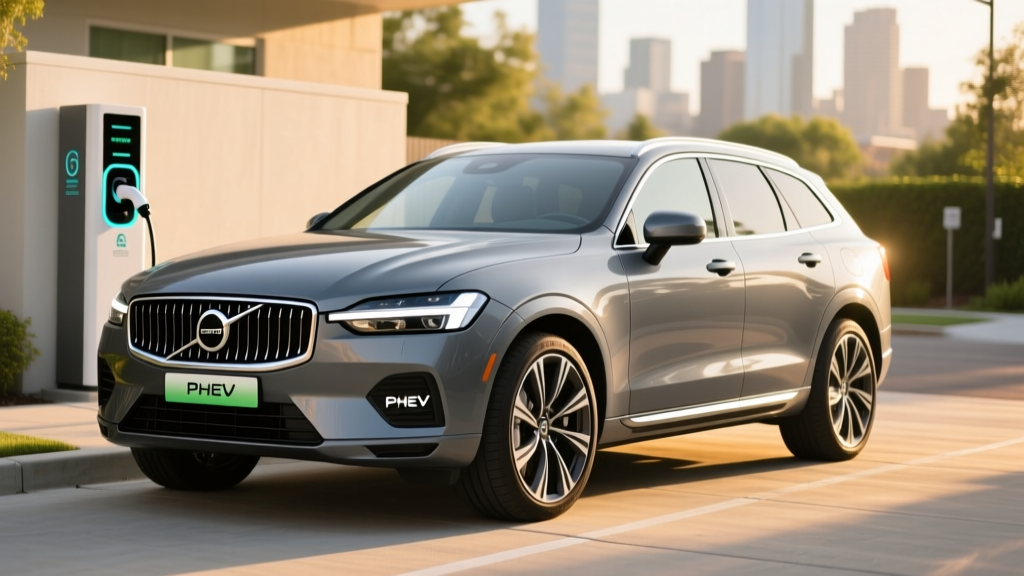
Volvo V60 Recharge (PHEV Wagon — Available in U.S.)
Pros:
- 35 miles EPA electric-only range (Extended Range battery)
- 455 hp combined (T8 eAWD powertrain)
- True wagon cargo floor: ~50 cu ft with seats folded
- Starting MSRP ~$52,000; eligible for up to $7,500 federal §30D tax credit (subject to income, sourcing, and MSRP caps — verify at IRS.gov)
- Available Polestar Engineered trim with Öhlins dampers
Volvo V60 Recharge Cons
- No DC fast charging (3.6 kW Level 2 only)
- Ground clearance lower than XC70's rugged image
- Rear-seat space tighter than XC90
- Infotainment learning curve (Google built-in)
For buyers who want the XC70's raised ride height and outdoorsy character, the closest 2026 match is the Volvo XC60 Recharge (PHEV compact SUV, 35 mi electric range, ~$58,000 MSRP) or the Subaru Outback (conventional gas, no hybrid currently offered, but the segment benchmark for the XC70's buyer profile).
Tax Credit Eligibility: Does a Volvo PHEV Qualify?
Under current IRS §30D rules for 2026, the Volvo V60 Recharge and XC60 Recharge may qualify for up to $7,500 in federal tax credits, but eligibility is conditional and changes frequently. Key requirements:
- MSRP cap: Vans/SUVs/pickups: $80,000; other vehicles (sedans, wagons): $55,000. The V60 Recharge wagon may fall under the $55,000 sedan/wagon cap — verify trim pricing carefully.
- Buyer income cap: $150,000 single / $225,000 head of household / $300,000 joint (modified AGI)
- Battery sourcing: Critical minerals and battery components must meet escalating domestic-sourcing thresholds that tighten annually through 2029
- Point-of-sale transfer: You can transfer the credit to the dealer at purchase for an immediate price reduction, rather than claiming it on your tax return
Always verify current eligibility on the official fueleconomy.gov tax credit page before purchasing. Volvo's battery sourcing compliance has been a moving target, and credit availability can change mid-year.
Hybrid vs. PHEV vs. Full EV: Which Powertrain Fits You?
Choose a Conventional Hybrid (HEV) If:
- You can't charge at home or work
- You want lower upfront cost with zero behavior change
- Your priority is city MPG improvement (hybrids shine in stop-and-go)
- You plan to keep the vehicle 10+ years (simpler powertrain)
Choose a PHEV If:
- You have reliable Level 1 or Level 2 home charging
- Your daily commute is under 30-35 miles round-trip
- You take occasional road trips where EV charging infrastructure is sparse
- You want to reduce fuel consumption without range anxiety
Choose a Full EV (BEV) If:
- You have home Level 2 charging (240V)
- Your daily driving is under 250 miles
- You want the lowest per-mile fuel cost and minimal maintenance
- You're ready to plan road trips around DC fast charging stops
For the XC70 PHEV searcher specifically: if what you want is a practical, efficient wagon for a 20-mile commute with weekend ski-trip capability, the V60 Recharge is the closest living relative. If you're open to an SUV form factor, the XC60 Recharge or even the Toyota RAV4 Prime (42 miles electric range, ~$44,000, though allocation remains tight) are strong PHEV alternatives.
Frequently Asked Questions
Was the Volvo XC70 ever sold as a plug-in hybrid?
No. The XC70 was discontinued in the U.S. after 2016, before Volvo's T8 PHEV powertrain was widely deployed. The V90 Cross Country (its successor) received a T8 PHEV variant in Europe, but not in the U.S. The closest U.S.-market equivalent is the V60 Recharge wagon.
How many MPG does the Volvo T8 PHEV powertrain get?
With a depleted battery (gas-only operation), expect 23-27 MPG combined depending on the model. When regularly charged, effective MPGe can exceed 60-80 for short commutes. The EPA combined gas-only rating for the XC90 T8 Recharge is 25 MPG; real-world highway driving at 75+ mph often drops to 22-24 MPG.
How far can a Volvo T8 PHEV go on electric only?
Pre-2023 models with the 11.6 kWh battery: approximately 18-22 miles EPA. The 2023+ Extended Range models with 18.8 kWh: approximately 35 miles EPA. Real-world electric range in cold weather (below 32°F) drops 20-30%, to roughly 24-28 miles for Extended Range versions.
Is the Volvo PHEV battery reliable and what does replacement cost?
Volvo's T8 batteries have shown modest degradation (5-10% over 5 years) and are covered by an 8-year/100,000-mile warranty with a 70% capacity retention threshold. Out-of-warranty replacement runs approximately $8,000-$12,000. The lack of DC fast charging capability may actually benefit long-term battery health.
Does the Volvo V60 Recharge qualify for the federal tax credit?
The V60 Recharge may qualify for up to $7,500 under IRS §30D, subject to the $55,000 MSRP cap for wagons/sedans, buyer income limits ($150K single / $300K joint), and battery critical-mineral sourcing requirements. Eligibility changes — always verify at IRS.gov or fueleconomy.gov before purchasing. Point-of-sale transfer is available.
Should I buy a used Volvo XC70 (gas) and convert it, or buy a new PHEV?
Aftermarket EV/PHEV conversions of the XC70 exist in the enthusiast community but are extremely expensive ($20,000-$40,000+), void all safety certifications, and offer no warranty. For nearly all buyers, a new or certified pre-owned V60 Recharge or XC60 Recharge is the rational choice.