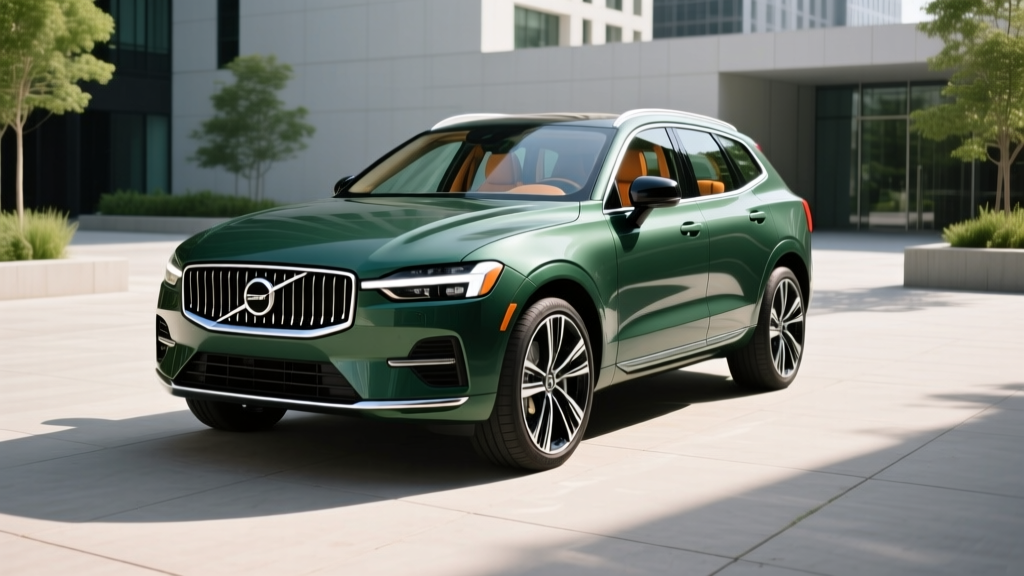
The Volvo XC60 has long occupied the sweet spot in Volvo's lineup — midsize luxury, Scandinavian restraint, and a cabin that punches above its price class. For 2026, the XC60 Recharge plug-in hybrid (PHEV) remains the bridge between Volvo's electrified ambitions and buyers who aren't ready to commit to a full battery-electric vehicle. With 35 miles of EPA-rated electric-only range, a combined 455 horsepower, and a starting MSRP that undercuts rivals like the BMW X5 xDrive50e, the XC60 Recharge is a compelling package — but only if you understand what you're buying and how to use it.
This guide covers everything a prospective buyer needs: the difference between the XC60's mild-hybrid and Recharge PHEV powertrains, real-world fuel economy and electric range, charging logistics, battery longevity, tax credit eligibility, and whether this PHEV is the right fit versus a full EV or a conventional hybrid SUV.
Volvo XC60 Powertrain Lineup: Mild Hybrid vs. Recharge PHEV
Volvo sells two electrified versions of the XC60, and confusing them is the single most common mistake shoppers make. Here's the distinction:
XC60 Mild Hybrid (B5)
- Type: Conventional hybrid (HEV) — no plug
- Battery: ~0.4 kWh (small, recharges via regen/braking)
- Electric-only driving: None — electric motor assists the gas engine only
- Fuel economy: EPA 26 city / 33 highway / 29 combined MPG
- Starting MSRP: ~$48,350 (2026)
- Federal tax credit: None — does not qualify under IRS §30D
XC60 Recharge (T8 PHEV)
- Type: Plug-in hybrid (PHEV) — charges from a wall outlet or charger
- Battery: 18.8 kWh usable (lithium-ion NMC)
- Electric-only driving: Up to 35 miles (EPA)
- Fuel economy: EPA 63 MPGe combined; 28 MPG combined on gas alone
- Starting MSRP: ~$61,950 (2026)
- Federal tax credit: Eligible for partial credit (see tax section below)
The B5 mild hybrid uses a 48-volt integrated starter-generator to smooth stop-start events and provide marginal torque assist. You never plug it in, and it cannot drive on electricity alone. The Recharge T8 is a fundamentally different powertrain: a turbocharged and supercharged 2.0-liter four-cylinder engine paired with a rear-axle electric motor and a substantially larger battery pack. It can operate as a pure EV for daily commutes, then switch seamlessly to hybrid mode for longer trips.
EPA Fuel Economy and Electric Range: What the Numbers Say
| Metric | XC60 Recharge (PHEV) | XC60 B5 (Mild Hybrid) |
|---|---|---|
| EPA City MPG | 27 (gas-only mode) | 26 |
| EPA Highway MPG | 29 (gas-only mode) | 33 |
| EPA Combined MPG | 28 (gas-only mode) | 29 |
| EPA Combined MPGe | 63 | N/A |
| Electric-Only Range | 35 miles | 0 (no EV mode) |
| Total Combined Range | ~430 miles | ~500 miles |
| Fuel Tank Capacity | 15.9 gal | 15.9 gal |
Source: EPA Fuel Economy
The MPGe figure of 63 can be misleading if you don't understand what it measures. MPGe (miles per gallon equivalent) converts the energy in electricity to a gasoline-equivalent number. It's useful for comparing PHEVs to full EVs, but your actual cost per mile depends on your local electricity rate. At the U.S. average of ~$0.17/kWh, fully charging the XC60 Recharge's 18.8 kWh battery costs roughly $3.20 — the equivalent of about $1.25 per gallon of gasoline for those 35 electric miles.
Charging the XC60 Recharge: Speeds, Connectors, and Logistics
The XC60 Recharge uses a standard J1772 connector for AC charging (Level 1 and Level 2). It does not support DC fast charging — this is common for PHEVs, whose smaller batteries don't require the 150+ kW speeds that full EVs use on road trips.
| Charging Level | Power (kW) | 0–100% Time | Notes |
|---|---|---|---|
| Level 1 (120V household) | ~1.4 kW | ~13–14 hours | Emergency/overnight only |
| Level 2 (240V, 32A) | ~7.7 kW (onboard max) | ~2.5 hours | Recommended for daily use |
| DC Fast Charge | Not supported | N/A | PHEV battery too small to benefit |
For most XC60 Recharge owners, a Level 2 home charger is the ideal setup. Plugging in when you get home means the battery is fully replenished by morning — well within the window for a 35-mile electric commute. The onboard charger maxes out at roughly 7.7 kW, so even if you install a 48-amp (11.5 kW) Level 2 station, the car will only draw what it can accept. A 32-amp Level 2 charger (like the ChargePoint Home Flex set to 40A or a Tesla Wall Connector on a non-Tesla setting) is the practical sweet spot.
Public Level 2 chargers at shopping centers, workplaces, or garages can top off the battery during the day, extending your electric driving. Services like PlugShare or ChargePoint can help you find nearby AC chargers.
Performance: 455 HP and a 4.5-Second 0–60
| Specification | XC60 Recharge T8 AWD |
|---|---|
| Powertrain | 2.0L turbo + supercharged I4 + rear electric motor |
| Combined Horsepower | 455 hp |
| Combined Torque | 523 lb-ft |
| 0–60 mph | 4.5 seconds |
| Drivetrain | AWD (eAWD — electric rear axle) |
| Battery (usable) | 18.8 kWh (NMC lithium-ion) |
| Transmission | 8-speed automatic |
| Towing Capacity | 3,500 lbs |
| Cargo Volume | 25.8 cu ft (rear seats up) / 63.3 cu ft (folded) |
The Recharge T8 is the performance flagship of the XC60 range. The front wheels are driven by the turbo- and supercharged 2.0-liter engine (312 hp on its own), while a 143-hp electric motor powers the rear axle. There's no mechanical connection between front and rear — this is an "eAWD" system. In practice, the electric motor provides instant torque off the line, and the transition between electric and gas power is seamless in most conditions.
Drive modes include Pure (electric-only, up to ~80 mph), Hybrid (default, blends gas and electric), Power (maximum combined output), and Off-Road. In Pure mode, the XC60 Recharge is whisper-quiet and genuinely pleasant for neighborhood and city driving. Switch to Power mode and this 4,700-pound SUV hits 60 mph in 4.5 seconds — faster than a Porsche Macan S.
Pricing, Trims, and Federal Tax Credit Eligibility
| Trim | 2026 MSRP | Key Features |
|---|---|---|
| Core | ~$61,950 | Google built-in, panoramic roof, 19" wheels |
| Plus | ~$65,250 | 360° camera, pilot assist, heated rear seats |
| Ultimate | ~$69,950 | Head-up display, crystal gear selector, 20" wheels |
| Polestar Engineered | ~$74,950 | Öhlins dampers, Brembo brakes, 21" wheels |
Federal Tax Credit (§30D): What You Need to Know
The Volvo XC60 Recharge is assembled in Torslanda, Sweden. Under the current IRS §30D rules, the federal clean vehicle credit has strict requirements around North American final assembly, battery component sourcing, and critical mineral content. Because the XC60 Recharge is built outside North America, it does not qualify for the full $7,500 new-vehicle credit.
- ❌ North American final assembly — Not met (Sweden)
- ⚠️ Battery component sourcing — Partially met
- ⚠️ Critical minerals requirement — Partially met
- ✅ MSRP cap ($80,000 for SUVs) — Met (all trims under cap)
- ✅ Buyer income cap ($300K joint / $150K single) — Varies by buyer
Bottom line: The XC60 Recharge likely qualifies for $0 to a partial credit under current rules. Always verify with your tax professional and check the latest IRS guidance at irs.gov. State-level incentives may still apply — check your state's energy office or AFDC incentive database.
Battery Warranty, Reliability, and Long-Term Costs
- Hybrid battery: 8 years / 100,000 miles (whichever comes first)
- Capacity threshold: Warranty covers repair/replacement if battery falls below ~70% of original capacity
- Powertrain warranty: 4 years / 50,000 miles
- Basic vehicle warranty: 4 years / 50,000 miles
- Complimentary maintenance: 3 years / 36,000 miles (Volvo's factory-scheduled program)
Volvo's PHEV powertrain has been in production since 2016 (the SPA-platform T6/T8 architecture), giving it a longer real-world track record than many competitors. The 18.8 kWh battery pack is liquid-cooled, which significantly extends its lifespan compared to passively cooled packs. Volvo engineers the battery with a buffer — you never actually use the full gross capacity, which reduces stress on the cells.
Based on data from earlier T8 models now reaching 8+ years on the road, PHEV battery degradation in the XC60 has been modest: most owners report retaining 85–92% of original electric range after 5 years and 60,000+ miles. A full battery replacement, if ever needed out of warranty, is estimated at $8,000–$12,000 including labor — expensive, but rarely required given the degradation curve and warranty coverage.
Volvo's reliability ratings have historically been middle-of-the-pack in J.D. Power and Consumer Reports surveys, though PHEV-specific complaints have been relatively low. The most common issues reported in earlier model years were software glitches in the infotainment system and occasional rough transitions between electric and gas power — both largely addressed in the Google-based Android Automotive infotainment update and powertrain calibration refinements.
XC60 Recharge vs. Full EV vs. Conventional Hybrid: Which Fits You?
- Your daily commute is under 35 miles and you can charge at home overnight
- You want electric daily driving but need gas flexibility for road trips or towing
- You don't have reliable public DC fast-charging infrastructure nearby
- You want 455 hp and AWD without range anxiety
Choose a full EV (like the Volvo EX90 or Tesla Model Y) if:
- You have home Level 2 charging and your daily driving is under 250 miles
- You want zero tailpipe emissions and the lowest per-mile fuel cost
- You want to avoid oil changes, spark plugs, and gas-engine maintenance entirely
- You qualify for the full $7,500 federal tax credit (many full EVs do)
Choose the XC60 B5 mild hybrid if:
- You cannot charge at home (apartment, street parking, no garage)
- Your budget is closer to $50,000
- You drive mostly highway miles where PHEV electric range provides minimal benefit
- You want the simplest ownership experience with no plug-in routine
The PHEV math works best when you charge daily. If your round-trip commute is 25 miles and you plug in every night, you might visit a gas station once every six to eight weeks. If you never plug in, you're simply hauling 500+ pounds of extra battery and motor weight, and your fuel economy drops to roughly 26–28 MPG — worse than the B5 mild hybrid on the highway. The PHEV premium over the B5 is roughly $13,600 at the Core trim level; at current gas and electricity prices, you'd need to drive primarily on electricity for 4–6 years to break even, depending on your local utility rates.
Pros and Cons: The Honest Assessment
Pros
- 35 miles electric range covers most daily commutes
- 455 hp / 4.5-sec 0–60 is genuinely fast for the segment
- Premium cabin with Google Automotive built-in
- AWD standard with eAWD rear motor
- No range anxiety — gas engine for road trips
- 8-year / 100,000-mile battery warranty
- 3,500-lb towing capacity (unusual for PHEVs)
Cons
- No DC fast charging capability
- Does not qualify for full $7,500 federal tax credit
- $13,600 premium over mild-hybrid B5 is steep
- 28 MPG gas-only is unremarkable for the class
- Cargo space slightly reduced vs. non-hybrid (battery placement)
- Reliability ratings middling vs. Lexus or BMW rivals
- Level 2 ADAS (Pilot Assist) requires hands-on-wheel at all times
Frequently Asked Questions
How many MPG does the Volvo XC60 hybrid get?
The XC60 Recharge PHEV achieves 63 MPGe combined when factoring in electric driving, and 28 MPG combined (27 city / 29 highway) when running on gasoline alone after the battery is depleted. The mild-hybrid B5 gets 29 MPG combined (26 city / 33 highway). Real-world gas-only MPG for the Recharge tends to land between 26–30 combined depending on driving style and conditions.
How far can the XC60 Recharge go on electric only?
The EPA rates the XC60 Recharge at 35 miles of electric-only range. In real-world driving, expect 28–32 miles at highway speeds or in cold weather, and up to 37 miles in mild-weather city driving. The electric motor can propel the car up to approximately 80 mph in Pure mode before the gas engine engages.
Does the Volvo XC60 hybrid qualify for a tax credit?
The XC60 Recharge does not qualify for the full $7,500 federal clean vehicle credit under IRS §30D because it is assembled in Sweden, not North America. It may qualify for a partial credit depending on battery sourcing compliance, but buyers should consult a tax professional and verify current eligibility at irs.gov. State-level PHEV incentives may still apply in states like California, Colorado, and New York.
Is the Volvo XC60 Recharge reliable, and what does a battery replacement cost?
Volvo's T8 PHEV powertrain has been in production since 2016, and real-world battery degradation has been modest — typically 8–15% range loss after 5 years. The hybrid battery is covered by an 8-year/100,000-mile warranty with a ~70% capacity retention threshold. Out-of-warranty replacement is estimated at $8,000–$12,000 but is rarely needed. Overall vehicle reliability is average for the luxury segment, trailing Lexus but comparable to BMW and Audi.
Do I need to install a home charger for the XC60 Recharge?
You don't strictly need one — the included Level 1 cord will charge the battery in about 13–14 hours from a standard 120V outlet. However, a Level 2 (240V) home charger is strongly recommended. It fully replenishes the battery in about 2.5 hours, ensuring you start every morning with a full charge. A basic 32-amp Level 2 charger costs $300–$600 for the unit, plus $500–$1,500 for professional installation depending on your electrical panel.
How does the XC60 Recharge compare to the BMW X5 xDrive50e or Lexus NX 450h+?
The BMW X5 xDrive50e offers more electric range (~40 miles EPA), a larger battery, and a more refined gas engine, but starts around $67,000 and is a larger vehicle. The Lexus NX 450h+ provides ~37 miles of electric range, superior reliability ratings, and a lower starting price (~$59,000), but with significantly less power (304 hp). The XC60 Recharge occupies a middle ground: more power than the Lexus, a more distinctive cabin than the BMW, and a lower starting price than the X5.
Specifications and pricing reflect 2026 model-year data as published by Volvo Cars USA and the EPA. Tax credit rules are subject to change; always verify eligibility with a qualified tax professional and irs.gov. Safety ratings available at iihs.org and nhtsa.gov.